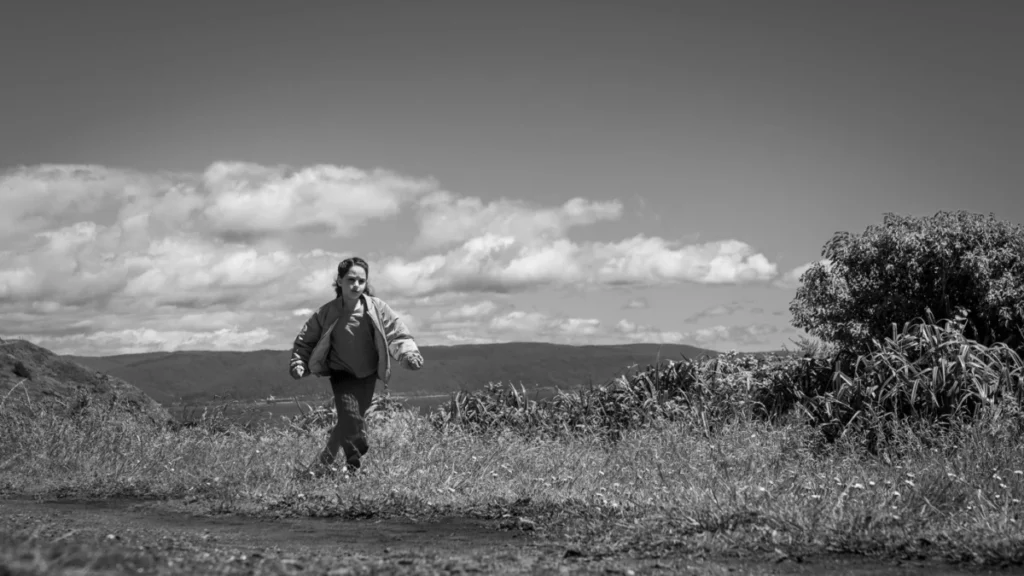

Valeria Sarmiento’s latest cinematic offering, Behind the Rain, made its world premiere in the prestigious Crystal Globe main competition at the 60th edition of the Karlovy Vary International Film Festival (KVIFF), drawing significant attention for its poignant exploration of childhood trauma and the pervasive societal silence surrounding abuse. The film, a visually striking black-and-white narrative, delves into the harrowing journey of Sofía, a psychology graduate whose return to her hometown of Valdivia, Chile, triggers a profound confrontation with buried childhood memories following the discovery of a young girl’s body. This event forces Sofía to navigate a painful past, not only for herself but for the entire community, urging her to look "beyond the rain and its veil" to uncover uncomfortable truths.
Unveiling the Narrative: A Return to Valdivia’s Shadows
The story centers on Sofía, portrayed by Paula Prado, who has just completed her psychology studies in Valparaíso. Her return to Valdivia, a city often characterized by its lush, rain-swept landscapes, becomes a catalyst for profound internal and external conflict. The picturesque, yet often melancholic, atmosphere of Valdivia, with its constant rainfall, serves as a powerful metaphor for the layers of forgotten or suppressed memories that shroud the community. The discovery of a deceased young girl’s body acts as a traumatic trigger, directly linking to Sofía’s own unresolved childhood experiences. This narrative choice immediately immerses the audience in a psychological drama where the protagonist’s personal healing is intrinsically tied to a broader societal reckoning. Sofía’s academic background in psychology provides her with a unique lens through which to process the events, yet it is the raw, visceral impact of the tragedy that truly drives her to confront the collective amnesia of her hometown. The film masterfully builds tension as Sofía grapples with the decision of whether to disturb the fragile peace of her community by unearthing a past that many would prefer to leave buried.
Valeria Sarmiento’s Enduring Vision and Creative Genesis
Director Valeria Sarmiento, a distinguished figure in Chilean and international cinema, conceived the original idea for Behind the Rain. Known for her nuanced storytelling and often challenging subject matter, Sarmiento expressed that the initial inspiration for the film stemmed from the unfortunate prevalence of child abuse in society and the accompanying culture of silence. "In our society, child abuse is sadly really common. And oftentimes, we are silent about it," Sarmiento remarked in an interview at KVIFF. This foundational concern drove the development of a screenplay that she meticulously crafted with the late Omar Saavedra Santis, a revered Chilean writer whose contributions undoubtedly added layers of cultural and historical depth to the narrative.
The journey to bring Behind the Rain to fruition was not without its challenges. Sarmiento initially explored collaborating with French and Swiss partners, but these attempts did not yield the desired progress. It was through a conversation with her long-time collaborator, Chamila Rodríguez, that the project found its true direction. Rodríguez suggested a return to the story’s roots in Chile, prompting Sarmiento to reconnect with Saavedra Santis. This strategic shift proved pivotal, allowing the screenplay to evolve authentically within its intended cultural context. The film stands as a testament to Saavedra Santis’s enduring legacy, showcasing his final contributions to cinematic storytelling.
The Artistic Canvas: Black and White, and the Glimmer of Color
One of the most striking aesthetic choices in Behind the Rain is its predominant use of black-and-white cinematography, handled with exquisite artistry by director of photography Acácio de Almeida. This stylistic decision is not merely an artistic flourish but a deliberate thematic choice, deeply rooted in Sarmiento’s personal and professional history. Born in 1948, Sarmiento grew up during an era when black-and-white films dominated the cinematic landscape. She explained, "I knew from the very beginning that the film was going to be in black and white, except for the ending, because I grew up seeing films with no color. It took quite a time before I was able to see a color film." This personal connection imbues the visual language of the film with a sense of timelessness and a nostalgic echo of classic cinema, while also underscoring the stark, often grim, reality of the subject matter.

The transition to color, which occurs only at the very end of the film, carries profound symbolic weight. This particular visual choice is directly inspired by a piece of wisdom Sarmiento received from her mother: "My mother said to me that I have to look behind the rain in order to see all the colors and aspects, so that’s what I tried to do." The rain, a recurring motif in the film, thus transforms from a symbol of concealment and melancholy into a veil that, once parted, reveals the spectrum of truth and potential for healing. This artistic choice elevates the film beyond a mere recounting of events, transforming it into a meditative exploration of memory, perception, and the eventual, albeit difficult, emergence into clarity. The precise editing by Galut Alarcón further ensures that the visual rhythm and emotional cadence of the film are seamlessly woven together, enhancing the impact of its narrative and aesthetic choices.
An Ensemble of Talent: Performances and Personal Connections
The cast of Behind the Rain features a strong ensemble of Chilean actors, led by Paula Prado in the pivotal role of Sofía. Sarmiento recounted the challenges of casting, particularly finding an actress willing and able to commit to filming in Valdivia, given the demands of theater work for many Chilean performers. However, upon encountering Paula Prado, Sarmiento immediately recognized her suitability for the role, believing she possessed the necessary depth to convey the film’s complex themes. "When I found Paula, I immediately felt that she was the right person, that she would be the perfect one to convey the ideas of the film," Sarmiento stated.
The film also stars Cristián Arriagada, Aline Kuppenheim, Shlomit Baytelman, Chamila Rodríguez, Daniel Muñoz, Julio Milostich, Aimar Alarcón Rodríguez, and Clara Vargas Arellano. Chamila Rodríguez not only features prominently in the cast, portraying a "difficult" lawyer character, but also served as the film’s producer. Her dual role is particularly significant given her deep personal connection to the film’s central theme. Rodríguez openly shared her own experience of childhood abuse, which remained hidden until she was 40 years old. This personal history profoundly resonated with the script, making her commitment to the project both artistic and deeply personal. "I experienced something similar when I was a child. My experience of child abuse was hidden, and I never spoke about it until I was 40. Then; I finally started to speak about it, so I could really relate to the story," Rodríguez explained. For her, cinema, and art in general, serves as a powerful means to "exorcize demons" and transform painful experiences into something positive. This emotional investment undoubtedly enriched both her performance and her dedication as a producer.
The harmonious atmosphere on set, particularly in the picturesque town of Valdivia, was highlighted by both Sarmiento and Rodríguez. Rodríguez praised Sarmiento’s calm and trusting directorial approach: "It is a great pleasure to work with Valeria, because as a director, she’s really calm, and you can trust her. You feel safe, and she knows exactly what she wants." The logistical advantages of filming in Valdivia, a smaller town where everything is conveniently located, also contributed to a smooth production process.
Karlovy Vary International Film Festival: A Prestigious Platform
The selection of Behind the Rain for the Crystal Globe main competition at the 60th Karlovy Vary International Film Festival underscores its perceived artistic merit and thematic significance. KVIFF is one of the oldest and most respected A-list film festivals globally, celebrated for its discerning programming and its role in showcasing thought-provoking cinema from around the world. For a Chilean film tackling such a sensitive subject to debut in such a prominent international forum speaks volumes about its potential impact.
The festival, marking its 60th anniversary, served as an especially poignant backdrop for Behind the Rain‘s premiere. Over six decades, KVIFF has consistently championed films that push artistic boundaries and engage with crucial societal issues, making it an ideal platform for a work like Sarmiento’s, which aims to spark dialogue and challenge complacency. The Crystal Globe competition, the festival’s highest honor, attracts critical attention and positions the selected films at the forefront of contemporary cinema, offering a significant launchpad for Behind the Rain onto the global stage.
A Collaboration Forged in Trust and Shared Purpose

The enduring partnership between Valeria Sarmiento and Chamila Rodríguez, dating back to their collaboration on the 2008 film Secrets, forms the bedrock of Behind the Rain‘s production. This long-standing professional relationship is characterized by mutual trust and a shared artistic vision, which proved crucial in navigating the sensitive nature of the film’s subject matter. Rodríguez’s pivotal suggestion to refocus the project on Chile, and her subsequent involvement as both producer and actress, demonstrates the depth of her commitment and belief in Sarmiento’s vision. This collaborative synergy allowed the filmmakers to tackle a difficult topic with both artistic integrity and personal conviction, creating a work that is both challenging and deeply human.
Societal Impact and the Call for Dialogue
At its core, Behind the Rain is a powerful plea for societal change, aiming to dismantle the wall of silence that often surrounds child abuse. Both Sarmiento and Rodríguez articulated their profound hope that the film would serve as a catalyst for essential discussions. "We hope the film will do exactly that," Sarmiento stated, referring to its potential to ignite societal debate. Rodríguez elaborated on the urgency: "Yes, because people have to talk about it. It’s like the abuse is hidden because children don’t have the words to be able to tell others about what’s been happening."
The issue of child abuse is a global crisis, often exacerbated by the vulnerability of victims and the reluctance of communities to confront uncomfortable truths. According to numerous international reports from organizations like UNICEF and the World Health Organization, millions of children worldwide experience various forms of abuse, with a vast majority going unreported. The long-term psychological impact on survivors, including complex trauma, depression, and anxiety, underscores the critical need for open dialogue, support systems, and preventative measures. In Chile, like many countries, efforts have been made to strengthen child protection laws and raise awareness, yet the cultural barriers of shame, fear, and denial often impede progress. Behind the Rain contributes to this vital conversation by dramatizing the profound personal and communal consequences of suppressed trauma, using the power of art to articulate what words often fail to convey. By offering a narrative that resonates deeply with personal experiences, as evidenced by Chamila Rodríguez’s own testimony, the film seeks to empower individuals to break their silence and encourage communities to foster environments where such discussions are not only possible but actively encouraged.
Broader Implications for Chilean Cinema and Global Discourse
Behind the Rain positions itself within a distinguished tradition of Chilean cinema that courageously tackles complex social and political issues, a trend that has garnered international acclaim for films like No, A Fantastic Woman, and The Club. Valeria Sarmiento’s film further solidifies this reputation, demonstrating the continued vitality and social consciousness of Chilean filmmakers. Her ability to blend a stark, classic aesthetic with a contemporary, urgent message highlights the versatility and depth of cinematic expression emanating from the region.
The film’s premiere at Karlovy Vary also contributes to a broader global discourse on child protection, mental health, and the therapeutic role of art. As festivals increasingly become platforms not just for entertainment but for social advocacy, Behind the Rain offers a compelling example of how cinema can illuminate dark corners of human experience and inspire collective action. Its nuanced portrayal of trauma and resilience, coupled with its powerful call to break the silence, ensures that Behind the Rain will be a significant entry in the ongoing global conversation about safeguarding the most vulnerable members of society and fostering healing within communities. The film’s enduring hope lies in its ability to resonate beyond the screen, prompting introspection and dialogue long after the credits roll.