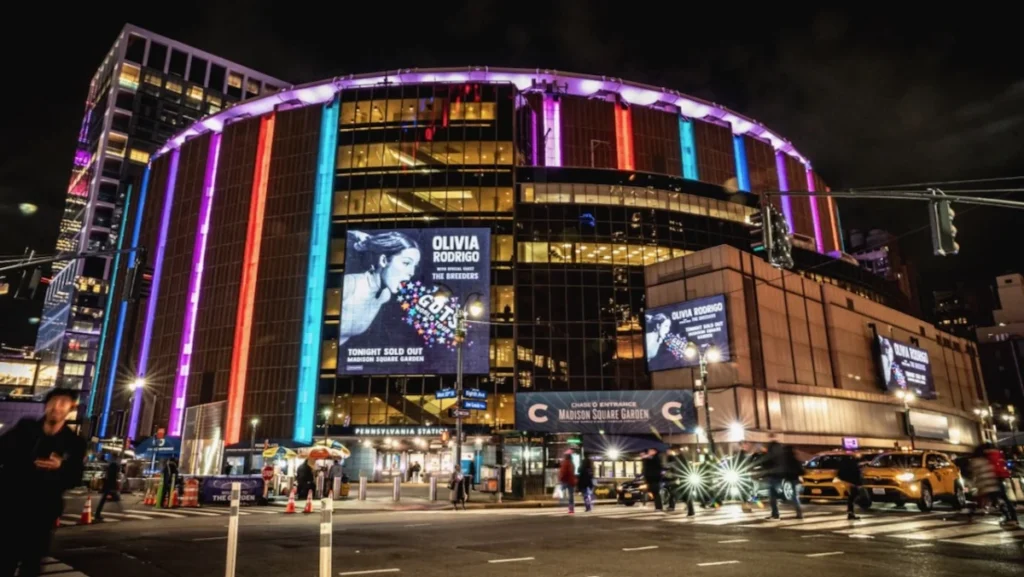

A new investigative report has unveiled that Madison Square Garden (MSG), one of the world’s most iconic entertainment venues, maintained an extensive internal database categorizing thousands of musicians, actors, and other public figures, assigning them "risk" designations and, in some cases, documenting their sexual orientation, race, and gender. The revelations, stemming from a data breach and subsequent leak to WIRED, paint a concerning picture of broad surveillance and data collection practices by the entertainment giant. The leaked database, described internally as a "talent" list, reportedly contained nearly 40,000 names, with approximately 400 celebrities specifically marked with a risk designation.
The Unveiling of MSG’s Celebrity "Risk" Database
The comprehensive report by WIRED detailed the existence of a sophisticated internal system used by Madison Square Garden to track high-profile individuals. This database went beyond standard guest lists, implementing a tiered "risk" assessment system that categorized celebrities as "flagged," "low risk," "medium risk," or "high risk." The criteria for these designations remain largely opaque, leading to widespread speculation and concern across the entertainment industry and among privacy advocates.
Among those labeled "high risk" were prominent figures in the music world, including rappers Freddie Gibbs, Lil Jon, DaBaby, and A Boogie Wit da Hoodie. The designation implies a heightened level of scrutiny or concern from the venue’s management regarding their presence. Meanwhile, "medium risk" individuals included a diverse group: rappers Jadakiss and Fat Joe, both vocal supporters of the New York Knicks (owned by MSG’s parent company), musicians Morgan Wallen and Lily Allen, and actors David Harbour (Allen’s ex-husband) and Anna Wintour, the chief content officer of Condé Nast and global editorial director of Vogue. The inclusion of such varied personalities, some with no known history of controversy related to MSG, raises questions about the parameters defining these risk levels.
Conversely, a substantial number of well-known personalities were categorized as "low risk." This group reportedly included popular artists like Ice Spice, Selena Gomez, and Benson Boone. Also on the "low risk" list were NFL player-turned-TV-host Michael Strahan and actress Mariska Hargitay, known for her role in Law & Order: SVU and recently announced as a future Emmys host. Notably, many of these "low risk" individuals, including Ice Spice, Selena Gomez, and Mariska Hargitay, were reported to have attended the high-profile wedding of Taylor Swift and Travis Kelce, suggesting their presence at other major events might be monitored or noted. Veteran performers and prominent Knicks fans such as Tracy Morgan, Edie Falco, and Ben Stiller also found themselves listed as "low risk."
Further granularities in the database included a "flagged" category, under which actor Will Harrison of Daisy Jones and the Six, musician and producer Mark Ronson, and actor John Turturro were listed. The significance of being "flagged" without a specific risk level is unclear but implies a level of internal notation. The hip-hop group The Lox, comprising Jadakiss, Styles P, and Sheek Louch, also appeared in the database, though without an explicit risk label, adding to the ambiguity surrounding the system’s application.
The Alarming Inclusion of LGBTQIA+ Data
Perhaps the most disconcerting aspect of the leaked database is the explicit tracking of celebrities’ sexual orientation. The report indicated that some musicians were specifically marked with an "LGBTQIA" label, for reasons that remain entirely unexplained. Notable figures identified this way include Grammy-winning artist Ricky Martin, indie rock sensation Phoebe Bridgers—who recently performed at MSG in June—and Emily Green of the band Geese. The WIRED report stated that 89 other individuals were similarly marked as "LGBTQIA."
The collection and storage of such sensitive personal information, particularly without any apparent security or operational justification, immediately sparked concerns regarding privacy violations, potential discrimination, and the ethical boundaries of corporate data practices. In an era where data privacy is paramount, the revelation that a major venue might be compiling and categorizing individuals based on their sexual orientation without their knowledge or consent is highly problematic and could lead to significant legal and reputational fallout.
A History of Surveillance: The Dolan Empire and Prior Controversies
This is not Madison Square Garden’s first foray into controversial surveillance practices. The venue, along with The Sphere in Las Vegas, is part of a broader network of entertainment and sports entities controlled by the Dolan family, with James Dolan serving as the chairman and CEO of Madison Square Garden Entertainment Corp. This corporate structure has been at the center of several high-profile controversies regarding its methods of monitoring and controlling access to its venues.
2023 Facial Recognition Scandal: In 2023, MSG’s parent company faced widespread criticism and legal challenges over its use of facial recognition technology. It was revealed that the company was employing this technology to identify and bar lawyers from law firms engaged in litigation against MSG or its affiliated entities (such as the New York Knicks or Rangers) from attending events at venues like Madison Square Garden, Radio City Music Hall, and Beacon Theatre. This practice, often described as weaponizing technology against legal adversaries, led to a lawsuit. While MSG ultimately prevailed in that specific legal challenge, the incident underscored a corporate culture willing to utilize advanced surveillance for its own perceived interests, even at the expense of public access and individual rights. The current "risk list" appears to be an extension of this established pattern of internal monitoring.
The Implied Motives: Criticism of Management and Corporate Control
While the criteria for "risk" designations remain largely unconfirmed by MSG, certain patterns in the leaked data offer clues. The report highlighted specific cases where the "not to be hosted" or "do not host" label—meaning individuals would not receive complimentary tickets—appeared to be directly linked to past criticisms of James Dolan or his management of the Knicks.
Comedian Adam Pally and hip-hop producer Pete Rock, both avid Knicks fans, were marked with this designation. WIRED reported that Pally’s designation specifically included the memo "due to previous comments," referencing his public criticism of the Knicks’ management. Pete Rock had reportedly gone so far as to call for a boycott of Dolan in the past. Even "medium risk" Jadakiss has publicly voiced criticism of Dolan. This suggests that public dissent against the company’s leadership or sports teams could be a significant factor in how celebrities are categorized and treated regarding access and perks.
However, the system does not appear to be solely punitive for critics. The inconsistencies are notable; "medium risk" Fat Joe, for instance, has been a public supporter of Dolan, even performing alongside Jadakiss at the Knicks’ championship celebration parade. This complexity indicates that the database might serve multiple purposes—from managing complimentary tickets and VIP access to potentially flagging individuals for security reasons, or simply as an internal record of high-profile interactions and perceptions. The underlying logic, therefore, remains multifaceted and largely undisclosed.
The Data Breach and Ransomware Attack
The existence of this extensive database only came to light due to a sophisticated cyberattack. Hackers reportedly infiltrated Madison Square Garden’s systems, stole a significant cache of data, and subsequently attempted to ransom it. When the ransom demands were not met, the data, including the celebrity "talent" list, was leaked, bringing these clandestine practices into the public domain. This breach underscores the inherent risks associated with collecting and storing vast amounts of personal and sensitive information, especially when it falls into the wrong hands. The incident highlights the critical importance of robust cybersecurity measures for organizations handling such data.
Inferred Reactions and Public Outcry
The immediate reaction to the revelations has been one of surprise and concern. Freddie Gibbs, upon learning of his "high risk" designation, publicly questioned the decision, tweeting, "D*** I got to do with this?" This sentiment of bewilderment and potential indignation is likely shared by many other listed celebrities who may be unaware of their categorization or the reasons behind it.
The broader public and privacy advocates are expected to react with significant alarm. The collection of racial data, gender, and particularly sexual orientation without clear justification raises serious ethical and legal questions. Such practices could be perceived as discriminatory, intrusive, and an abuse of corporate power. The potential for misuse of such sensitive data, whether through internal bias or external breach, is immense.
Legal and Ethical Implications
The implications of MSG’s alleged practices are far-reaching. From a legal standpoint, the collection of sensitive personal data, especially sexual orientation, could potentially violate various privacy laws, depending on the jurisdiction and specific circumstances. In New York, for example, data protection laws like the Stop Hacks and Improve Electronic Data Security Act (SHIELD Act) mandate reasonable safeguards for private information. Broader data protection principles, increasingly emphasized globally, call for transparency, consent, and purpose limitation in data collection. The lack of apparent consent from individuals and the unclear purpose for collecting such intimate details about their lives could expose MSG to significant legal challenges.
Ethically, the practice raises questions about trust and transparency between entertainment venues and the public figures who frequent or perform at them. It creates an environment where celebrities might feel constantly scrutinized, potentially chilling free expression or public engagement. For the LGBTQIA+ community, specifically, the tracking of sexual orientation, particularly without consent or clear purpose, evokes historical fears of discrimination and targeting.
Broader Impact and Future Outlook
The revelation of MSG’s "risk list" and its extensive data collection practices is likely to have a profound impact on the company’s reputation and its relationships within the entertainment industry. Artists, agents, and managers may reconsider their engagements with MSG-owned venues, demanding greater transparency about data policies. The incident could lead to calls for industry-wide standards regarding data collection by entertainment venues, potentially spurring new regulations or self-governing guidelines.
For James Dolan and MSG Entertainment, this controversy adds another layer to their already scrutinized corporate image. The recurring theme of surveillance and control, from facial recognition to celebrity databases, suggests a systemic approach to managing their properties and perceived threats.
As the story develops, official responses from Madison Square Garden will be critical. Any statement will need to address the rationale behind these categories, the purpose of collecting sensitive data like sexual orientation, and the steps being taken to safeguard privacy and ensure ethical data handling. The absence of a transparent and satisfactory explanation will only deepen public skepticism and could lead to sustained scrutiny from regulators, privacy advocates, and the entertainment community at large. This incident serves as a stark reminder of the ever-evolving landscape of data privacy and the challenges of balancing security, business interests, and individual rights in the digital age.