
Wimbledon 2026 has been captivated by the astonishing ascent of British wildcard Arthur Fery, whose improbable journey to the men’s singles semi-finals has rewritten tournament history and ignited a fervent wave of national support. While Fery, ranked a modest No. 114 in the world, has become the undisputed "wildcard wonder," the tournament’s narrative has also been punctuated by the unexpected mid-match departure of legendary commentator John McEnroe and the ongoing public debate surrounding his distinctive broadcasting style. These intertwining storylines underscore the drama, tradition, and evolving media landscape that define the pinnacle of grass-court tennis.
Arthur Fery’s Historic Run: A Wildcard Defies Expectations
Arthur Fery, a name largely unfamiliar to mainstream tennis fans just a fortnight ago, has transformed his wildcard entry into an open-era record-breaking streak at Wimbledon 2026. His remarkable progress culminated in a stunning quarter-final victory over Italy’s Flavio Cobolli on Tuesday, securing his place in the coveted semi-finals. This achievement is not merely a personal triumph but a significant moment for British tennis, as Fery becomes one of the lowest-ranked players in recent memory to reach such a late stage at a Grand Slam, especially at his home major.
Fery’s path to the semi-finals has been a testament to his resilience, tactical acumen, and burgeoning confidence. Each victory has been met with escalating disbelief and excitement, as the 23-year-old navigated a draw that saw more established players falter. His ability to perform under the intense pressure of Centre Court, often against opponents with far greater experience and higher rankings, has been a defining characteristic of his campaign. The sheer joy and exhaustion were palpable as Fery collapsed to the turf following his quarter-final win against Cobolli, a moment that encapsulated the emotional weight of his unexpected success.
The concept of a "wildcard" entry in tennis is designed to offer opportunities to promising young talents, returning players from injury, or local favourites who might not otherwise meet the direct entry criteria based on their ranking. Historically, wildcard success at Grand Slams is rare, making Fery’s achievement particularly noteworthy. The most famous example, frequently cited in discussions surrounding Fery, is Goran Ivanisevic’s legendary victory at Wimbledon in 2001. Ivanisevic, then ranked No. 125, defied all odds to win the men’s singles title, becoming the first and only wildcard to do so. Fery’s deep run evokes parallels with Ivanisevic’s fairytale, fueling hopes that he might emulate that historic feat.
Fery’s success comes at a crucial time for British men’s tennis, which has long yearned for consistent representation at the sharp end of Grand Slams beyond Andy Murray. His journey is expected to significantly boost his world ranking, potentially propelling him into the top 50, and provide invaluable experience that could define the trajectory of his professional career. The spotlight now firmly fixed on him offers a platform to solidify his presence on the ATP Tour.
McEnroe’s Abrupt Exit and Commentary Controversies
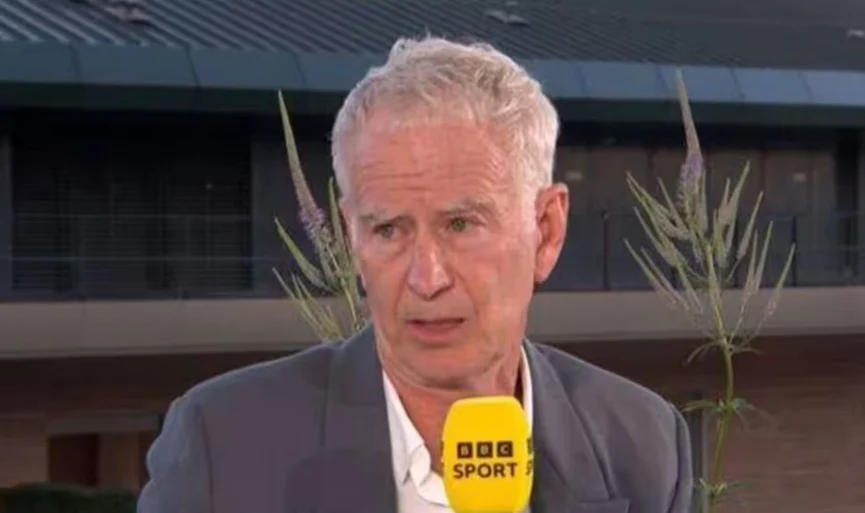
Amidst the unfolding drama of Fery’s ascent, the commentary box at Wimbledon 2026 has provided its own share of talking points. During Fery’s match against Grigor Dimitrov on Monday – a gripping encounter where Fery won the opening set before Dimitrov leveled the score in the second, prompting a lengthy toilet break from Fery – veteran commentator John McEnroe made an unceremonious departure.

BBC presenter James Cotter informed viewers, "I think we’re going to have to bid farewell at this point. John McEnroe to take a break, never to return." McEnroe, renowned for his candid and often provocative style, swiftly clarified his position: "Well, hopefully I’ll return but I’ve got contractual obligations to do the lone American in the draw, Taylor Fritz." His commitment required him to switch to cover Fritz’s match against Alexander Bublik, a significant fixture featuring the last American standing in the men’s singles draw, who McEnroe described as "maybe the slight favourite to get to the final on this half." He concluded by entrusting his colleagues to "call a great rest of the match."
McEnroe’s departure, while explained by professional commitments, inadvertently highlighted a broader conversation that has been simmering throughout the 2026 Championships regarding his commentary. A tennis icon known for his "Superbrat" persona during his playing days, McEnroe has transitioned into a broadcasting career marked by a similarly unfiltered approach. This style has consistently divided Wimbledon viewers.
On one hand, many fans laud his passionate insights, deep knowledge of the game, and willingness to express strong opinions. His energetic delivery and ability to connect with the raw emotion of a match are often praised as adding an essential layer to the broadcast. For these viewers, McEnroe’s commentary is an integral part of the Wimbledon experience, offering a distinctive voice that stands apart from more conventional analyses.
However, a significant portion of the audience has expressed frustration with what they perceive as McEnroe’s tendency to stray into irrelevant tangents, discuss personal anecdotes, or offer opinions that overshadow the match itself. Social media platforms, particularly X (formerly Twitter), have become a barometer for these sentiments. Comments like "God does McEnroe ever stop talking about irrelevant nonsense?" and "McEnroe on again I’ve switched it off" reflect a segment of the viewership finding his style disruptive rather than enriching. Another viewer posted, "McEnroe really p***ing me off with his commentary," underscoring the strong negative reactions.
This dichotomy in public opinion is not new for McEnroe, whose commentary has often generated discussion. It raises questions about the balance broadcasters seek between engaging, charismatic personalities and objective, focused match analysis. In an era where viewers have multiple options for sports consumption, the role and style of commentators are increasingly scrutinized.
Broadcasting Dynamics: Punditry and Past Glories
Beyond the live match commentary, the BBC’s post-match analysis has also seen its moments of candid exchange, particularly involving host Clare Balding and former British No. 1 Tim Henman. Balding, known for her comprehensive and engaging presentation style, inadvertently stumbled into a sensitive topic during a discussion about Fery’s remarkable run.
Balding noted a fascinating coincidence: Fery’s 24th birthday on Sunday coincides with the men’s final. Pundit Jamie Murray added a touch of poetic optimism, remarking, "It’s written in the stars." Balding then extended the historical parallel, stating, "And 25 years ago today, so before he was born, the only wildcard to win Wimbledon, Goran Ivanisevic, did that. I mean…"
This historical reference, while contextually relevant to Fery’s wildcard status, immediately touched upon a painful memory for Henman. Ivanisevic famously defeated Henman in a grueling five-set semi-final in 2001, before going on to win the title. It was one of four semi-final losses for Henman at Wimbledon, a recurring heartbreak that defined much of his career at his home Grand Slam.

Henman, quick to interject and steer the conversation away from his past disappointments, responded with a clear, albeit good-natured, plea: "This is a much better story, let’s not go back to 2001!" Balding, recognizing the sensitivity of the moment, gracefully conceded, "OK, let’s just keep looking forward, you’re right."
This exchange highlights the delicate balance within sports punditry, particularly when former players are involved. While historical context enriches analysis, invoking past failures can be an awkward, if not painful, experience for those who lived through them. It also underscores the enduring impact of Wimbledon on British tennis players and the collective memory of the nation’s fans. The pressure on British players at Wimbledon is immense, and for someone like Henman, who carried the hopes of a nation for many years, certain historical footnotes remain raw.
Looking Ahead: The Semifinals and Fery’s Future
Arthur Fery’s extraordinary journey is set to continue in the Friday semifinals, where he faces an formidable challenge in second seed and reigning French Open champion, Alexander Zverev. Zverev, a formidable opponent known for his powerful serve and groundstrokes, booked his place in the semi-finals by defeating Taylor Fritz in straight sets on Court One, showcasing the kind of dominant form that makes him a strong contender for the title.
The match against Zverev will be Fery’s sternest test yet, pushing his physical and mental fortitude to their limits. Regardless of the outcome, Fery’s performance at Wimbledon 2026 has already secured his place in the tournament’s lore. His ranking is set to skyrocket, granting him direct entry into many ATP Tour events and opening doors to a more consistent professional schedule. This exposure will be invaluable for his development, allowing him to regularly compete against the world’s best players.
Beyond the immediate prize money and ranking points, Fery’s fairytale run has captured the imagination of the public, generating a wave of interest that could translate into commercial endorsements and increased visibility for British tennis. His story serves as an inspiration, demonstrating that with dedication and belief, even the longest odds can be overcome. For the All England Club, Fery’s success validates the wildcard system, proving its capacity to unearth and showcase exceptional talent.
Wimbledon 2026, already marked by unexpected upsets and thrilling matches, continues to deliver compelling narratives. From the improbable rise of a British wildcard to the engaging, sometimes contentious, discussions emanating from the commentary box, the tournament underscores its unique blend of sporting excellence, tradition, and captivating human drama. As Fery prepares for his biggest match yet, the world watches, eager to see if this remarkable story can have one more magical chapter written on the hallowed grass of Centre Court.