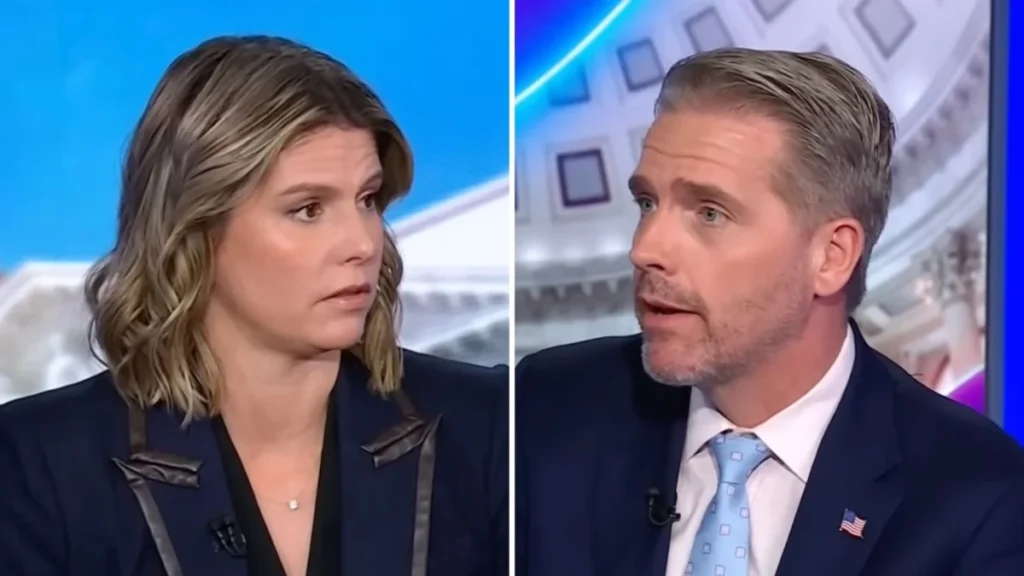

CNN commentator Scott Jennings found himself in a difficult position on Tuesday, July 7th, when pressed live on air to facilitate a direct conversation with Senator Mitch McConnell (R-KY), amid a growing cloud of uncertainty surrounding the veteran Republican leader’s health. The exchange, which occurred during Tuesday’s broadcast of The Arena, highlighted the public’s concern and the media’s drive for clarity regarding Senator McConnell’s well-being, particularly given his extended absence from public view.
Host Kasie Hunt directly questioned Jennings about a recent alleged conversation he had with the senator earlier that day. This inquiry stemmed from Senator McConnell’s conspicuous lack of public appearances in recent weeks, a situation that has fueled widespread speculation and questions about his health status. Jennings had earlier posted on X, formerly Twitter, detailing a conversation he had with the senator: "I spoke to my old friend Mitch McConnell this morning, the senior Senator from Kentucky. He’s still recovering in the hospital. We talked for just shy of 20 minutes… about IRAN, UKRAINE, the unfolding situation in MAINE, my visit to the TR Presidential Library, and even a little bit of Senate history. I told him we want to see him back at work as soon as possible."
Hunt, seizing on this information, directly asked Jennings if Senator McConnell might be willing to speak with the program. "As we wrap up here, do you think he’d be willing to call into the show? Could we get him on the phone now?" she inquired. Jennings responded with a laugh, indicating his surprise at the senator’s earlier call. "I wasn’t really expecting him to call this morning to be honest, so when the phone rang, and I was able to talk to him, I was frankly pretty grateful," Jennings stated, underscoring the unexpected nature of the conversation.
A Mentor’s Impact and Personal Concerns
Jennings, who identified himself as a supporter of the MAGA movement, then elaborated on the personal significance of Senator McConnell in his life. He recounted first meeting the senator as a teenager and expressed deep gratitude for McConnell’s role in his educational journey. "If it hadn’t been for Mitch McConnell and the McConnell Center at the University of Louisville, I would never have been able to go to college. He’s been my mentor, and he changed the trajectory of my life," Jennings shared, emphasizing the profound personal impact the senator has had.
He admitted to being "extremely worried" about McConnell’s health prior to their conversation. The senator’s voice, clear and engaged, provided Jennings with a sense of reassurance. "So when I heard his voice today, and he was clearly keeping up with stuff, that made me happy to hear from him because, like everybody else, I’ve been somewhat in the dark about it, but to hear him talking and to know that he’s also talking to the Senate leadership, it made me pretty happy," Jennings explained. This personal relief, however, did not entirely quell the broader public demand for more information.
The Transparency Debate
When directly asked by Hunt if McConnell’s team needed to be more transparent about his status, potentially by releasing photographs, Jennings pushed back against the idea, citing privacy concerns. "If I were laying in a hospital bed, would I want a bunch of people around photographing me? Probably not," Jennings stated. He further elaborated, "Particularly if I were an 84-year-old person who’s normally private about his health."
Acknowledging the validity of public concern, Jennings conceded, "I accept the criticism. I think it’s a fair question about transparency. I think it’s a fair question about whether they’ve done enough. But ultimately, these office holders, you know, they’re in charge of their own operations." This sentiment suggests a belief in the senator’s autonomy regarding the disclosure of his medical information.
As the segment concluded, Hunt reiterated the open invitation for the senator to call in: "Well, let him know, our phone lines are open here at The Arena should he wish to call in."
Later, Jennings appeared on Laura Coates Live, where he reiterated the details of his conversation with Senator McConnell. "I can just tell you that I saw some people postulating that he was deceased or not capable of having a conversation, and that certainly wasn’t my experience," he stated, directly addressing and refuting some of the more extreme rumors circulating about the senator’s condition.
Context of Senator McConnell’s Absence
Senator Mitch McConnell, a towering figure in Republican politics for decades and the longest-serving Senate party leader in history, has been notably absent from public view following a fall in March 2023. This incident led to a hospitalization and a period of rehabilitation, during which he experienced a concussion and a rib fracture. While he returned to the Senate in April 2023, his public appearances and public speaking engagements became less frequent.
More recently, in July 2024, Senator McConnell again experienced a public health scare. During a press conference in Covington, Kentucky, on July 26, 2024, he appeared to freeze for an extended period, requiring assistance from colleagues and drawing significant media attention and renewed concerns about his health. This event further intensified the public’s desire for updates on his condition, especially as he is a key figure in the Senate’s legislative agenda and upcoming elections.
The senator’s office has generally maintained that he is capable of performing his duties, while also acknowledging his need for recovery and rest. However, the lack of frequent, direct public engagement has created a vacuum that has been filled by speculation, particularly in the hyper-partisan environment of Washington D.C.
Broader Implications for Senate Leadership and Public Trust
The situation surrounding Senator McConnell’s health has broader implications for the functioning of the Senate and public trust in elected officials. As a senior leader, his ability to participate fully in legislative debates, strategy sessions, and public outreach is crucial. Any perceived or actual impairment can affect the Republican party’s ability to advance its agenda and communicate its message effectively.
The debate over transparency in the case of elected officials’ health is a recurring one. While individuals have a right to privacy, especially regarding medical matters, there is also a public interest in understanding the capacity of those who hold positions of power. The demands for greater transparency, whether through public statements, photos, or direct interviews, reflect a desire for reassurance and accountability.
Scott Jennings’ personal testimony, while offering a glimpse of reassurance for those close to the senator, also highlights the inherent tension between personal privacy and public expectation. The media’s role in seeking clarification on behalf of the public is a critical function, even when it places commentators in uncomfortable positions. The ongoing situation with Senator McConnell underscores the delicate balance that must be struck in reporting on the health of public figures.
The duration of Senator McConnell’s recovery and his eventual return to a more visible public role will undoubtedly continue to be a subject of intense interest and reporting. The events of July 7th serve as a snapshot of the current media environment, where the absence of information can be as newsworthy as the information itself, and where personal connections are often leveraged in the quest for answers. The public’s attention remains fixed on the senior senator from Kentucky, awaiting further clarity on his health and his capacity to continue his distinguished career in the United States Senate.