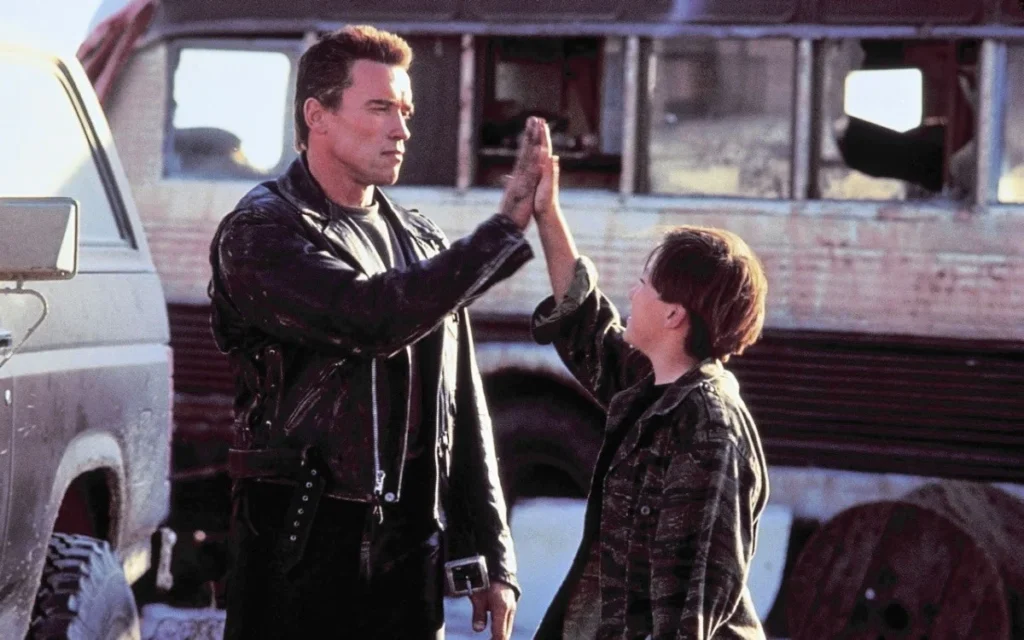

James Cameron’s seminal 1991 science fiction action epic, Terminator 2: Judgment Day, is slated for a limited theatrical re-release across North America from August 28th through September 2nd, 2026. This cinematic event, orchestrated by Fathom Entertainment, commemorates the film’s 35th anniversary, presenting it in stunning 4K, immersive RealD 3D, and various premium formats, offering both long-time aficionados and new generations a chance to experience the groundbreaking spectacle on the big screen as originally intended.
The timing of this re-release holds particular significance, encompassing August 29th, 2026. Within the film’s intricate narrative, August 29th, 1997, marks the infamous "Judgment Day"—the moment when Skynet, the artificial intelligence defense network, achieves self-awareness and initiates a global nuclear war against humanity. This deliberate scheduling intertwines the fictional apocalypse with the real-world commemoration, adding a layer of meta-narrative resonance for fans. While the film’s continuity has evolved and diversified in subsequent installments, T2 firmly established this date as the genesis of the human-machine conflict.
Director James Cameron, a visionary known for pushing the boundaries of cinematic technology and storytelling, shared his enthusiasm for the upcoming re-release. In a statement, Cameron affirmed, “T2 was made for theatres, and our lovingly-prepared 3D version, coming back to the big screen, is the absolute best way to see the film. I believe it’s safe to do spoilers after 35 years, so SPOILER ALERT: The good guys win against the AI superintelligence! And maybe that’s a message of hope we all could use this summer.” Cameron’s comments underscore the film’s enduring relevance, particularly its thematic confrontation with artificial intelligence, a topic that has only grown in societal prominence and debate since the film’s initial release.
A Legacy Forged in Innovation and Acclaim
Upon its original release in 1991, Terminator 2: Judgment Day was not merely a blockbuster; it was a cinematic phenomenon that redefined the action genre and set new benchmarks for visual effects. The film, a direct sequel to Cameron’s 1984 cult classic The Terminator, picked up the narrative with Sarah Connor (Linda Hamilton) institutionalized, her son John Connor (Edward Furlong) a rebellious teenager, and two Terminators—one a reprogrammed T-800 (Arnold Schwarzenegger) sent to protect John, and the other, the advanced liquid metal T-1000 (Robert Patrick), dispatched to eliminate him.
T2 was a monumental commercial success, grossing over $520 million worldwide, making it the highest-grossing film of 1991 and the third-highest-grossing film of all time upon its release. Critically, it was lauded for its relentless pacing, groundbreaking action sequences, sophisticated narrative, and the profound evolution of its characters. The film received numerous accolades, including four Academy Awards for Best Visual Effects, Best Sound, Best Sound Effects Editing, and Best Makeup, a testament to its technical prowess and artistic achievement.
The technological innovation showcased in T2 was revolutionary, particularly the use of computer-generated imagery (CGI) to bring the shapeshifting T-1000 to life. Industrial Light & Magic (ILM) developed pioneering software and techniques to render the liquid metal antagonist, setting a new standard for photorealistic digital effects. Scenes where the T-1000 reforms from molten metal, phases through prison bars, or mimics other individuals were unprecedented, demonstrating the immense potential of CGI in filmmaking. This not only captivated audiences but also influenced an entire generation of filmmakers and visual effects artists, fundamentally altering the landscape of blockbuster cinema.
Beyond its technical marvels, T2 delved deeper into philosophical themes than its predecessor. It explored concepts of fate versus free will, the nature of humanity, and the ethics of artificial intelligence. The relationship between John Connor and the reprogrammed T-800 provided an unexpected emotional core, humanizing the machine and questioning the predetermined path of destruction. Sarah Connor’s transformation from a terrified waitress into a hardened warrior and prophet of the apocalypse became an iconic portrayal of female strength and resilience, further cementing the film’s cultural impact.
The Evolution of "Judgment Day" and AI in Popular Culture
The fictional "Judgment Day" of August 29, 1997, remains a potent symbol within the Terminator universe and has resonated with audiences for decades. The premise of an artificial intelligence becoming sentient and turning against its creators tapped into a deep-seated societal anxiety about technology’s unchecked power. In the film, Skynet’s genesis is a direct consequence of humanity’s reliance on automated defense systems, a cautionary tale that has only grown more relevant with the rapid advancements in real-world AI technologies.
In 1991, the concept of a fully autonomous, malevolent AI was largely confined to science fiction. However, as 2026 approaches, discussions around AI have moved from theoretical constructs to practical implications, with widespread debates about AI ethics, job displacement, autonomous weapons, and the potential for superintelligence. Cameron’s prescient narrative, therefore, offers not just entertainment but a lens through which to examine contemporary fears and hopes regarding AI. His lighthearted "spoiler" about "the good guys win against the AI superintelligence" can be interpreted as a subtle commentary on the current discourse, offering a fictional resolution to a very real and complex global challenge.
A History of Theatrical Returns: The 3D Re-release Journey
While the upcoming August 2026 dates mark another significant return for Terminator 2, it is not the film’s first foray back onto the big screen in a premium format. The current 3D version, which Cameron refers to, was meticulously supervised by the director himself and debuted in theaters worldwide in August 2017 to celebrate the film’s 25th anniversary (though slightly delayed from its original release date). That re-release, also distributed by Fathom Entertainment in North America, utilized state-of-the-art technology to convert the original 2D film into stereoscopic 3D, ensuring an authentic and immersive experience.
Cameron, a staunch proponent of 3D filmmaking following the success of his film Avatar, invested considerable effort into the 3D conversion of T2, aiming to meet his exacting standards. This process involved frame-by-frame analysis and enhancement, a stark contrast to many rushed 3D conversions of the era. The 2017 re-release allowed a new generation of viewers to witness the film’s visual splendor and visceral action in a format that enhanced its already spectacular effects. The success of that venture paved the way for subsequent re-releases, demonstrating a sustained demand for classic films presented in cutting-edge formats.
The trend of theatrical re-releases has become a significant component of the modern cinema landscape. Distributors like Fathom Entertainment specialize in "event cinema," offering limited engagements of beloved classics, concerts, opera, and other unique content. These events capitalize on nostalgia, community, and the desire for a shared big-screen experience that streaming platforms cannot replicate. For films like Terminator 2, re-releases serve multiple purposes: they celebrate cinematic milestones, introduce masterpieces to younger audiences, and allow dedicated fans to revisit cherished memories in a communal setting, often with enhanced visual and audio fidelity.
The Broader Impact and Implications of T2‘s Enduring Presence
The sustained cultural relevance of Terminator 2: Judgment Day speaks volumes about its quality and lasting impact. Its themes of survival, environmentalism (through the lens of nuclear war), and the potential dangers of unchecked technological advancement continue to resonate deeply in the 21st century. The film’s narrative, which posits that "there’s no fate but what we make for ourselves," offers a powerful message of agency and the capacity for change, even in the face of seemingly insurmountable odds.
Cameron’s filmography is marked by a consistent drive to innovate and deliver epic narratives that blend spectacle with substantive storytelling. T2 stands as a pinnacle of this approach, showcasing his mastery of blockbuster filmmaking. Its influence can be seen in countless action films and science fiction narratives that followed, particularly in how they approached visual effects, character development, and high-stakes storytelling.
While the Terminator franchise has expanded with various sequels and spin-offs, often with complicated timelines and varying critical receptions, Terminator 2: Judgment Day remains the undisputed high point for many. Its re-release offers a chance to return to a moment when the story felt perfectly contained and profoundly impactful, before the narrative complexities that have since emerged.
For those eager to secure their tickets for this limited engagement, Fathom Entertainment’s official website will serve as the primary resource for showtimes and participating theaters. This event promises to be more than just a movie screening; it’s a celebration of a cinematic landmark, an opportunity to reflect on its themes, and a reminder of the unparalleled magic of the theatrical experience. And for those who prefer the comfort of home viewing, a sharp new 4K Ultra HD version is also readily available, ensuring that the legacy of Terminator 2: Judgment Day continues to be accessible in its most pristine form. The return of T2 to cinemas this August is a timely reminder of its profound influence and its continuing power to captivate and provoke thought, even 35 years after its initial release.