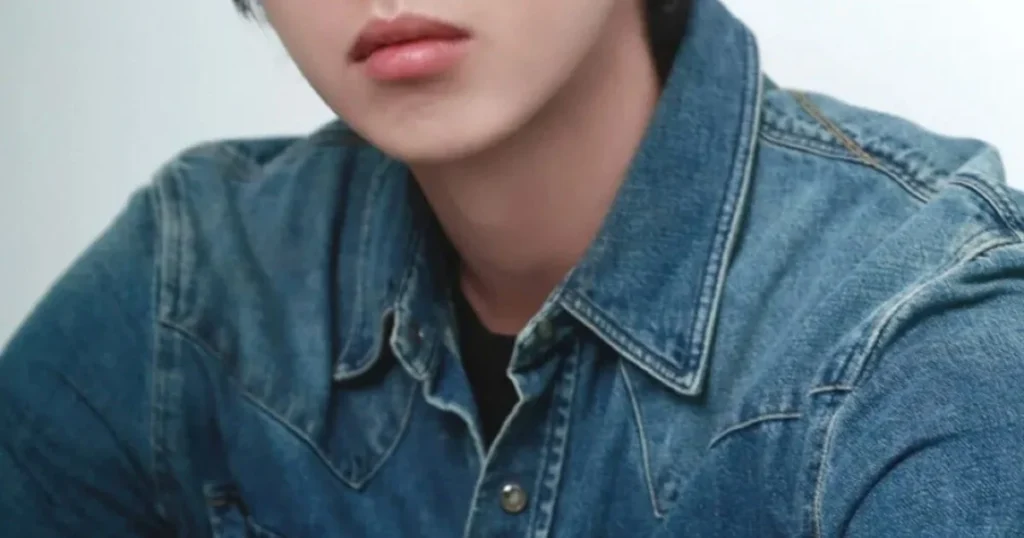

South Korean actor Mo Geon Hu has officially addressed a growing wave of public criticism following a controversial interaction on social media involving a video centered on the victims of North Korea’s "pleasure squad." The incident, which began to circulate widely across various online communities and social media platforms, centered on a "like" attributed to the actor’s official account on a comment that appeared to express envy toward the North Korean political elite. As the backlash intensified, Mo issued a detailed clarification and apology on July 3, attributing the incident to a mechanical error rather than a reflection of his personal political or social views.
The controversy is particularly sensitive given the harrowing nature of the subject matter. The video in question featured testimonies from defectors who had been forced into the Kippumjo, or "pleasure squad," a group of women and girls allegedly maintained by the North Korean leadership for entertainment and service. In the specific video, titled "When you join North Korea’s pleasure squad, they really strip you, down to your underwear," a victim shared her traumatic experiences, describing the psychological manipulation and "brainwashing" used to coerce young women into compliance. The victim recounted how she was led to believe that refusal to undress or follow orders would result in severe harm to herself or her family, a realization she now views with profound shame and regret.
The Genesis of the Controversy
The public outcry was triggered when eagle-eyed netizens noticed that Mo Geon Hu’s account had "liked" a specific user comment under the aforementioned video. The comment in question stated, "I really envy the North Korean elite." In the context of a video detailing the systemic sexual exploitation and human rights abuses perpetrated by that very elite, the "like" was interpreted by many as being tone-deaf at best and ideologically problematic at worst.
In South Korea, where the geopolitical relationship with the North remains a matter of intense national security and social sensitivity, any perceived endorsement of the North Korean regime or its lifestyle is met with severe scrutiny. The Kippumjo, specifically, is viewed by international human rights organizations as a symbol of the regime’s disregard for human dignity. For a public figure to seemingly engage positively with a comment envying the perpetrators of such a system, the backlash was immediate and substantial.
Chronology of Events and the Actor’s Response
The timeline of the incident suggests a rapid escalation from social media discovery to a formal public statement. On July 3, after the "like" had been screenshotted and shared across major South Korean web portals and entertainment forums, Mo Geon Hu took to his personal social media account to issue a formal statement.
Mo’s apology began with a direct acknowledgment of the distress caused to his followers and the general public. "I sincerely apologize for causing concern to many people due to my social media activity," he stated. He then moved to explain the technical nature of the incident, characterizing the "like" as a "mechanical mistake" rather than an intentional act of endorsement. According to his statement, he had been browsing through comments when he accidentally tapped the "like" button—a common occurrence on mobile interfaces where scrolling and interacting are controlled by similar gestures.
Mo further explained that his delayed reaction to the controversy was due to a demanding work schedule and other personal matters, which prevented him from monitoring the immediate fallout. He clarified that as soon as he became aware of the situation, he revoked the "like" and took steps to moderate the comment section to prevent further misunderstanding.
"Regardless of the reason, I deeply regret causing a major misunderstanding and discomfort and disappointment to many due to my lack of careful social media management," Mo said, bowing his head in a traditional gesture of remorse. He emphasized that the "malicious interpretations" spreading online did not reflect his "usual values or thoughts," and concluded by promising to be a more "careful and responsible person" in the future.
Background: The Kippumjo and the Gravity of the Subject
To understand the intensity of the public reaction, it is necessary to examine the context of the "pleasure squad" or Kippumjo. Historical reports and testimonies from high-ranking defectors and former members suggest that the Kippumjo was established in the late 1970s by Kim Il-sung and expanded significantly under Kim Jong-il. The group is reportedly divided into three branches: the Manjokjo (providing sexual services), the Haengbokjo (providing massages), and the Gamyonjo (providing entertainment such as singing and dancing).
Recruitment for these squads is said to involve rigorous physical examinations of young girls, often while they are still in school. Those selected are subjected to intense isolation and training. Human rights organizations, including Human Rights Watch and various United Nations commissions, have frequently cited these practices as evidence of state-sanctioned sexual violence and human rights violations.
The video Mo Geon Hu interacted with was part of a broader effort by defectors to bring international attention to these abuses. For the South Korean public, the testimony of a woman describing the shame of being "brainwashed" to undress is a matter of profound tragedy. Consequently, any interaction that could be interpreted as trivializing this trauma or envying the lifestyle of those who facilitate it is viewed with extreme prejudice.
Supporting Data: Celebrity Social Media and Public Perception
This incident highlights the precarious nature of social media for public figures in South Korea. According to a 2023 survey on celebrity influence and social responsibility conducted by a Seoul-based media research institute, approximately 72% of respondents believe that celebrities have a "high level of social responsibility" regarding their online interactions. Furthermore, "accidental likes" or "mechanical mistakes" are frequently cited by agencies as the cause of social media scandals, yet public skepticism remains high.
In recent years, several high-profile Korean actors and idols have faced "cancel culture" or temporary career hiatuses following controversial social media interactions. The speed at which information travels—often through "cyber-wreckers" (YouTubers who profit from celebrity scandals)—means that a single accidental tap can become a national headline within hours. For Mo Geon Hu, a rising star in the industry, the stakes are particularly high as he navigates the balance between personal online presence and public image management.
Official Responses and Industry Implications
While Mo Geon Hu’s management agency has not released a separate, more formal corporate statement beyond the actor’s personal post, industry insiders suggest that such incidents often lead to stricter social media protocols for talent. It is common for agencies to implement "social media training" or even take over the management of an actor’s accounts during periods of high-profile project releases to mitigate risks.
The implications for Mo’s career remain to be seen. In the South Korean entertainment industry, the "sincerity" of an apology is often measured by the actor’s subsequent actions and the duration of their "reflection period." By immediately clarifying his stance and distancing himself from the sentiment of the comment, Mo has attempted to perform damage control before the incident could impact potential casting calls or endorsement deals.
Broader Impact and Sociopolitical Analysis
The Mo Geon Hu controversy serves as a microcosm of the broader tensions inherent in the South Korean digital landscape. The sensitivity toward North Korean issues is not merely a matter of political preference but is rooted in the National Security Act and the collective national memory of the Korean War and subsequent decades of division.
Moreover, the incident underscores the "dark side" of the digital age for public figures: the loss of the benefit of the doubt. In a climate where every "like," "follow," and "comment" is tracked by automated tools and vigilant fans, the margin for error is non-existent. The "mechanical mistake" defense, while technically plausible given the UI design of modern apps, is often met with cynicism by a public that demands perfection from its cultural icons.
As the situation settles, the focus will likely shift to how Mo Geon Hu conducts himself in future public engagements. His promise to be more "careful and responsible" reflects a growing awareness among Korean celebrities that the digital world is an extension of their professional life, where a single second of inattention can have years of consequences.
Conclusion
The controversy surrounding Mo Geon Hu’s interaction with the "pleasure squad" video serves as a stark reminder of the complexities of celebrity in the age of social media and the deep-seated historical traumas that continue to shape South Korean public discourse. While the actor has moved quickly to rectify the error and express his remorse, the incident highlights the ongoing need for sensitivity and awareness when engaging with content related to human rights and national history. For now, Mo Geon Hu remains under the watchful eye of a public that values social consciousness as much as artistic talent.