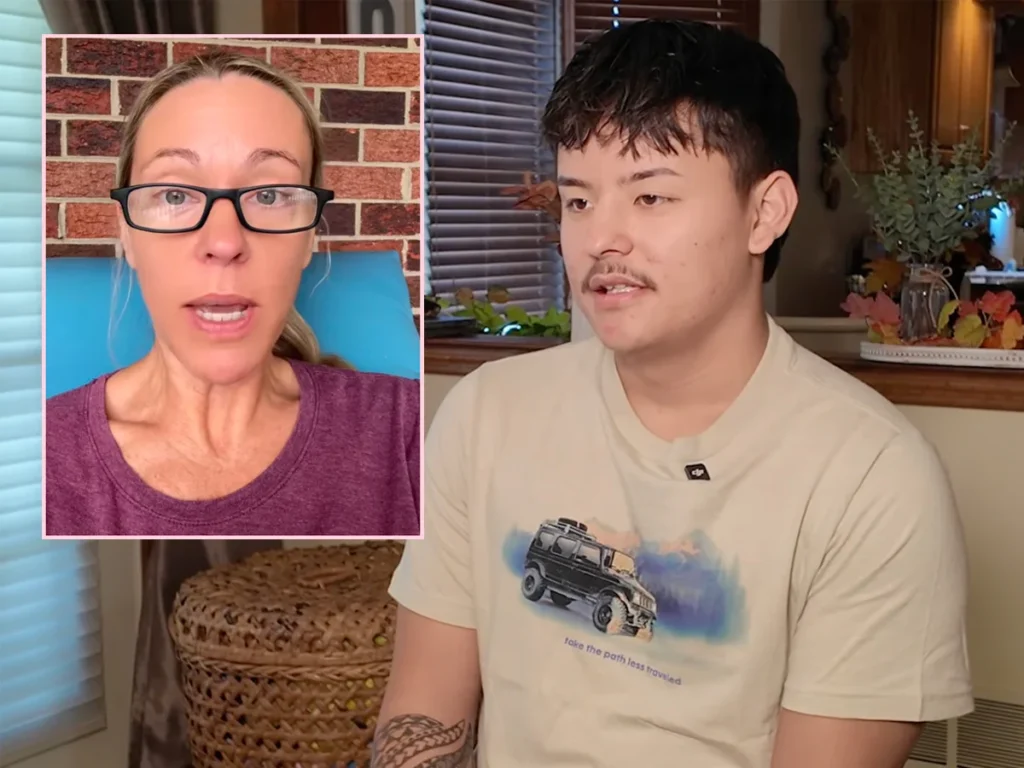

Collin Gosselin, one of the sextuplets from the former reality television series Jon & Kate Plus 8, has offered a new perspective on the circumstances surrounding his placement in a behavioral institution by his mother, Kate Gosselin, in 2016. At only 12 years old, Collin was sent away, a decision that has been a central point of contention and public discussion regarding the highly publicized Gosselin family. His latest theory, revealed in a September 2025 interview with The Us Sun and published in full this week, suggests his mother’s motivation may have stemmed from his growing reluctance to participate in their family’s reality television show, Kate Plus 8. This revelation adds another layer to the complex narrative of the Gosselin family, which has been under intense media scrutiny for over a decade.
Background of the Gosselin Family and Reality Television Fame
The Gosselin family first rose to prominence in 2007 with the premiere of Jon & Kate Plus 8 on TLC. The show chronicled the lives of Jon and Kate Gosselin as they navigated raising their twin daughters, Cara and Madelyn, and their sextuplets—Collin, Alexis, Aaden, Leah, Joel, and Hannah. The premise of managing a household with eight young children captivated audiences, making the family household names. The series quickly became a ratings success, offering an intimate, albeit curated, glimpse into their daily challenges and triumphs.
However, the immense public spotlight also brought significant personal strain. By 2009, Jon and Kate Gosselin announced their separation and subsequent divorce, a development that played out prominently in the media and on their show. Following the divorce, Kate Gosselin was granted primary custody of all eight children. The series continued under the new title Kate Plus 8, focusing on Kate’s life as a single mother raising her large family. This period marked a significant shift in the family dynamic, particularly for the children, who continued to grow up in front of television cameras without the presence of both parents on screen.
The Institutionalization of Collin Gosselin
In 2016, a pivotal and controversial event occurred when Kate Gosselin sent Collin, then 12 years old, to a behavioral institution. At the time, Kate publicly stated that Collin had "special needs" and exhibited "unpredictable and violent behavior" towards family members, necessitating a specialized environment for his care and for the safety of his siblings. These claims were met with a mix of public sympathy and skepticism, given the family’s history of public exposure.
Collin remained in the facility for two years. His father, Jon Gosselin, eventually intervened, leading to Collin’s release from the institution and Jon gaining custody of him in 2018. Jon also gained custody of Hannah, another of the sextuplets, around the same time. The experiences of Collin during his time away from home and the reasons behind Kate’s decision have since been a recurring subject of public and private dispute within the family.
Collin’s Evolving Theories on His Mother’s Motivations
Prior to his latest interview, Collin Gosselin had already publicly offered a stark explanation for his institutionalization. He previously alleged that his mother sent him away to conceal what he described as "her alleged abuse," claiming he "was starting to tell people what was going on at home." This serious accusation highlighted the depth of the familial discord and painted a troubling picture of his childhood experiences.
His recent interview with The Us Sun introduces an additional, though not necessarily contradictory, theory. Collin posits that his mother’s decision to send him away was significantly influenced by his burgeoning desire to step out of the public eye and cease participation in Kate Plus 8. He recounts a period of growing autonomy and skepticism, even at a young age. "Even as a 12-year-old, before I was sent away, I could start to consider both sides of things. I really could look at things in retrospect, and I was stubborn enough to question my mom," Collin stated. This questioning, he explained, evolved into a direct refusal to be filmed. "I questioned her about everything, and that came before the rebellion of me not wanting to be on camera and be a part of her circus. That questioning led to me later not wanting to be on camera, and that really killed her."
This new theory casts a different light on the motivations, suggesting a potential clash between a child’s burgeoning independence and a parent’s commitment to a lucrative television career that relied on the participation of all family members.
The Role of Reputation and Work Permits in Collin’s Theory
Collin’s reflections extend beyond his personal reluctance to be filmed, delving into the potential strategic considerations his mother might have weighed. He pondered whether Kate’s actions were an attempt to protect her public image or to simplify the logistical and legal aspects of maintaining the show’s production. "I don’t know what reason it was, whether it was her reputation she was saving by sending me away from home, or whether it was the fact that maybe it’s easier to sign a work permit for seven children that are voluntary, instead of seven children that are voluntary and one that’s involuntary," he speculated.
This particular insight from Collin touches upon the complex legal framework surrounding child labor in the entertainment industry. Minors participating in television shows, films, or other media productions typically require work permits, and their participation is often contingent on parental consent and adherence to strict regulations designed to protect children’s welfare, education, and working hours. A child’s explicit unwillingness to participate could complicate the process of obtaining or maintaining such permits, potentially affecting the viability of a show centered around a large family. While this remains Collin’s theory, it highlights the often-overlooked business side of reality television that can intersect with personal family dynamics. The implication is that a non-compliant child could disrupt the commercial enterprise, presenting a motive for removal from the production environment.
Collin’s Account of His Time in the Institution
The interview also offered a poignant and distressing account of Collin’s two years within the behavioral institution. He described a profound sense of isolation and blame. "My mother only visited him one time for probably about 20 minutes," he recounted, highlighting a perceived lack of parental support during a vulnerable period. He further stated that "the whole time I was blamed," indicating that the narrative presented to him focused solely on his perceived shortcomings rather than exploring any external factors or family dynamics.
Collin’s physical and emotional state during his institutionalization was also detailed. "It was about a year of me being there, and the whole time I had these glasses on and tears coming down my face," he shared, painting a picture of deep sadness and distress. He also revealed that he became "overweight" and "sick" due to being "on all these medications" at the time. This detail raises concerns about the nature of the treatment he received and the potential side effects of psychotropic medications on a developing child. Adding to the emotional distress, Collin claimed that during her brief visit, Kate told him "that I broke her family, that my siblings want nothing to do with me, all that stuff," a statement that, if true, would be profoundly damaging to a child already in a vulnerable state.
Kate Gosselin’s Stance and the Impending Memoir
Kate Gosselin has consistently denied any allegations of abuse and has maintained that her decisions regarding Collin were made in his best interest and for the well-being of the entire family. While Kate has not directly responded to Collin’s latest interview at the time of this report, the original article notes that she "isn’t entirely receptive to a talk with Collin right now." This suggests a continued estrangement and a lack of open communication between mother and son.
Furthermore, the tension is reportedly heightened by Collin’s plans to release an upcoming memoir. The original report indicates that Kate is "preparing for battle" and focused on "protecting her reputation" in anticipation of her son’s tell-all book, which is expected to "expose all her alleged dirty laundry." Such a public unveiling of personal family details is likely to intensify the already fractious relationship and reignite public interest in the family’s long-standing disputes. The memoir could serve as a comprehensive platform for Collin to articulate his experiences and perspectives, potentially offering an even more detailed account than his interviews.
Broader Implications for Child Stars and Reality Television
The ongoing saga of Collin and Kate Gosselin resonates with broader discussions about the ethics of child participation in reality television and the long-term psychological impacts on young stars. Children on reality shows are often thrust into an adult world of production schedules, public scrutiny, and edited narratives, with little agency over their own image or experiences. Concerns frequently arise regarding potential exploitation, the blurring of lines between authentic family life and manufactured drama, and the profound challenges children face in developing a normal sense of self when their lives are perpetually documented and broadcast.
The Gosselin family’s story, in particular, has become a cautionary tale for some, illustrating the potential pitfalls when personal lives become public entertainment. The legal and emotional complexities of parental custody, particularly when intertwined with media careers, raise questions about safeguarding children’s welfare in an environment driven by ratings and commercial interests. Collin’s claims, whether related to alleged abuse, a desire for privacy, or the logistical challenges of filming, underscore the vulnerability of children in such unique circumstances and the lasting repercussions of decisions made by adults in their lives.
Conclusion
Collin Gosselin’s recent statements add critical dimensions to the public understanding of his difficult childhood and his years-long estrangement from his mother, Kate Gosselin. His theories—ranging from alleged abuse to his unwillingness to be filmed—paint a picture of a child struggling for agency within a highly public and often tumultuous family environment. As Collin prepares to release his memoir, the ongoing narrative of the Gosselin family continues to evolve, prompting further reflection on the ethical considerations of reality television, the complexities of family dynamics under extreme public pressure, and the paramount importance of child welfare. The public will undoubtedly watch closely as these deeply personal revelations continue to unfold, highlighting the profound and lasting impact of such experiences on those who grow up in the unforgiving glare of the media spotlight.
If you have sincere cause to suspect child abuse, call the Childhelp National Child Abuse Hotline at 1-800-4-A-Child or 1-800-422-4453, or go to www.childhelp.org.