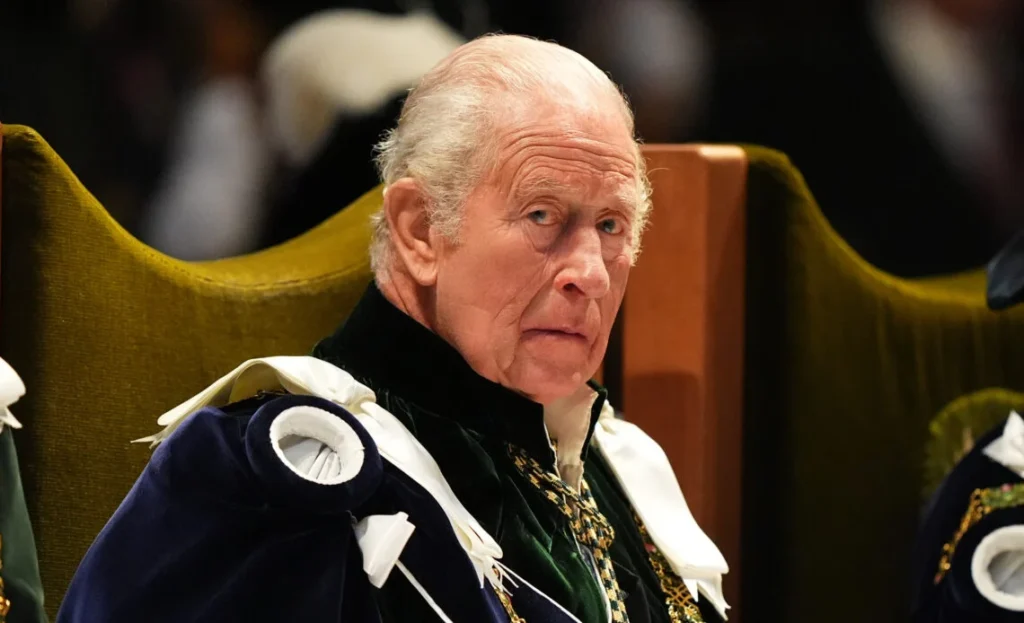

Edinburgh, Scotland – King Charles III and his elder son, Prince William, Prince of Wales, stood at the forefront of Scotland’s most esteemed chivalric order this week, gracing the annual Order of the Thistle service at St Giles’ Cathedral. This significant event, a cornerstone of Royal Week in Scotland, saw the King, as Sovereign of the Order, joined by Queen Camilla and the Duke of Edinburgh in a magnificent display of tradition and royal pageantry through the historic streets of the Scottish capital.
The Order of the Thistle, Scotland’s highest honour, is a testament to centuries of tradition and national pride. The annual service, a highlight of the royal calendar, brings together the distinguished members of this ancient fraternity, celebrating Scotland’s heritage and recognizing exceptional service to the nation. This year’s ceremony underscored the continuity of royal leadership within the Order, with King Charles, who ascended to the throne in September 2022, now fulfilling his role as its supreme head.
Prince William, invested as a Royal Knight of the Order in 2012 by his grandmother, Queen Elizabeth II, assumed his rightful place among his fellow knights. His presence signifies the enduring legacy and the next generation of the monarchy’s commitment to Scotland’s highest order of chivalry. He also holds significant Scottish titles, being the Duke of Rothesay, a title automatically conferred upon the heir to the Scottish throne, and was created Prince of Wales, the traditional title for the heir apparent, by his father just 24 hours into his reign.
A Spectacle of Royal Pageantry and Tradition
The procession, a visual spectacle for the assembled crowds and those watching globally, saw senior royals, adorned in the distinctive ceremonial dress of the Order, move through the heart of Edinburgh. This regalia is as striking as the history it represents. Members don a deep green velvet mantle, lined with silk and fastened with green and gold cords, emblazoned with the silver star of the Order on the left shoulder. Complementing this is a dramatic black velvet hat, often adorned with sweeping white ostrich feathers, a symbol of prestige and distinction. The elaborate gold collar, intricately decorated with thistles, the national emblem of Scotland, from which hangs the badge of St Andrew, the nation’s patron saint, completes the ensemble. This ceremonial attire is reserved for the Order’s most significant occasions, making the annual service a particularly resplendent event.
King Charles, in his capacity as Sovereign, led the procession, embodying the ultimate authority of the Order. Queen Camilla, who was installed as a Royal Lady of the Thistle in 2024, and Prince Edward, the Duke of Edinburgh, also a distinguished member, walked alongside fellow Knights and Ladies. The presence of these senior royals highlights the ongoing significance and vibrancy of the Order. Notably, the Princess Royal, a member since 2000, also holds a senior position within the Order, further demonstrating the deep familial ties to this prestigious institution.
The Ancient Order of the Thistle: History and Significance
The Order of the Thistle’s origins are steeped in legend, with tales tracing its foundation back to the 9th century. However, its modern incarnation was formally revived by King James VII of Scotland (James II of England) in 1687. It stands as Scotland’s highest order of chivalry and is the second most senior order of knighthood in the United Kingdom, following the Order of the Garter.
Membership is deliberately exclusive, limited to the Sovereign, 16 Knights and Ladies, and a small number of Royal Knights and Ladies. A key distinction of the Order of the Thistle, setting it apart from many other honours, is that appointments are made personally by the monarch, rather than on ministerial advice. This ensures that recipients are recognized for outstanding and exceptional service specifically to Scotland. The rigorous selection process underscores the Order’s role in honouring those who have made a profound contribution to Scottish life, culture, and public service.
The annual service has been held at St Giles’ Cathedral since the completion of the Thistle Chapel in 1911, a dedicated space designed to house the Order’s regalia and provide a fitting venue for its ceremonies. Members typically process from the nearby Signet Library, a historic institution itself, before gathering within the hallowed walls of the cathedral for a service of worship and commemoration. This tradition reinforces the deep historical and cultural connections between the Order, the Church of Scotland, and the nation’s capital.
Royal Week: A Celebration of Scotland
The Order of the Thistle service is a central event within Royal Week, an annual period where members of the Royal Family undertake a series of engagements across Scotland. Officially known as Holyrood Week, it is a crucial fixture in the royal calendar, dedicated to celebrating Scottish communities, its rich culture, and the contributions of individuals through public service. Throughout the week, engagements typically span a diverse range of activities, from official ceremonies and charity events to visits to local institutions and community groups.
The presence of the Royal Family in Scotland during this period serves to strengthen their connection with the nation and its people. It provides a platform to highlight important issues, support charitable causes, and acknowledge the achievements of Scots from all walks of life. This year’s Royal Week, commencing with the Order of the Thistle service, promises a packed schedule of engagements designed to engage with various facets of Scottish society.
Broader Royal Engagements and Their Significance
The Royal Family’s commitment to Scotland extends beyond the formal ceremonies. This year’s Royal Week has already seen significant activity from other senior royals. The Princess of Wales, for instance, recently completed the challenging National Three Peaks Challenge, a feat undertaken in aid of the Royal Marsden Cancer Charity. Her journey began with scaling Ben Nevis in Scotland, followed by Scafell Pike in England, and concluding with Yr Wyddfa (Snowdon) in Wales. This remarkable physical achievement not only raised vital funds for a specialist cancer hospital where she herself received treatment but also kept Scotland firmly on the royal agenda even before the official commencement of Royal Week.
The Princess of Wales’s participation in such demanding challenges, especially in Scotland, underscores a growing trend of direct engagement with charitable causes and physical endeavors that resonate with national identity and resilience. Her efforts highlight the personal connection the Royal Family seeks to foster with the causes they champion and the landscapes they visit. While she was not among those attending the Thistle service, her recent high-profile challenge demonstrates the breadth and depth of the Royal Family’s ongoing commitment to Scotland and its people.
The Heir Apparent’s Role and Future Implications
Prince William’s position as a Knight of the Thistle is particularly noteworthy. As the heir to the throne, his early and consistent involvement in Scotland’s most prestigious order signals a deep and enduring commitment to the nation. His titles – Duke of Rothesay and Prince of Wales – intrinsically link him to Scotland’s historical and constitutional framework. His presence at the Order of the Thistle service is not merely symbolic; it represents a tangible demonstration of his dedication to upholding Scottish traditions and fostering his relationship with the Scottish people.
The Order of the Thistle, with its emphasis on personal recognition of service, offers a unique insight into the monarch’s perception of contributions to Scotland. The inclusion of both King Charles and Prince William, along with Queen Camilla and other senior royals, underscores the Order’s evolving nature while simultaneously reinforcing its historical roots. The continuity provided by these senior royals ensures that the traditions and significance of the Order of the Thistle will be passed down through generations, maintaining its esteemed position in Scotland’s national life.
The annual service is more than just a ceremonial event; it is a powerful affirmation of Scotland’s place within the United Kingdom and the enduring bonds that connect the Crown to the nation. As King Charles continues to lead the nation and Prince William increasingly takes on more prominent roles, their participation in events like the Order of the Thistle service solidifies their commitment to Scotland and its unique heritage, ensuring that this ancient order of chivalry remains a vibrant and respected institution for years to come. The continued engagement of the Royal Family during Royal Week serves to reinforce these ties, fostering a sense of shared history and future aspirations between the monarchy and the people of Scotland.