
The landscape of Maine’s hospitality sector is undergoing a significant transformation as travelers increasingly pivot from traditional inns toward highly curated short-term rental properties. While Maine has long been defined by its historic coastal hotels and rustic sporting camps, a new wave of design-forward Airbnbs—ranging from 18th-century farmhouses to repurposed industrial stations—is redefining the "Pine Tree State" experience. This shift comes at a time when Maine’s tourism industry is seeing record-breaking engagement; according to the Maine Office of Tourism, the state welcomed over 15 million visitors in 2023, contributing an estimated $9 billion to the local economy. As remote work persists and travelers seek "slow travel" experiences, the demand for well-appointed, amenity-rich homes has surged, particularly in regions stretching from the Midcoast to the quiet interior rivers.
The Economic and Cultural Shift in Maine Tourism
The rise of the high-end short-term rental market in Maine is not merely a trend in lodging but a reflection of broader demographic shifts. Data from the Maine Office of Tourism indicates a growing preference for "authentic" and "secluded" stays that allow for longer durations. The average length of stay for non-resident visitors has seen a marginal but consistent increase, driven by the "work-from-anywhere" cohort. This has led to a diversification of the rental market. While the coastal "Gold Coast" areas like Kennebunkport and Bar Harbor remain perennial favorites, inland cabins and remote island estates are seeing unprecedented booking rates.
Property owners are responding by investing in high-design renovations that blend historical preservation with modern luxury. This intersection of architecture and hospitality is particularly evident in the selection of properties that prioritize aesthetic integrity, such as those featuring mid-century modern interiors or preserved 19th-century structural elements.
Historical Grandeur: The North Haven Farmhouse Legacy
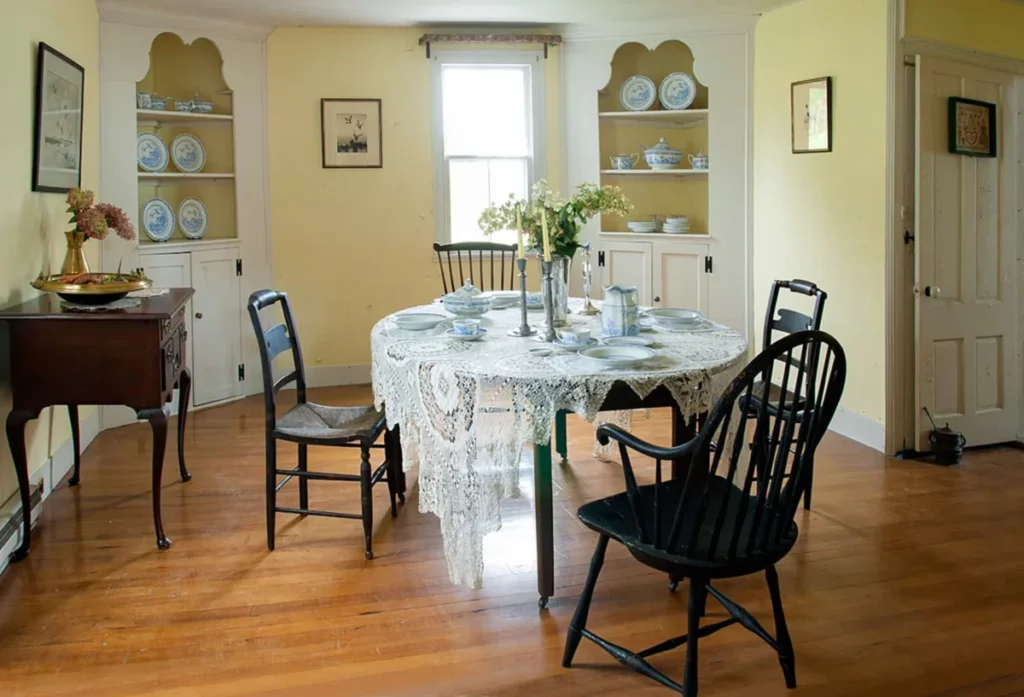
One of the most significant examples of Maine’s high-end rental market is the Historic North Haven Farmhouse. Situated on 18 private acres on North Haven island, this 1795 estate represents the pinnacle of coastal heritage. Historically, the property was owned by Frank Benson, a prominent American Realist artist and a member of "The Ten," a group of painters who resigned from the Society of American Artists in 1897. Benson’s work often captured the luminous quality of the Maine coast, and the farmhouse continues to serve as a testament to the region’s artistic inspiration.
The property, which accommodates up to ten guests across seven bedrooms, serves a specific niche in the market: multigenerational travel and large-group retreats. Beyond its historical pedigree, the estate offers a comprehensive suite of amenities, including a clay tennis court, a 200-year-old barn, and private pier access. In a move that highlights the "experiential" nature of modern rentals, guests can rent a 24-foot boat for $1,200 per week to navigate Penobscot Bay. This reflects a broader trend in the luxury rental market where "add-on" experiences—such as private charters or guided nature tours—are becoming standard expectations for high-net-worth travelers.
Architectural Evolution: From Picket Hill to Minimalist Retreats
The evolution of Maine’s rural architecture is further exemplified by properties like Picket Hill Farm. Built in 1835, this farmhouse illustrates the "connected farmstead" style typical of New England, though it has been adapted for the 21st century. While it preserves the exposed beams and spindle beds of the 19th century, it integrates modern climate control and high-speed connectivity. This property targets the "solitude seeker," offering a single-bedroom configuration on a sprawling landscape with views of Pleasant Mountain.
Parallel to the preservation of farmhouses is the repurposing of industrial and utility structures. A notable entry in the minimalist segment is a former hydro station on the banks of the Sandy River. This studio space caters to a demographic influenced by the minimalist movement, specifically the aesthetic principles of Donald Judd. By focusing on light, tranquility, and "thoughtful minimalism," this property attracts artistic professionals and those looking to "unplug." It marks a departure from the traditional "shingle-style" Maine cottage, offering a stark, modern alternative that emphasizes the natural environment through large apertures and spare furnishings.
The Wellness and Glamping Frontier
The "wellness tourism" sector is another major driver for Maine’s Airbnb market. The Contemporary Cabin in the Pines, located near Reid State Park, serves as a primary example of "luxe-glamping." The property features a cedar sauna and an outdoor shower, tapping into the growing consumer demand for spa-like amenities in natural settings.
Design choices in these modern cabins often reflect a global influence, blending local white pine floors with international design icons like Eames chairs and Noguchi lighting. This "global-local" design language appeals to a cosmopolitan traveler who seeks the ruggedness of the Maine wilderness without sacrificing the comforts of high-end urban living. The proximity to Reid State Park—one of the few locations in Maine with expansive sandy beaches and heavy surf—adds a strategic location value that commands premium nightly rates.
Coastal Hubs and the "Cottagecore" Phenomenon
The town of Boothbay Harbor remains a central pillar of Maine’s coastal tourism. The "Storybook Cottage" in this region leverages the "Cottagecore" aesthetic—a social and design movement that romanticizes rural life. This property balances antique charm, such as wrought-iron beds and retro appliances, with the practicalities of modern travel.
Boothbay Harbor’s economic model relies heavily on its walkability and its status as a hub for marine excursions. The presence of high-quality rentals in the town center supports local commerce, including lobster shacks, boutique retail, and specialized tours like whale-watching and puffin-sighting trips. Industry analysts suggest that properties within walking distance of "authentic" maritime activities see a 20% higher occupancy rate than those requiring significant driving.
Family-Centric Infrastructure and Strategic Locations
In Cushing, Maine, the focus shifts toward family-friendly infrastructure. The Cushing Cabin property is designed with a specific chronology of family life in mind, featuring separate levels for parents and children, a crib-equipped nursery, and recreational facilities like ping-pong tables and indoor swings.
The location of Cushing is strategically advantageous, situated within a short driving radius of Boothbay, Pemaquid, and Friendship. This allows travelers to use the property as a "base camp" for exploring the Midcoast region. The inclusion of a cedar hot tub and a wood stove allows guests to engage in "Maineness"—a term used by sociologists to describe the performance of local cultural rituals, such as wood-burning and stargazing, by visitors.
Chronology of a Maine Summer Stay
For the typical traveler, a week-long stay in a Maine Airbnb follows a predictable but highly valued chronology:
- Arrival and Provisions: Travelers often stop in hubs like Portland or Rockland to stock up on local produce and seafood.
- The "Deep Chill": The first 48 hours are typically spent on the property, utilizing amenities like saunas or fire pits.
- Exploration: Days three through five usually involve day trips to state parks (Acadia, Reid) or coastal towns for lobster-based dining.
- Maritime Engagement: Boat rentals or ferry trips (essential for island properties like those on North Haven) occupy the latter half of the trip.
Regulatory and Environmental Implications
As the number of high-end Airbnbs in Maine grows, so does the regulatory scrutiny. Several Maine municipalities, including Portland and Bar Harbor, have introduced ordinances to limit the number of short-term rentals in an effort to preserve housing stock for year-round residents.
Furthermore, the environmental impact of increased tourism in sensitive coastal areas is a point of ongoing discussion. Property owners are increasingly adopting "green" technologies, such as solar power and high-efficiency heat pumps, to align with Maine’s state-wide climate goals. The "Climate Friendly Maine" initiative has encouraged many hosts to provide EV charging stations, a feature that is becoming a filter-priority for travelers arriving from Boston, New York, and Montreal.
Broader Impact and Future Outlook
The diversification of Maine’s Airbnb offerings is a strong indicator of the state’s resilient tourism economy. By providing a range of options—from the $300-per-night inland farmhouse to the $1,400-per-night island estate—Maine is successfully capturing multiple segments of the travel market.
Looking forward to the 2025 season, experts predict a continued emphasis on "amenity-savvy" stays. As the market becomes more saturated, the properties that will thrive are those that offer more than just a bed; they must offer a narrative. Whether it is the historical link to a Realist painter or the architectural novelty of a hydro station, the future of Maine’s hospitality lies in its ability to tell a story of the landscape.
In conclusion, Maine’s premier Airbnbs represent a sophisticated blend of history, design, and nature. They offer a window into the "Pine Tree State" that is both deeply rooted in the past and meticulously adapted for the modern traveler. As the state continues to navigate the balance between tourism growth and community preservation, these high-end rentals will remain a vital component of Maine’s economic and cultural identity.