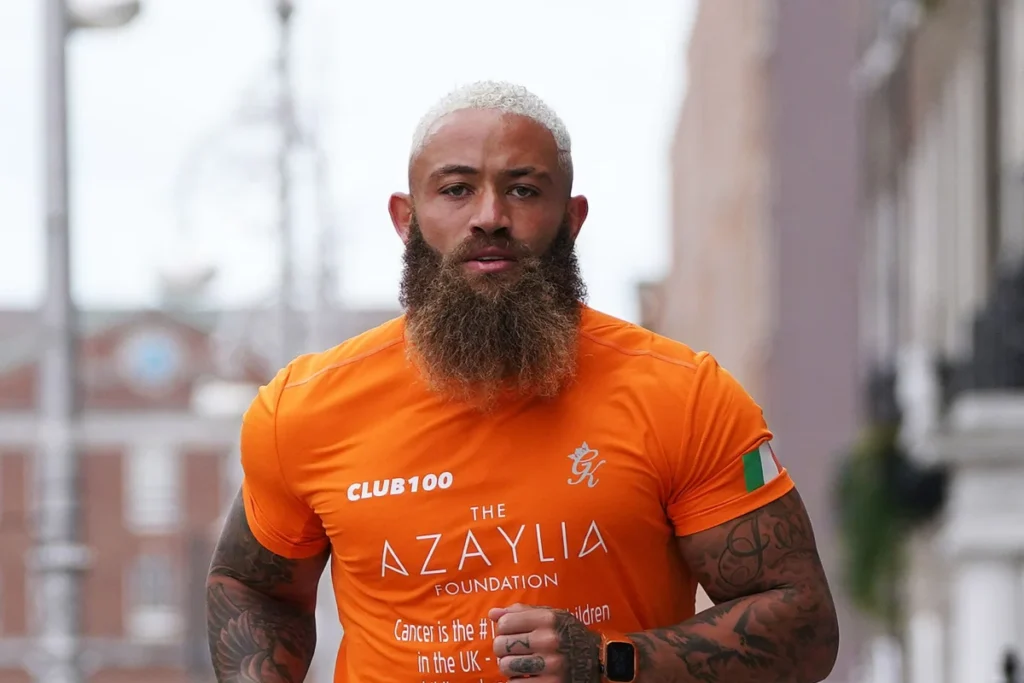

Former footballer and reality television personality Ashley Cain has publicly expressed profound regret and shame over a series of historical social media posts containing sexist and misogynistic language. The admission comes after allegations surfaced last week, prompting the British Broadcasting Corporation (BBC) to announce it has no plans to broadcast the second series of his documentary, "Ashley Cain: Into The Danger Zone," and has ceased all future projects with the presenter. Cain’s statement, released across multiple pages on his Instagram account, marks his first public address since the controversy erupted, acknowledging the offensive nature of the language used and attributing it to a younger, less mature version of himself.
Background: Ashley Cain’s Journey from Sport to Stardom and Philanthropy
Ashley Cain, 35, first rose to public prominence through his career as a professional footballer, notably playing for Coventry City. His athletic aspirations were, however, curtailed by injury, leading him to transition into the world of reality television. He gained significant recognition appearing on popular shows such as MTV’s "Ex On The Beach" and Channel 4’s "Celebrity SAS: Who Dares Wins," which further cemented his status as a public figure. Beyond his entertainment career, Cain has become widely known for his poignant personal story and subsequent philanthropic efforts. In April 2021, his infant daughter, Azaylia Diamond Cain, tragically passed away at just eight months old following a battle with a rare and aggressive form of leukaemia. This devastating loss profoundly impacted Cain, leading him and his former partner, Safiyya Vorajee, to establish The Azaylia Foundation, a charity dedicated to fighting childhood cancer and supporting families. His dedication to this cause has garnered widespread public sympathy and admiration, reshaping his public image from a reality TV personality to a grieving father and advocate for a critical cause. This narrative of personal tragedy and subsequent humanitarian work has been central to his recent public persona, making the resurfacing of his past remarks particularly jarring against his current image.
The Allegations: Unearthing Problematic Online Content
The controversy began when The Guardian newspaper published an investigation last week, detailing historical social media posts made by Cain. The report highlighted numerous instances where Cain allegedly used abusive and sexualised terms, including "slags," "sluts," and "psychos." Furthermore, the investigation claimed that some of these tweets, reportedly seen by The Guardian, included jokes about hitting women. These posts, dating back over a decade, were made on his X account (formerly Twitter), which appears to have since been removed from the platform. The nature of the language used directly contradicts the values of respect and empathy that are often associated with his more recent public advocacy and the themes of personal growth and responsibility that his BBC documentary sought to explore. The uncovering of such content for public figures is not an isolated incident; in an increasingly digital world, historical online footprints are often subject to intense scrutiny, with past comments frequently brought to light, regardless of the time elapsed or the individual’s subsequent personal evolution.
BBC’s Swift Response and Acknowledged Vetting Failures
In the immediate aftermath of The Guardian’s revelations, the BBC acted decisively. The broadcaster issued a statement confirming that the comments made by Cain were "completely unacceptable." Crucially, the BBC also admitted to a significant failure in its internal processes, stating that social media vetting systems, which should have been in place to review talent before commissioning projects, "clearly failed." This admission highlights a broader challenge faced by media organisations in the age of pervasive social media: the difficulty of thoroughly vetting individuals whose online presence spans many years and multiple platforms.
The decision to halt the second series of "Ashley Cain: Into The Danger Zone" and to confirm "no future projects" with him sends a strong message about the BBC’s commitment to upholding certain ethical standards, particularly when dealing with content creators whose past actions contradict the themes or values of their programming. The first series of the documentary saw Cain exploring issues affecting young men born into a life of criminality, focusing on difficult conversations around societal pressures, choices, and consequences. The irony of the host of such a series having a documented history of problematic language was not lost on critics, making the BBC’s decision an almost inevitable step to protect its reputation and the integrity of its content.

Ashley Cain’s Instagram Statement: An Attempt at Accountability and Redemption
Days after the BBC’s announcement, Ashley Cain broke his silence with a detailed, multi-page statement posted on his Instagram account. In his carefully worded apology, Cain directly addressed the allegations, stating: "You may have seen a recent article concerning language I used many years ago that I am not proud of. I don’t deny it. I don’t excuse it. And I certainly don’t condone it." This opening immediately established a tone of direct acknowledgment, seeking to avoid evasion or minimisation of his past actions.
He further contextualised the remarks, explaining, "The truth is that these comments were made over a decade ago by a younger version of myself who still had a lot of growing up to do." This narrative of personal evolution is a common defence for public figures confronted with past mistakes, framing the individual as having matured beyond their earlier self. Cain emphasised his belief in accountability, stating, "I cannot change the past and truthfully I have never tried to hide from it. I have always believed that accountability matters. We should all take responsibility for our actions, good or bad."
Cain delved into the personal struggles he faced at the time the posts were made, explaining that he was "very lost" and "frustrated" after a career-ending injury dashed his dream of becoming a professional footballer. He admitted to a lack of "maturity, perspective and understanding," stating, "Like many young men, I had lessons to learn, and life made sure I learned them." This personal narrative seeks to provide a humanising context for his past behaviour, suggesting that emotional distress and immaturity contributed to his use of inappropriate language.
Crucially, Cain invoked his profound personal tragedy as a turning point in his life. "Over the last decade, life has taught me lessons that no amount of fame, success or public opinion ever could. I became a father. I experienced a love so powerful that it changed every part of me. Then I experienced a pain so devastating that it nearly destroyed me," he wrote. He explicitly linked his daughter Azaylia’s passing to his transformation: "Losing my daughter changed me forever. Since then, I have dedicated my life to trying to honour my daughter’s legacy and help others wherever I can." This part of his statement is pivotal, aiming to leverage the public’s established empathy for his grief and charitable work to underscore the sincerity of his change.
He concluded his apology by reiterating his commitment to ongoing personal growth: "I cannot change what I said over a decade ago. What I can do is take responsibility for it. What I can do is continue striving every day to be a good father, a good human and a positive force in the lives of others." This forward-looking commitment seeks to assure the public that his transformation is not merely a reaction to the current controversy but an ongoing process rooted in his life experiences.
Chronology of Key Events
- Over a Decade Ago: Ashley Cain makes the social media posts containing sexist and misogynistic language, including terms like "slags," "sluts," "psychos," and jokes about hitting women.
- April 2021: Ashley Cain’s eight-month-old daughter, Azaylia, tragically dies of leukaemia, a pivotal event Cain cites as a catalyst for profound personal change.
- Last Week (prior to Cain’s statement): The Guardian publishes an investigation revealing Cain’s historical social media posts.
- Days After Guardian Report: The BBC releases an official statement declaring the posts "completely unacceptable," admitting a failure in their social media vetting systems, and announcing the cessation of the second series of "Ashley Cain: Into The Danger Zone" and all future projects with Cain.
- Following BBC Statement: Ashley Cain posts a multi-page statement on his Instagram account, acknowledging, apologising for, and contextualising his past remarks, while emphasising his personal growth and dedication to his daughter’s legacy.
- Present: Cain’s X account appears to have been removed from the platform.
Broader Implications: Public Figures, Digital Footprints, and Media Accountability
This incident underscores several critical issues in contemporary media and public life. Firstly, it highlights the indelible nature of digital footprints. In an era where social media posts can persist for years, public figures are increasingly vulnerable to "social media archaeology," where past comments are unearthed and scrutinised in light of current public standards and personal branding. This phenomenon has impacted numerous careers across various fields, from entertainment and sports to politics and corporate leadership. The public expectation for consistent moral conduct, or at least a demonstrable evolution away from past transgressions, is higher than ever.

Secondly, the BBC’s admission of a "failed" vetting system raises significant questions about due diligence within major media organisations. For a public broadcaster commissioning a documentary series focused on sensitive social issues like criminality and male identity, a thorough background check on the presenter, especially regarding their public online history, is paramount. This incident will likely prompt a re-evaluation of vetting protocols across the industry, potentially leading to more stringent checks on talent, particularly those with extensive online histories or backgrounds in reality television, where past controversial behaviour might have been part of their on-screen persona.
The controversy also reignites discussions about the complexities of "cancel culture" versus accountability. While some might view the BBC’s actions as an example of "cancelling," others argue it is a necessary consequence of holding public figures accountable for language that perpetuates harmful stereotypes and misogyny. Cain’s apology, which leans heavily on a narrative of personal growth and redemption through suffering, attempts to navigate this complex terrain. The effectiveness of such apologies often depends on their perceived sincerity, the length of time over which change has been demonstrated, and the public’s willingness to believe in an individual’s capacity for transformation.
The Narrative of Growth and Public Perception
Ashley Cain’s statement attempts to craft a narrative of profound personal growth, propelled by the most devastating loss a parent can experience. He paints a picture of a young man who was "lost" and "frustrated," lacking maturity, who then underwent a fundamental transformation through fatherhood and unimaginable grief. This narrative is powerful and resonates with many who have followed his journey since Azaylia’s diagnosis. However, the efficacy of this narrative in fully rehabilitating his public image and career remains to be seen.
The challenge for Cain, and for any public figure in a similar situation, is to demonstrate that the change is authentic and enduring, not merely a reactive measure to current criticism. His commitment to charity and his public grieving process have undeniably garnered widespread support and established him as a figure associated with resilience and compassion. The tension now lies in reconciling this admired public persona with the unearthed historical comments. The public’s capacity for forgiveness is often tied to the perceived sincerity of an apology and the tangible evidence of sustained behavioural change.
Conclusion: Accountability in the Digital Age
The Ashley Cain controversy serves as a poignant reminder of the enduring nature of digital content and the increasing demands for accountability placed upon public figures. It underscores the critical importance of self-reflection and responsible online conduct, even for past remarks. For media organisations, it highlights the necessity of robust vetting processes to ensure that their talent aligns with the values they wish to promote. While Cain has expressed remorse and articulated a journey of personal growth, the decision by the BBC reflects a wider societal intolerance for language that promotes sexism and misogyny, irrespective of when it was uttered. As public discourse continues to evolve, the standards for conduct for those in the public eye will likely only become more stringent, demanding a continuous commitment to ethical behaviour and genuine personal development. The incident stands as a significant case study in the ongoing conversation about redemption, accountability, and the indelible mark of one’s digital past.