
The Genesis of the Employment Controversy
The discourse surrounding Myung Jaehyun’s past began after several media appearances and fan interactions where the idol candidly shared stories of his life before becoming a trainee. Jaehyun, who debuted as the leader of BOYNEXTDOOR in May 2023, has been frequently praised for his "all-rounder" capabilities, including songwriting, producing, and performing. To humanize his journey, he often mentioned that he worked a diverse array of part-time jobs to fund his musical ambitions.
According to Jaehyun, his resume included stints as a construction site laborer, a parking attendant, a wedding hall assistant, and a clerk at various convenience stores, cafes, and restaurants. However, the point of contention for many netizens was his mention of working in the coal industry. In South Korea, coal mining is a heavily regulated and increasingly rare profession, leading some observers to question whether a young man in his late teens or early twenties could have legally or physically performed such labor.
Critics pointed to South Korea’s Labor Standards Act, which strictly prohibits minors from engaging in "harmful or dangerous occupations," including underground mining. Furthermore, rumors circulated that because many coal mines in South Korea have been shuttered or are located in remote regions far from Seoul, Jaehyun’s claims were either exaggerated or involved illegal labor practices.
Detailed Clarification of the "Coal Mine" Allegations
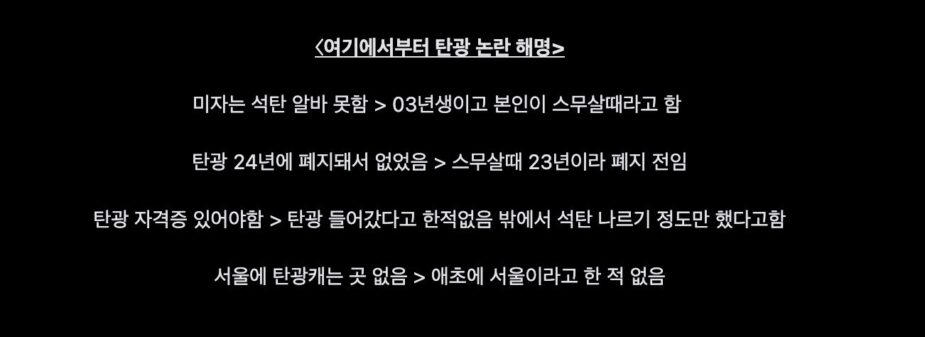
As the speculation intensified, Myung Jaehyun took to communication platforms to provide a nuanced explanation of his work. He clarified that the nature of his work had been misunderstood by the public. He emphasized that he never claimed to be an underground miner, a role that requires specific licensing, rigorous safety training, and adherence to strict age requirements.
"No matter what radio station I go to these days, there is only talk about my part-time jobs," Jaehyun remarked, addressing the situation with a mix of sincerity and lightheartedness. "Like I’ve said before, I’ve never gone inside a coal mine. I only moved the coal."
This distinction is crucial from a legal and operational standpoint. In South Korea, the distribution of coal briquettes (yeontan) remains a common practice, especially during the winter months in older neighborhoods. This type of labor—loading, transporting, and delivering coal from outside storage areas to residential or commercial delivery points—is categorized as general manual labor or logistics rather than "mining." By clarifying that his work was limited to the physical transport of coal on the surface, Jaehyun effectively dismantled the argument that he had violated labor laws pertaining to hazardous underground environments.
Chronology of Events and Age Verification
To understand the validity of Jaehyun’s statements, it is necessary to examine the timeline of his pre-debut years. Myung Jaehyun was born in 2003. According to supporters and online investigators who came to his defense, the work in question likely took place around 2022 and early 2023, just before or during his transition into a full-time trainee.

- 2003: Myung Jaehyun is born.
- 2021-2022: Jaehyun reaches the legal age of majority in South Korea (19 years old). At this stage, he is legally permitted to engage in most forms of manual labor, provided they do not fall under specific restricted categories for youth under 18.
- 2023 (Early): Jaehyun mentions working various jobs to save money for music equipment, including high-intensity manual labor which pays a higher hourly wage than standard service-sector jobs.
- May 2023: BOYNEXTDOOR debuts under KOZ Entertainment with the single album WHO!.
- June 2024: Snippets of Jaehyun’s past interviews resurface, leading to a viral debate regarding the legality of his "coal mine" job.
- June 18, 2024: Jaehyun issues a direct clarification via social media and during a radio appearance, explaining the surface-level nature of the coal work.
The defense presented by fans and the artist himself notes that while coal mines have been declining in number—with many scheduled for total closure by 2024 and 2025—several were still operational in provinces like Gangwon during the time Jaehyun would have been seeking work. Furthermore, the delivery of coal for heating remains a seasonal reality in parts of the country, providing short-term, high-intensity employment opportunities for young men looking to earn quick capital.
Financial Background and the "Self-Made" Narrative
A secondary layer of the controversy involved Jaehyun’s socio-economic background. Some netizens questioned why a trainee who had previously studied abroad in the United States and described his family as relatively well-off would need to work at construction sites or move coal. This led to accusations that the idol was "fetishizing" poverty or creating a "struggle narrative" to gain sympathy from the public.
However, Jaehyun and his supporters clarified that his decision to work was driven by a desire for independence rather than absolute necessity. He explained that while his parents supported his basic needs, they were not in a position—or perhaps chose not to—finance expensive professional music production equipment, which can cost thousands of dollars.
"He never pretended to be poor," wrote one user on a popular community board. "He actually mentioned that he was quite well-off before… He wanted to buy equipment to make music, but his parents could not help him financially at the time, so he opted to work short, but hard, well-paying jobs to focus on his music."

In the K-pop industry, the "producer-idol" image is highly coveted. Idols like BTS’s Suga and Stray Kids’ Bang Chan have similarly shared stories of working part-time jobs or facing financial hurdles while pursuing their craft. For Jaehyun, the narrative is less about "rags-to-riches" and more about the "work ethic of a creator." By taking high-intensity jobs like coal moving and construction, he was able to earn the necessary funds in a shorter timeframe than working at a convenience store, allowing him more time to dedicate to his musical training.
Industry Implications and the Scrutiny of Idols
The intense scrutiny of Myung Jaehyun’s employment history reflects a broader trend in the South Korean entertainment industry, where the "past life" of an idol is subject to rigorous fact-checking by the public. In an era of digital transparency, even minor anecdotes shared on variety shows can be cross-referenced with labor laws, geographical data, and historical records.
For HYBE and its subsidiaries, managing the public image of their artists involves navigating these "micro-controversies" before they escalate into full-blown scandals. The speed with which Jaehyun addressed the rumors is indicative of a modern PR strategy that favors direct communication over corporate silence. By injecting humor into his response—joking that companies should contact him for part-time job advertisements—Jaehyun managed to de-escalate the tension and reframe the story as one of diligence and personality.
Industry analysts suggest that this level of scrutiny is a double-edged sword. While it holds public figures accountable, it also places an immense burden on young artists to remember every detail of their lives with legal precision. In Jaehyun’s case, the "controversy" appears to have ultimately bolstered his reputation among fans, who view his willingness to perform grueling manual labor as a testament to his character and dedication to his art.
Conclusion and Future Outlook
The clarification provided by Myung Jaehyun effectively resolves the questions regarding the legality of his pre-debut work. By specifying that his role involved the logistics of coal transport rather than underground mining, he aligned his history with both the legal framework of South Korea and the geographical realities of the industry.
As BOYNEXTDOOR continues to grow in popularity, Jaehyun’s transparency regarding his journey—from a student in the U.S. to a manual laborer to the leader of a HYBE group—serves as a multi-faceted narrative that resonates with a generation that values both hard work and authenticity. The "coal controversy" will likely be remembered not as a legal failing, but as a moment where a young artist stood his ground against online speculation, reinforcing the "boy next door" image that his group is named after: relatable, hardworking, and honest.
Moving forward, the group is expected to continue their promotional activities for their latest releases, with Jaehyun’s role as a producer and lyricist remaining central to their identity. The resolution of this issue allows the focus to shift back to the music, while also setting a precedent for how idols can handle social media-driven inquiries with clarity and poise.