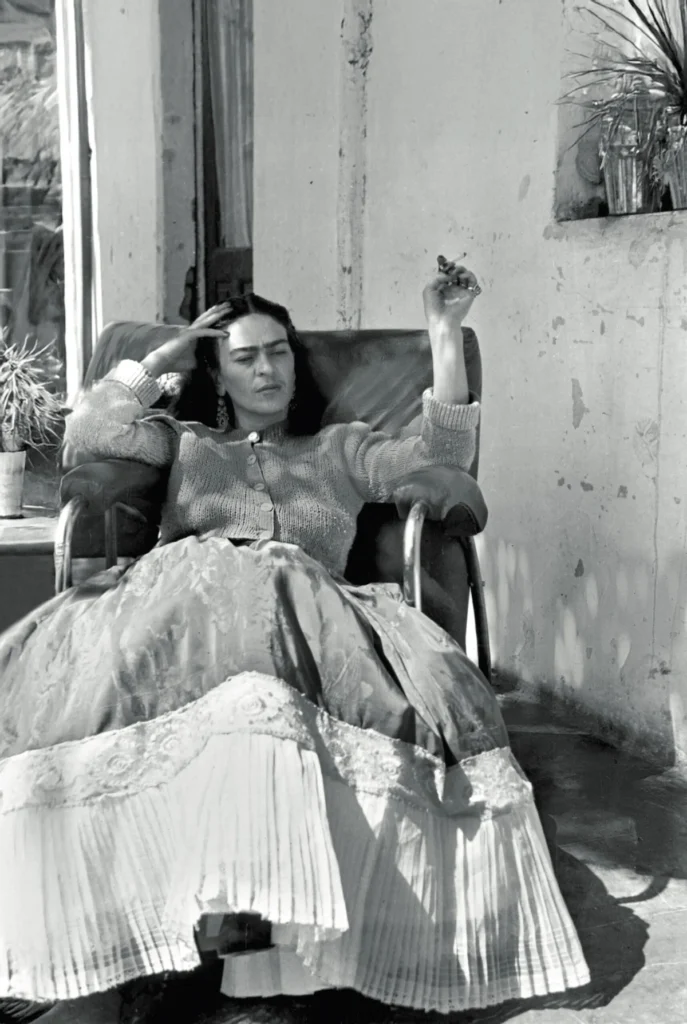

The enduring legacy of Frida Kahlo has, over the decades, undergone a process of profound mythologization that has often flattened the complexities of the woman behind the art. While her visage has become a global commodity—emblazoned on everything from high-fashion runways to mass-produced stationery—the commercial phenomenon known as "Fridamania" has frequently decontextualized the artist from her lived human experience. A significant new publication from Rizzoli, authored by the artist’s direct descendants, seeks to rectify this narrative imbalance. Titled Casa Kahlo: Frida Kahlo’s Sanctuary, the book serves as a companion to the namesake museum that opened in Mexico City in 2023, offering an unprecedented and intimate window into the painter’s domestic life, her familial bonds, and the private sanctuaries that shaped her creative output.

For years, the public’s primary physical connection to Kahlo was "Casa Azul" (The Blue House), her birthplace and the home she eventually shared with her husband, the muralist Diego Rivera. While Casa Azul was converted into a museum shortly after her death in 1954, its neighbor, Casa Kahlo, remained a private residence for her descendants until only three years ago. The transition of this property into a public space led to the discovery of a wealth of personal ephemera, ranging from lipstick-sealed letters to family recipes and previously unseen photographs. These artifacts provide a necessary counterpoint to the traditional narrative of Kahlo as a figure defined solely by tragedy, revealing instead a woman who found profound joy in her family, her pets, and the vibrant culture of her native Coyoacán.
The Architectural Foundations of a Legacy
The story of Frida Kahlo’s domestic life begins in 1904, when her father, Guillermo Kahlo, a German-Hungarian immigrant and professional photographer, built Casa Azul. Situated on a 0.2-acre plot in the then-quiet suburb of Coyoacán, the house was designed to accommodate Guillermo, his wife Matilde Calderón, and their growing family. Frida was born there on July 6, 1907, and the residence would remain the emotional and physical anchor of her life.

However, the recently spotlighted Casa Kahlo—located just blocks away—represents a different facet of the family’s history. Purchased by Frida’s mother in 1930, the house was renovated using funds sent by Frida while she was living in San Francisco with Diego Rivera. This property served as a refuge for Frida’s sisters and eventually her nieces and nephews. Unlike the curated museum environment of Casa Azul, Casa Kahlo functioned as a living, breathing family home for nearly a century. Mara Romeo Kahlo, Frida’s grandniece and a co-author of the new Rizzoli book, resided in the home until 2023. The preservation of this space allows for a more granular look at Kahlo’s role as a daughter, sister, and aunt—identities that are often overshadowed by her status as a revolutionary artist.
A Chronology of Resilience and Artistic Evolution
To understand the significance of these domestic spaces, one must view them through the timeline of Kahlo’s turbulent life. The domesticity of the Kahlo family was irrevocably altered on September 17, 1925, when an 18-year-old Frida was involved in a catastrophic bus accident. The collision with a streetcar left her with a broken spinal column, a broken collarbone, broken ribs, and a shattered pelvis. During her long, bedridden recovery at Casa Azul, she began to paint, using a specially made lap easel and a mirror installed in the canopy of her bed.

By 1926, as she began to regain her strength, her father captured her in photographs that show a young woman transitioning from a convalescent to a serious artist. Her entry into the Mexican Communist Party led to her meeting Diego Rivera, whom she married in 1929. The early years of their marriage were marked by travel to the United States—San Francisco, Detroit, and New York—where Rivera received major mural commissions. Despite the international exposure, Kahlo’s heart remained in Mexico. Upon their return in 1933, the couple sought a living arrangement that reflected their unconventional and often volatile relationship.
They settled into a pair of adjoining modernist houses in the San Angel neighborhood, designed by architect Juan O’Gorman. These structures, characterized by their functionalist "concrete cube" design, were connected by a bridge, symbolizing both their union and their need for individual creative space. Rivera’s house was painted red and white, while Kahlo’s was a striking blue, a nod to her childhood home. However, the pull of Coyoacán remained strong, and by 1940, following a brief divorce and remarriage, the couple moved back to Casa Azul permanently.

Beyond the "Broken Column": The Joyful Domesticity
While Kahlo’s art frequently explored themes of physical pain and psychological trauma—exemplified by her 1944 masterpiece The Broken Column—the archives of Casa Kahlo reveal a lighter side of her personality. Family members recall a woman who delighted in the company of children, particularly her niece Isolda and nephew Antonio. The new book highlights her penchant for sealing letters with lipstick kisses and her deep engagement with the culinary traditions of Mexico.
Her love for animals also transformed her homes into a literal menagerie. At various times, Casa Azul was home to spider monkeys (such as Fulang-Chang, immortalized in her 1937 self-portrait), Xoloitzcuintli dogs, parrots, deer, and even an eagle. These animals were not merely pets but served as surrogates for the children she was unable to conceive, and they became integral symbols in her complex visual vocabulary.

In 1943, when her health began to decline more rapidly, Kahlo accepted a teaching position at the arts school La Esmeralda. As she became increasingly unable to travel to the campus, she moved her classes to the patio of Casa Azul. Her students, who became known as "Los Fridos," received a unique education centered on the celebration of Mexican folk art and the observation of nature within the walls of her sanctuary. This period reinforced the home’s status as a site of both private suffering and public intellectual exchange.
Supporting Data: The Economic and Cultural Impact of "Fridamania"
The humanization of Kahlo through the Casa Kahlo book and museum comes at a time when her market value and cultural influence have reached unprecedented heights. In November 2021, Kahlo’s self-portrait Diego y yo (Diego and I) sold at Sotheby’s for $34.9 million, making her the most expensive Latin American artist in history and surpassing the record previously held by Rivera.

The tourism impact of her legacy is equally significant. Casa Azul (The Frida Kahlo Museum) is one of the most visited museums in Mexico City, attracting over 500,000 visitors annually. The opening of the Casa Kahlo museum and the publication of the Rizzoli book are expected to further drive cultural tourism to the Coyoacán district, which has long served as a hub for artists and intellectuals.
| Metric | Detail |
|---|---|
| Record Art Sale | $34.9 Million (Diego y yo, 2021) |
| Museum Attendance | >500,000 annually (Casa Azul) |
| Total Major Surgeries | 32 (various sources), 23 (family records focus) |
| Museum Expansion | Casa Kahlo opened to public in 2023 |
Official Perspectives and Broader Implications
The family’s decision to open Casa Kahlo and share their archives was motivated by a desire to reclaim the narrative. Mara Romeo Kahlo notes in the book’s introduction that while Casa Azul represented Frida the "great painter," Casa Kahlo was where "Frida the daughter, the sister, and the aunt" truly existed. "There you could find her singing while playing the guitar, or making bawdy jokes, or crying with her sisters," she writes.

Art historians and curators have largely welcomed this shift toward a more nuanced biographical approach. By focusing on her domestic life, the new museum and book challenge the "tragic heroine" trope that has dominated Kahlo scholarship for decades. Instead, they present a woman who was an active participant in her family’s life, a meticulous curator of her own environment, and a figure who found strength in the mundane rituals of home.
Conclusion: A Legacy Recontextualized
The publication of Casa Kahlo: Frida Kahlo’s Sanctuary marks a pivotal moment in the posthumous life of Mexico’s most famous artist. By moving beyond the iconic, unibrowed visage found on consumer goods and delving into the lipstick-stained letters and family recipes of her private life, the descendants of Frida Kahlo have provided a vital service to art history.

As Casa Kahlo begins its new chapter as a museum, it offers a space where the "myth" of Frida can finally meet the "human" Frida. In the final years of her life, despite undergoing more than 20 surgeries and facing the amputation of her right leg, Kahlo famously painted a still life of watermelons with the inscription "Viva la Vida" (Long Live Life). The revelations from Casa Kahlo suggest that this was not merely a defiant slogan, but a philosophy she lived daily within the walls of her beloved Coyoacán sanctuaries. The domestic artifacts she left behind serve as a testament to a life that, while punctuated by pain, was anchored in an exuberant love for family, home, and the vibrant textures of the world around her.