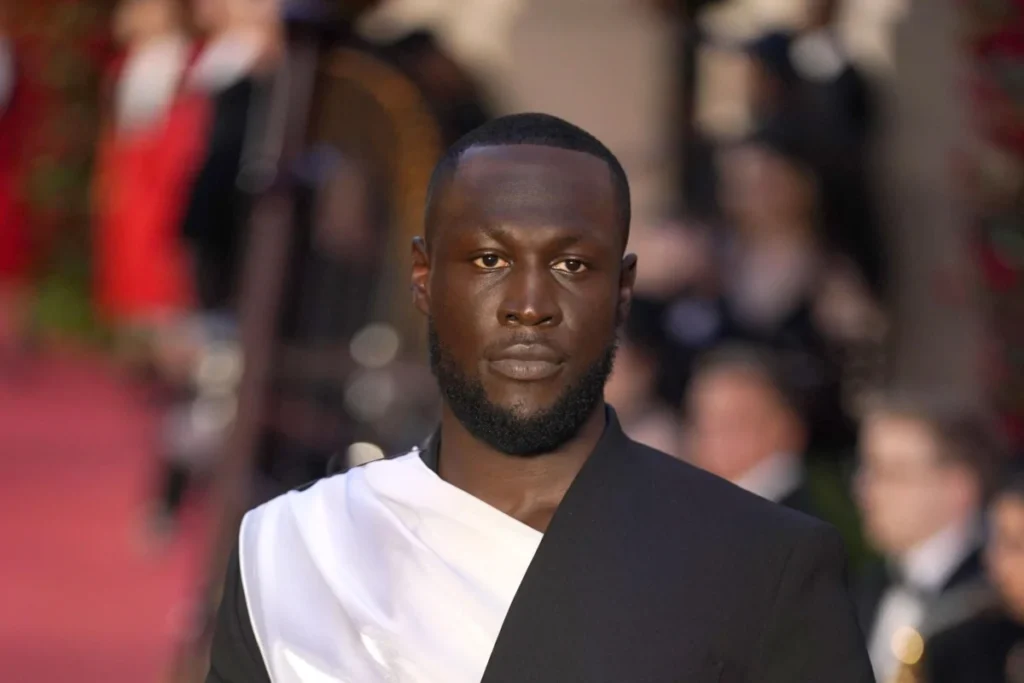

Award-winning grime artist Stormzy, whose real name is Michael Ebenazer Owuo Junior, has been ordered to pay more than £500 in fines and court costs after being caught using a mobile phone at the wheel of his £400,000 Ferrari Purosangue. The incident, which occurred last November, marks the second time the music superstar has faced legal repercussions for distracted driving, with reports indicating a significant future driving ban stemming from a separate prior offence.
The Incident: A Luxury Vehicle and a Distracted Driver
The latest offence took place on November 10, when the 32-year-old rapper was observed by a Metropolitan Police constable typing an address into his phone’s map application. The incident occurred at approximately 9:25 AM near his home in Kingston upon Thames, a borough in south-west London, while Stormzy was stationary in traffic. The vehicle in question was his black Ferrari Purosangue, a high-performance luxury SUV known for its formidable price tag and striking presence.
Pc Glen Lambert, the Metropolitan Police officer who identified the offence, provided a detailed statement regarding the encounter. He recounted how he noticed the driver of the black Ferrari appearing "distracted and no longer in proper control" of the supercar. As Pc Lambert maneuvered his vehicle to filter through traffic, passing the Ferrari on its offside, he clearly observed Stormzy actively engaging with his mobile phone. "I noticed the driver was inputting an route on his maps application on his mobile phone," Pc Lambert stated in his report. The officer’s assessment was that the standard of driving had "fallen below that of a driver in full, careful control of their vehicle" due to the observed distraction.
Upon stopping the vehicle, Pc Lambert engaged with Stormzy, who readily admitted to the offence at the roadside. The rapper confirmed that he had been setting a route on his maps application and had "only just picked up the device" as the officer passed. This candid admission at the scene likely streamlined the subsequent legal process.
Legal Proceedings and Financial Penalties
Following his admission, Stormzy formally pleaded guilty to the charge of not having proper control of his vehicle. The case was heard at Croydon Magistrates’ Court, where Magistrate Lynn Keane presided over the proceedings. On May 7, the court delivered its judgment, imposing a fine of £533 for the offence. In addition to the fine, Stormzy was ordered to pay £120 in court costs and a £213 victim surcharge, bringing the total court bill for this incident to £866. Furthermore, three penalty points were added to his driving licence, an accumulation that can significantly impact a driver’s ability to retain their licence, especially if they already have points. Stormzy was given one month from the date of his conviction to settle the total court bill.
The prosecution of Stormzy, handled under his real name Michael Ebenazer Owuo Junior, was processed via the Single Justice Procedure. This mechanism allows certain minor offences to be dealt with by a single magistrate based on written evidence, without the need for the defendant to attend court. This procedure is commonly used for traffic offences, fare evasion, and other low-level crimes, aiming to streamline the justice system and reduce the burden on courts. Stormzy’s written guilty plea included a brief statement in mitigation: "I accept I was putting a location in the map."
A Pattern of Driving Infractions: A Future Ban Looms
This latest conviction is not an isolated incident but rather the second time the prominent musician has faced legal repercussions for mobile phone use while driving. According to court papers obtained by the Press Association, Stormzy is set to face a nine-month driving ban starting in January 2025. This ban stems from an earlier incident where he was caught by an off-duty police officer using his phone while driving a Rolls-Royce in West Kensington. In that instance, he pleaded guilty and was handed a substantial court bill of £2,010. Adding to the charges from that previous encounter, Stormzy also admitted to a second offence: having overly tinted windows on his luxury vehicle, which contravenes road safety regulations regarding visibility.
The prospect of a future driving ban underscores a concerning pattern of behaviour for a high-profile individual who often serves as a role model for millions. The consecutive nature of these offences highlights the persistent challenge of distracted driving, even for those with significant public scrutiny and financial means.
Stormzy’s Public Image and Road Behaviour
Stormzy’s public persona is one of an influential artist, known not only for his groundbreaking music but also for his significant philanthropic efforts and vocal social commentary. He has become a symbol of success and aspiration for many, particularly within the UK’s youth culture. The images of him driving high-end vehicles like a Ferrari Purosangue or a Rolls-Royce are often associated with his achievements and status.

However, these driving infractions present a contrasting narrative to his otherwise carefully curated public image. The incidents raise questions about personal responsibility and adherence to laws that apply universally, regardless of celebrity status. Interestingly, a month prior to the November mobile phone incident, Stormzy experienced another minor road mishap involving the same Ferrari. He ran out of petrol on Putney High Street, an event that he publicly documented, using the unexpected stop as an opportunity for an impromptu meet-and-greet with fans, turning a minor inconvenience into a lighthearted social media moment. While not a legal offence, this incident, coupled with the phone-use convictions, adds to a narrative of occasional vehicular misadventures for the star.
The Broader Context: The Dangers of Distracted Driving in the UK
Stormzy’s case brings into sharp focus the pervasive issue of distracted driving, particularly mobile phone use, which remains a significant road safety concern across the United Kingdom. The law regarding mobile phone use while driving in the UK is stringent. It is illegal to hold a mobile phone or similar device while driving or riding a motorcycle, even if stationary in traffic. This includes using the phone for texting, making calls, accessing the internet, or using map applications. The only exceptions are in a genuine emergency (999 or 112 calls) or when safely parked. The Highway Code explicitly states that drivers must have proper control of their vehicle at all times.
Penalties for using a handheld mobile phone at the wheel are severe, typically resulting in six penalty points on the driving licence and a £200 fine. New drivers, those who passed their test in the last two years, face even harsher consequences; accumulating six or more points within this period means their licence will be revoked. For more serious offences or repeat offenders, such as Stormzy, the penalties can escalate to a driving ban and significantly higher fines.
Official data underscores the scale of the problem. According to court data referenced in Stormzy’s case, 1,195 motorists were prosecuted in the month preceding his conviction for either not having proper control of their vehicles or using a mobile phone at the wheel. These prosecutions led to fines totalling almost £180,000 and 58 driving bans, illustrating the continuous enforcement efforts by police forces across the country. Road safety organisations consistently highlight that distracted driving, including mobile phone use, is a major contributing factor to road accidents, injuries, and fatalities. Even a momentary lapse of concentration, such as glancing at a phone or typing an address, can have catastrophic consequences, significantly increasing reaction times and impairing judgment.
Expert Commentary and Road Safety Advocacy
Road safety charities and organisations frequently campaign to raise awareness about the dangers of mobile phone use behind the wheel. They would likely reiterate that while the convenience of modern technology is undeniable, it must never compromise safety. Campaigns often emphasize that there is no call, text, or notification important enough to risk one’s life or the lives of others.
The Metropolitan Police, like other forces, maintains a proactive stance on enforcing traffic laws, including those pertaining to mobile phone use. A spokesperson for the force, if commenting on such a case, would likely stress the police’s commitment to ensuring road safety and holding all drivers accountable, regardless of their public standing. The message is clear: the rules of the road apply to everyone, and violations will be met with appropriate legal action. The enforcement of these laws is not about targeting specific individuals but about protecting the public and deterring dangerous behaviour.
Implications for Public Figures and Road Safety Messaging
The conviction of a public figure like Stormzy for a common driving offence carries significant implications. Firstly, it reinforces the principle that the law is applied equally to all citizens, irrespective of their fame or wealth. This impartiality of justice is a cornerstone of the legal system and serves as an important message to the wider public.
Secondly, for Stormzy, these incidents could subtly impact his public image. While he remains a beloved and respected artist, repeated brushes with traffic laws, particularly those related to safety, might raise questions about judgment. As a role model for many young people, his actions, both positive and negative, are amplified. Such incidents provide an opportunity for public figures to use their platform to advocate for safer driving practices, transforming a personal setback into a public service message. The financial penalties and potential driving ban serve as a tangible reminder of the severe consequences that even seemingly minor distractions can incur.
The Single Justice Procedure: A Mechanism for Efficiency
The Single Justice Procedure (SJP), under which Stormzy’s recent case was handled, was introduced in England and Wales to streamline the processing of low-level criminal offences. It allows cases such as minor traffic violations, train fare evasion, and certain shoplifting offences to be resolved by a single magistrate without a formal public hearing. Defendants are typically notified of the charge and given the option to plead guilty or not guilty in writing. If they plead guilty and do not request a hearing, the magistrate can impose a sentence based on the submitted evidence. This system aims to free up court time for more complex cases and reduce the administrative burden on both the judiciary and defendants. While efficient, critics sometimes raise concerns about the lack of public scrutiny and the potential for defendants to miss important correspondence. However, for straightforward cases like Stormzy’s admitted mobile phone use, it provides a swift resolution.
Conclusion: A Costly Lesson in Road Safety
Stormzy’s recent conviction and the looming driving ban serve as a potent reminder of the universal importance of road safety. Despite his immense success and public profile, he is not exempt from the laws designed to protect all road users. The financial penalties, the accumulation of points on his licence, and the impending driving ban underscore the serious consequences of distracted driving. For a figure as influential as Stormzy, these incidents carry an amplified message, highlighting that vigilance and adherence to traffic laws are paramount, not just for personal safety but for the collective well-being of the community. The costly lessons learned from these incidents hopefully reinforce the critical message that safe driving demands full attention, every single time.