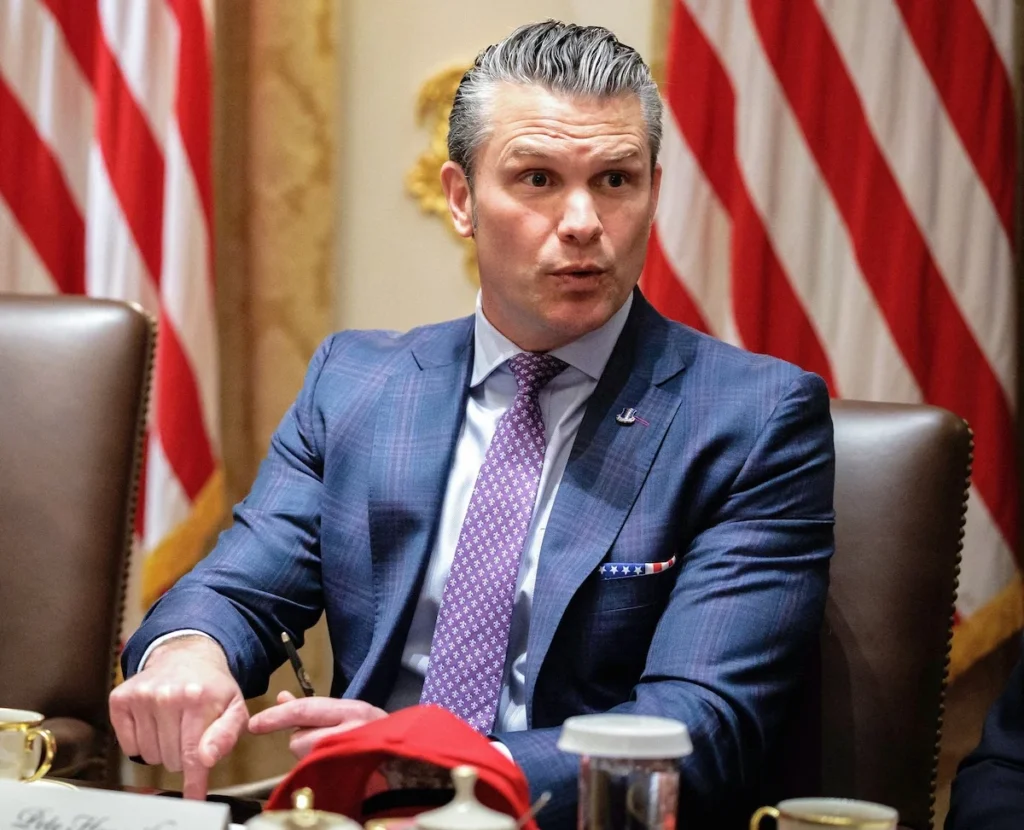

A new report from the New York Times on Monday has cast a shadow over the highest echelons of US military leadership, alleging that Defense Secretary Pete Hegseth directly intervened to block the promotions of at least seven US Navy officers. The report, which has swiftly ignited a national debate, suggests that among those reportedly removed from the promotion list were two women and two Black men, alongside three white male officers. This revelation comes amidst ongoing discussions about diversity, equity, and inclusion within the armed forces, and raises serious questions about the fairness and transparency of the promotion process under the current administration. The Pentagon has vehemently denied any wrongdoing, asserting that all promotion decisions are based purely on merit, irrespective of race or gender. However, critics, including prominent lawmakers, are accusing the Defense Secretary of injecting political and cultural agendas into critical military personnel decisions, potentially undermining morale and readiness.
The Heart of the Allegations: Unprecedented Intervention in Naval Promotions
The New York Times investigation, drawing on accounts from four current and former defense officials, details a highly unusual level of direct involvement by Defense Secretary Hegseth in the typically standardized military promotion process. According to the report, Hegseth allegedly stepped in to personally review and ultimately remove names from a list of Navy officers slated for advancement. While the Defense Secretary holds ultimate approval authority over promotion lists presented by the services, direct intervention at the individual candidate level, particularly in such a broad manner, is considered a significant departure from established norms and protocols governing military personnel management.
The specific demographics of the officers reportedly removed—two women, two Black men, and three white men—immediately drew scrutiny. However, the report highlighted even greater concerns regarding the composition of the final promotion list released in May. Despite women constituting roughly one-fifth of the active-duty Navy, no female officers reportedly appeared on the most recent list. Similarly, only two non-white officers were included, even though racial minorities represent a substantially larger proportion of Navy personnel across both enlisted and officer ranks. These disparities, critics argue, are statistically improbable if promotions were solely based on an unbiased meritocratic system, especially given the Navy’s stated commitments to fostering a diverse leadership corps that accurately reflects the nation it serves.
Military promotion boards typically involve a rigorous, multi-tiered selection process where senior officers evaluate candidates based on their service records, performance evaluations, leadership potential, and overall contributions to the mission. These boards submit recommended lists to their respective service secretaries, who then conduct their own reviews before forwarding the consolidated lists to the Secretary of Defense for final approval. The entire process is meticulously designed to be insulated from political interference, ensuring that the most qualified individuals ascend through the ranks based on objective criteria. Hegseth’s alleged actions, as described by the New York Times sources, suggest a bypass of these established safeguards, leading to accusations that political considerations or ideological preferences may have superseded professional military judgment and standard operating procedures. The alleged direct involvement in vetting individual candidates, rather than approving a collective list, marks a significant departure from historical precedent.
A Pattern of Intervention? Previous Allegations Emerge
The current controversy is not an isolated incident but appears to be part of a broader pattern of alleged interventions in military promotion decisions under Secretary Hegseth’s leadership. The New York Times report references earlier investigations that had already signaled an unusually active role by the Defense Secretary in reviewing military promotions across multiple branches of the armed forces. These previous reports provide a crucial context, suggesting that the current allegations regarding Navy promotions may be indicative of a systemic approach rather than an anomaly.
Earlier this year, NBC News reported similar concerns, detailing how promotions across various military branches had allegedly been delayed or blocked. Sources cited in the NBC News article, speaking anonymously due to the sensitive nature of their positions, indicated that these interventions were often linked to factors such as race, gender, or perceived ties to policies implemented during the previous Joe Biden administration. One official reportedly told the outlet that no branch of the military had been untouched by this unprecedented level of involvement from the Secretary of Defense’s office. This suggests a widespread and deliberate strategy to vet and potentially alter promotion outcomes at a granular level, rather than isolated decisions based on specific individual concerns. The consistent theme in these reports points to an ideological filter being applied to career progression.
Further underscoring this alleged pattern, a March report from the New York Times specifically detailed how the promotions of two highly qualified female US Army officers and two Black Army officers were purportedly blocked from advancing to one-star general positions. These specific cases, involving candidates for critical senior leadership roles, fueled earlier concerns that the administration was actively steering the demographic composition of the military’s top brass in a direction that deviates from previous diversity goals. Such repeated instances, involving multiple branches and various ranks, critics contend, paint a troubling picture of a deliberate strategy to reshape the military’s leadership. This pattern, they argue, potentially comes at the expense of established meritocratic principles, the careers of deserving service members, and the strategic advantages that diversity is believed to bring to military command. The cumulative weight of these reports suggests a consistent, albeit contested, narrative of civilian leadership exercising an unusual and potentially politicized degree of control over military personnel management.
Demographic Realities Versus Promotion Outcomes: A Statistical Discrepancy?
The allegations against Secretary Hegseth gain additional gravity when viewed through the lens of military demographics and the Navy’s own stated diversity goals. While the New York Times report noted that women comprise approximately one-fifth of the active-duty Navy, more granular data highlights the ongoing efforts and remaining challenges in achieving truly representative diversity across all ranks. According to recent Department of Defense statistics (as of late 2025/early 2026), women account for roughly 19-20% of the active-duty force across all branches, with the Navy generally consistent with this figure. For racial and ethnic minorities, the numbers are even more significant: African Americans, for instance, typically represent around 17-18% of the Navy’s active-duty enlisted force and approximately 8-9% of its officer corps. Other minority groups further contribute to the overall diversity, bringing the total non-white representation in the officer ranks to a substantial portion.
Against this backdrop, the reported absence of any female officers on the most recent Navy promotion list in May, and the inclusion of only two non-white officers, stands in stark contrast to the demographic composition of the service and the pipeline of qualified candidates. Critics argue that such an outcome is statistically anomalous and raises legitimate questions about the fairness and impartiality of the selection process, particularly when the Secretary of Defense is accused of direct intervention. The US military has historically striven to promote a diverse force, recognizing that varied perspectives enhance problem-solving, innovation, and global understanding—all critical assets in modern warfare, strategic planning, and international relations. Initiatives over the past decades have focused on ensuring equal opportunity and removing systemic barriers to advancement for all qualified personnel, regardless of background, reflecting the diverse fabric of American society.
Furthermore, the implications extend beyond mere statistics. The perception of an unfair or politically biased promotion system can severely impact morale, particularly among minority and female service members who may feel their career progression is subject to external, non-meritocratic factors. This could, in turn, critically affect recruitment and retention efforts, potentially discouraging talented individuals from pursuing military careers or remaining in service if they believe their chances of advancement are diminished by factors unrelated to their performance or qualifications. The military’s ability to attract and retain the best talent from all segments of society is crucial for maintaining its strength, technological edge, and global leadership, making these allegations particularly damaging to the institution’s long-term health and credibility. A diverse force is often cited by military strategists as a strategic imperative, enhancing cultural competence and adaptability in a complex global operational environment.
Pentagon Rebuttal: Meritocracy Reigns Supreme
In response to the escalating controversy, the Pentagon has launched a forceful defense of its promotion policies and Secretary Hegseth’s actions. Chief Pentagon spokesman Sean Parnell vehemently rejected the New York Times report’s suggestions, particularly the implication that race or gender played any role in the promotion decisions. Parnell took to X (formerly Twitter) to publicly blast the narrative, stating, "They continue to push this worn out narrative because they view almost everything through the lens of race and gender over merit. As we’ve said before, military promotions are given to those who have earned them." This initial statement set the tone for the administration’s consistent counter-narrative.
Parnell further elaborated on the administration’s stance, emphasizing an unwavering commitment to pure meritocracy as the sole determinant for advancement. His subsequent tweet reiterated, "The Department will never consider the color of a service member’s skin or their gender as a factor in promotions. Under President Trump and @SecWar Hegseth, meritocracy reigns supreme at the War Department." This strong declaration underscores the administration’s consistent position against what it often labels as "woke" policies or identity politics within the military, advocating instead for a system based solely on individual achievement, demonstrated capability, and leadership potential. The specific use of "War Department," an antiquated term for the Department of Defense, in Parnell’s tweet, is seen by some observers as a deliberate symbolic rejection of modern inclusivity language and a nod towards a more traditionalist, unvarnished view of military ethos.
In his comments directly to the New York Times, Parnell reiterated these core tenets, stating unequivocally, "Military promotions are given to those who have earned them. The department will never consider the color of a service member’s skin or their gender as a factor in promotions." This consistent messaging aims to quell doubts about the integrity of the promotion process and to frame the controversy as a politically motivated attack rather than a legitimate concern about fairness. The Pentagon’s position is clear: any perceived demographic imbalance in promotion lists is a natural outcome of a strictly merit-based system, reflecting the current pool of top performers, not a result of discriminatory practices or politically motivated interventions. They argue that focusing on race and gender detracts from the true qualifications and performance of officers, which should be the exclusive determinants of advancement in a fighting force.
Political Fallout and Concerns for Military Morale
The allegations and the Pentagon’s subsequent denials have quickly escalated into a significant political issue, drawing sharp criticism from lawmakers and defense experts across the political spectrum. Democratic Rep. Adam Smith, the ranking member of the House Armed Services Committee, was particularly vocal, accusing Defense Secretary Hegseth of deliberately transforming personnel decisions into a front in a broader "culture war" within the Department of Defense. Smith’s critique is rooted in the belief that politicizing military promotions undermines the very foundations of the armed forces, eroding the trust and professionalism that are paramount to military effectiveness. He argued that experienced military leaders, who have dedicated their careers to service, are being unfairly pushed aside, not due to lack of merit, but because of ideological alignment or demographic characteristics, which he deems unacceptable.
The potential ramifications of such a "culture war" extend far beyond individual careers. Smith warned that the resulting turmoil could severely damage morale, stability, and confidence throughout the armed forces. Morale is a critical, intangible component of military effectiveness, directly impacting unit cohesion, retention, and overall readiness. If service members perceive that promotions are not based on merit but on political favor or demographic quotas (whether for or against certain groups), it can breed cynicism, foster resentment, and severely erode trust in leadership. This erosion of trust can permeate all ranks, from junior enlisted personnel to senior officers, impacting unit cohesion and the willingness to follow orders, particularly in high-stakes operational environments.
Furthermore, the controversy has broader implications for the military’s relationship with civilian leadership. A healthy civil-military relationship relies on mutual respect and a clear understanding of roles, with civilian leaders setting policy and military professionals executing it, largely free from undue political interference in operational and personnel matters. Hegseth’s alleged hands-on approach to promotions, particularly if driven by ideological considerations, risks blurring these lines and injecting partisan politics into an institution that traditionally prides itself on being apolitical and merit-based. This could lead to a less experienced or ideologically aligned leadership cadre, potentially compromising strategic decision-making, operational effectiveness, and the military’s ability to provide objective advice to civilian leaders in an increasingly complex global security environment.
The debate also reignites discussions about diversity initiatives within the military. While proponents argue that diversity strengthens the armed forces by bringing varied perspectives, enhancing innovation, and improving cultural competence, critics often contend that such initiatives lead to "reverse discrimination" or lower standards, undermining true meritocracy. The current administration, under President Trump, has frequently expressed skepticism about diversity quotas and programs, advocating instead for a strict merit-only approach, often framing diversity initiatives as "woke" policies detrimental to military strength. This philosophical divergence lies at the heart of the current conflict, with Hegseth’s alleged actions being interpreted by some as an attempt to actively re-engineer the military’s leadership away from diversity-focused policies of previous administrations.
Navigating Competing Narratives: The Path Forward
As the competing narratives continue to clash, the path forward remains fraught with challenges. On one side, critics point to the stark demographic outcomes of the May promotion list and the accumulating reports of alleged interventions as compelling circumstantial evidence of a deliberate strategy to alter the military’s leadership composition. They argue that while the Pentagon claims meritocracy, the results suggest otherwise, particularly when considered against the backdrop of a Secretary of Defense known for taking an unusually active role in personnel decisions. The inherent confidentiality of the military promotion process, usually shrouded in secrecy to protect candidates and board members, makes it exceptionally difficult to definitively prove or disprove direct intent behind individual promotion decisions, creating a fertile ground for suspicion and speculation.
On the other side, the Pentagon maintains an unwavering stance that all promotions are earned, based purely on an officer’s qualifications, performance, and leadership capabilities, without regard to race or gender. They contend that focusing on demographics is a distraction from true merit and part of a broader "culture war" narrative pushed by political opponents seeking to undermine the administration. From this perspective, any demographic imbalances are simply a reflection of the meritocratic system at work, not evidence of discrimination or politically motivated interference. This framing places the burden of proof squarely on the accusers, who often lack direct access to the sensitive deliberations of promotion boards.
The lack of clear, publicly verifiable evidence of specific discriminatory intent makes resolving these competing claims incredibly complex and challenging for the public to assess. What is clear, however, is the potential for significant and lasting damage to the US military as an institution. Trust in leadership, the perceived fairness of career progression, and the ability to