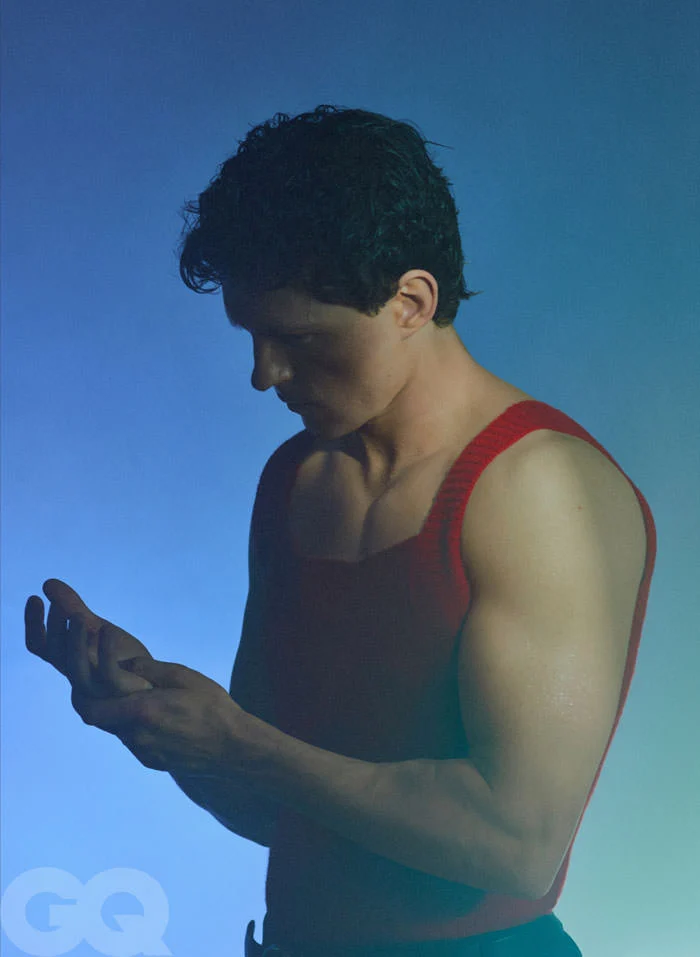

The global media landscape shifted its focus toward the high-stakes world of summer blockbusters this week as GQ Magazine unveiled the latest installment of its Summer 2026 cover series. Centered on the ensemble cast of Christopher Nolan’s highly anticipated cinematic venture, The Odyssey, the publication has dedicated a series of profiles to the film’s leading men. Following features on industry veterans Matt Damon and Robert Pattinson, the spotlight has now turned to Tom Holland. The interview, conducted by the magazine’s editorial team and accompanied by striking photography from acclaimed artist Alex Prager, captures Holland at a pivotal juncture in his career—one defined by personal sobriety, artistic maturation, and a transition away from the "boy wonder" persona that defined his early years in the public eye.
As the entertainment industry prepares for the June 9 newsstand release of the issue, Holland’s reflections offer a rare glimpse into the psychological and professional demands of modern superstardom. The feature serves not only as a promotional vehicle for Nolan’s latest project but also as a definitive statement on Holland’s evolution from a teenage sensation into a formidable leading man capable of anchoring one of the most prestigious productions of the decade.
The Nolan Method: Realism and the Visceral Response
Central to the GQ profile is Holland’s experience working under the direction of Christopher Nolan. Known for his steadfast commitment to practical effects and his aversion to the heavy reliance on computer-generated imagery (CGI) that dominates contemporary tentpole filmmaking, Nolan’s sets are famously rigorous. Holland, who spent the better part of a decade performing against green screens within the Marvel Cinematic Universe (MCU), described the transition to Nolan’s environment as both a challenge and a revelation.
"Chris doesn’t fake anything," Holland told GQ, emphasizing the director’s dedication to authenticity. "Everything’s real. Everything you’re reaching to is what he wants your visceral human response to."
This commitment to tactile reality is a hallmark of Nolan’s filmography, which includes Oppenheimer, Inception, and Dunkirk. For The Odyssey, a project whose title suggests a journey of epic proportions and existential weight, the physical demands on the actors were reportedly immense. Industry analysts suggest that Nolan’s choice of Holland—an actor with a background in dance and gymnastics—was a strategic move to leverage the performer’s physical capabilities in a setting where the environment itself serves as a primary character.
The "visceral human response" Holland references points to a specific school of acting that Nolan fosters. By placing actors in actual locations with practical props and sets, the performances move beyond the intellectualization of a script and into the realm of genuine reaction. For Holland, this meant unlearning some of the habits formed during the production of high-fantasy superhero films and reconnecting with the raw, grounded instincts of his early work in films like The Impossible.
A Chronology of Fame: The "Reset Button" and Sobriety
A significant portion of the GQ feature is dedicated to Holland’s personal growth, specifically his journey toward sobriety and his decision to step back from the Hollywood limelight. To understand the significance of this "reset," it is necessary to look at the timeline of Holland’s rapid ascent.
Born in 1996, Holland’s career began on the stage in Billy Elliot the Musical before his breakout film role in 2012. However, it was his 2015 casting as Peter Parker/Spider-Man that catapulted him into a level of global fame few actors ever experience. Between 2016 and 2021, Holland appeared in six Marvel films, effectively becoming the face of the world’s largest media franchise.
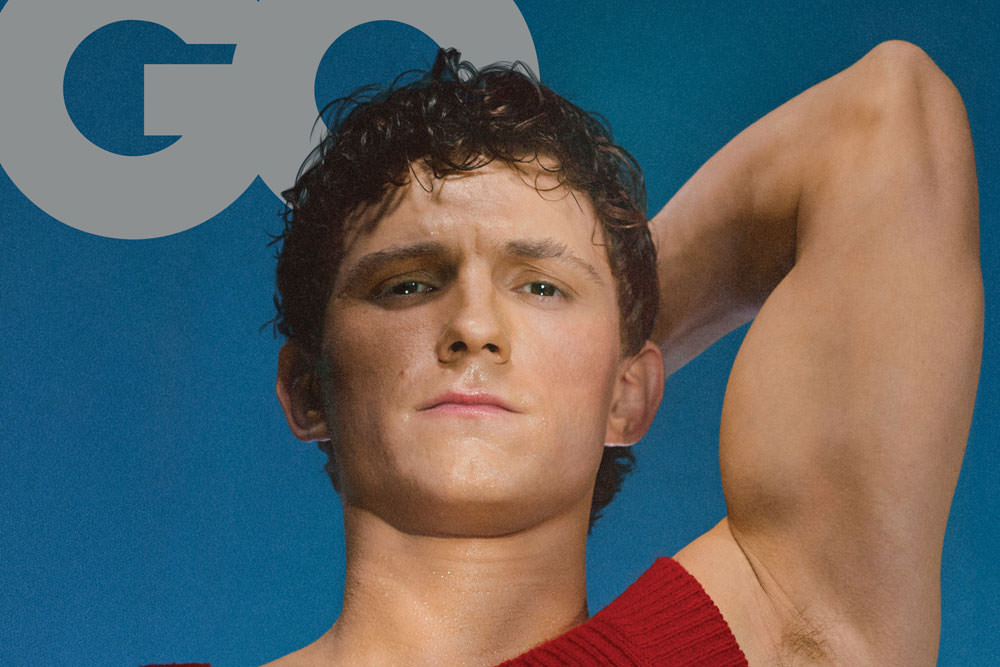
Reflecting on that period in the GQ interview, Holland was candid about the lifestyle that accompanied his rise. "I was obviously drinking back then," he admitted. "I probably was enjoying myself a lot and was right in the middle of the Spider-Man run, which was the time of my life. I was falling in love. I was making movies that I was really proud of. I was building a career that I was really excited about."
Despite the outward success, the internal pressure was mounting. Holland’s decision to pursue sobriety—a journey he has touched upon in previous years but discusses with newfound clarity in this 2026 profile—marked the beginning of what he calls the end of his "chapter of being a kid in Hollywood."
The actor describes hitting a "reset button," a necessary intervention to prevent the burnout that frequently claims the careers of former child stars. By choosing sobriety, Holland not only addressed his personal health but also reclaimed agency over his professional narrative. This shift is evident in his recent project choices, which lean toward complex, director-driven narratives rather than purely commercial ventures.
The Strategic Sabbatical: Purpose Over Production
In an industry that often demands constant visibility, Holland’s decision to take an extended break from acting was seen by many as a risky move. However, the GQ interview clarifies that this sabbatical was a calculated necessity rather than a retreat.
"I needed a break, and I felt like I’d overworked and I needed to do some growing up in my personal life, which required me to have some time at home," Holland explained.
The data regarding actor burnout suggests that Holland’s concerns were well-founded. The "always-on" nature of modern celebrity, fueled by social media and year-round press cycles, has led several high-profile actors to announce similar breaks in recent years. For Holland, the risk was that acting would become a "chore."
"I just wanted to make sure that I was always in love with what I was doing," he said. "I think to do what we do, we’re so lucky, and the moment it becomes a chore, there’s something wrong. I don’t know if there was a moment where I doubted being in love with it, but it just felt a little bit like I was not doing my best work, because I was just going to work."
By stepping away, Holland allowed himself the space to mature outside the confines of a film set. This period of reflection appears to have paid dividends in his performance in The Odyssey. Critics and industry insiders who have seen early footage suggest that the "new" Tom Holland brings a level of gravitas and stillness to the screen that was previously unseen in his more kinetic, youthful roles.
The Spider-Man Legacy: Passing the Baton vs. Staying the Course
No conversation with Tom Holland is complete without addressing the character that made him a household name: Spider-Man. As the MCU enters a new phase of storytelling, the question of how long Holland will continue to wear the mask remains a topic of intense speculation among fans and studio executives alike.
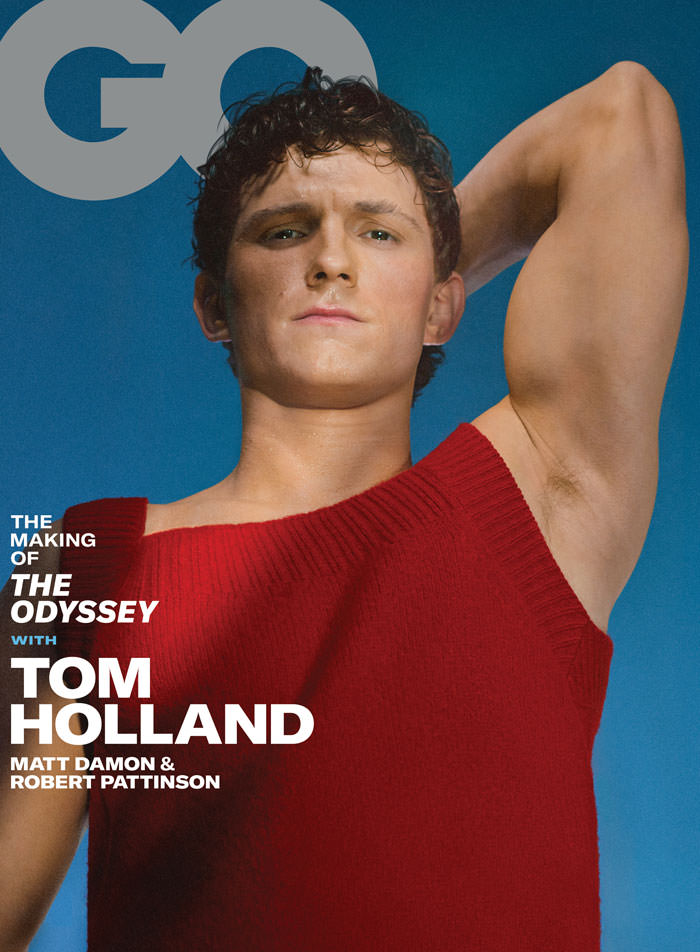
Holland’s comments to GQ suggest a complex relationship with the role. On one hand, he expresses a desire for the franchise to evolve beyond him. "I would love to pass the baton on, but I haven’t achieved that yet," he noted. This sentiment aligns with his previous statements regarding the importance of diversity and the potential for a live-action Miles Morales or Spider-Gwen to take center stage.
On the other hand, Holland remains deeply protective of the character and the platform it provides. "I think the truth is that playing Spider-Man has been the joy of my life," he said. "I now kind of stand on the plinth of like, I’ll do it for as long as they’ll have me."
This duality—wanting to move forward while remaining loyal to his roots—mirrors the career trajectories of other actors who have successfully navigated the "superhero trap." By balancing massive franchise work with prestige projects like Nolan’s The Odyssey, Holland is following a blueprint established by peers like Robert Pattinson, who moved from Twilight to indie darlings and eventually back to The Batman.
Broader Implications and Industry Impact
The GQ Summer 2026 cover story is more than a celebrity profile; it is a signal of the shifting power dynamics in Hollywood. The pairing of Tom Holland with Christopher Nolan represents a bridge between the "blockbuster era" of the 2010s and the "auteur-driven spectacle" of the late 2020s.
Nolan’s ability to draw actors of Holland’s caliber away from traditional franchise cycles reinforces the idea that "the director as the star" remains a viable and lucrative model for studios. For Holland, the collaboration serves as a formal graduation. Being selected as one of Nolan’s "leading men" alongside Matt Damon and Robert Pattinson places him in the upper echelon of dramatic actors.
Furthermore, Holland’s openness about mental health, sobriety, and the necessity of career breaks reflects a broader cultural shift within the entertainment industry. The "tough it out" mentality of previous generations is being replaced by a more sustainable approach to fame—one that prioritizes longevity and artistic integrity over short-term financial gain.
As The Odyssey prepares for its global release, the narrative surrounding Tom Holland has successfully shifted. He is no longer just the energetic youth from London who can do backflips; he is a sober, thoughtful, and disciplined actor who has navigated the pitfalls of early fame to emerge as a cornerstone of modern cinema.
The June 9 issue of GQ, featuring the Alex Prager-shot portfolio, is expected to be a landmark release for the publication. As Holland himself noted, he has ended the chapter of being a kid in Hollywood. The next chapter, if The Odyssey is any indication, promises to be his most compelling yet.
Timeline of Key Events: Tom Holland’s Path to The Odyssey
- 2012: Breakout role in The Impossible showcases Holland’s dramatic potential.
- 2015: Cast as Peter Parker/Spider-Man in the Marvel Cinematic Universe.
- 2016–2021: Six MCU appearances, culminating in the historic box office success of Spider-Man: No Way Home.
- 2022–2023: Holland takes a public sabbatical, citing the need to prioritize mental health and personal growth.
- 2024: Cast in Christopher Nolan’s The Odyssey, marking his first collaboration with the director.
- 2025: Production of The Odyssey takes place under strict secrecy, utilizing practical sets and IMAX technology.
- Summer 2026: GQ Magazine features Holland as part of its "Leading Men" cover series, signaling his return to the global stage.