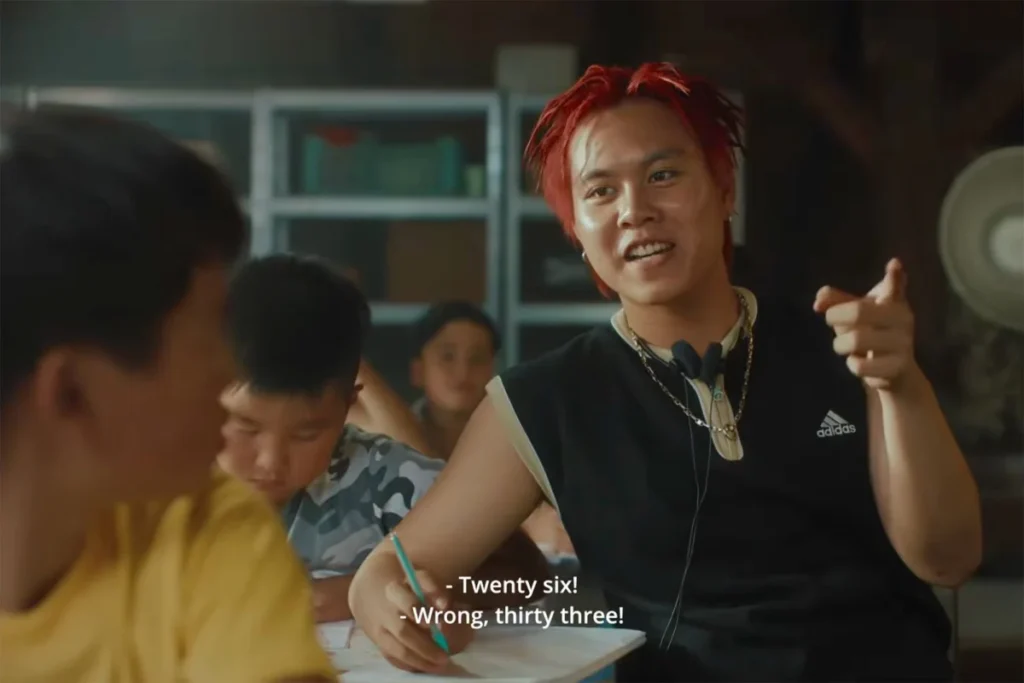

The cinematic landscape of coming-of-age dramas is set to be enriched by the arrival of Summer School, 2001, an acclaimed Vietnamese-Czech independent film that offers a poignant and authentic portrayal of a fractured Vietnamese family navigating their identity and belonging in the Czech Republic. This compelling narrative, which garnered significant attention at its premiere, has now unveiled its first official trailer, providing a tantalizing glimpse into its emotionally resonant story and the promising directorial debut of Duzan Duong.
A Deep Dive into Summer School, 2001
Summer School, 2001, originally titled Letní škola, 2001 in Czech, is a film that delves into the complexities of intergenerational relationships and cultural assimilation through the lens of a Vietnamese family residing in Cheb, a town in the Czech Republic. The story centers on Kien, a 17-year-old protagonist with striking red hair, who returns to his family’s market stall after a decade spent in Vietnam. His homecoming, however, is far from the warm embrace he anticipates. Instead, he is met with a strained relationship with his father, a mother worn down by the demands of life, and a younger brother who offers no quarter. The film unfolds during the summer school period, a time that becomes a crucible for familial tensions and the exploration of individual identities within the broader context of their immigrant experience.
The film is a significant marker as it is hailed as the "long-awaited, first Czech Viet-feature," a testament to the growing representation of minority communities within Czech cinema. This designation underscores its importance not only as a piece of art but also as a cultural document reflecting the integration of the Vietnamese diaspora into the fabric of modern Czech society. The narrative is woven with dialogues in both Czech and Vietnamese, further amplifying its authenticity and its commitment to portraying the dual cultural realities faced by its characters.
The ensemble cast features a compelling group of local actors, led by Bùi Thảo Dũng as Kien. Alongside him, the film showcases the talents of Đỗ Tuấn Hoàng Anh, Lê Quỳnh Lan, and Tạ Tiến Tài, who collectively breathe life into the intricate dynamics of the family unit. The recently released trailer, equipped with English subtitles that ingeniously utilize different color schemes to distinguish between languages, serves as an effective introduction to the film’s characters and the emotional core of its narrative.
Duzan Duong: A Visionary Director
The directorial reins of Summer School, 2001 are held by Duzan Duong, a talented Vietnamese-Czech filmmaker who is making his feature film debut with this project. Duong’s personal background, having grown up in the Czech Republic as part of the first generation of Vietnamese to be fully raised in the country, imbues the film with an insider’s perspective and a deep understanding of the community it portrays. His previous short films have hinted at his potential, and Summer School, 2001 is widely seen as a powerful realization of that promise.

The screenplay, a collaborative effort, is credited to Duzan Duong himself, alongside Lukáš Kokes and Jan Smutný. The production, also overseen by Lukáš Kokes and Duzan Duong, highlights a dedicated team committed to bringing this unique story to the screen. The film’s genesis and its subsequent reception at the Karlovy Vary Film Festival underscore the collaborative spirit and artistic vision that has shaped its creation.
A Landmark Premiere at Karlovy Vary Film Festival
Summer School, 2001 made its initial bow at the prestigious Karlovy Vary Film Festival in 2025, a significant event in the European film calendar. The festival, held annually in the spa town of Karlovy Vary, Czech Republic, is one of the oldest and most respected film festivals in the world, attracting international filmmakers, industry professionals, and cinephiles. Its selection of Summer School, 2001 as a major local premiere was a deliberate affirmation of the film’s cultural significance and artistic merit.
The film’s debut at Karlovy Vary was met with considerable enthusiasm, particularly within the Czech film community. The festival itself heralded the film as a groundbreaking achievement, marking a new chapter in Czech cinema by presenting a feature film centered on the Vietnamese community. This recognition not only provided a platform for Duong’s directorial debut but also brought to the forefront the narratives and experiences of a diaspora that has become an integral part of Czech society.
The author of this article previously attended the 2025 Karlovy Vary Film Festival and offered a "strong review" of Summer School, 2001, praising its authentic portrayal of an immigrant community and its poignant exploration of family dynamics. This early endorsement from a seasoned film critic further amplifies the anticipation surrounding the film’s wider release. The buzz generated at the festival indicated a strong local reception, with the town reportedly abuzz with discussions about the film.
Context and Significance of the Vietnamese Diaspora in Czechia
The presence of the Vietnamese community in the Czech Republic is a fascinating aspect of the country’s post-socialist transformation. Vietnamese migration to Czechoslovakia began in the 1950s, primarily through labor exchanges and educational programs established between the two socialist countries. Following the Velvet Revolution in 1989 and the subsequent economic shifts, many Vietnamese who had established lives and businesses in the Czech Republic chose to remain, forming a significant and visible minority.
Over the decades, the Vietnamese community has evolved from a transient population to an embedded element of Czech society. They have established thriving businesses, particularly in retail and services, and their cultural influence is increasingly felt. However, like many immigrant communities worldwide, they have also faced challenges related to integration, cultural preservation, and intergenerational understanding. Summer School, 2001 taps into these very real experiences, offering a nuanced and relatable narrative.

The film’s setting in Cheb, a town in western Bohemia, places the story in a specific geographical context within the Czech Republic. Cheb, like many border towns, has historically been a crossroads of cultures and trade. The family’s market stall, a common entrepreneurial venture for Vietnamese immigrants, serves as a central hub for their economic activity and family life, making it a potent symbol of their presence and their livelihood. The inclusion of a Google Maps link to Cheb in the original article suggests an effort to ground the film in a tangible reality, inviting viewers to connect with the physical space where these profound human stories unfold.
Thematic Resonance and Broader Implications
Summer School, 2001 appears to be more than just a family drama; it is a film that engages with broader themes of cultural identity, assimilation, and the universal struggles of adolescence. Kien’s return after a decade in Vietnam creates a natural point of friction, as he has likely absorbed different cultural norms and perspectives than those prevalent within his family’s established life in Czechia. His "crazy red hair," as described, could be a visual metaphor for his individuality and his potential to stand out, either positively or negatively, within his family and community.
The film’s exploration of cross-generational conflict is a common thread in immigrant narratives. Younger generations often find themselves caught between the traditions of their parents and the allure of the dominant culture, leading to misunderstandings and emotional distances. The "lightness and wit" mentioned in the film’s description suggest that Duong’s approach avoids heavy-handed melodrama, opting instead for a more subtle and humanistic portrayal of these complex issues.
The film’s analysis of "cultural identity" is particularly timely. In an increasingly globalized world, questions of belonging and heritage are paramount for individuals navigating multiple cultural influences. Summer School, 2001 promises to offer a unique perspective on this debate, specifically within the context of the Vietnamese diaspora in Central Europe. The film’s affectionate and bold approach to these themes positions it as a significant contribution to discussions about diversity and integration in contemporary society.
A Milestone in Representation
The fact that Summer School, 2001 is being described as a "milestone" in the debate on cultural identity and the "first Czech Viet-feature" carries significant weight. It signifies a potential shift in the Czech film industry towards greater inclusivity and a willingness to explore narratives from marginalized communities. This development is crucial for fostering a more comprehensive and representative cinematic landscape that reflects the diverse realities of modern society.
The film’s potential impact extends beyond the Vietnamese community. By offering a window into their experiences, it can foster greater understanding and empathy among the broader Czech population and international audiences. Such films play a vital role in breaking down stereotypes and promoting a more nuanced appreciation of different cultures and lived realities.

A Look Ahead: Release and Audience Engagement
While Summer School, 2001 has already captivated audiences at the Karlovy Vary Film Festival, its wider release is eagerly anticipated. As of the article’s publication, no specific U.S. release date has been announced, leaving many interested viewers waiting for further information. The availability of the trailer, however, serves as a strong indicator that a broader distribution is likely on the horizon.
The film’s categorization under "Indies," "To Watch," and "Trailer" on its originating platform suggests its positioning within the independent film circuit, a space often characterized by artistic innovation and diverse storytelling. The concluding question, "Who’s interested?", posed by the article’s author, directly engages the audience, highlighting the film’s potential to spark conversation and connect with viewers on a personal level.
The success of Summer School, 2001 could pave the way for more films that explore the experiences of immigrant communities in Czechia and elsewhere, enriching the global cinematic tapestry with stories that are both deeply personal and universally resonant. As the film prepares for its official release, it stands as a beacon of authentic storytelling and a testament to the power of cinema to bridge cultural divides and illuminate the human condition.