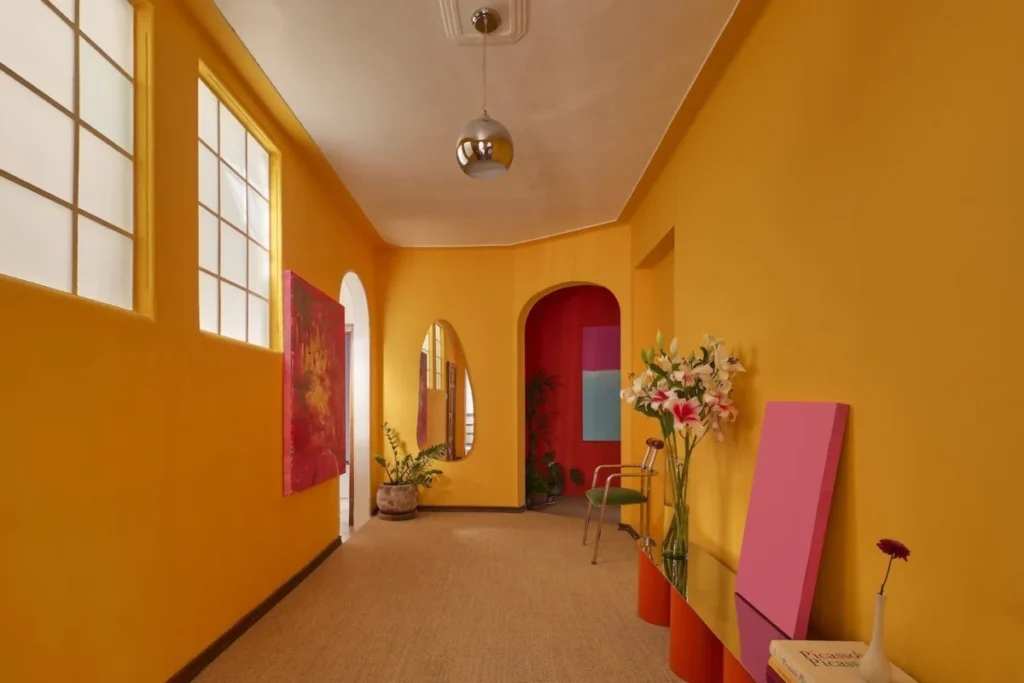

Mexico City, or Ciudad de México (CDMX), has transitioned from a historical curiosity to a global epicenter of contemporary design and architectural innovation. While the city remains a bastion of ancient ruins and world-class gastronomy, a new wave of creative professionals—architects, artisans, and interior designers—is actively reimagining the Mexican aesthetic. This evolution is perhaps most visible in the city’s high-end short-term rental market. Across neighborhoods like the verdant Condesa and the historic Roma Norte, the best Mexico City Airbnbs have become living galleries, offering travelers an immersive experience in a design scene that is increasingly separating itself from international tropes.
The rise of Mexico City as a design capital was solidified in 2018 when it was named the World Design Capital, the first city in the Americas to receive the honor. Since then, the integration of traditional Mexican craftsmanship with mid-century modernism and brutalist influences has created a unique visual language. For the modern traveler, choosing a rental is no longer just about proximity to landmarks like the Zócalo or the Palacio de Bellas Artes; it is about inhabiting a space that reflects the city’s complex architectural heritage.
The Evolution of the Mexico City Design Scene
The current architectural boom in CDMX is built upon a foundation of legendary figures like Luis Barragán and Juan O’Gorman. However, the new generation of designers is shifting toward "transitional indoor-outdoor living," a concept that leverages the city’s temperate climate. This movement is driven by an influx of digital nomads and design enthusiasts who seek "visual inspiration" alongside functional luxury. Data from the Mexico City Tourism Secretariat indicates a significant year-over-year increase in international arrivals seeking "boutique" and "curated" stays, moving away from standardized hotel chains toward personalized residential experiences.
1. Condesa Luxury House: A Study in Natural Wood and Volume
Located in the leafy Condesa neighborhood, this three-bedroom residence is defined by its high ceilings and heavy-handed use of natural woodgrain. The property features polished flooring, arched doorways, and window frames that highlight the warmth of Mexican timber. The design philosophy here is "pared-back but meaningful," utilizing vibrant artwork and traditional textiles to provide pops of color against a neutral architectural backdrop. With a rooftop terrace and two separate indoor dining areas, the home is priced from $941 per night and caters to groups of up to six who value spatial volume and alfresco dining.
2. Designer’s Luxury Rental: Sculptural Art and Local Foliage
In another corner of Condesa, this two-bedroom apartment focuses on texture and sculptural art installations. Meticulous stonework and exaggerated seating arrangements create a sense of drama. The design masterfully layers local foliage into the living space, with floor-to-ceiling drapery allowing for precise light filtration. A chrome-filled kitchen with custom cabinetry provides a sleek contrast to the organic textures found in the rest of the unit. This property starts at $721 per night.
3. Designer Loft in Trendy La Juárez: Heritage Meets Modernity
La Juárez is currently undergoing a massive revitalization, and this loft, set within a restored heritage building, is a prime example of the neighborhood’s new identity. The architecture features scalloped brick ceilings—a nod to the building’s historical structure—paired with warm lighting and a high-fidelity sound system. The open layout is specifically designed for digital nomads, featuring a dedicated workspace and proximity to the famous Rosetta Bakery. Prices begin at $312 per night.
4. Vintage House in Roma Norte: Maximalism in the Balmori Building
The Balmori Building is one of Roma Norte’s most iconic structures, and this duplex within it serves as a masterclass in maximalism. The color palette is a sophisticated mix of midnight, cobalt, and aquamarine blues, punctuated by orange accents. The design blends mid-century furniture with patterns ranging from florals to geometric checks. At $334 per night, it offers a private concierge and 24-hour security, reflecting the growing demand for hotel-level services within private rentals.
Organic Architecture and Sustainability
One of the most significant trends in Mexican design is the move toward organic shapes and sustainable materials. This is best exemplified by the work of Javier Senosiain, whose "Earthship" philosophy has gained international acclaim.
5. Quetzalcoatl’s Nest: A Surrealist Masterpiece
Quetzalcoatl’s Nest is not merely a rental; it is a design landmark. Designed by Javier Senosiain, this snake-shaped apartment complex is built into the natural topography of a lush valley. The unit features rounded windows, curved walls, and organic shapes, all constructed from upcycled materials. Guests are offered guided tours of the surrounding Parque Quetzalcoatl, providing insight into the intersection of architecture and environmentalism. This stay starts at $587 per night and represents the "futuristic" end of the Mexican design spectrum.
Neighborhood Context: The Rise of Santa Maria and Coyoacán
While Roma and Condesa remain popular, neighborhoods like Santa Maria la Ribera and Coyoacán are attracting travelers looking for a more authentic, "neighborhood-centric" experience.
6. Chic Apartment in Santa Maria: Indoor-Outdoor Urbanism
Santa Maria la Ribera is an up-and-coming district known for its Moorish Kiosk and local art scene. This contemporary apartment features two private terraces and a communal courtyard, emphasizing the city’s indoor-outdoor lifestyle. Filled with local artifacts and a curated library, the space functions as a gallery of Mexico City culture. It is priced at $238 per night.
7. Oasis in the Heart of Coyoacán: The Bohemian Sanctuary
Seven blocks from the Frida Kahlo Museum, this one-bedroom cottage offers a sanctuary from the urban bustle. The architecture utilizes skylights, exposed brick, and ceramic tiles to create a warm, "airy yet cozy" vibe. A shared fire pit serves as a social hub, fostering the community atmosphere for which Coyoacán is famous. Prices start at $238 per night.
High-End Luxury and Executive Stays
For the traveler seeking the pinnacle of CDMX luxury, neighborhoods like Polanco offer residences that rival the world’s most exclusive hotels.

8. Unique Loft in Polanco: The Three-Story Penthouse
Polanco is often referred to as the "Beverly Hills of Mexico City," home to Michelin-starred restaurants like Pujol. This three-story loft features a private terrace with skyline views, a barbecue grill, and three distinct floors of living space. It is designed for travelers who require privacy and high-end amenities, with rates starting at $1,239 per night.
9. Casa Teo: The Intersection of Design and Gastronomy
Owned by world-renowned chef Enrique Olvera, Casa Teo was the original home of his restaurant, Pujol. The two-bedroom space now operates as an artist residency and luxury rental. The minimalist aesthetic—comprising pale woods and heather grays—is designed to foster creativity. Guests are treated to homemade breads and local fruits, bridging the gap between architectural excellence and culinary art. Rates begin at $394 per night.
Chronology of Modern Mexican Architecture
To understand these Airbnbs, one must look at the timeline of the city’s architectural development:
- 1910-1930: The Porfirian era brought European-style townhouses to Roma and Condesa.
- 1940-1960: The rise of Mexican Modernism, led by Luis Barragán, introduced the use of bold colors and light as a structural element.
- 1990-2010: A period of "New Internationalism" saw the construction of glass towers in Polanco and Santa Fe.
- 2015-Present: The "New Mexican School" focuses on heritage restoration, local materials (volcanic rock, timber), and artisanal integration.
10. Quiet Nook Near Lardo: The Atelier Approach
Designed by Atelier Zuniga López and the firm Jsa, this one-bedroom in Condesa is an example of the "healing breath" manifested in architecture. The plant-covered balcony and soft textiles provide a retreat from the city’s sensory overload. It includes a dedicated workspace and private security, starting at $251 per night.
11. Minimalistic Loft at DIB: Historical Facade, Modern Interior
Located in a 1910 building in Roma Norte, this loft represents the "Minimalist" trend currently dominating the city’s interior design. Blonde wood and Teka appliances provide a clean, modern contrast to the historic exterior. It offers a 24-hour doorman and daily cleaning services, starting at $283 per night.
12. Artistic Loft on Historic Madero Street: The Heart of the Centro
For those who wish to be in the historic center, this jewel-toned apartment in a former hotel offers proximity to the Palacio de Bellas Artes. The design uses deep colors to create a retreat from the vibrant noise of the Zócalo. It is one of the more accessible design-led stays, starting at $101 per night.
Brutalism and Remote Escapes
13. Casa Alferez: Brutalism in the Forest
An hour outside the city in Cañada De Alferes, Casa Alferez offers a starkly different experience. This "Brutalist" cabin features raw concrete interiors, sky-high ceilings, and a forest-green conversation pit. It is a testament to the versatility of Mexican architecture, moving from urban density to rural isolation. Prices start at $414 per night.
14. Casa Wynwood in Roma Norte: The Social Hub
This property is designed for large groups, featuring four bedrooms and a maze-like layout of common spaces. With a library, an antique collection, and a private patio, it mimics the feel of a high-end boutique hotel. It is pet-friendly and starts at $1,559 per night.
15. Classical Roma Townhouse: The Power of Color
Utilizing the color theories popularized by Barragán, this townhouse features emerald green, purple, and pastel accents. The architecture emphasizes the "long soak" with an oversized bathtub for two, targeting the luxury wellness market. Rates start at $244 per night.
16. Eclectic Condo with Orchid Terrace: Light and Privacy
Situated near Chapultepec Park, this loft uses frosted glass panels to create a private, light-filled environment. The "Orchid Terrace" provides a private outdoor space, reflecting the city’s obsession with urban gardening. Prices start at $210 per night.
17. Xolo Condesa: The Minimal Balance
Finally, Xolo Condesa offers a two-bedroom abode that strips away the noise. With exposed concrete and no screens, the focus is entirely on natural light and good design. Each bedroom opens to its own terrace, starting at $466 per night.
Broader Impact and Market Analysis
The proliferation of these high-design Airbnbs has significant implications for Mexico City. Economically, they attract a demographic of "high-spend" tourists who contribute to the local economy by patronizing design shops, galleries, and high-end restaurants. However, this trend has also sparked discussions regarding gentrification and the rising cost of living in neighborhoods like Roma and Condesa.
Architecturally, these properties serve as a proof-of-concept for the viability of heritage restoration. By repurposing 19th-century buildings and mid-century bungalows into modern havens, architects are preserving the city’s structural history while updating it for the 21st century. The focus on "transitional living" and "local materiality" ensures that the Mexico City design scene remains distinct, resisting the homogenization of global luxury.
As Mexico City continues to evolve, these Airbnbs stand as a testament to a city that is comfortable with its past but aggressively pursuing its future. For the design-conscious traveler, these homes are more than just a place to sleep—they are the most direct way to experience the pulse of one of the world’s most creative capitals.