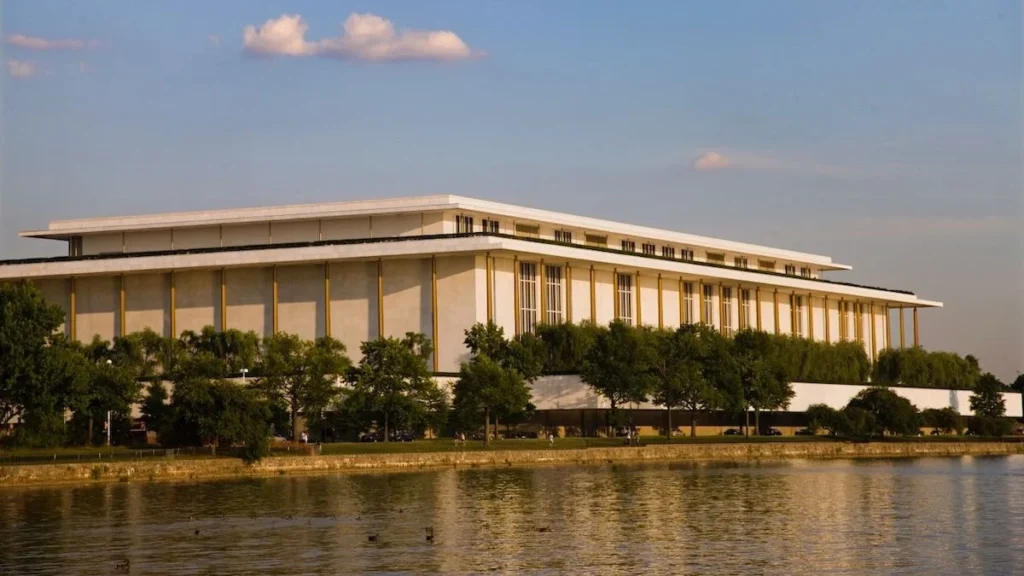

A federal judge in Washington, D.C., has issued a landmark ruling, ordering the immediate removal of former President Donald Trump’s name from the prestigious John F. Kennedy Center for the Performing Arts. This judicial mandate, delivered by Judge Casey Cooper, marks a significant setback for efforts to formally associate Trump with the national cultural landmark, emphasizing the enduring legislative intent behind the Center’s original naming. The ruling further temporarily halts the controversial plan to close the venue for two years, deeming the Board’s decision-making process "ill-informed and seemingly preordained."
Judicial Mandate and Legislative Intent
Judge Cooper’s order, a pivotal moment in the ongoing dispute over the Kennedy Center’s governance and identity, rests firmly on the bedrock of its foundational legislation. As reported by CNN, the judge meticulously concluded that the law establishing the Kennedy Center "makes crystal clear that the Center is to be named for President [John F.] Kennedy, and it cannot bear any other formal name or public memorial based on the Board’s unilateral say-so." This assertion underscores a fundamental principle: Congress, as the legislative body that established and named the institution, holds sole authority over any formal alteration to its designation. "Congress gave the Kennedy Center its name, and only Congress can change it," Judge Cooper unequivocally stated, reinforcing the separation of powers and the sanctity of legislative intent in the creation of national memorials.
The ruling stipulates a stringent timeline for compliance. The Kennedy Center has been given 14 days to systematically remove all physical signage bearing Trump’s name from its premises and to meticulously scrub any references from its official website and public-facing digital platforms. This swift action is intended to restore the Center to its original, congressionally mandated identity, free from the recent additions that sparked widespread controversy.
The Genesis of the Controversy: A Chronology of Politicization
The legal battle over the Kennedy Center’s name is the culmination of a series of events that began to unfold with increased intensity during and after the Trump administration. Established in 1964 by Public Law 88-260, the John F. Kennedy Center for the Performing Arts was conceived as a living memorial to the assassinated 35th President, a permanent tribute to his profound appreciation for the arts and culture. Its mission was, and remains, to present a wide array of performing arts, to foster arts education, and to serve as a national cultural center. For decades, its governance, while subject to presidential appointments, largely operated within a framework of non-partisanship, focusing on artistic excellence and public service.
However, the composition and direction of the Kennedy Center’s Board began to shift significantly with new appointments during the Trump presidency. By last December (inferred 2025), the Board, predominantly consisting of members handpicked by the former president, unanimously voted to rename the esteemed Washington, D.C., arts center as "The Donald J. Trump and The John F. Kennedy Memorial Center for the Performing Arts." This audacious move was widely perceived as the apex of a broader effort to exert political influence over the institution.
This renaming initiative did not occur in isolation. It followed a period marked by considerable turbulence and alleged politicization within the Center. Reports and public commentary suggested a "takeover" that included several contentious actions:
- Board Member Purges: There were widespread concerns regarding the alleged firing or forced resignations of long-standing board members, often replaced by individuals with strong political ties to the former administration rather than deep experience in the arts. Critics argued this undermined the institutional knowledge and artistic independence of the Center.
- Cancellation of "Woke" Programming: The Board faced accusations of canceling programming deemed "woke" or politically undesirable. While specific examples were often anecdotal or subject to interpretation, this led to fears that artistic freedom and diverse representation were being stifled in favor of a more politically aligned agenda. Such actions generated significant unease within the broader arts community, which typically champions inclusivity and freedom of expression.
- Artist Boycott: In response to these perceived shifts in governance and programming, a notable artist boycott emerged. Prominent performers, directors, and cultural organizations expressed their solidarity with those opposing the changes, refusing to stage productions or participate in events at the Kennedy Center. This boycott not only impacted the Center’s artistic calendar but also threatened its reputation as a premier destination for world-class performing arts. The financial implications, while not fully disclosed, were likely substantial, stemming from lost ticket sales, donor reluctance, and damage to its brand.
- Announcement of Two-Year Closure: Perhaps the most disruptive and controversial decision, prior to the renaming, was the announcement of renovations that would necessitate the closure of the Kennedy Center for two years. While renovations are often necessary for aging infrastructure, the timing and scope of this particular closure raised eyebrows. Critics questioned the necessity of such an extensive shutdown, its potential impact on the D.C. arts ecosystem, the livelihoods of staff and artists, and the message it sent about the Center’s commitment to continuous public engagement. Judge Cooper’s subsequent blocking of this closure highlights the judiciary’s concerns regarding the rationale behind this decision.
The Legal Challenge and Its Rationale
The legal challenge that led to Judge Cooper’s ruling likely originated from concerned citizens, advocacy groups, or even former officials who saw the Board’s actions as a direct contravention of the Kennedy Center’s founding principles. The core argument centered on the statutory language of the Public Law 88-260, which explicitly designates the institution as the "John F. Kennedy Center for the Performing Arts." This federal charter, critics argued, left no room for unilateral renaming by an appointed board, regardless of their political mandate.
Judge Cooper’s ruling not only addressed the naming controversy but also scrutinized the Board’s decision to close the Center. His characterization of this decision as an "ill-informed and seemingly preordained decision" suggests a judicial concern over the due diligence, transparency, and perhaps even the underlying motives behind such a drastic operational change. This aspect of the ruling implies that the Board may not have adequately justified the closure from a logistical or financial standpoint, or that its decision-making process lacked the necessary objectivity and thoroughness expected of a federally chartered institution.
Official Responses and Political Fallout
The immediate aftermath of the ruling saw swift reactions from the involved parties, highlighting the ongoing political and cultural tensions.
The Kennedy Center Board’s Stance: Roma Daravi, spokesperson for the Kennedy Center, quickly issued a statement indicating the Board’s intent to appeal the ruling. Daravi asserted, "We are confident that on appeal the court will uphold the Board’s will to recognize President Trump’s historic contributions to our nation’s cultural center." This statement suggests the Board believes its actions were within its purview and that there is a legitimate basis for formally acknowledging Trump’s impact, even if those contributions remain a point of contention for many. The appeal process is expected to extend the legal battle, potentially creating further uncertainty for the Center’s future direction.
Donald Trump’s Reaction: Former President Donald Trump, known for his direct and often confrontational communication style, responded via his Truth Social platform. He "blasted the judge’s decision" but also, notably, "somewhat acknowledged defeat" by proposing a new path forward. Trump’s statement framed the issue as a political battle: "Based on the fact that the Radical Left Democrats care more about opposing your favorite President, ME, than saving a dying Performing Arts Center… we are going to be working with Congress to transfer this failing Institution back to them so they can make a determination as to what to do with it."
His rhetoric, consistent with his past critiques of cultural institutions he perceives as hostile, portrays the Kennedy Center as a "dying" and "failing" entity that only he could "bring back, physically, financially, and artistically." He concluded with a conditional ultimatum: "Unless I am free to do what I do better than anyone else, bring this Institution back, physically, financially, and artistically, I have no interest in continuing what could only be a hopeless journey into ‘NEVER NEVER LAND.’" This statement indicates his unwillingness to engage with the Center under the court’s restrictions, signaling a potential withdrawal of his influence or a demand for congressional intervention to regain control. His suggestion to "transfer this failing Institution back to them" could imply a desire to divest federal responsibility or even to privatize aspects of its operation, should his vision not be fully embraced.
Inferred Reactions from Other Stakeholders:
- Congressional Democrats: Many are likely to applaud Judge Cooper’s ruling, viewing it as a victory for institutional integrity and a rebuff to attempts at politicizing a national memorial. They might emphasize the importance of adhering to founding legislation and protecting cultural institutions from partisan capture.
- Arts Community and Former Board Members: Artists, arts patrons, and former board members who opposed the changes are likely to express relief and vindication. The ruling could be seen as a restoration of artistic independence and a signal that the Kennedy Center will revert to its core mission without political interference. This could encourage artists who had joined the boycott to reconsider performing there.
- Legal Scholars: Legal experts are likely to analyze the ruling as a strong affirmation of legislative supremacy over appointed boards regarding foundational institutional matters. The clarity of the statute and the judge’s interpretation would be highlighted as a textbook example of judicial adherence to the rule of law.
- Cultural Commentators: The decision will undoubtedly fuel broader discussions about the politicization of cultural institutions in America, the role of government in the arts, and the delicate balance between presidential appointments and institutional autonomy.
Broader Impact and Implications
Judge Cooper’s ruling carries significant implications extending beyond the immediate removal of a name.
- Precedent for Federal Cultural Institutions: This decision sets a powerful precedent for the governance and naming conventions of other federally chartered cultural institutions and national landmarks. It reinforces the idea that legislative mandates are paramount and that appointed boards, even those empowered by the executive branch, do not have unilateral authority to fundamentally alter the identity or mission of such institutions. This could lead to closer scrutiny of board actions across various federal entities.
- Politicization of the Arts Debate: The controversy at the Kennedy Center is a microcosm of a larger national debate about the politicization of the arts. The ruling, in many ways, represents a pushback against attempts to align cultural institutions too closely with any single political ideology or figure. It underscores the importance of maintaining a degree of independence for the arts to thrive and serve a diverse public.
- Future of the Kennedy Center: The immediate future of the Kennedy Center remains complex. The impending appeal means the legal battle is not over, introducing continued uncertainty. However, the judge’s blocking of the two-year closure offers a reprieve, potentially allowing the Center to continue its operations without a disruptive shutdown. The institution will face the challenge of repairing its reputation, rebuilding trust with artists and the public, and reaffirming its original mission as a non-partisan hub for the performing arts. This may involve revisiting programming strategies, engaging with diverse communities, and focusing on transparent governance.
- Financial and Operational Challenges: The period of controversy has likely had financial ramifications, from potential donor attrition to the costs associated with legal battles and rebranding efforts. If the Board’s decision to appeal is upheld, these challenges could intensify. Furthermore, the operational continuity ensured by the temporary blocking of the closure will allow the Center to mitigate some financial losses but also requires immediate adaptation to its original operational model.
- Legacy and Symbolism: Ultimately, the ruling reaffirms the Kennedy Center’s symbolic role as a living memorial to John F. Kennedy. It underscores the importance of honoring historical legacies as defined by legislative acts and protects these institutions from being co-opted for contemporary political purposes. The decision reinforces the idea that some national institutions transcend political cycles and must remain dedicated to their founding principles.
The saga of the Kennedy Center’s name and governance is far from over, with an appeal anticipated and the broader political climate remaining volatile. However, Judge Cooper’s decisive ruling marks a critical juncture, temporarily restoring the institution to its congressionally mandated identity and reasserting the boundaries of executive influence over cherished national cultural landmarks. The coming months will reveal whether this judicial intervention can permanently steer the Kennedy Center back to its intended course, or if it merely marks another chapter in a protracted battle over its soul and purpose.