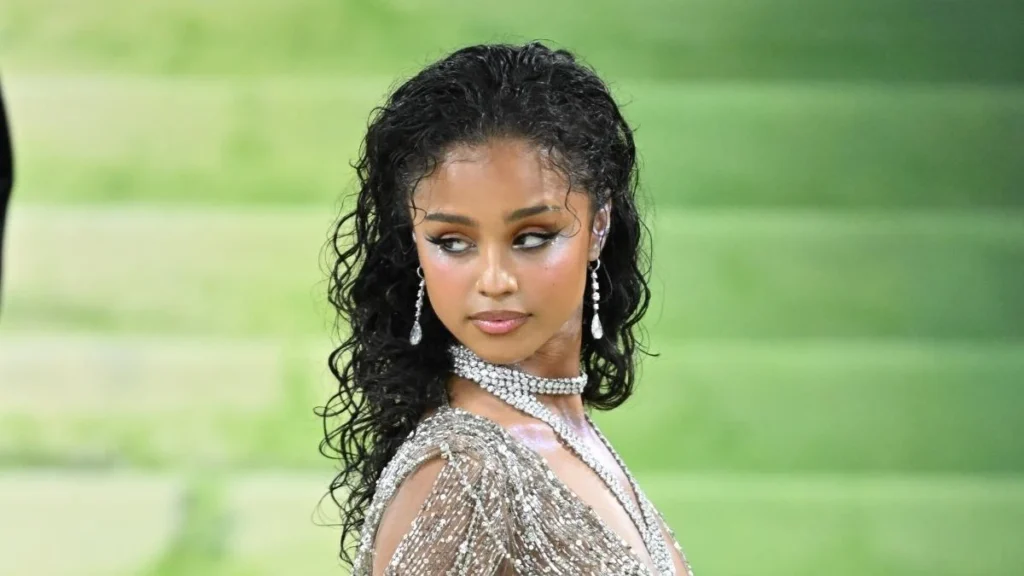

The global music landscape and the world of international sports have converged once again as South African sensation Tyla and American rap heavyweight Future unveiled snippets of their new collaboration, "Game Time." Confirmed as an official single for the 2026 FIFA World Cup, the track represents a strategic intersection of contemporary pop, Amapiano-infused rhythms, and trap music, designed to capture the energy of the world’s largest sporting event. The promotional rollout for the single has already generated significant traction on social media, particularly following a series of visual teasers that showcase Tyla’s distinct fashion sense and the high-production value associated with FIFA’s musical ventures.
In the newly released visuals, Tyla, the Grammy-winning artist behind the global hit "Water," is seen sporting a meticulously curated athletic-chic ensemble. The outfit, consisting of a plunging black micro crop top and matching low-rise pants with red stripe detailing, emphasizes a blend of performance-ready aesthetics and high-fashion sensibilities. This visual direction aligns with the "diva energy" that has become a hallmark of Tyla’s public persona, further solidified by her choice of metallic gold sandals and layered jewelry. The collaboration with Future, a multi-platinum artist known for his dominant presence in the hip-hop industry, suggests a track that aims to appeal to a broad, multi-generational audience across different continents.
The Strategic Importance of the 2026 FIFA World Cup Anthem
The 2026 FIFA World Cup is set to be a landmark event in the history of the tournament. For the first time, the competition will be hosted by three nations—the United States, Canada, and Mexico—and will feature an expanded format of 48 teams. Given the unprecedented scale of the upcoming tournament, the selection of the official musical representatives is a critical component of FIFA’s branding and engagement strategy.
Historically, FIFA World Cup anthems have served as cultural touchstones. From Ricky Martin’s "The Cup of Life" in 1998 to Shakira’s "Waka Waka (This Time for Africa)" in 2010, these songs are tasked with unifying diverse fanbases while generating commercial momentum. By selecting Tyla and Future, FIFA is tapping into two of the most influential markets in modern music. Tyla represents the explosive rise of African music on the global stage, specifically the Amapiano genre, while Future provides a direct link to the North American hip-hop scene, which remains a dominant force in streaming and cultural trends.
Artist Profiles: Tyla and Future’s Path to "Game Time"
Tyla’s involvement in the 2026 World Cup anthem marks another milestone in what has been a meteoric rise to fame. Born Tyla Laura Seethal in Johannesburg, South Africa, the singer achieved international stardom in 2023 with her single "Water." The track not only dominated TikTok and Instagram reels but also earned her a Grammy Award for Best African Music Performance, making her the youngest African artist to win a Grammy. Her ability to fuse traditional South African sounds with contemporary R&B has made her a sought-after collaborator and a symbol of the "Afropop" movement’s evolution.
Future, born Nayvadius DeMun Cash, brings decades of industry experience and a massive global following to the project. As one of the pioneers of the melodic trap sound, Future has consistently topped the Billboard charts and influenced a generation of artists. His recent successes, including high-profile collaborative albums, demonstrate his enduring relevance. The pairing of Tyla’s melodic, rhythmic vocals with Future’s signature grit and flow is expected to create a dynamic contrast that reflects the competitive and celebratory nature of the World Cup.
Visual Aesthetics and Fashion Analysis
The promotional material for "Game Time" highlights a specific visual narrative that bridges the gap between sports and luxury. Tyla’s outfit is more than a fashion statement; it is a calculated piece of imagery designed for the digital age. The black micro crop top with its plunging neckline and short sleeves offers a balance of boldness and athletic refinement. The low-rise pants, featuring a red stripe, evoke the classic aesthetic of track-and-field uniforms, modernized for a pop-star context.
Fashion critics and industry analysts note that this look fits within the broader "Y2K" and "Sporty Chic" trends that currently dominate the youth market. By utilizing metallic gold sandals and heavy jewelry, Tyla adds an element of "trophy-like" glamour, subtly nodding to the ultimate prize of the FIFA World Cup. This aesthetic choice is likely to resonate on platforms like TikTok and Instagram, where visual impact is paramount for a song’s viral success.
Chronology of the Collaboration and Release
The development of "Game Time" follows a structured timeline typical of major international commercial projects. While rumors of a collaboration between Tyla and an American rapper began circulating in late 2024, the official confirmation of the FIFA partnership only surfaced recently through coordinated social media posts.
- Late 2024: Preliminary reports suggested that FIFA officials were looking for a "fresh, global sound" for the 2026 tournament, focusing on artists with strong social media engagement.
- Early 2025: Tyla was spotted in recording studios in Los Angeles and Atlanta, sparking speculation about her debut album’s follow-up and potential high-profile features.
- May 2026: Snippets of "Game Time" were leaked and subsequently officially teased on Instagram. The clips showcased the high-energy production and the visual direction of the music video.
- Present: The official rollout has begun, with "Game Time" positioned as a lead single for the World Cup’s multi-track soundtrack.
Music Industry Impact and Streaming Data
The integration of music into the FIFA World Cup is a multi-billion dollar sub-industry. According to data from previous tournaments, the official anthem can expect to see hundreds of millions, if not billions, of streams across platforms like Spotify, Apple Music, and YouTube. For instance, "Waka Waka" has surpassed 3 billion views on YouTube, remaining a consistent source of revenue and brand recognition for both the artist and FIFA.
"Game Time" is expected to follow a similar trajectory. By leveraging Tyla’s 30 million+ monthly listeners on Spotify and Future’s massive domestic US audience, the track is mathematically positioned to debut high on the global charts. Furthermore, the 2026 World Cup’s expansion to 48 teams means that the song will be marketed to more nations than ever before, including significant emerging markets in Asia and Africa.
Official Responses and Public Reaction
Initial reactions from the music and sports communities have been largely positive. Fans on social media have praised the "unexpected yet logical" pairing of Tyla and Future. Industry insiders suggest that the track’s production—rumored to involve top-tier producers known for blending electronic and hip-hop elements—is specifically engineered to sound as good in a stadium as it does in a club.
While official statements from FIFA’s marketing division have focused on the "unity and energy" the song brings to the tournament, Tyla’s team has emphasized the artist’s pride in representing South Africa on such a prestigious stage. Future’s involvement is seen as a strategic move to solidify the tournament’s cultural footprint in the United States, where soccer’s popularity is at an all-time high following the arrival of international stars like Lionel Messi to Major League Soccer (MLS).
Broader Implications for Global Culture
The collaboration for "Game Time" is indicative of a larger shift in the global entertainment industry. The distinction between "regional" and "global" music is increasingly blurred. Tyla’s success proves that an artist can maintain their cultural roots—incorporating South African languages and dance moves—while achieving mainstream success in the West.
For FIFA, the 2026 tournament is an opportunity to rebrand and modernize. After the controversies and logistical challenges of previous cycles, the 2026 World Cup in North America is being positioned as a "festival of football and culture." The music, led by "Game Time," serves as the sonic backdrop for this rebranding effort. It signals a move away from traditional, often criticized "manufactured" anthems toward collaborations that feel more organic to current musical trends.
Conclusion and Future Outlook
As the countdown to the 2026 FIFA World Cup continues, "Game Time" is set to become the defining sound of the lead-up period. The combination of Tyla’s visual charisma and Future’s established star power provides FIFA with a versatile tool for marketing the tournament to a young, digital-native demographic.
Beyond the immediate commercial success, the track stands as a testament to the power of cross-continental collaboration. It highlights how sports can act as a catalyst for cultural exchange, bringing together the sounds of Johannesburg and Atlanta to celebrate a tournament that will span from Vancouver to Mexico City. With the full music video and official release expected shortly, the industry will be watching closely to see if "Game Time" can achieve the legendary status of World Cup anthems past, or if it will set a new standard for how global sports events sound in the mid-2020s.