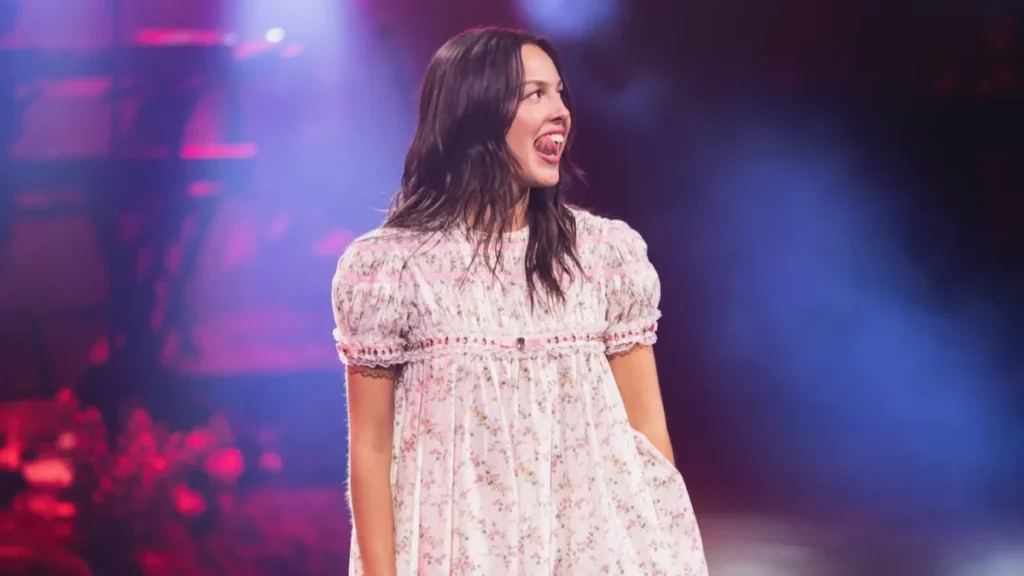

Pop superstar Olivia Rodrigo has ignited a significant cultural conversation, directly addressing the persistent scrutiny and criticism surrounding her stage attire. In a candid appearance on The New York Times’ Popcast, Rodrigo unequivocally stated that women "shouldn’t be responsible for some guy sexualizing you in a way that was never your intention," calling the online discourse "disturbing." Her remarks delve into the problematic double standards often applied to female artists, highlighting a societal tendency to blame victims of sexualization rather than holding perpetrators accountable.
The artist’s comments come amidst a broader, ongoing debate within the entertainment industry and wider society regarding female autonomy, public image, and the pervasive issue of the male gaze. Rodrigo, known for her sharp lyrical honesty and raw emotional delivery, has now extended that forthrightness to her public persona, challenging the very frameworks that dictate how young women, particularly those in the public eye, are perceived and judged.
The Catalyst: Scrutiny Over Stage Attire
Rodrigo’s statements were a direct response to recent online criticism targeting her concert outfits. The discourse intensified around particular looks, notably a "babydoll" style dress that some online commentators deemed "childlike" and, paradoxically, "inappropriate." This specific incident crystallized a deeper issue for Rodrigo, who articulated a stark contrast in public reaction. She recounted wearing "revealing outfits" such as a "sparkly bra" and "little shorts" on stage, which she felt empowered and "cool and comfortable" in, and which largely escaped the same level of condemnation. Yet, a more modest, fully covered dress provoked outrage and accusations of impropriety.
"What’s really, like, disturbing is I feel like I have worn outfits that are revealing on stage," Rodrigo explained on the Popcast. "I’ve been on stage in a sparkly bra, little shorts, which is my right. That’s fun. I felt cool and comfortable in that. And that wasn’t ‘inappropriate,’ but me, fully covered up in a dress that people deem to be, like, childlike was ‘inappropriate.’ And I just it just like shows how we really normalize pedophilia in our culture." This powerful assertion connects the seemingly innocuous criticism of a dress to a much darker societal undercurrent, suggesting a disturbing readiness to sexualize youth and blame the individual for the perceptions of others.
Rodrigo’s Stance on Sexualization and Victim-Blaming
At the core of Rodrigo’s argument is a profound rejection of victim-blaming culture, a phenomenon where individuals, particularly women and girls, are held accountable for the unwanted sexualization they experience. She articulated the pervasive rhetoric that girls are subjected to from a young age: "And also it’s just this rhetoric that we’re fed as girls since we’re so little, which is, ‘Don’t wear that because then a man is going to sexualize your body and it’s your fault.’ Like it’s so weird."
This societal conditioning places the onus on women to manage external perceptions of their bodies, rather than challenging the problematic gaze itself. Rodrigo emphasized that her fashion choices are driven by personal expression and comfort, not an intent to be perceived in a specific sexual manner. She cited influences like punk icons Kathleen Hanna and Courtney Love, figures known for their unapologetic style and artistic integrity, underscoring that her choices are rooted in a sense of artistic identity and empowerment. "I didn’t think I looked sexy in that at all. I was like, ‘This is so cool. I feel like I look like Kathleen Hanna or Courtney Love’… all these people who are my heroes. And I felt cool and comfortable in it."
She cautioned against a defensive approach to dressing, where fear of misinterpretation dictates style. "I just think if we start dressing in a way that’s like, ‘Oh, I don’t want some freak to think that I am sexy like a baby,’ or some crazy thing like that… I just, I just think it’s like losing the plot a little bit." For Rodrigo, yielding to such fears undermines artistic freedom and personal agency.
Historical Context: Female Artists and Dress Code Scrutiny
The scrutiny faced by Olivia Rodrigo is far from an isolated incident; it is a recurring theme in the history of female artists navigating the public sphere. From early Hollywood stars to modern pop icons, women in entertainment have consistently been subjected to intense examination of their appearance, often eclipsing their artistic contributions. Figures like Britney Spears, Christina Aguilera, and Miley Cyrus have, at various points in their careers, faced moral panic and public shaming over their evolving aesthetics, stage costumes, and perceived sexual expression.
This historical pattern reveals a societal discomfort with female artists asserting control over their bodies and public images, particularly when those images challenge traditional norms of modesty or femininity. There is a persistent double standard: male artists often enjoy greater freedom in their sartorial choices without similar levels of sexualized critique, while female artists are frequently placed under a microscope, their clothing choices dissected for perceived messages, intentions, or "appropriateness." This often manifests as a form of gatekeeping, attempting to dictate what is acceptable for women to wear based on an external, often conservative, moral framework.
The "babydoll" dress controversy, in particular, touches upon a deeper societal anxiety surrounding the intersection of youth, femininity, and sexuality. The garment itself, with its loose fit and often delicate fabrics, has roots in both historical children’s wear and 1990s grunge fashion, worn by artists like Courtney Love as a statement of rebellion against conventional sexiness. For critics to deem such an item "inappropriate" while more overtly "sexy" outfits pass with less comment underscores Rodrigo’s point about the arbitrary and often hypocritical nature of these judgments, ultimately revealing underlying biases that are less about the clothing itself and more about controlling female expression.
The "Popcast" Interview: A Deeper Dive into Rodrigo’s Platform
The New York Times’ Popcast served as a significant platform for Rodrigo to articulate her views. Known for its in-depth analysis of pop culture, music trends, and industry dynamics, the podcast provided an environment conducive to a nuanced discussion, moving beyond soundbites. Rodrigo’s choice to speak on this platform rather than a more traditional, high-glamour interview setting signals her intent to engage in a serious, intellectual discourse about these issues.
Her specific references to "normalizing pedophilia" and "losing the plot" highlight the gravity of her concerns. By connecting the criticism of her "childlike" dress to the normalization of pedophilia, Rodrigo drew a direct, stark link between seemingly innocuous fashion critiques and a much more insidious societal problem. This bold statement underscores her commitment to protecting younger women and girls from harmful rhetoric. "Ultimately," Rodrigo concluded, "I’m just very protective of like younger women and girls and, I don’t ever want them to be fed that rhetoric, I guess. You shouldn’t be responsible for some guy sexualizing you in a way that was never your intention."
The Broader Cultural Discourse: Objectification and Autonomy
Rodrigo’s intervention resonates deeply with ongoing feminist discourse surrounding objectification, female autonomy, and the male gaze. The concept of the male gaze, introduced by feminist film theorist Laura Mulvey, describes how women are often depicted in visual arts and literature from a masculine, heterosexual perspective that presents women as objects of male pleasure. In a broader societal context, this translates to women’s bodies and appearances being constantly evaluated and judged by external standards, often for male consumption.
Her comments contribute to a critical re-evaluation of how society discusses female bodies and agency. It challenges the deeply ingrained idea that women are responsible for managing the reactions of others to their physical appearance. This conversation extends beyond celebrity culture, touching upon everyday experiences of women and girls who face street harassment, dress code enforcement in schools, and professional biases based on appearance. Rodrigo’s platform amplifies these often-silenced experiences, bringing them to the forefront of mainstream media.
Industry Reactions and Fan Support
While specific official statements from "related parties" were not immediately available, Rodrigo’s comments are likely to garner significant support from within the music industry and among her vast global fanbase. Many artists and industry professionals have long advocated for greater artistic freedom and protection for women in entertainment. Her stance aligns with broader movements for gender equality and empowerment that have gained momentum across various sectors.
Fan reactions, particularly on social media platforms like X (formerly Twitter) where the initial snippet of her interview went viral, indicate overwhelming solidarity. Fans praised her articulate defense of female autonomy and her courage in addressing such a sensitive topic. This outpouring of support underscores the widespread recognition of these issues among younger generations, who are increasingly vocal about challenging patriarchal norms and advocating for self-expression. The rapid dissemination of her quotes across social media further demonstrates the power of these platforms in shaping and amplifying critical conversations.
Rodrigo’s Artistic Evolution and Upcoming Projects
This outspokenness is not merely a tangential celebrity comment but appears to be an integral part of Olivia Rodrigo’s evolving artistic identity. Since her explosive debut with "drivers license" and the critically acclaimed album SOUR, Rodrigo has cultivated an image of authenticity and emotional honesty. Her music often explores themes of heartbreak, insecurity, and the tumultuous experience of young womanhood. Her willingness to tackle complex social issues publicly further solidifies her position as a voice for her generation.
This period marks a significant chapter in her career. Rodrigo is poised to release her highly anticipated new album, you seem pretty sad for a girl so in love, on June 12th. The album title itself, with its nuanced blend of vulnerability and defiance, hints at the continued exploration of personal and societal pressures she faces. Following the album’s release, she will embark on an expansive world tour, providing her with numerous opportunities to showcase her evolving artistic vision and continue to challenge expectations through her performances and presence. Her live shows will undoubtedly become a platform for embodying the very principles of self-expression and autonomy she champions.
Conclusion: A Call for Cultural Shift
Olivia Rodrigo’s remarks on The New York Times’ Popcast represent more than just a celebrity defending her fashion choices; they are a potent call for a fundamental cultural shift. By directly challenging the ingrained rhetoric that holds women responsible for the actions and perceptions of others, she is advocating for a world where personal expression is celebrated, and accountability is placed squarely where it belongs. Her willingness to use her considerable platform to address issues of objectification, victim-blaming, and the sexualization of young women contributes significantly to a vital public discourse, empowering younger generations to question harmful norms and demand respect for their autonomy. As she continues her artistic journey with new music and a global tour, Rodrigo stands as a formidable voice in the ongoing fight for gender equality and authentic self-expression.