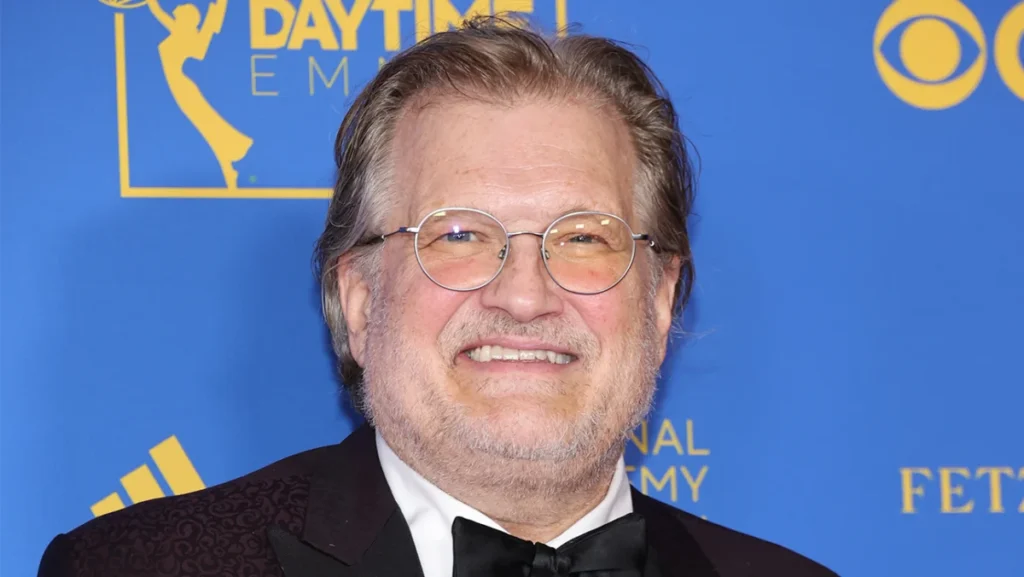

Veteran comedian and television personality Drew Carey has ignited a fervent public discussion by unequivocally condemning Los Angeles mayoral candidate Spencer Pratt, a former reality television star, through a sharply worded post on social media. Carey’s forceful intervention into the city’s political landscape underscores the growing tensions and diverse opinions surrounding the upcoming mayoral primary, especially as Los Angeles grapples with critical issues ranging from urban resilience to public safety. The primary election, scheduled for June 2, will determine who advances to challenge incumbent Mayor Karen Bass, and Pratt’s unconventional candidacy has certainly injected an unpredictable element into the race.
Drew Carey, widely known for his affable persona as the host of "The Price Is Right" and star of "The Drew Carey Show," took to Threads to express his profound disapproval of Pratt’s political aspirations. "Anyone who votes for, or endorses Spencer Prattfall for Mayor of LA needs to get their head out of their ass," Carey wrote, mincing no words. His statement continued, "I understand being angry/unsatisfied, but at least get behind someone competent and not some serial scammer without a soul or moral compass. Fuck this guy already." This uncharacteristically vitriolic outburst from Carey, who typically maintains a more neutral public stance on political matters, immediately garnered significant attention, highlighting the deep divisions and strong sentiments that Pratt’s candidacy has evoked across the city’s diverse population. Carey’s use of terms like "serial scammer" and "without a soul or moral compass" suggests a fundamental distrust of Pratt’s character and intentions, moving beyond policy disagreements to question his very fitness for public office.
Spencer Pratt, whose public image has been largely shaped by his appearances on popular reality television series such as "The Hills," "The Princes of Malibu," and "I’m a Celebrity… Get Me Out of Here!", formally announced his bid for mayor in January 2026. This announcement came approximately a year after a devastating series of wildfires ravaged Los Angeles, including the Palisades wildfire which tragically consumed his family’s home. The personal experience of loss and displacement propelled Pratt into the role of an outspoken activist, a narrative he has since woven into the fabric of his political campaign. His platform, while still evolving, has reportedly centered on themes of municipal accountability, disaster preparedness, and a call for fresh leadership in response to what he and his supporters perceive as a failure of the current administration.
The backdrop to Pratt’s candidacy is a city still reeling from the widespread devastation of the January 2025 wildfires. Beyond the Palisades incident, the Eaton fire also contributed to a period of intense crisis, burning vast swathes of land and destroying hundreds of homes across Los Angeles County. Estimates from various urban planning and environmental agencies placed the total economic damage in the hundreds of millions of dollars, with thousands of residents displaced and long-term ecological impacts anticipated. The immediate aftermath saw significant public outcry and widespread criticism directed at incumbent Mayor Karen Bass. Critics argued that the mayor’s office and associated city departments were slow to respond, lacked adequate preventative measures, and failed to provide transparent communication to affected communities. Public opinion polls conducted in late 2025 indicated a notable decline in voter confidence regarding the city’s emergency response capabilities, creating a fertile ground for challenger candidates like Pratt who could tap into this public dissatisfaction.
Mayor Bass, a seasoned politician with a background in social work and a long career in both state and federal legislatures before becoming mayor, has acknowledged the challenges posed by the wildfires but has defended her administration’s efforts, citing unprecedented climate conditions and the rapid escalation of the blazes. Her campaign has emphasized ongoing recovery efforts, long-term resilience strategies, and improvements to early warning systems, while also highlighting her broader agenda to tackle homelessness, enhance public safety, and foster economic development. However, the emotional toll and tangible losses experienced by residents have created a palpable desire for change among certain segments of the electorate, making the mayoral race particularly competitive.
Pratt’s campaign, despite its unconventional nature and the strong criticisms it has attracted, has managed to garner support from several prominent figures, adding another layer of intrigue to the race. Among his most notable backers are podcast titan Joe Rogan and former President Donald Trump. Rogan, known for his vast and often politically charged audience, frequently champions anti-establishment voices and individuals who challenge conventional political narratives. His endorsement of Pratt likely resonates with a segment of voters who feel disenfranchised by traditional politics and are drawn to outsider candidates. While Rogan himself has not offered a detailed explanation for his support, it is widely speculated that he views Pratt as an authentic, albeit unconventional, voice representing a populist uprising against entrenched political systems.
Perhaps even more surprising has been the endorsement from former President Donald Trump. Trump’s involvement in a local mayoral race, particularly in a predominantly liberal city like Los Angeles, signals a strategic move to energize a specific base and perhaps test the waters for future political maneuvers. While Pratt has publicly cast himself as a non-partisan candidate, his Republican backing, as previously reported by The Hollywood Reporter, has been a significant aspect of his campaign’s financial and ideological support structure. This dichotomy between a self-proclaimed non-partisan stance and clear partisan endorsements raises questions about the true nature of his political alignment and appeals to voters across the political spectrum. Political analysts suggest that Trump’s endorsement could galvanize conservative voters within Los Angeles County who might otherwise feel unrepresented in local elections, even if the city itself leans heavily Democratic.
However, Pratt’s candidacy is not without internal opposition, even from within his own family. His sister, Stephanie Pratt, has publicly voiced her strong disapproval of his mayoral bid, further complicating his campaign narrative. Stephanie Pratt’s opposition, which has been widely reported, centers on concerns about her brother’s temperament, his past controversies, and his perceived lack of serious administrative experience. Her statements have often highlighted a family dynamic fraught with tension, suggesting that she views his foray into politics as potentially detrimental to both his personal reputation and the integrity of the office he seeks. While family disagreements are not uncommon in politics, such public dissent from a close relative adds another dimension to the challenges Pratt faces in establishing his credibility with voters.
Adding to the circus-like atmosphere surrounding his campaign, reports surfaced earlier this month suggesting that Pratt had inked a deal for a reality show centered on his mayoral run. This development immediately drew comparisons to his past career and fueled cynicism about the sincerity of his political ambitions. Critics, including Drew Carey, seized upon these reports as evidence that Pratt might be leveraging the political arena primarily for entertainment purposes or personal gain. The idea of a mayoral campaign unfolding as a reality television spectacle raised ethical questions about the blurring lines between governance and entertainment, potentially undermining the seriousness of the issues facing Los Angeles. However, Pratt’s representatives were quick to downplay these reports, issuing a strong denial: "This is a non-starter as there is no signed contract. Nothing has been pitched, nothing has been filmed, there is no contact or deal of any sort in existence. Cameras have not been rolling and there are no plans at all for cameras to film." While the denial aimed to quell speculation, the initial reports themselves contributed to the perception that Pratt’s campaign might be more about performance than public service, a narrative that his opponents are eager to exploit.
The broader implications of Spencer Pratt’s candidacy extend beyond the immediate electoral contest. His entry into the mayoral race highlights a growing trend of celebrity figures, particularly those from reality television, transitioning into political roles. From Arnold Schwarzenegger’s governorship to Donald Trump’s presidency, the path from entertainment to politics has been well-trodden, often by individuals who leverage their public recognition and media savvy to bypass traditional political hierarchies. This phenomenon sparks ongoing debate about the qualifications required for public office, the role of charisma versus experience, and the impact of media saturation on political discourse. Some argue that celebrity candidates bring fresh perspectives and can energize a disengaged electorate, while others contend that they often lack the depth of policy understanding and administrative experience necessary to govern effectively, potentially trivializing serious civic responsibilities.
For Los Angeles, a city grappling with complex and deeply entrenched problems—including a persistent homelessness crisis, rising crime rates, an escalating cost of living, and the ongoing challenge of climate resilience—the mayoral election is of paramount importance. The next mayor will inherit immense responsibilities and face formidable tasks in addressing these multifaceted issues. The presence of a highly unconventional candidate like Spencer Pratt, who draws both passionate support and fierce condemnation, inevitably reshapes the nature of the debate. It forces traditional candidates to consider how to engage with a public increasingly influenced by social media and celebrity culture, while also challenging voters to discern genuine leadership from mere spectacle.
As the June 2 primary approaches, the dynamics of the Los Angeles mayoral race remain highly fluid. Polls, while varying, generally suggest a competitive field where no single candidate is assured a decisive victory in the primary. The outcome will depend on various factors: the effectiveness of campaign messaging, the ability of candidates to connect with diverse voter demographics, and the overall sentiment of a city yearning for effective solutions to its pressing challenges. Drew Carey’s outspoken critique serves as a potent reminder that for many, the stakes are too high to treat the election as anything less than a serious quest for competent and morally guided leadership, especially in a city facing such critical junctures. The ongoing dialogue around Pratt’s campaign, fueled by celebrity endorsements, family dissent, and questions of authenticity, will undoubtedly shape the narrative leading up to one of Los Angeles’s most closely watched electoral contests in recent memory.