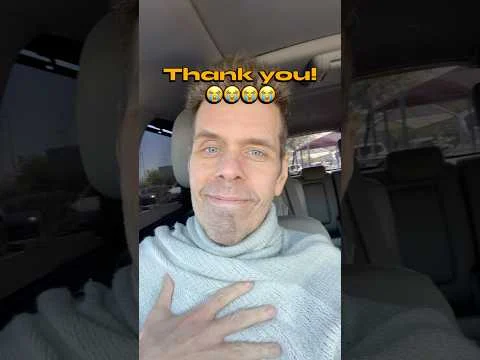

Reports emerging on April 18, 2026, indicate that renowned celebrity blogger Perez Hilton, born Mario Armando Lavandeira Jr., experienced a profoundly moving encounter during a routine grocery shopping trip at a Trader Joe’s in Las Vegas. The unexpected outpouring of support and well-wishes from members of the public, many of whom were seemingly aware of his recent severe health struggles, left Hilton deeply touched. His candid admission, "I’m not used to such kindness!" underscores a significant moment of personal reflection and a potential shift in public perception for the often-controversial media personality, following a harrowing battle with conditions including sepsis, deep vein thrombosis (DVT), and a thrombectomy for a blood clot, which he described as a near-death experience.
The incident highlights a compelling narrative of human connection and empathy, particularly striking given Hilton’s long and often tumultuous career in the public eye. His recent health crisis, which brought him to the precipice of mortality, appears to have resonated with a broad audience, transforming what might have been an ordinary errand into a testament to the power of shared human vulnerability and support during times of severe adversity.
A Moment of Unexpected Support
The scene unfolded as Perez Hilton navigated the aisles of a popular Las Vegas grocery store. Instead of the usual anonymity or occasional recognition associated with celebrity, Hilton was met with a series of sincere expressions of concern and encouragement. Individuals approached him, offering words of support, acknowledging his recent health challenges, and expressing relief at seeing him well. This unsolicited kindness evidently struck a profound chord with Hilton, who has historically been accustomed to a more polarizing public reaction. His immediate reaction, conveying surprise at the level of public compassion, speaks volumes about the impact of his recent near-death experience and the subsequent public awareness of his struggle.
For a figure whose career was built on candid, often critical, commentary on celebrity culture, this shift in public interaction represents a notable evolution. It suggests that his public sharing of a deeply personal and vulnerable health journey has fostered a connection with the general public that transcends his professional persona. The grocery store encounter serves as a poignant reminder that beneath the layers of fame and public image, shared human experiences, especially those involving fragility and resilience, can forge powerful bonds of empathy.
The Battle for Health: A Near-Death Experience
Perez Hilton’s recent health crisis has been a severe and multi-faceted ordeal. He has publicly revealed battles with sepsis, deep vein thrombosis (DVT), and the necessity of a thrombectomy to address a dangerous blood clot. Collectively, these conditions led to what he has characterized as a near-death experience (NDE), a term often used to describe profound psychological events associated with impending death, but medically rooted in physiological distress.
Sepsis is a life-threatening condition that arises when the body’s response to infection causes injury to its own tissues and organs. It can lead to shock, multi-organ failure, and death, particularly if not recognized and treated promptly. Globally, sepsis is a major cause of mortality, responsible for an estimated 11 million deaths annually, according to the World Health Organization. Survivors often face long-term physical, psychological, and cognitive impairments.
Deep Vein Thrombosis (DVT) involves the formation of a blood clot (thrombus) in a deep vein, most commonly in the legs. DVT can be extremely dangerous if the clot breaks loose and travels to the lungs, causing a pulmonary embolism (PE), which can be fatal. Risk factors for DVT include prolonged immobility, surgery, certain medical conditions like cancer, and severe infections such as sepsis, which can cause inflammation and damage to blood vessels, increasing the likelihood of clot formation.
A thrombectomy is a surgical procedure to remove a blood clot from a blood vessel. In cases of severe DVT or a life-threatening pulmonary embolism, a thrombectomy can be a critical intervention to restore blood flow and prevent further complications. Hilton’s mention of undergoing this procedure underscores the severity and immediate danger posed by his blood clot. His recovery from these interwoven and critical conditions signifies a testament to robust medical intervention and personal resilience.
Chronology of Crisis and Recovery
While specific dates for the onset of Perez Hilton’s health crisis prior to April 18, 2026, have not been fully detailed, the narrative implies a significant period of illness, treatment, and recovery. His public statements suggest that the health battle unfolded over several weeks or months, culminating in a critical phase where his life was in jeopardy.
The chronology likely began with the onset of an underlying infection that rapidly progressed to sepsis. This critical stage would have necessitated immediate hospitalization and intensive medical care, including antibiotics, fluid resuscitation, and organ support. During or shortly after the septic episode, the DVT would have developed, potentially as a complication of the infection and subsequent immobility. The diagnosis of a significant blood clot would then have led to the decision for a thrombectomy, a high-stakes procedure aimed at preventing potentially fatal pulmonary embolism.
The period following such acute medical interventions is typically characterized by an arduous recovery process. This involves physical rehabilitation to regain strength, management of residual symptoms, and psychological support to cope with the trauma of a near-death experience. The grocery store visit on April 18, 2026, can thus be seen as a significant milestone in his recovery journey – a public re-emergence that signifies a return to a semblance of normalcy, albeit one profoundly altered by his recent ordeal. It represents not just a physical recovery but also a psychological step forward, as he navigates public spaces with a newfound perspective.
Public Perception and Personal Evolution
Perez Hilton’s career, spanning over two decades, has been characterized by a distinctive and often provocative approach to celebrity journalism. Launching his blog in 2004, he quickly gained notoriety for his candid, sometimes scathing, commentary, and his practice of drawing on celebrity photos. This style earned him both immense popularity and significant criticism, establishing him as a polarizing figure in the entertainment industry. His brand was built on an unfiltered, opinionated voice that often pushed boundaries and challenged conventional media etiquette.
Over the years, Hilton has shown signs of evolving, particularly as he embraced fatherhood and matured personally. He has frequently spoken about his desire to move beyond some of the more aggressive aspects of his past persona, seeking to foster a more positive and supportive online environment. However, the shadow of his earlier reputation often lingered.
His recent health crisis, and his decision to share it publicly, marks a profound turning point. Vulnerability, especially concerning life-threatening illness, strips away pretense and connects individuals on a fundamental human level. By openly discussing his near-death experience with sepsis and DVT, Hilton has offered the public a glimpse into his personal fragility, fostering an unexpected wave of empathy. This shift in public perception suggests that shared human experience, particularly in the face of mortality, can transcend long-held public images and facilitate a re-evaluation of public figures. It underscores the idea that authenticity and vulnerability, even from those with complex public histories, can unlock reservoirs of compassion.
The Medical Realities: Understanding Sepsis and DVT
The medical conditions Perez Hilton endured are not only life-threatening but also widespread public health concerns. Understanding their nature is crucial for public awareness and early intervention.
Sepsis: This syndrome affects approximately 1.7 million adults in the U.S. each year, with nearly 270,000 deaths, according to the Centers for Disease Control and Prevention (CDC). It is the body’s extreme response to an infection. When an infection triggers a chain reaction throughout the body, it can lead to organ damage or failure. Symptoms can include fever, confusion, rapid heart rate, shortness of breath, and extreme pain. Early recognition and aggressive treatment with antibiotics and supportive care are paramount to improving survival rates. Survivors often face a range of post-sepsis syndrome symptoms, including chronic pain, fatigue, organ dysfunction, and psychological issues like PTSD.
Deep Vein Thrombosis (DVT) and Blood Clots: DVT affects an estimated 900,000 people in the U.S. annually, with up to 100,000 dying from DVT/PE, as reported by the CDC. A blood clot forms in a deep vein, most commonly in the leg, but can occur in other parts of the body. Risk factors are numerous and include surgery, cancer, genetic clotting disorders, prolonged bed rest or travel, and conditions like severe infection (sepsis) that cause systemic inflammation. The most feared complication is pulmonary embolism (PE), where a piece of the clot breaks off and travels to the lungs, blocking blood flow and potentially causing sudden death. Symptoms of DVT can include swelling, pain, tenderness, redness, or warmth in the affected limb.
Thrombectomy: This surgical procedure is performed to remove a blood clot from a blood vessel. It is typically reserved for severe cases of DVT or PE, especially when the clot is large, causing significant symptoms, or poses an immediate threat to life or limb. The procedure can be open surgery or a minimally invasive catheter-directed approach, aiming to restore blood flow and prevent further complications. Hilton’s need for this intervention underscores the critical nature of his condition and the immediate danger he faced. The interrelation between sepsis and DVT is particularly concerning, as severe infection can predispose individuals to hypercoagulability, increasing the risk of clot formation.
The Role of Faith and Gratitude in Recovery
Hilton’s public statements following his health crisis have frequently referenced "God," "Faith," "Religion," "Spirituality," "Jesus," and "Christ." This emphasis points to a significant spiritual component in his recovery and reflection process. For many individuals facing life-threatening illnesses, faith and spirituality provide a crucial framework for coping with fear, pain, and uncertainty.
Research indicates that spiritual beliefs and practices can play a vital role in psychological resilience and well-being during and after severe illness. They can offer a sense of purpose, meaning, and hope, fostering a positive outlook even in the direst circumstances. For Hilton, these elements likely provided comfort and strength during his near-death experience and the arduous journey of recovery. The mention of gratitude is also prominent, suggesting a profound appreciation for life and the support he has received. Gratitude, as a psychological construct, has been linked to improved mental and physical health outcomes, acting as a buffer against stress and promoting overall well-being. This spiritual and grateful perspective appears to be a cornerstone of his current outlook, influencing his interpretation of the public’s kindness.
Broader Implications: Empathy in the Digital Age
Perez Hilton’s experience at Trader Joe’s carries broader implications for understanding celebrity, public empathy, and the impact of shared human experiences in the digital age. In an era often characterized by online vitriol and performative outrage, this spontaneous outpouring of genuine kindness stands as a powerful counter-narrative.
Firstly, it underscores the enduring human capacity for empathy. Despite the often-impersonal nature of online interactions and the transactional relationship celebrities sometimes have with their audience, a shared moment of vulnerability can cut through the noise. When a public figure confronts mortality and shares that struggle, it humanizes them, allowing the public to connect with their suffering on a deeper, more relatable level.
Secondly, it highlights the evolving nature of celebrity-fan relationships. Social media allows for a more direct, albeit curated, connection between public figures and their audience. When a celebrity shares a personal crisis, it often creates a sense of collective concern, moving beyond mere entertainment consumption to a more supportive dynamic. The "Thank You!" video and subsequent public interaction demonstrate how this digital sharing can translate into real-world compassionate responses.
Finally, the incident serves as a subtle, yet potent, reminder of the importance of simple human kindness. In a fast-paced world, the act of acknowledging another’s struggle and offering words of support can have a profound impact, especially on someone who publicly admitted to not being "used to such kindness." It reiterates that fundamental human decency and compassion remain powerful forces, capable of transforming individual experiences and fostering a more empathetic society. The public’s reaction to Perez Hilton’s recovery is not merely a story about a celebrity; it is a story about the enduring power of human connection in the face of life’s greatest challenges.
Perez Hilton’s journey from a life-threatening health crisis to receiving an unexpected wave of public support marks a significant chapter in his personal and public narrative. It is a powerful illustration of resilience, the profound impact of vulnerability, and the enduring capacity for human empathy, even for figures long accustomed to a more complex public reception. As he continues his recovery, this encounter stands as a testament to the transformative power of shared human experience and the quiet strength found in simple acts of kindness.