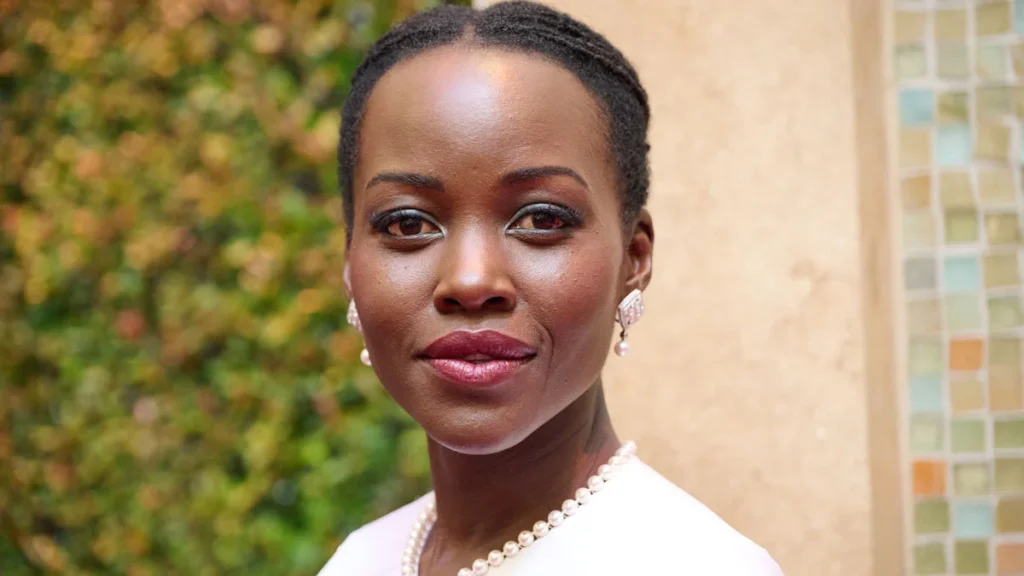

Award-winning actress Lupita Nyong’o, celebrated for her formidable talent and striking presence, has been cast as the iconic Helen of Troy in Christopher Nolan’s highly anticipated adaptation of The Odyssey. The announcement of Nyong’o in the pivotal role, which she described to Elle in a recent profile as a "deeply honored" entrustment, has, predictably for the current cultural climate, ignited a divisive online debate. While many commend the casting choice as a bold and inspired move by Nolan, a vocal segment of the internet has reacted with what Nyong’o herself gently but firmly categorizes as racist backlash, prompting her to issue a succinct and salient reminder: "This is a mythological story."
The epic poem The Odyssey, attributed to the ancient Greek poet Homer, stands as a cornerstone of Western literature, detailing the arduous ten-year journey of the hero Odysseus back to his kingdom of Ithaca following the Trojan War. Within this saga, Helen of Troy, though not a central figure in Odysseus’s direct narrative, looms large as a character whose legendary beauty is fabled to have launched a thousand ships and precipitated the decade-long conflict. Traditionally depicted in ancient Greek art and literature as having fair skin and hair, often representing an idealized Hellenic beauty, Helen’s image has become deeply ingrained in popular culture. However, the nature of mythology itself, as Nyong’o rightly asserts, lies in its narrative flexibility and symbolic resonance rather than its adherence to historical fact.
Christopher Nolan, a director renowned for his intricate narratives, ambitious visual spectacles, and often grounded approach even to fantastical concepts, takes the helm for this ambitious project. Nolan’s filmography, which includes cerebral thrillers like Inception, historical epics such as Dunkirk, and science fiction blockbusters like Interstellar, demonstrates a consistent interest in exploring complex themes and pushing cinematic boundaries. His decision to cast Nyong’o, a Black woman of Kenyan descent, as Helen of Troy, signals a deliberate artistic interpretation that prioritizes thematic depth, character essence, and contemporary relevance over a rigid adherence to perceived historical or racial literalism within a mythological framework. This approach is consistent with a growing trend in modern cinematic adaptations to re-examine classic narratives through a diverse lens, aiming to reflect a more inclusive global audience.
Lupita Nyong’o’s professional trajectory unequivocally establishes her as one of Hollywood’s most compelling and respected talents. Her Academy Award-winning performance in 12 Years a Slave (2013) garnered universal acclaim, showcasing her profound dramatic capabilities. Subsequent roles in films like Black Panther, Us, and Queen of Katwe have further solidified her reputation for versatility, strength, and captivating screen presence. Beyond her acting prowess, Nyong’o is also recognized for her elegance, intelligence, and outspoken advocacy for diversity and representation in media. Nolan himself articulated his reasoning for selecting Nyong’o, telling Elle, "The strength and the poise were so important to the character of Helen. And Lupita makes it look effortless… I was absolutely desperate for her to do the part." This statement underscores a casting philosophy that values an actor’s intrinsic qualities and their ability to embody the spirit of a character, rather than a superficial matching of traditional, often ethnocentric, aesthetic expectations. Nyong’o’s capacity to convey power, grace, and an almost ethereal quality makes her a compelling choice to portray a figure whose influence on a monumental conflict stemmed from her legendary allure and the profound impact she had on those around her.
The controversy surrounding Nyong’o’s casting is not an isolated incident but rather fits into a broader pattern of online backlash against diverse casting in adaptations of established properties, particularly those with European origins. Critics often invoke "historical accuracy" or "faithfulness to the source material" as justifications for their objections, despite the subject matter being mythological. This argument frequently overlooks the inherent artistic license involved in any adaptation, especially when translating ancient texts or myths into a modern cinematic language. Mythology, by its very definition, is a collection of stories, often involving supernatural beings or events, that embody a culture’s worldview, values, and fears. These narratives are not historical records; they are symbolic tales that have been reinterpreted and retold countless times throughout history. The notion of a singular, immutable "accurate" portrayal of a mythological figure like Helen, whose very existence is legendary rather than documented, disregards the fluid nature of storytelling and artistic interpretation.
Among the loudest voices amplifying this particular wave of criticism has been Elon Musk, the prominent entrepreneur and owner of the social media platform X (formerly Twitter). Musk, known for his provocative statements and frequent engagement in cultural debates, has reportedly been "on the warpath" regarding Nyong’o’s casting. While specific details of his direct commentary were not fully enumerated in the initial report, his past public statements often reflect a stance critical of what he perceives as "woke" ideology influencing media and entertainment. His engagement in such discussions, given his vast online following and influence, invariably galvanizes a segment of his audience and further amplifies the controversy, transforming an artistic decision into a socio-political flashpoint. The involvement of high-profile figures like Musk adds significant weight and visibility to these debates, moving them beyond niche fan discussions into broader cultural discourse, often with polarizing effects.
Nyong’o’s response, "this is a mythological story," serves as a direct and elegant rebuttal to arguments centered on anachronistic notions of racial or historical fidelity. It subtly highlights the fundamental misunderstanding inherent in criticizing the race of a character from a non-historical narrative. Furthermore, her statement, "Our cast is representative of the world. I’m not spending my time thinking of a defense. The criticism will exist whether I engage with it or not," showcases a profound understanding of the current media landscape and a commitment to Nolan’s broader artistic vision. This stance reflects a growing resolve among creators and actors to prioritize inclusive storytelling and artistic integrity over capitulation to vocal online opposition. It underscores a shift towards embracing global representation in narratives, acknowledging that stories, even ancient ones, resonate differently across diverse audiences today.
Adding another layer to Nolan’s progressive casting choices is the rumored involvement of Elliot Page, a prominent transgender actor, as Achilles’ ghost. Achilles, the greatest warrior of the Achaeans in the Trojan War and a central figure in Homer’s The Iliad, would appear as a spectral presence in The Odyssey. The casting of Page, a trans man, in such a role would further underscore Nolan’s commitment to a diverse and inclusive interpretation of the ancient Greek epic. This decision, if confirmed, would likely invite further commentary from those resistant to contemporary diversity in classical adaptations, while simultaneously being celebrated by advocates for LGBTQ+ representation in major Hollywood productions. It signals a deliberate artistic choice to embed modern sensibilities of identity and representation within a classical framework, challenging traditional portrayals and expanding the narrative’s potential resonance.
Director Christopher Nolan’s unwavering support for Nyong’o’s casting, emphasizing her "strength and poise," reinforces his vision for a Helen of Troy who embodies more than just superficial beauty. In the context of ancient Greek literature, Helen’s power was not merely aesthetic; it was her capacity to inspire awe, desire, and conflict, and to maintain a complex agency even amidst her mythological abduction. Nyong’o’s acting capabilities and inherent gravitas are ideally suited to portray such a multifaceted figure, transcending simplistic interpretations. Nolan’s previous works often explore complex moral landscapes and human endurance, and his Odyssey is expected to bring similar depth to the classic tale, utilizing a diverse cast to enrich its universal themes.
The broader implications of this casting controversy extend to the ongoing dialogue about representation in media, the evolving nature of artistic adaptation, and the impact of social media on cultural discourse. As Hollywood continues to grapple with calls for greater inclusivity, projects like Nolan’s The Odyssey serve as crucial battlegrounds where traditional expectations collide with modern sensibilities. The film’s eventual release on July 17th will undoubtedly reignite these discussions, providing a tangible example of how ancient narratives can be reinterpreted to reflect the complexities and diversity of the contemporary world. It will test the waters for how audiences and critics alike respond to a bold, modern vision of a story deeply embedded in cultural consciousness, prompting further reflection on the boundaries of adaptation and the enduring power of myth to speak to new generations through new voices and faces. The success or contentious reception of The Odyssey will contribute significantly to the ongoing conversation about the future of diverse storytelling in mainstream cinema, potentially paving the way for more inclusive interpretations of classic tales or reinforcing the challenges that such initiatives face.