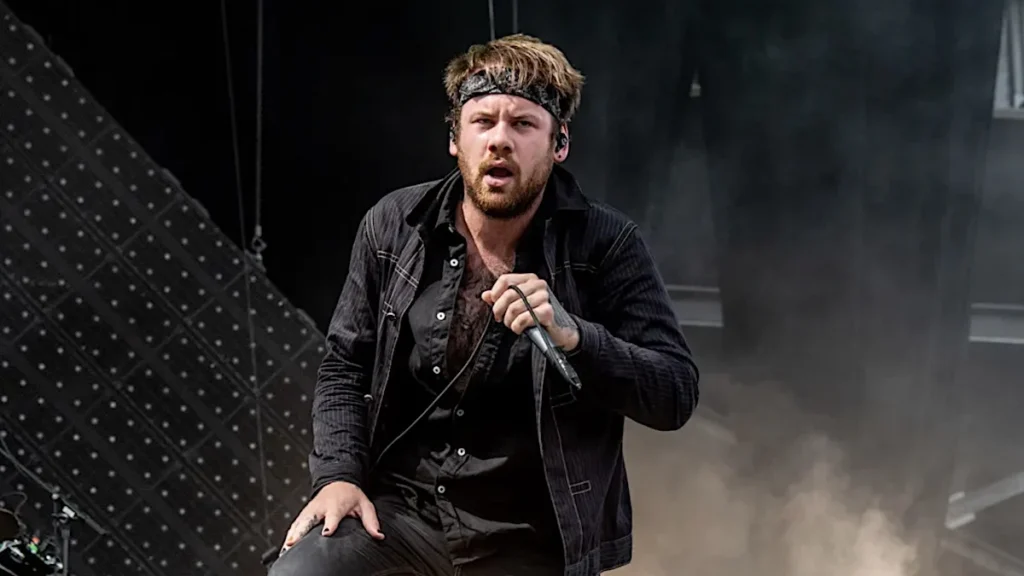

Beartooth frontman Caleb Shomo publicly declared himself a "proudly gay man" in a heartfelt social media statement released on Saturday morning, marking a significant personal revelation that aligns with a pivotal period for his band. The announcement arrives amidst a flurry of activity for Beartooth, including the recent unveiling of their forthcoming album, Pure Ecstasy, and an extensive Fall 2026 US tour. This disclosure follows a period of introspection for Shomo, who had temporarily withdrawn from social media in February after the release of the album’s lead single, "Free," a track that introduced a new musical direction and a refreshed aesthetic for the singer, unfortunately triggering a wave of homophobic comments online.
The Revelation and Its Immediate Context
Shomo’s statement, shared via his Instagram account, addressed widespread speculation about his personal life, asserting a need to clarify matters before they further impacted those close to him. "I am a proudly gay man," he unequivocally stated, bringing to light a journey of self-discovery and acceptance that has been deeply intertwined with his artistic output. This public declaration is not merely a personal update but a profound moment that resonates within the rock and metal community, where discussions of sexuality and identity have gained increasing prominence. The timing is particularly noteworthy given the band’s current trajectory, poised to release an album that Shomo himself has described as his most authentic work to date.
The period preceding this announcement was characterized by notable shifts within Beartooth’s creative sphere. The single "Free," released earlier in the year, showcased a stylistic evolution for the band, moving into territories that, while still retaining their signature intensity, hinted at a broader sonic palette. Accompanying this musical progression was a visual transformation for Shomo, which, regrettably, became a target for online vitriol rooted in prejudice. This experience, as suggested by Shomo’s subsequent social media hiatus, likely contributed to his decision to address his identity head-on, transforming a moment of vulnerability into one of empowering affirmation.
Caleb Shomo’s Statement: A Deep Dive into Self-Discovery
Shomo’s Instagram post provided an expansive and candid look into his personal journey, framing his coming out as a culmination of years of internal struggle and self-exploration. He articulated that this realization was "something I’ve been unpacking and reckoning with in my life for quite some time now," highlighting the complex emotional landscape he navigated. His honesty about the difficulty in reconciling these feelings and determining how to share this aspect of himself underscores the courage inherent in his public statement.
A recurring theme in Shomo’s artistic career with Beartooth has been a relentless pursuit of authenticity, channeling his deepest personal struggles into his music. He openly acknowledged the self-deprecating nature of the band’s earlier albums, which delved into his religious upbringing, battles with depression, self-hatred, self-loathing, and hopelessness. While expressing gratitude for these foundational works, he also conveyed a sense of embarrassment that he had not allowed himself to "really dig up the roots for so long." This sentiment suggests a deeper, perhaps subconscious, connection between his earlier lyrical themes and the underlying struggle with his sexual identity.
A critical turning point in Shomo’s journey, as detailed in his statement, was his decision to pursue sobriety. He revealed that he "spent a decade burying feelings with alcohol," and that putting down alcohol and focusing on understanding the root causes of his long-standing emotional turmoil directly led him to reconcile with his sexuality. This connection between sobriety, mental health, and self-acceptance offers a powerful narrative, illustrating how addressing one area of personal struggle can unlock profound revelations in others. This aspect of his journey serves as an important message for fans, particularly those grappling with addiction and identity issues.
For the upcoming album, Pure Ecstasy, Shomo committed to an unprecedented level of self-expression. He declared that before writing a single note, he resolved to "express myself whole heartedly and fully," vowing not to "water any part of it down, from the music, to the lyrical content, and way I portray myself." This pledge underscores the album’s potential as a deeply personal and transformative work, reflecting his newfound commitment to living authentically. He articulated a core belief: "I believe it’s impossible to love every part of you when you won’t face every part of you head on." His public coming out is presented as a "massive part of that journey" towards finally being proud of who he is.
Shomo extended heartfelt gratitude to those who have offered him love, empowerment, and support, whether through living openly, advocating for the queer community, or simply expressing unconditional affection. He concluded his statement with a powerful message of encouragement for anyone struggling with their identity, urging them to practice grace, patience, and honesty. He cautioned against burying feelings, emphasizing that such suppression only harms oneself and those around them, a lesson learned from his own experience. His closing sentiment, "Love you all, and hopefully this is a step in the right direction to loving myself one day," encapsulates the vulnerability and hope central to his message.
Chronology of Recent Events Leading to the Announcement
The timeline of events highlights a period of intense personal and professional development for Caleb Shomo and Beartooth:
- February 2026: Beartooth releases "Free," the first single and music video from Pure Ecstasy. The track showcases a new musical direction for the band, and Shomo debuts a new look. This release is met with a mixed reaction online, including homophobic comments directed at Shomo, prompting him to step away from social media temporarily.
- Spring 2026: Beartooth announces their new album, Pure Ecstasy, detailing its release date and confirming a Fall 2026 US tour.
- Saturday Morning (Date Not Specified, but implied May 2026): Caleb Shomo posts his statement on Instagram, publicly coming out as a "proudly gay man," addressing the speculation surrounding his personal life.
- August 28, 2026: Beartooth’s new album, Pure Ecstasy, is slated for release via Fearless Records.
- November 11, 2026: The Fall US tour commences in Boston, Massachusetts, featuring support from Don Broco, Magnolia Park, and Windwaker. The tour will traverse major cities across the United States, concluding on December 19th in Wheatland, California.
This sequence of events positions Shomo’s announcement not as an isolated incident, but as an integral part of Beartooth’s current chapter, deeply influencing the narrative surrounding their new music and upcoming performances.
Background on Beartooth and Shomo’s Artistic Journey
Beartooth, formed in 2012 by Caleb Shomo in Columbus, Ohio, quickly established itself as a significant force in the metalcore and hard rock scenes. Shomo, previously known for his role as the frontman and primary songwriter for the electronicore band Attack Attack!, founded Beartooth as a solo project, initially intended as a casual outlet for his musical ideas. However, the project rapidly evolved into a full-fledged band, releasing its debut EP, Sick, in 2013, followed by critically acclaimed albums like Disgusting (2014), Aggressive (2016), Disease (2018), and Below (2021).
Throughout Beartooth’s discography, Shomo’s lyrics have consistently explored themes of mental health struggles, internal conflict, and the pursuit of self-acceptance. His raw and unflinching honesty about his battles with anxiety, depression, and personal demons has resonated deeply with a dedicated fanbase, establishing him as a relatable voice for many young people facing similar challenges. The band’s musical style, characterized by a blend of aggressive riffs, melodic hooks, and Shomo’s powerful vocal delivery, has allowed them to carve out a unique niche within a competitive genre.
The progression of Beartooth’s sound has often mirrored Shomo’s personal growth. From the visceral angst of Disgusting to the more nuanced explorations of Disease and Below, each album has served as a sonic diary. His revelation regarding his sexuality and its connection to his sobriety and artistic integrity suggests that Pure Ecstasy will represent the most transparent and perhaps most transformative chapter in this ongoing narrative. The title itself, Pure Ecstasy, could be interpreted as a reflection of the joy and liberation that comes with authentic self-acceptance after years of struggle.
Industry Context: LGBTQ+ Representation in Rock and Metal
Caleb Shomo’s coming out is a significant moment within the rock and metal genres, which have historically been perceived as less diverse in terms of LGBTQ+ representation compared to pop or indie music. While the landscape is evolving, artists openly identifying as LGBTQ+ in hard rock and metal can still face unique challenges and, simultaneously, become powerful beacons of representation.
In recent years, there has been a noticeable increase in LGBTQ+ visibility across various music genres, with more artists feeling empowered to share their authentic selves. Figures like Laura Jane Grace of Against Me!, Lynn Gunn of PVRIS, and Alissa White-Gluz of Arch Enemy, among others, have contributed to a growing dialogue around identity in alternative music spaces. Shomo’s announcement adds a prominent voice to this conversation, particularly within the metalcore community, where Beartooth holds considerable influence.
The impact of such public statements extends beyond the individual artist. For countless fans, especially younger individuals who may be struggling with their own identity in environments that lack acceptance, seeing a respected figure like Shomo embrace his true self can be profoundly life-affirming. It fosters a sense of belonging and validates their experiences, contributing to a more inclusive and accepting cultural landscape within music. Conversely, it also shines a light on the persistent prejudices that still exist, as evidenced by the homophobic comments Shomo received earlier in the year. His decision to address these head-on, rather than retreat, underscores a broader shift towards demanding respect and challenging intolerance within fan communities.
Inferred Reactions and Broader Implications
While specific official reactions from the music industry or other artists were not detailed in the original content, it can be logically inferred that Caleb Shomo’s announcement would be met with widespread support from fans, peers, and industry professionals. In the current socio-cultural climate, public figures who come out often receive an outpouring of positive affirmation, celebrating their courage and honesty. Social media platforms, while capable of hostility, are also powerful tools for solidarity, and it is highly probable that messages of love and encouragement have flooded Shomo’s accounts and relevant online communities.
For Beartooth, this revelation is likely to deepen the connection with their existing fanbase, many of whom identify with Shomo’s lyrical themes of vulnerability and struggle. It may also attract new listeners who are drawn to artists who embody authenticity and advocate for self-acceptance. The band’s reputation for genuine emotion and lyrical depth will be further cemented, as Shomo’s personal life now openly mirrors the themes he has explored throughout his career.
The implications for Pure Ecstasy are particularly profound. The album, already anticipated for its musical evolution, will now be listened to through the lens of Shomo’s personal journey of coming out. Lyrics that might have been interpreted in a general sense of struggle could now carry a more specific and potent meaning related to his sexuality and his path to self-love. The album’s title itself, Pure Ecstasy, takes on a layered significance, potentially reflecting the profound joy and liberation that accompanies embracing one’s authentic identity. Live performances on the upcoming tour are also expected to be imbued with an added layer of emotional intensity, as Shomo performs songs that are now more explicitly tied to his lived experience.
Furthermore, Shomo’s candid discussion of his sobriety and its role in his self-discovery adds another layer of significance. This linkage reinforces the interconnectedness of mental health, addiction recovery, and identity formation. His message of "giving yourself grace" and "doing the hard work instead of burying it down" provides a powerful testimony to the transformative potential of self-reflection and honesty. This aspect of his statement will undoubtedly resonate with individuals navigating similar challenges, offering hope and validation.
In conclusion, Caleb Shomo’s declaration as a proudly gay man is a pivotal moment for him personally, for Beartooth, and for the broader rock and metal community. It underscores the ongoing evolution of these genres towards greater inclusivity and authenticity, while also highlighting the enduring power of music as a vehicle for personal truth and collective understanding. His journey, marked by artistic integrity, vulnerability, and resilience, serves as an inspiring testament to the importance of self-acceptance and the courage it takes to live authentically. As Beartooth prepares to release Pure Ecstasy and embark on their Fall US tour, the band’s narrative will be enriched by a newfound depth, promising an even more profound connection between artist and audience.