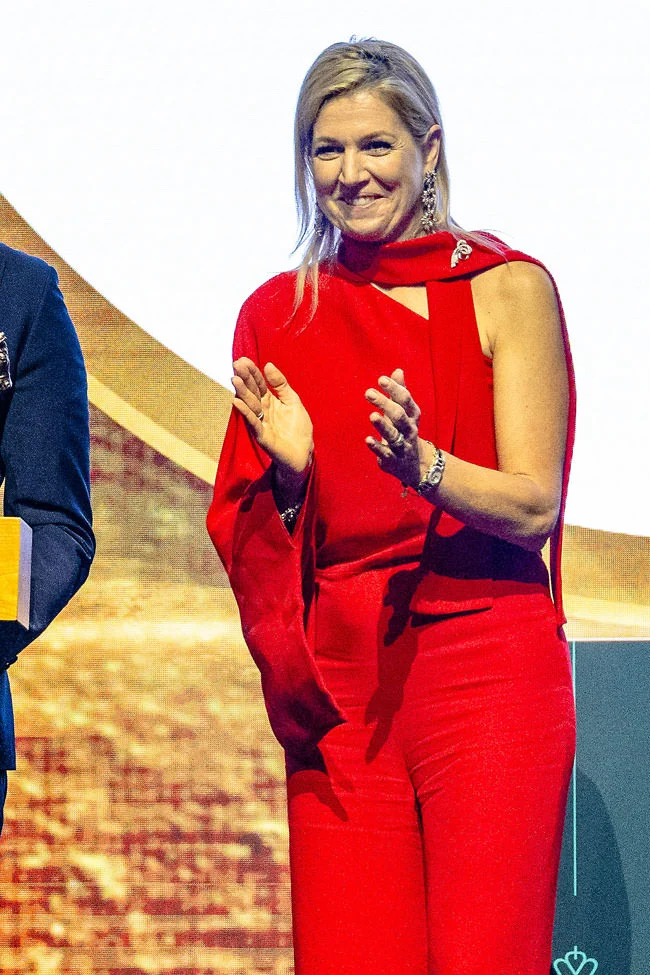

The presentation of the King Willem I Awards remains one of the most significant dates on the Dutch royal calendar, serving as a high-profile intersection between the monarchy and the nation’s burgeoning economic sector. In May 2026, Queen Máxima attended the biannual ceremony, reinforcing her long-standing commitment to Dutch entrepreneurship and innovation. As the honorary chair of the King Willem I Foundation, her presence at the event is not merely ceremonial; it represents the state’s recognition of corporate excellence, sustainability, and the "pioneer spirit" that characterizes the Netherlands’ global business reputation. For this iteration of the awards, the Queen made a distinct stylistic departure from traditional business attire, opting for a monochromatic ensemble that sparked significant discussion among fashion historians and royal observers alike.
The King Willem I Awards: A Legacy of Entrepreneurial Excellence
The King Willem I Awards are often referred to as the "Oscars of the Dutch business community." Established in 1958 by the De Nederlandsche Bank (DNB) and several prominent business organizations, the King Willem I Foundation was named after King Willem I (1772–1843), the first King of the Netherlands from the House of Orange-Nassau. Known as the "Merchant King," Willem I was instrumental in reviving the Dutch economy after the Napoleonic era, investing personal wealth into industrialization and infrastructure.
The foundation awards three primary prizes every two years: the King Willem I Prize in the "Large Company" category, the prize for "Small and Medium-sized Enterprises" (SME), and the "Plaquette for Sustainable Entrepreneurship." The 2026 ceremony highlighted the evolution of the Dutch economy, focusing heavily on green energy transitions, circular manufacturing, and digital integration. Queen Máxima, who has served as honorary chair since succeeding her husband, King Willem-Alexander, in the role, has consistently used this platform to advocate for inclusive finance and corporate social responsibility.
Aesthetic Analysis: The Valentino Red Jumpsuit
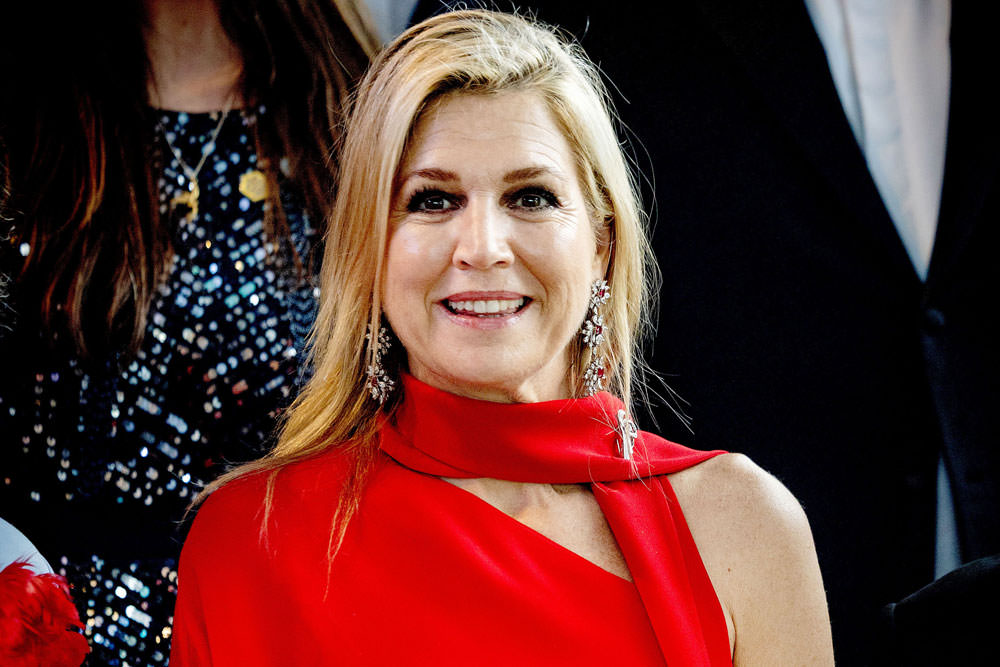
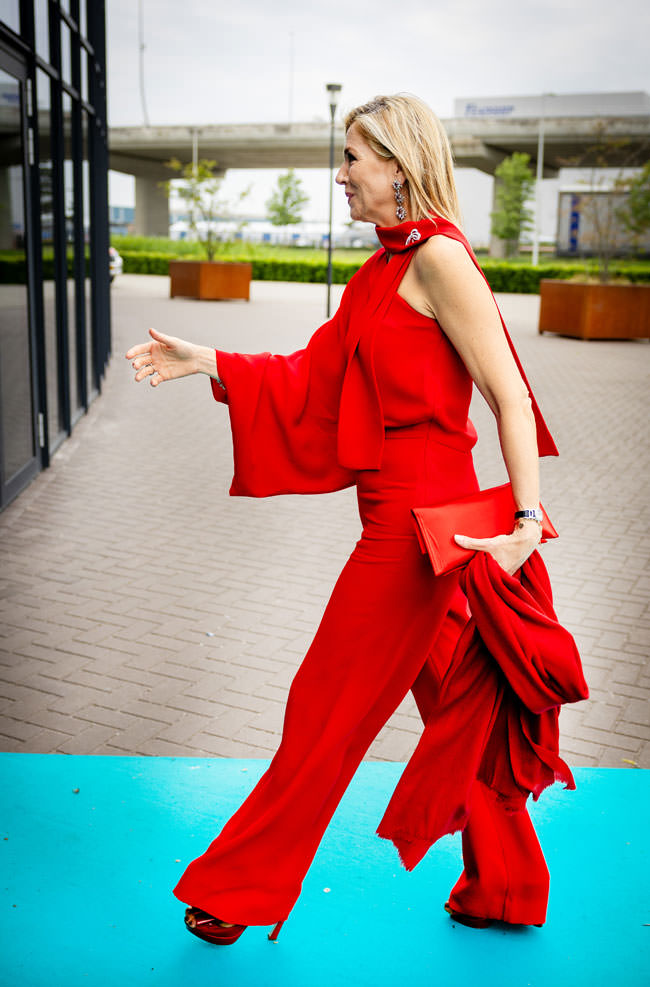
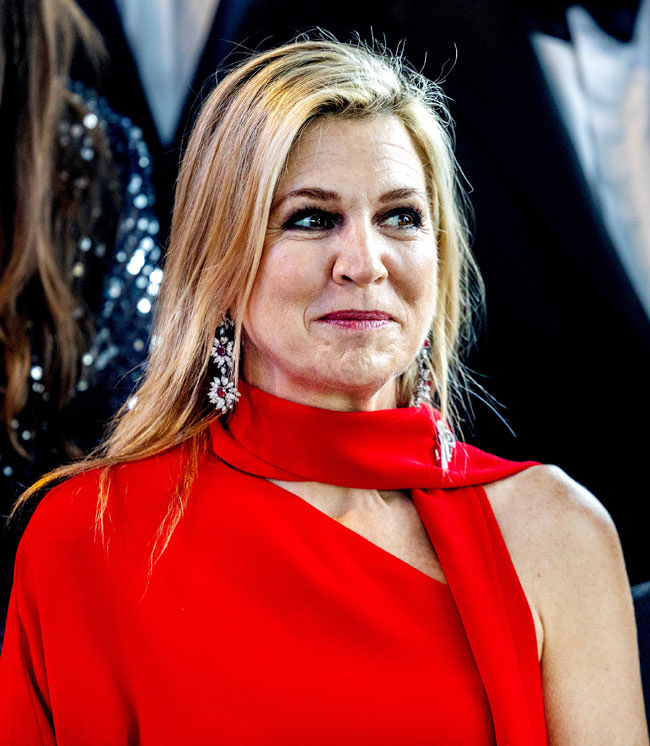
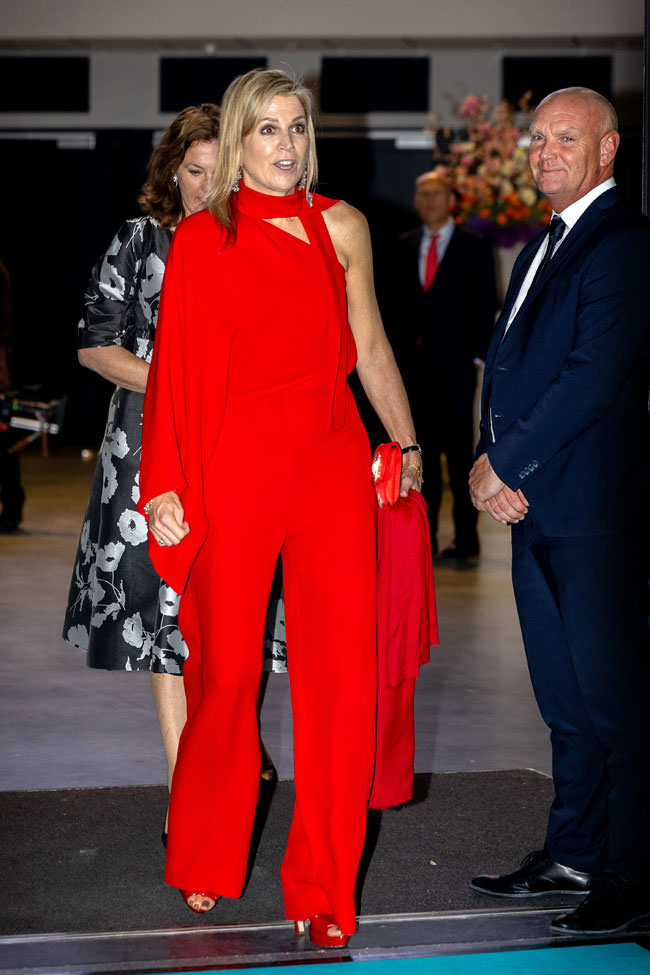
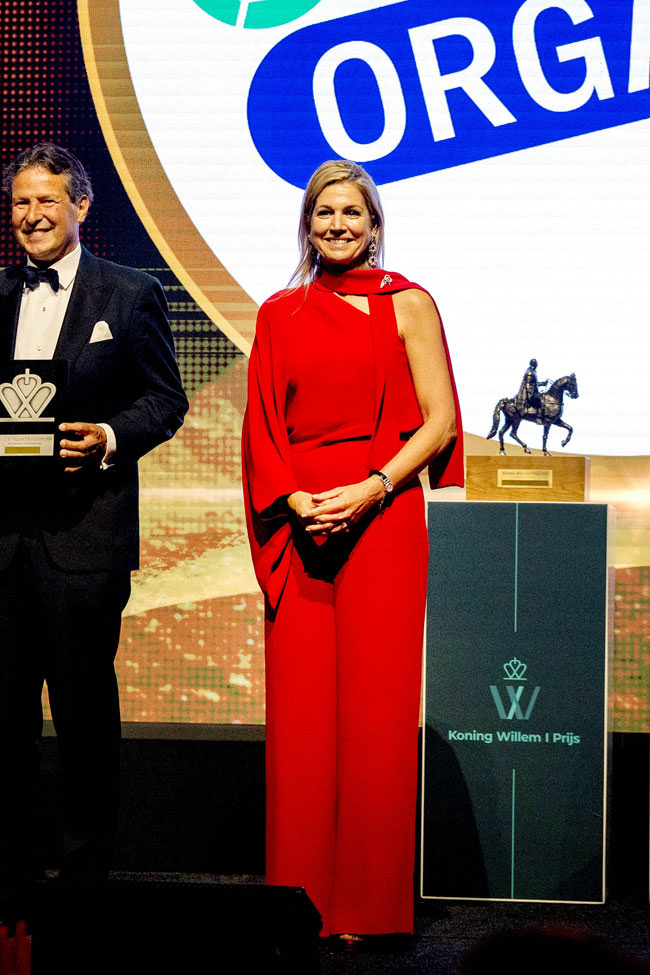
For the 2026 ceremony, Queen Máxima selected a vibrant, fire-engine red jumpsuit by the Italian fashion house Valentino. The choice was notable for its departure from the "business-casual" or "power suit" aesthetic typically seen at corporate award ceremonies. The jumpsuit featured a structured silhouette with a unique integrated scarf detail at the neckline, providing a dramatic flair that balanced the utilitarian origins of the garment.
The ensemble was accessorized with a red Miu Miu clutch and Valentino platform pumps. While the use of a singular color palette—monochrome dressing—is a frequent strategy employed by royals to ensure visibility in large crowds, the specific shades used in this appearance provided a nuanced study in tonal variation. The vibrant hue of the Valentino fabric contrasted with the deeper, more saturated tones of the leather accessories.
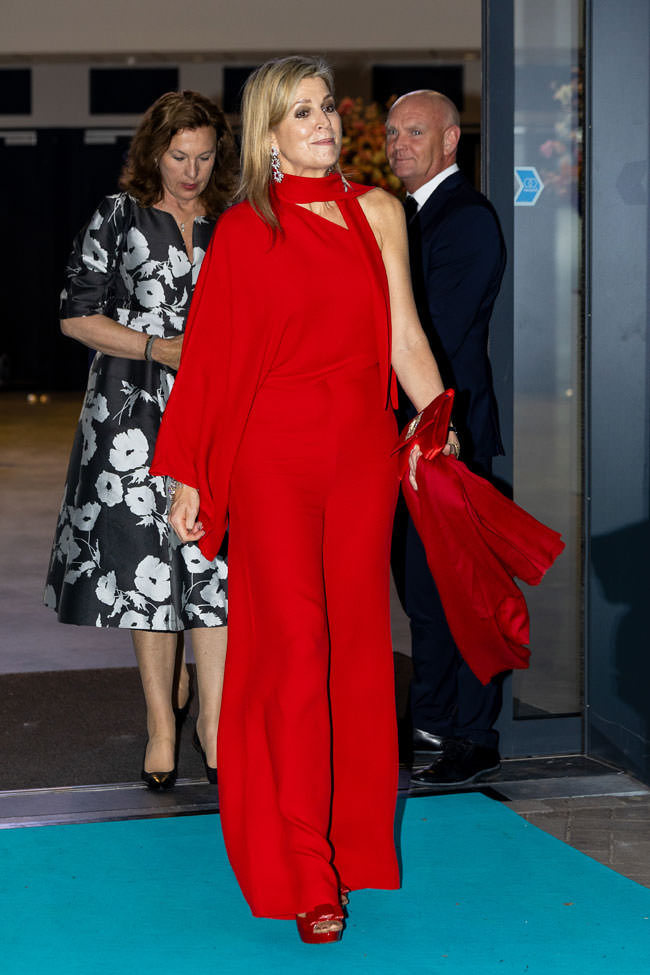
The decision to wear Valentino carries historical weight for the Dutch royal family. Valentino Garavani designed Queen Máxima’s wedding dress in 2002, a gown that has since been cemented as one of the most iconic royal bridal looks of the 21st century. By returning to the house of Valentino for a high-profile business event, the Queen maintains a sense of brand loyalty while adapting the house’s high-fashion DNA to a contemporary, professional setting.
Chronology of the 2026 Ceremony
The evening’s proceedings followed a rigorous schedule designed to showcase the breadth of Dutch industry:
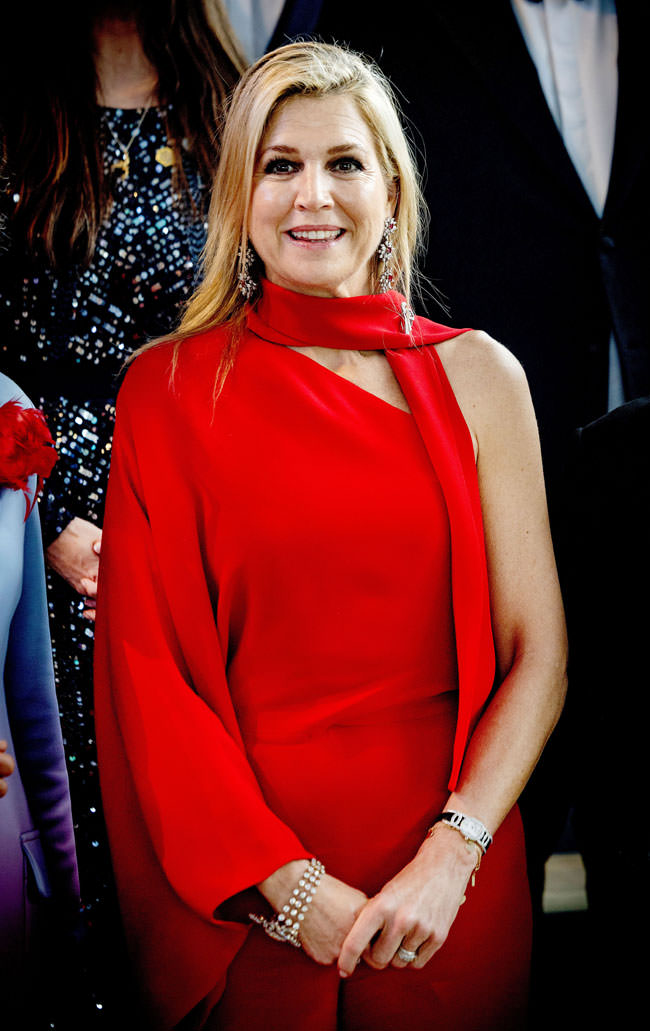
- Arrival and Reception: Queen Máxima arrived at the venue, greeted by the board of the King Willem I Foundation and local dignitaries. This initial phase of the evening allowed for informal dialogue with the finalists, many of whom represented the cutting edge of the Netherlands’ tech and agricultural sectors.
- Keynote Addresses: The ceremony opened with a series of speeches focusing on the economic outlook for 2026. Speakers emphasized the importance of resilience in the face of shifting global trade dynamics and the necessity of maintaining the Netherlands’ position as a hub for logistical innovation.
- The Award Presentations: The Queen took the stage to present the three main honors. The "Large Company" award was granted to a firm specializing in hydrogen-based maritime transport, while the SME prize went to a startup developing biodegradable alternatives to industrial plastics.
- Closing Remarks: The evening concluded with a call to action for the next generation of entrepreneurs, with the Queen highlighting the foundation’s role in mentoring young business leaders.
Supporting Data: The Economic Impact of the Foundation
The influence of the King Willem I Awards extends beyond the prestige of the trophy. Data from previous years indicates that winning companies often see a significant uptick in brand equity and international interest. According to economic reports released by the foundation:
- Growth Trajectory: Approximately 65% of SME winners reported an increase in export volume within 24 months of receiving the award.
- Sustainability Benchmarking: Since the introduction of the Plaquette for Sustainable Entrepreneurship, there has been a 40% increase in the number of Dutch firms applying for the award with comprehensive ESG (Environmental, Social, and Governance) reports.
- Innovation Funding: Winners often gain preferential access to venture capital networks facilitated by the foundation’s partners, including the Ministry of Economic Affairs and Climate Policy.
The 2026 awards saw a record number of nominations, with over 450 companies vying for the three top spots, reflecting a robust recovery and expansion in the post-pandemic European market.
Royal Fashion as Soft Power: An Analytical Perspective
The choice of attire by Queen Máxima at the King Willem I Awards serves as an example of "soft power"—the ability to influence and represent through cultural and aesthetic means. Unlike more traditional royal figures who may adhere to a strict "uniform" of pinstripes or conservative dresses, the Dutch Queen has cultivated a reputation for bold, avant-garde choices that mirror the innovative spirit of the awards themselves.
The jumpsuit, in particular, symbolizes a modern approach to royal duties. It suggests mobility, efficiency, and a break from the rigid formalities of the past. However, the choice also invites scrutiny. Fashion analysts noted that while the jumpsuit was a daring choice, the complexities of the design—specifically the integrated scarf—required precise tailoring to maintain a professional appearance. The use of platform heels, while a staple of the Queen’s wardrobe to accommodate her height and provide a commanding presence, also serves as a bridge between high-fashion trends and the requirements of royal visibility.
In comparison to other European consorts, such as Catherine, Princess of Wales, who often utilizes tailored suits and traditional motifs for business-related events, Queen Máxima’s style is distinctly more experimental. This aligns with the Dutch national identity, which prides itself on being "eigenwijs"—a term that translates roughly to "self-willed" or "pleasantly stubborn" in its pursuit of original ideas.
Broader Implications for the Dutch Monarchy
The participation of the Queen in the King Willem I Awards is a strategic component of the monarchy’s efforts to remain relevant in a modern democracy. By aligning the House of Orange-Nassau with the successes of the private sector, the royal family reinforces its role as a unifying force that celebrates national achievement.
The 2026 ceremony underscored several key themes that are likely to define the Dutch economy for the remainder of the decade:
- The Energy Transition: With several winners hailing from the renewable energy sector, the awards highlighted the Netherlands’ transition away from fossil fuels.
- Technological Sovereignty: The focus on AI and digital infrastructure in the SME category suggested a national push toward reducing reliance on external tech giants.
- Circular Economy: The emphasis on sustainability showed that "green" business is no longer a niche concern but a prerequisite for corporate excellence in the eyes of the state.
As the Queen departed the venue in her Valentino red, the imagery produced by the event served a dual purpose. It provided the media with a striking visual narrative of a vibrant, modern monarchy, while simultaneously shining a spotlight on the entrepreneurs who drive the Dutch economy forward. The King Willem I Awards 2026 will be remembered not only for the business leaders it honored but for the clear message it sent about the synergy between tradition and innovation in the Netherlands.