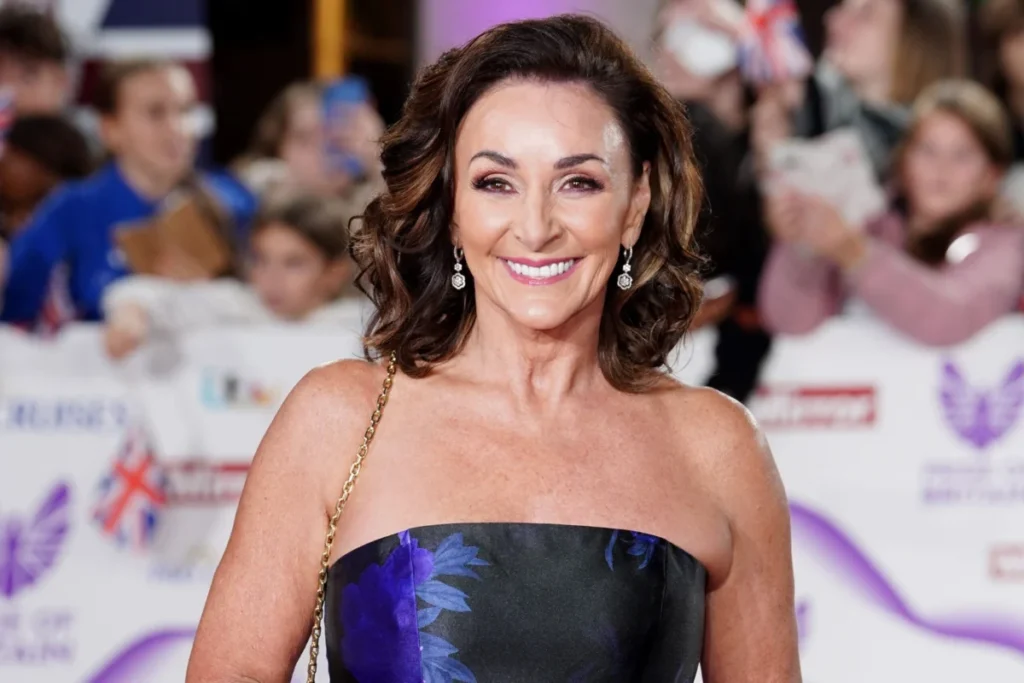

Strictly Come Dancing head judge Shirley Ballas has offered a candid insight into her personal life, revealing that living with her 88-year-old mother, Audrey Rich, brings her unparalleled joy and a sense of independence she found lacking in previous romantic relationships. Her heartfelt reflections, shared in a recent interview, underscore a broader societal shift towards multi-generational living and challenge conventional narratives surrounding romance, aging, and female autonomy in the public eye. Ballas, 65, who resides with her mother in south-east London, described their cohabitation as "the most joyous thing," highlighting her mother’s self-sufficiency as a stark contrast to her experiences with past boyfriends. This declaration comes amidst a period of significant personal change for Ballas, including the recent termination of her engagement and a firm stance on her future, both professionally and personally, as she prepares to return to the iconic Strictly judging panel.
A Life Defined by Dance and Dedication
Shirley Ballas’s journey to becoming a household name is a testament to decades of unwavering dedication to dance. Born in Wallasey, Merseyside, her early life was marked by an intense passion for ballroom and Latin dancing. By her early twenties, she had established herself as a formidable force in the competitive dance world, earning the moniker "Queen of Latin" for her unparalleled skill and numerous championships. Her career saw her achieve multiple British Open to the World Latin American Championship titles, as well as European and US titles, often partnering with her ex-husbands, Sammy Stopford and Corky Ballas. Her expertise and rigorous training regimen positioned her as one of the most respected figures in the global dance community.
In 2017, Ballas stepped into one of the most coveted roles in British television, succeeding the beloved Len Goodman as head judge on BBC One’s Strictly Come Dancing. Her appointment was met with considerable excitement, and she quickly established herself as a fair yet firm critic, known for her technical insights and empathetic approach. Strictly Come Dancing, a cultural phenomenon in the UK since its inception in 2004, regularly commands millions of viewers and has become a staple of Saturday night television. Its format, pairing celebrities with professional dancers, has reignited interest in ballroom and Latin dance across generations. Ballas’s role at the helm of the judging panel is pivotal, guiding the tone and standards of the competition, and her public persona has become inextricably linked with the show’s enduring success.
The Dynamics of a Multi-Generational Home
Ballas’s decision to have her mother, Audrey Rich, move in permanently four years ago, following Audrey’s health challenges including colon cancer and COPD, has evidently transformed her domestic life. Speaking to The Telegraph, Ballas painted a picture of a mutually supportive household where responsibilities are shared. "Living with her is the most joyous thing," Ballas stated, detailing how her mother contributes significantly to daily chores. "She does the washing and the ironing, and still stands on a stool to clean her ornaments – though I wish she wouldn’t. She puts the meals on the table, things like vegetable casseroles, and I take care of the rest. We are a bit like husband and wife."

This arrangement offers a compelling counter-narrative to traditional views on aging and family structures. Multi-generational living has been steadily increasing in popularity across the UK and other Western nations, driven by various factors including rising living costs, childcare needs, and the desire for enhanced elder care. Data from the Office for National Statistics (ONS) in the UK indicates a significant rise in multi-generational households, often defined as households with at least two adults from different generations. While precise figures vary, studies show that factors such as economic pressures, cultural preferences, and the need for support during times of illness or old age contribute to this trend. For many, like Ballas, it provides companionship, shared responsibilities, and emotional support, fostering a stronger family unit. Her description of Audrey as "self-sufficient" and not prone to "fuss" or dictating her actions highlights a dynamic rooted in mutual respect and independence, a stark contrast to her previous romantic experiences.
Candid Reflections on Romance and Independence
Ballas’s remarks about her mother’s self-sufficiency took on a sharper edge when juxtaposed with her experiences in romantic relationships. Having been married twice and recently ending her engagement to actor Danny Taylor in 2024 after six years together, Ballas candidly admitted, "I’ve had a few boyfriends and I just found myself always having to take care of them." This sentiment speaks volumes about her desire for a partnership built on equality and shared responsibility, rather than one where she feels burdened with the care of another adult. The end of her engagement to Taylor, who is 13 years her junior, was attributed to "unforgivable behaviour," a private matter she chose not to elaborate on but which clearly left a lasting impression on her views regarding romantic commitment.
Her reflections also extended to the pervasive societal double standards concerning age-gap relationships. When Taylor was labelled her "toyboy," Ballas expressed her frustration: "What annoys me is that older men dating younger women get applauded. Al Pacino is in his 80s and has just had a baby. Yet if women get a younger boyfriend it’s disdainfully looked upon. Women get judged." This observation resonates with broader feminist critiques of ageism and sexism, where women, particularly those in the public eye, often face harsher scrutiny for their personal choices than their male counterparts. The media’s portrayal and public reaction to women dating younger men often carry connotations of desperation or unconventionality, whereas similar arrangements for men are frequently celebrated as a sign of virility or success. Ballas’s articulate challenge to this imbalance adds her voice to a growing chorus of women advocating for equitable treatment and freedom from judgment in their personal lives.
Despite two "failed marriages and failed relationships along the way," Ballas maintains an openness to the idea of marriage. However, she acknowledges the inherent challenges of forming new bonds later in life: "But at this age you get set in your ways." This honest assessment reflects a common sentiment among older adults who have established routines and preferences, making the compromises often required in a new relationship more difficult to navigate. Currently single, she admits to having "friends" but "nothing I would want to tag as ‘boyfriend and girlfriend’," indicating a cautious approach to formalizing new romantic connections. Her current focus appears to be on the stability and joy she finds in her family unit and her professional commitments.
Embracing Technology: A Bridge for Generations
Beyond the personal dynamics, Ballas has also become an advocate for older adults embracing technology, using her mother’s journey as a compelling example. Audrey Rich, despite her health issues, has successfully adopted digital tools, a source of pride for both mother and daughter. "I’ve taught her not to be frightened of technology because it can be so helpful for older people if they are shown how it works. She loves using emojis," Ballas shared. Audrey can now order her medicine using her phone, a small but significant step towards greater independence and convenience.

This initiative aligns with national efforts to bridge the digital divide for seniors. Technology adoption among older generations has accelerated, particularly since the pandemic, as digital platforms became essential for communication, healthcare, and access to services. However, a significant portion of the elderly population still faces barriers to technology use, including lack of access, fear, or insufficient training. Ballas’s public endorsement of digital literacy for seniors highlights its profound impact on quality of life, enabling greater autonomy and connectivity. For Ballas herself, technology is crucial for maintaining close ties with her son, Mark Ballas, 39, also a celebrated professional dancer and judge on the US TV show Dancing with the Stars. Mark lives in California with his two-year-old son, Banksi, and Ballas proudly states, "We FaceTime every day," underscoring how digital communication keeps her connected to her grandson across continents.
The Future of Strictly and Beyond: A Legacy of Purpose
As the television landscape continually evolves, Ballas is preparing for her return to the Strictly Come Dancing judging table in September. While the original article contained an inaccuracy regarding the main hosts, it is important to clarify that Tess Daly and Claudia Winkleman remain the beloved presenters of the flagship show. Ballas’s comments about Emma Willis, Johannes Radebe, and Josh Widdicombe likely refer to collaborations on other projects, such as Cooking With The Stars where she previously worked with Emma Willis, or other entertainment industry colleagues. She expressed enthusiasm for these partnerships, stating, "I’ve worked with Emma (Willis) before on Cooking With The Stars and she is a true professional. And who doesn’t love JoJo (Johannes Radebe)? He’s a shining star." She also anticipated the "banter Josh (Widdicombe) is going to bring," adding that "he’s a fabulous comedian, I know he’s going to give Craig Revel Horwood a run for his money with the comebacks." These interactions highlight her continued engagement with various facets of the entertainment world beyond her primary role on Strictly.
Looking further ahead, Ballas holds a clear vision for her post-television future. Despite the eventual conclusion of her TV career, she firmly states, "I don’t think I’ll ever retire, I’m not going to sit in the garden planting tulips, that’s not who I am." This resolute stance reflects a broader trend among high-achieving individuals who find purpose and fulfillment beyond conventional retirement ages. For Ballas, her television platform has served a greater purpose: "The TV work will come to an end, that’s how it works, but it’s given me a platform to help people – charities, campaigns, COPD awareness – and that’s the part I love." Her dedication to advocacy, particularly for causes like COPD awareness, stemming from her mother’s condition, showcases her commitment to leveraging her public profile for social good. Coupled with her enduring passion for dance teaching, where she loves "helping young people achieve their dreams, just as I have," Ballas is charting a path that blends continued contribution with personal fulfillment, well beyond the glitz and glamour of prime-time television.
Shirley Ballas’s candid revelations provide a compelling narrative about the evolving nature of family, relationships, and personal fulfillment in contemporary society. Her experience living with her mother underscores the increasing relevance of multi-generational households as a source of mutual support and independence. Simultaneously, her critical reflections on romantic relationships and societal double standards offer a powerful commentary on female autonomy and the ongoing quest for equitable treatment. As she continues to grace our screens and advocate for causes close to her heart, Ballas remains a prominent figure whose personal journey continues to resonate with and challenge public perceptions of age, love, and purpose.