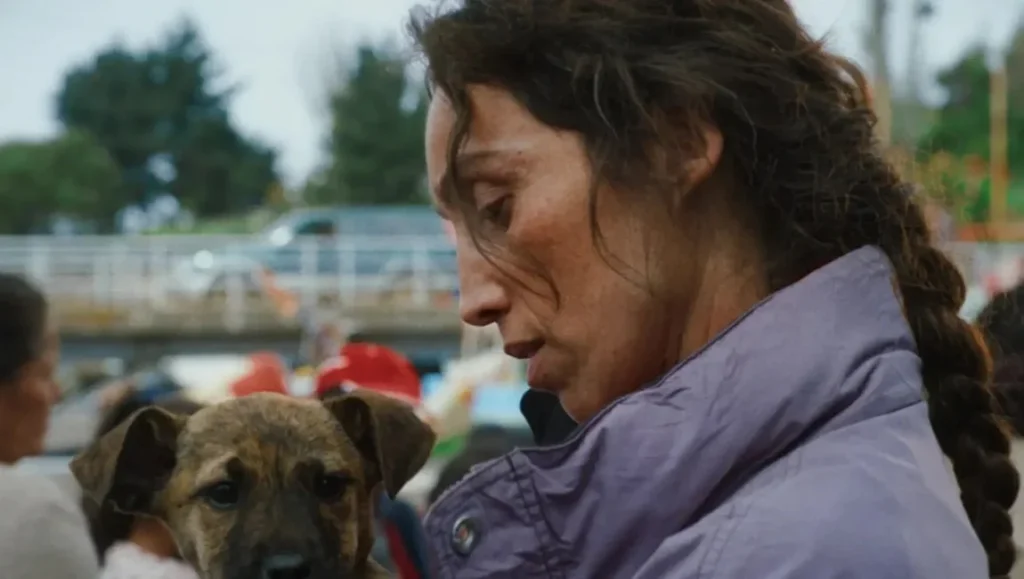

The 2024 edition of the Cannes Film Festival once again concluded with its beloved, unofficial, yet highly anticipated, Palm Dog awards, a ceremony that celebrates the finest canine performances in cinema. This year, the event delivered a striking thematic resonance, honoring two female dogs from films helmed by two acclaimed women directors, underscoring both the rising prominence of female voices in filmmaking and the undeniable impact of animal actors on screen. Held at the convivial Cannes Members Club, the awards ceremony drew a significant crowd, captivated by stories of furry stars whose performances evoked both laughter and profound emotion.
The Genesis and Evolution of the Palm Dog
Founded in 2001 by British journalist Toby Rose, the Palm Dog began as a whimsical counterpoint to the more formal accolades bestowed at the Cannes Film Festival. What started as a quirky side event has, over two decades, blossomed into a genuine Cannes fixture, commanding international media attention and a dedicated following. The award, a prestigious embossed leather collar, recognizes outstanding canine contributions across the festival’s official selection, Un Certain Regard, and various parallel sections like Directors’ Fortnight and Critics’ Week. Its growing stature reflects a broader appreciation within the film industry for the nuanced and often scene-stealing performances delivered by animal actors, acknowledging their integral role in storytelling rather than merely as props. Past winners have included Uggie from The Artist (2011), often credited with helping the silent film achieve widespread critical and commercial success, and Brandy from Quentin Tarantino’s Once Upon a Time in Hollywood (2019), demonstrating the award’s reach across diverse cinematic landscapes and its capacity to predict future industry darlings. The Palm Dog’s unique blend of irreverence and genuine recognition has solidified its place as a cherished highlight of the festival calendar.
A Thematic Convergence: Celebrating Female Vision and Canine Charisma
This year’s awards felt particularly symbolic, weaving together threads of directorial talent and captivating animal presence. The distinct pattern of two female directors leading films featuring two remarkable female dogs, both securing top honors, did not escape observers. It highlighted a serendipitous, yet powerful, thematic through-line that resonated deeply with the ongoing global conversations about gender representation in cinema. While the Palm Dog itself does not explicitly set out to champion diversity, its outcomes often reflect the broader trends and emerging talents showcased at Cannes. The success of Dominga Sotomayor and Clio Barnard, both critically acclaimed filmmakers known for their distinctive narrative styles, alongside their canine stars, offered a compelling narrative of artistic synergy. This alignment serves as a subtle yet significant nod to the increasing visibility and impact of women behind the camera, whose storytelling often brings fresh perspectives and emotional depth to their narratives, sometimes featuring unconventional or overlooked characters, including animals.
Yuri’s Triumph: A Journey of Freedom in "La Perra"
The coveted main Palm Dog award was bestowed upon Yuri, the remarkable canine star of Chilean director Dominga Sotomayor’s latest feature, La Perra. Premiering in the Directors’ Fortnight sidebar, a section renowned for showcasing innovative and independent filmmaking, La Perra captivated audiences with its raw emotional landscape and Yuri’s compelling performance. Sotomayor, an acclaimed figure in contemporary Latin American cinema known for her contemplative and intimate narratives such as Thursday Till Sunday and Too Late to Die Young, adapted the film from Pilar Quintana’s novel, drawn to its unflinching portrayal of the human-animal bond.
In La Perra, Yuri is introduced as a roguish stray, a creature of untamed spirit that disrupts the solitary existence of Silvia, the film’s protagonist. Named by Silvia after a vibrant 1980s Mexican pop star whose hits occasionally punctuate the film from a rickety television set, Yuri’s presence on a windswept island off the southern coast of Chile becomes the catalyst for Silvia’s profound journey of self-discovery. The dog’s untamed nature forces Silvia to confront long-buried childhood traumas and re-evaluate her own identity and desires.
Sotomayor articulated her fascination with the source material’s refusal to romanticize the relationship between dog and owner. She spoke of the "fascinating tension between domestication and an animal’s uncontrollable nature," a central theme that Yuri embodies with striking authenticity. Accepting the engraved leather collar in person, Sotomayor emphasized her intention to craft a dog role that transcended mere companionship, aiming for a "deep character, looking for identity and freedom." In Yuri, with her restless energy, willful independence, and magnificent self-possession, Sotomayor found the perfect embodiment of this vision, delivering a performance that resonated deeply with the Palm Dog jury. The win for La Perra not only spotlights Chilean cinema but also underscores Sotomayor’s continued trajectory as a significant global directorial talent, capable of extracting profound performances from all her actors, irrespective of species.
Lola’s Heartwarming Story: A Beacon of Change in "I See Buildings Fall Like Lightning"
The Palm Dog Jury Prize was awarded to Lola, the unforgettable female canine presence in Clio Barnard’s I See Buildings Fall Like Lightning. This film, also a standout in the Directors’ Fortnight and fresh from securing the sidebar’s prestigious People’s Choice Award, offered a poignant exploration of working-class lives in contemporary Britain. Barnard, a celebrated British filmmaker whose previous works like The Selfish Giant and Ali & Ava have garnered critical acclaim for their gritty realism and empathetic character studies, brings her distinctive vision to this ensemble drama.
In I See Buildings Fall Like Lightning, Lola belongs to Oli, a slacker and small-time drug dealer portrayed by Jay Lycurgo. Lola’s arrival in Oli’s life serves as a pivotal turning point, inspiring him to reconsider his choices and embark on a path toward change. Their relationship was frequently cited by reviewers as one of the most heartwarming and authentic depicted in any film at this year’s festival, a testament to Barnard’s storytelling and Lola’s compelling presence. The film itself is a nuanced kitchen-sink drama that follows five working-class friends – Patrick, Shiv, Rian, Oli, and Conor – who grew up together in a Birmingham tower block. Now in their thirties, they find themselves navigating increasingly divergent and often constrained paths to the future, with Lola offering a glimmer of hope and unconditional affection amidst their struggles.
Clio Barnard attended the Palm Dog ceremony accompanied by Soprano, Lola’s female stand-in, a strikingly convincing lookalike who accepted the coveted collar with considerable enthusiasm and a joyful wriggle, much to the delight of the crowd. This tradition of finding a local substitute when the actual canine star cannot travel is a cherished quirk of the Palm Dog, with Toby Rose famously making it his mission to track down suitable doubles. However, it was Barnard’s account of Lola’s own backstory that provided the afternoon’s most poignant and emotionally resonant moment. Before the collar was fastened, Barnard shared that Lola had once lived rough on the streets before being rescued by an animal shelter. It was there, amidst her recovery, that she was discovered by the production team and cast in the film. The director movingly described Lola’s journey from stray to Cannes award-winner as a "true rags to riches story," a narrative arc that mirrored the transformative power often seen in Barnard’s human characters and underscored the film’s themes of redemption and hope.
The Ceremony’s Emotional Crescendo and Playful Conclusion
The atmosphere at the Cannes Members Club during the Palm Dog ceremony is always a unique blend of formal recognition and playful festivity. This year, the palpable warmth generated by Lola’s inspiring backstory was a particular highlight, drawing audible sighs and smiles from the audience. The recognition of animals who have overcome adversity, mirroring human narratives of resilience, adds a powerful layer of meaning to their on-screen achievements. The ceremony reached its customary playful peak with Toby Rose himself taking to the microphone for a karaoke tribute. With characteristic gusto, Rose belted out the iconic opening lines to Barry Manilow’s classic "Copacabana": "Her name was Lola, she was a showgirl…" The spontaneous performance, a beloved Palm Dog tradition, encapsulated the spirit of the event: a celebration of cinematic excellence, delivered with wit, warmth, and an enduring affection for the festival’s most charming, four-legged stars.
Broader Implications and the Evolving Role of Animal Actors in Cinema
The double triumph at this year’s Palm Dog Awards carries broader implications for the film industry. Firstly, it reinforces the growing recognition of animal performances as sophisticated and essential elements of cinematic storytelling. No longer are animal actors simply considered background elements or comedic relief; films like La Perra and I See Buildings Fall Like Lightning demonstrate their capacity to embody complex themes, drive narrative arcs, and forge deep emotional connections with audiences. This evolving perspective encourages filmmakers to integrate animal characters more thoughtfully and ethically into their creative processes, often leading to more authentic and impactful portrayals.
Secondly, the success of films by Dominga Sotomayor and Clio Barnard, both of whom have consistently pushed boundaries in their respective national cinemas, further highlights the increasing influence of female directors on the global stage. Their ability to craft compelling narratives that resonate with international audiences, coupled with their insightful direction of both human and animal actors, speaks to a powerful and diverse creative force. The thematic through-line of female directors and female dogs, while coincidental, serves as a celebratory echo of the ongoing efforts to achieve greater gender equity and representation within the film industry.
In an era where discussions around representation, authenticity, and the emotional impact of cinema are paramount, the Palm Dog Awards continue to serve as a charming, yet significant, barometer of the industry’s evolving sensibilities. This year’s winners, Yuri and Lola, are not just memorable canine performers; they are symbols of stories told with heart, directed with vision, and celebrated for their unique ability to enrich the tapestry of world cinema. Their victories underscore that whether from the streets of Birmingham or the remote coasts of Chile, a powerful performance can come from anywhere, or indeed, from any species, proving that sometimes, the most profound cinematic magic comes on four paws.