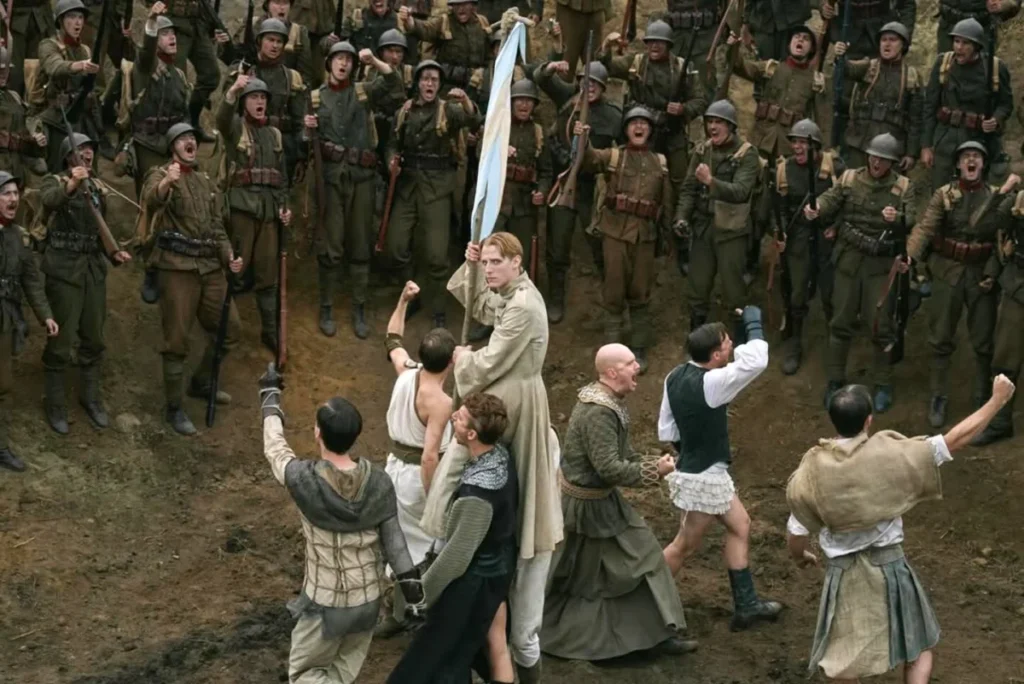

The 79th annual Cannes Film Festival, held against the picturesque backdrop of the French Riviera, has once again served as a global stage for cinematic excellence, premiering a diverse array of films that are poised to define the discourse of the year. Among the most anticipated and critically lauded selections in the Main Competition is Lukas Dhont’s latest offering, Coward, a profoundly moving and visually arresting exploration of love amidst the brutal realities of World War I. The film, which received a standing ovation following its premiere, has quickly established itself as a frontrunner in the race for the Palme d’Or, solidifying Dhont’s reputation as one of contemporary cinema’s most sensitive and insightful storytellers.
Coward transports audiences to the desolate Western Front in 1916, a period etched in history by unprecedented conflict and immense human suffering. The narrative centers on Pierre, a young Belgian soldier portrayed with remarkable vulnerability by Emmanuel Macchia. Upon arrival at the front, Pierre, like many of his compatriots, is confronted with the grim reality of trench warfare, a stark contrast to the patriotic fervor that may have initially propelled him into service. The film masterfully captures the demoralizing conditions, the constant threat of death, and the profound psychological toll exacted on these young men.
In an effort to combat the pervasive despair and foster camaraderie, a group of soldiers within Pierre’s brigade devises an unconventional form of entertainment: a theatrical revue. This initiative, born out of a desperate need for levity, evolves into a poignant showcase of artistic expression. The troupe’s performances, which include early instances of men adopting female personas in a drag show, serve as a vital escape from the horrors of their daily existence. Central to this artistic endeavor is Francis, a charismatic and flamboyant figure played with captivating élan by Valentin Campagne. It is through this shared artistic pursuit that Pierre and Francis forge a profound connection, a quiet burgeoning of love that offers solace and a reason to persevere in the face of overwhelming adversity.
Lukas Dhont, the acclaimed Belgian director behind the Oscar-nominated Close (2022), demonstrates in Coward a remarkable evolution in his filmmaking prowess. While Close explored the intense, often unspoken bonds between adolescent boys, Coward tackles a more expansive canvas, interweaving a deeply personal love story with the grand, tragic sweep of a global conflict. The screenplay, co-written by Dhont and Angelo Tijssens, navigates the delicate balance between the harshness of war and the tender vulnerability of human connection with a grace and precision that has become Dhont’s hallmark. The film’s visual language is as compelling as its narrative, with stunning cinematography that captures both the bleakness of the battlefield and the intimate moments of connection between Pierre and Francis. The score, a crucial element in conveying the film’s emotional resonance, further amplifies the on-screen drama.
The thematic resonance of Coward extends beyond its central romance. The film offers a powerful commentary on the restorative and transformative power of art and performance, particularly in times of extreme duress. The soldiers’ theatrical endeavors are not merely diversions; they are acts of defiance against dehumanization, affirmations of their continued humanity. This aspect of the film draws parallels with other works showcased at Cannes 2026, such as Ira Sachs’ The Man I Love, another Main Competition entry that delves into the role of art in mitigating difficult circumstances. The thematic kinship with films like La Bola Negra, a Spanish triptych exploring gay narratives, and Flesh & Fuel, a celebrated gay trucker romance, underscores a prevailing trend at this year’s festival: a profound exploration of love in its myriad forms and a celebration of stories that affirm human connection and resilience.
Coward‘s exploration of love between two soldiers in the trenches of World War I positions it within a broader cinematic tradition of war films that have sought to humanize the conflict by focusing on individual experiences. Films like 1917 and All Quiet on the Western Front have previously depicted the brutal realities faced by soldiers, but Coward distinguishes itself by foregrounding a tender, homoerotic romance as a central driving force. This narrative choice offers a fresh perspective on the often-homogenized portrayals of wartime camaraderie and sacrifice, highlighting the diverse forms that love and connection can take, even in the most dire circumstances.
The critical reception for Coward has been overwhelmingly positive, with many critics praising Dhont’s sensitive direction and the compelling performances of his lead actors. Emmanuel Macchia, in his first major feature role, delivers a nuanced portrayal of Pierre, conveying a spectrum of emotions through subtle expressions and quiet introspection. Valentin Campagne, however, is singled out for his electrifying performance as Francis. His charisma and emotional depth have been described as "transcendent," a performance that anchors the film and resonates deeply with audiences. The chemistry between Macchia and Campagne is palpable, lending an authentic and deeply affecting quality to their burgeoning relationship.

The film’s narrative culminates in a finale that has been described as emotionally devastating yet ultimately cathartic. The enduring nature of Pierre and Francis’s love, forged in the crucible of war and tested by time and separation, provides a powerful testament to the resilience of the human spirit and the enduring power of love. The film’s message, encapsulated in the sentiment "love not war," serves as a poignant reminder that even in the darkest of times, the pursuit of love and connection remains a fundamental human imperative.
The historical context of World War I, often referred to as "The Great War," provides a stark backdrop against which Coward‘s intimate story unfolds. The conflict, which raged from 1914 to 1918, involved the vast majority of the world’s countries, forming two opposing military alliances: the Allies and the Central Powers. Its unprecedented scale and devastating impact led to profound social, political, and technological changes, and it remains a significant touchstone in global history. Set in 1916, the film immerses viewers in the midst of this global conflagration, where millions of soldiers endured unimaginable hardship. The Belgian front, in particular, was a theater of intense and brutal fighting, making the soldiers’ experiences all the more harrowing.
The thematic exploration of "cowardice" within the film’s title invites a deeper examination of the societal constructs and pressures that define bravery and fear, particularly within a military context. The original review’s question, "Who are the real cowards of war?", probes the complex nature of courage, suggesting that fear of death and a desire for self-preservation are not necessarily indicative of cowardice, but rather a natural human response. The film, by focusing on the soldiers’ desire to live and to love, implicitly challenges the often-rigid definitions of heroism imposed by wartime propaganda and military hierarchies. It suggests that true courage might lie in the ability to maintain one’s humanity and capacity for love amidst the dehumanizing forces of war.
The inclusion of Coward in the Cannes Main Competition signifies its potential impact on the international film landscape. Dhont’s previous success with Close, which garnered critical acclaim and nominations for major awards, has set high expectations for his subsequent works. Coward not only meets these expectations but, according to early reviews, surpasses them, offering a more ambitious and emotionally resonant narrative. The film’s success at Cannes is likely to translate into significant distribution deals and a strong awards season campaign, further cementing Dhont’s position as a filmmaker of global importance. The film’s thematic engagement with LGBTQ+ narratives within a historical war setting also contributes to a growing body of cinema that seeks to broaden representation and challenge traditional perspectives.
The broader implications of Coward extend to its potential to foster empathy and understanding. By presenting a deeply human story set against the backdrop of one of history’s most devastating conflicts, the film encourages audiences to reflect on the universal themes of love, loss, and resilience. The narrative’s focus on artistic expression as a source of solace and connection also offers a powerful message about the enduring importance of creativity and human ingenuity in overcoming adversity. As audiences connect with the struggles and triumphs of Pierre and Francis, they are invited to consider the profound impact of war on individual lives and the enduring strength of the human spirit. The film’s ability to weave a deeply personal story into the fabric of historical events underscores its potential to resonate with a wide audience, sparking conversations about love, war, and the very definition of courage.
Alex Billington’s review, which awarded Coward a score of 9 out of 10, highlights the film’s masterful execution and its profound emotional impact. The sentiment expressed, "Love not war," encapsulates the film’s core message, suggesting that in the face of conflict, the pursuit of love and human connection remains paramount. This perspective, shared by numerous critics and audiences alike, positions Coward as more than just a war film; it is a powerful testament to the enduring strength of love and its capacity to transcend even the most horrific circumstances. The film’s success at Cannes 2026 underscores a growing appetite for cinematic narratives that explore the complexities of human experience with depth, nuance, and profound emotional honesty.
The critical consensus emerging from Cannes is that Lukas Dhont has once again delivered a masterpiece. Coward is not merely a historical drama or a war film; it is a testament to the enduring power of love, a poignant exploration of artistic expression as a lifeline, and a deeply human story that resonates long after the credits roll. Its presence in the Main Competition and the overwhelmingly positive reception it has garnered signal its significance as a major cinematic achievement of 2026. The film’s ability to capture both the grand sweep of history and the intimate details of human connection solidifies its place as a must-see and a strong contender for the festival’s highest honors.