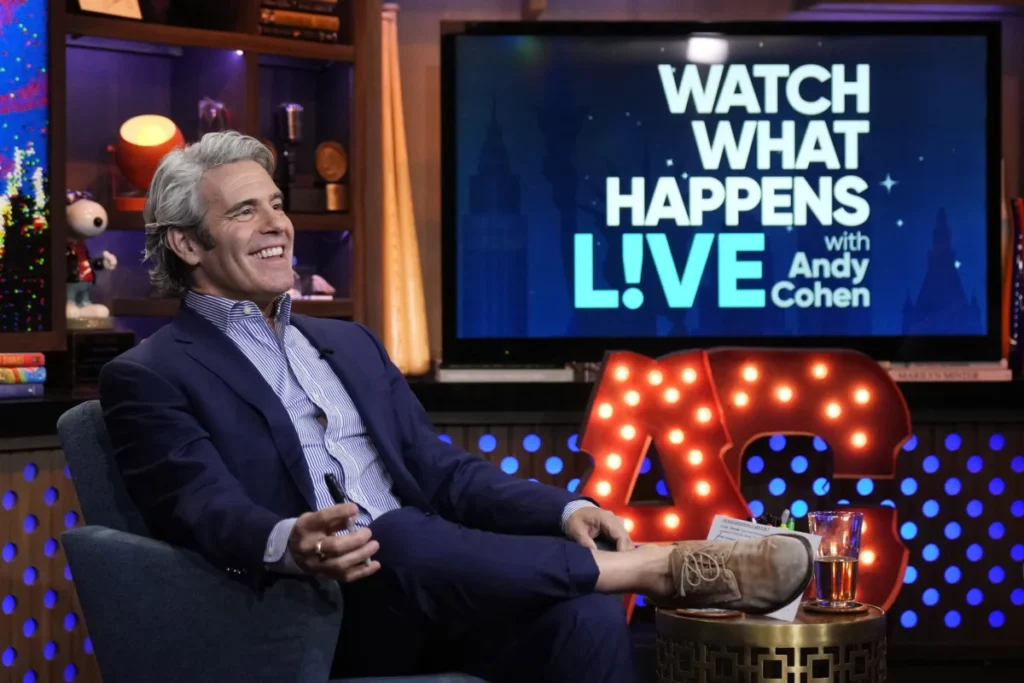

Andy Cohen, the executive producer and primary architect of the Real Housewives franchise, has officially addressed long-standing rumors regarding the potential expansion of the series into the Midwestern United States, specifically targeting St. Louis, Missouri. During a recent interview with KMOV, a local news outlet in his hometown, Cohen characterized the possibility of a Real Housewives of St. Louis iteration as a “hard no,” effectively ending years of speculation among fans and industry insiders. The decision appears to be rooted in a strategic desire to maintain professional boundaries within his personal life and a broader assessment of the franchise’s current developmental trajectory.
As the face of Bravo’s late-night programming and the creative lead behind one of the most successful reality television empires in history, Cohen’s refusal to bring the cameras to St. Louis marks a significant moment in the franchise’s geographic strategy. While the Real Housewives brand has successfully localized in coastal hubs like New York, Beverly Hills, and Miami, as well as inland metropolitan areas like Salt Lake City and Atlanta, the Midwestern market remains largely untapped. Cohen’s reluctance, however, is not a critique of the city’s culture or its potential for television-worthy drama, but rather a protective measure for his family and his own sanity.
The Personal Rationale Behind the Decision
The primary deterrent for Cohen is his deep-seated connection to the St. Louis community. Born and raised in the city, Cohen’s roots run deep, with much of his immediate family still residing in the area. During the KMOV interview, he expressed concern over the social fallout that would inevitably occur should a production team begin casting in his backyard. Cohen noted that the pressure from friends, family members, and acquaintances seeking to join the cast would be overwhelming.
“I can’t imagine how annoying it would be for my mom, dad, sister, and everyone I know to be like, ‘Oh, so-and-so auditioned,’” Cohen remarked. This statement highlights the unique position Cohen occupies as both a high-level executive and a public figure with local ties. In the world of reality television, casting is often the most contentious phase of production. By bringing the franchise to St. Louis, Cohen would effectively be turning his personal network into a talent pool, a move that he believes would lead to unnecessary interpersonal friction.
Furthermore, Cohen emphasized that the inherent drama associated with the Real Housewives—a hallmark of the brand that involves complex social hierarchies and public disputes—would be “multiplied” if it were set in his hometown. For Cohen, the professional responsibility of managing these narratives is already a full-time endeavor; adding the layer of local familiarity would likely complicate his ability to remain an objective producer.
A Timeline of Geographic Expansion and the Midwestern Gap
To understand the weight of Cohen’s “hard no,” it is essential to examine the chronological expansion of the Real Housewives franchise and how it has historically approached the American Midwest.
- 2006: The Genesis (Orange County). The franchise began as a voyeuristic look into the gated communities of Southern California.
- 2008–2010: The Coastal Surge (New York City, Atlanta, New Jersey, D.C.). Bravo expanded rapidly, focusing on major media markets and high-society enclaves. The short-lived D.C. iteration (2010) served as a cautionary tale about the difficulties of filming in politically sensitive or overly guarded social circles.
- 2010–2011: Beverly Hills and Miami. These cities solidified the franchise’s reputation for opulence and "aspirational" lifestyles.
- 2016: Potomac and Dallas. While Potomac focused on the elite Black community in Maryland, Dallas represented an attempt to capture the "Big D" energy of Texas. The eventual cancellation of the Dallas series highlighted the challenges of maintaining viewership in certain regional markets.
- 2020: Salt Lake City. This marked a shift toward smaller, culturally distinct cities, proving that "niche" markets could provide high-intensity drama and strong ratings.
- 2024–2025: Rhode Island. The most recent expansion, which has already generated significant social media discourse and controversy.
Throughout this nearly 20-year history, the Midwest has remained noticeably absent, with the exception of brief rumors regarding a Chicago-based series that never came to fruition. St. Louis has frequently been cited by fans as a prime candidate due to its wealthy enclaves like Ladue and Huntleigh, which mirror the affluent environments seen in other successful iterations. However, Cohen’s latest comments suggest that the "Midwestern Gap" will continue for the foreseeable future.
Current Production Challenges and the Rhode Island Controversy
Cohen’s decision is also influenced by the current workload and the evolving nature of the franchise. With multiple cities currently in production or airing—including staples like Beverly Hills, Orange County, and Salt Lake City—the executive producer’s schedule is saturated. Beyond his professional duties, Cohen is a father to two young children, Ben and Lucy, both born via surrogate. Balancing the demands of a global media brand with the responsibilities of parenthood has necessitated a more selective approach to new projects.
The recent launch of The Real Housewives of Rhode Island (RHORI) serves as a case study in the difficulties of managing new cast dynamics. The series has faced immediate scrutiny and backlash, particularly concerning cast member Rosie DiMare. DiMare recently appeared on Watch What Happens Live to defend her use of the term “slam pig” in reference to co-star Kelsey Swanson. While DiMare claimed the phrase is a common New England colloquialism for someone one dislikes, the exchange underscored the volatile nature of introducing new personalities to the Bravo ecosystem.
For Cohen, these controversies require constant mediation and public relations management. Adding a St. Louis-based show would not only increase his administrative burden but would do so in a city where he has a personal stake in the community’s reputation.
The Economic and Cultural Landscape of St. Louis
From a purely data-driven perspective, St. Louis possesses many of the hallmarks Bravo looks for when scouting a new city. The metropolitan area is home to several Fortune 500 companies and a deep-seated "old money" culture that often provides the backdrop for Real Housewives storylines.
According to demographic data, the affluent suburbs of St. Louis County rank among the wealthiest in the Midwest. The social scene in these areas is often defined by exclusive country clubs, philanthropic galas, and long-standing family legacies—elements that have historically translated well to reality television. However, industry analysts suggest that Bravo may be pivoting away from the traditional "wealth-porn" model in favor of cities that offer more distinct cultural or social conflicts, as seen in the religious and lifestyle clashes of the Salt Lake City cast.
By declining to move forward with St. Louis, Cohen is also avoiding the "hometown curse" that has affected other producers in the past. When a creator is too close to the subject matter, the risk of "producer interference" or biased editing increases, which can undermine the perceived authenticity of the show.
Official Responses and Fan Reactions
While there has been no formal statement from Bravo’s corporate offices regarding the St. Louis decision, Cohen’s word is generally considered final in matters of franchise expansion. The reaction from the St. Louis community has been mixed. On social media platforms, some local residents expressed relief that their city would be spared the "Bravo treatment," which often involves highlighting interpersonal conflict and material excess. Others, particularly business owners in the luxury and hospitality sectors, expressed disappointment at the lost opportunity for increased tourism and national exposure.
The "Real Housewives effect" often leads to a surge in business for the restaurants, boutiques, and salons featured on the show. For a city like St. Louis, which has been working to revitalize its national image, the platform of a Real Housewives series could have provided a significant economic boost. However, Cohen’s concerns about the "annoyance" factor for his family suggest that for him, the personal costs far outweigh the potential economic benefits for the city.
Broader Implications for the Franchise
The rejection of St. Louis may signal a broader shift in Bravo’s strategy. As the television landscape becomes increasingly fragmented, the network appears to be focusing on "rebooting" and "refreshing" existing properties rather than endlessly expanding. The total overhaul of The Real Housewives of New York City for its fourteenth season is a prime example of this strategy.
Furthermore, the franchise is increasingly looking toward international markets and digital-first content. With the success of The Real Housewives of Dubai, the brand is exploring global cosmopolitan hubs that offer a different aesthetic and cultural perspective than the American suburbs.
In conclusion, Andy Cohen’s “hard no” to St. Louis is a calculated decision that prioritizes personal peace and professional stability over geographic expansion. While the Midwest may eventually find its place in the Real Housewives universe, it will not be through St. Louis—at least not while Cohen is at the helm. For now, the drama remains concentrated in the existing cities, leaving the social circles of Clayton and Ladue to operate away from the glare of the Bravo cameras. Cohen’s focus remains on his current roster of shows and his growing family, ensuring that when he does choose to expand, it will be in a location where the drama is strictly business, not personal.