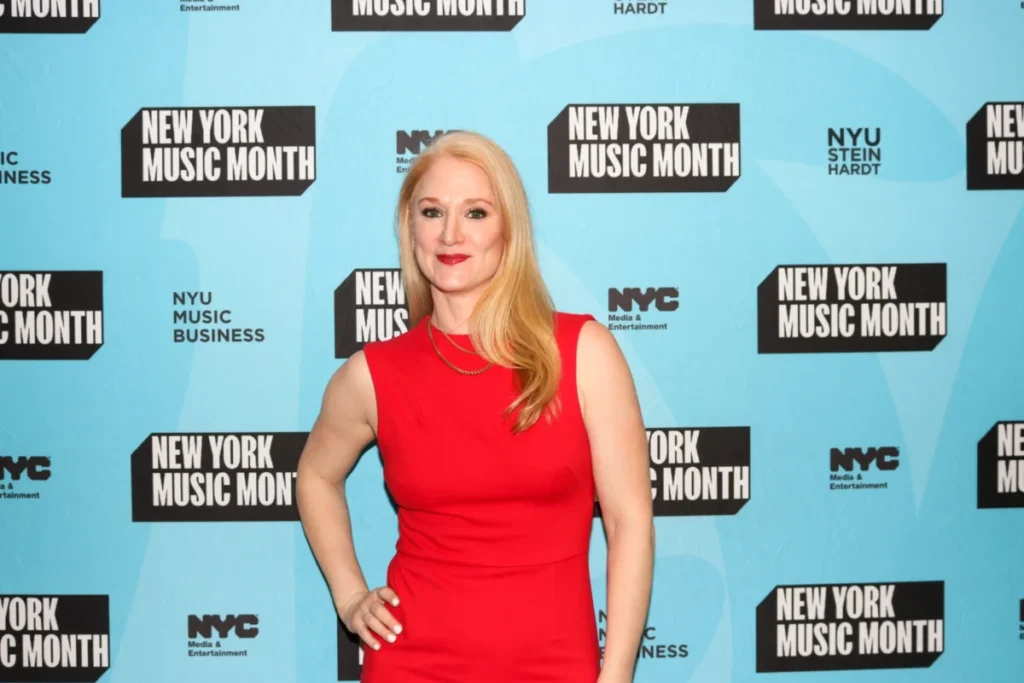

June in New York City has become synonymous with a vibrant surge of musical activity, marking the official commencement of summer with a packed calendar of events. From the indie showcases of Indie Week and the prestigious Libera Awards to the expansive festival grounds of Governors Ball and the esteemed halls of The Songwriters Hall of Fame, the city transforms into a global epicenter for music lovers and industry professionals alike. For the past nine years, the New York City Mayor’s Office of Media and Entertainment (MOME) has been a driving force behind this cultural phenomenon through New York Music Month (NYMM). Shira Gans, MOME’s senior executive director of policy and programs, is currently at the helm, meticulously orchestrating a comprehensive schedule featuring 60 events across all five boroughs over 30 days, solidifying NYMM’s role as a crucial pillar of the city’s creative infrastructure.
The Evolution of New York Music Month
The genesis of New York Music Month in 2017 was a more modest affair, encompassing just 12 events. Today, the initiative has burgeoned into a multifaceted program, showcasing a significant expansion in scope and impact. This year’s iteration boasts 38 talks, 21 performances, a central conference, and the revival of NYMM’s highly anticipated free rehearsal series. This series alone will provide over 2,000 hours of complimentary rehearsal space across four distinct locations, a testament to the growing demand and commitment to supporting artists.
Shira Gans reflects on this remarkable growth, describing the process as "getting crazy" but also as a profound evolution on multiple levels. "When I think about creating it, I think of it as infrastructure," Gans told Billboard. "And that’s really changed as I’ve seen the industry get more and more excited about Music Month. It’s a true public-private partnership." This sentiment underscores the collaborative spirit that has propelled NYMM from its inception to its current stature, fostering a symbiotic relationship between municipal support and industry engagement.
Last year marked a strategic shift for NYMM with the introduction of a nominal fee for conference tickets. This decision, according to Gans, was implemented to ensure greater commitment from attendees and to bolster the sustainability of the programming. Currently, tickets are priced at $30, inclusive of all fees, a measure designed to balance accessibility with resource generation.
The impact of NYMM extends beyond mere event hosting, fostering a unique synergy within the city’s creative landscape. Josh Rabinowitz, a music consultant and professor at Brooklyn Music Experience, articulates this phenomenon, stating, "What’s happening in New York is a rare alignment where public policy, private industry and independent creators stop orbiting separately and start operating as one ecosystem, acknowledging that culture survives only when the infrastructure behind it is intentionally built." He further elaborates, "The result is NYC not just hosting the music business, but actively engineering the conditions that allow the future of the industry to exist here." This perspective highlights NYMM’s role in proactively cultivating an environment conducive to the growth and innovation of the music sector.
Sourcing and Structuring the Programming
The curation of New York Music Month’s extensive programming is a deeply collaborative process, driven by the very industry it serves. "Everything is sourced from the industry itself," Gans explains. "Every idea, for the most part, is really somebody coming to me and saying, ‘Hey, I think this would benefit the segment of the industry that I work in.’ I think this is an important topic. And then we’re able to invest and give funding to do that. So, it becomes a mirror and a megaphone." This approach ensures that the program remains relevant and responsive to the current challenges and opportunities within the music world.
Gans notes a conscious effort to move away from the often-insular nature of industry conferences, where a familiar roster of speakers frequently dominates panels, often influenced by sponsorship dynamics. "When you’re on the conference circuit, it’s often the same people that get on the stage, either because that’s who people know, or it’s driven by sponsorships. No shade to that, but we try to move away from it," she states. This commitment to inclusivity and fresh perspectives is a hallmark of NYMM’s programming strategy.
The Role of Live Performances and Rehearsal Spaces
While the conference component focuses on industry discourse, live performances play an increasingly integral role in NYMM. Initially, Gans expressed reservations about the city directly curating live music to avoid influencing cultural decisions. However, as the event has matured and forged stronger partnerships, this aspect has evolved. "As it’s grown and we’ve gotten more partnerships – I curate the curators, so we’re really working with people who are working with up-and-coming artists – on the performance side, it shifted, too, in that we did have more programming in terms of live music," Gans notes.
The initial focus of performance programming was to provide opportunities for underserved communities in the Bronx and Queens through partnerships with the Parks Department. More recently, with NYMM solidifying its industry standing, the emphasis has shifted towards serving as a platform for emerging artists, offering them visibility and exposure to a broader audience.
The provision of free rehearsal space is another critical component of NYMM’s support for the creator community. This initiative directly addresses a significant logistical and financial hurdle for many musicians, offering essential resources for artistic development and practice.

Addressing Contemporary Industry Challenges
New York Music Month’s programming is meticulously designed to address the most pressing issues facing the music industry today. Gans outlines four core verticals: conference talks, performances, rehearsal space, and a "multidimensional matrix of factors" that encompasses various aspects of the music ecosystem. This includes discussions on the value of music, artist development, business strategies, sync licensing, distribution, and legal matters.
A particularly pertinent topic this year is the state of music journalism. Gans highlights the importance of this conversation, stating, "What’s happening to that? And, if you don’t have local acts, if you don’t have as many local journalists, how do you get someone covered? If you can’t get them covered, how does that shift artist discovery and things like that?" This underscores the interconnectedness of media coverage and artist career progression.
Furthermore, NYMM is actively addressing the evolving job market within the music industry, particularly in the wake of recent layoffs. "I’ve added stuff on the hiring landscape, so we have one event that’s about, ‘You got laid off, what’s next?’" Gans reveals. Another session will feature a music headhunter bringing together HR representatives from major music companies to discuss current hiring priorities and expectations.
Mental health is also a prominent theme, reflecting a growing awareness of its importance within the demanding music profession. "There’s more in mental health," Gans states. "There’s been a lot of interest in the last couple of years of people looking at the intersection of mental health from the angles of the challenges working in the industry, the challenges of an artist, and now how music is being used as healthcare." This multifaceted approach acknowledges the diverse needs and experiences of individuals within the music community.
Maintaining Freshness and Branding
To keep the event dynamic and engaging year after year, NYMM underwent a rebranding last year, a move Gans believes significantly enhanced its cohesion and appeal. "We rebranded last year, which I think helped a lot. It felt a bit like the school science fair because we didn’t have a consistent brand," she admits. The new branding initiative, spearheaded by a creative director, has introduced color-coded templates for social media and event materials, organized by vertical. This visual consistency, while allowing for individual event distinctiveness, helps attendees recognize the overarching NYMM brand. "New York Music Month is cool because it’s the sum of all the parts, and now we have this brand and people see that they all look a little different, but then you start to get it," Gans explains.
Empowering the New York City Creator Community
The benefits of New York Music Month for the city’s creator community are manifold, with a significant emphasis on professional development. This includes skill-building workshops, access to resources like free headshots, and invaluable networking opportunities. "Conferences are expensive. Even membership to different organizations can be challenging to figure out. I think professional development is important," Gans emphasizes.
In an era increasingly dominated by discussions around artificial intelligence, Gans highlights the enduring importance of human connection. "I think networking itself is really important, as people think about some doomsday idea around AI. I do think human connection is something you can’t really replace and the strength of an industry really has to do with these different levels of strong ties and weak ties and how you meet people." This sentiment underscores the foundational role of interpersonal relationships in fostering a robust and resilient industry.
Navigating the AI Revolution
Artificial intelligence (AI) stands as one of the most significant technological shifts impacting the music industry, and NYMM is dedicating substantial programming to this evolving landscape. Gans confirms that a panel specifically addressing AI will feature insights from Drew Thurlow, an author specializing in the subject, alongside representatives from companies like ElevenLabs, authors, and academics.
The discourse around AI has moved beyond its initial philosophical implications, which were explored at NYMM in 2023, to a more pragmatic focus on legal frameworks and revenue models. "Now it’s more looking at the legal angles, and revenue models. How are people using that to make money?" Gans notes. New York City’s unique position at the intersection of film, television, advertising, technology, and finance provides a distinct advantage for exploring these AI-driven innovations. This multifaceted environment, unlike that found in Los Angeles or Nashville, offers a fertile ground for discussing how AI can be integrated and monetized across various creative industries, a perspective that will be central to much of NYMM’s programming.
A Model for Global Music Cities
The influence of New York Music Month is extending beyond its immediate geographical reach, with cities like Liverpool, England, drawing inspiration from its model. Gans believes that the success of NYMM offers valuable lessons for other urban centers aiming to cultivate their own vibrant music ecosystems. "When you connect with people and talk about it, then you can model best practices and you can take ideas from other cities or places and see what’s worked," she suggests.
She draws parallels with the establishment of New York City’s Office of Nightlife, which was influenced by European discussions on the nighttime economy. Similarly, she points to San Francisco’s nightlife board and Austin’s initiatives in fostering international songwriting camps and promoting music as an export. "I think we have a lot to learn from other cities," Gans concludes, emphasizing the ongoing global dialogue and shared learning that propels the evolution of music cities worldwide. NYMM, through its comprehensive approach and commitment to fostering innovation and connection, continues to set a benchmark for urban music development.