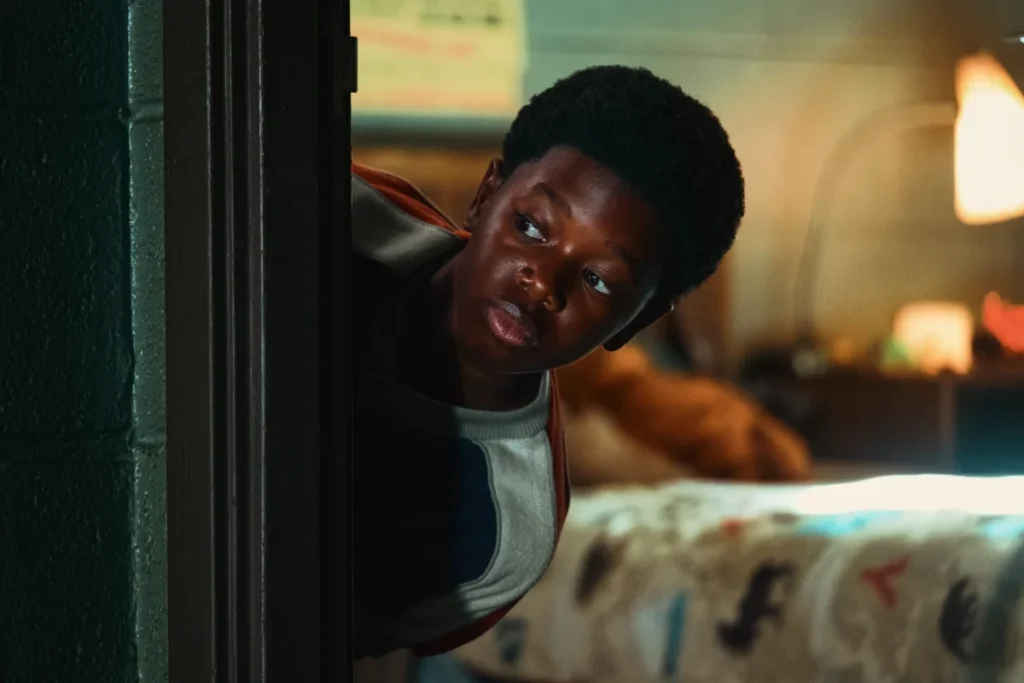

The highly anticipated third season of HBO’s critically acclaimed drama Euphoria is beginning to peel back the layers of its enigmatic antagonist, Alamo Brown, portrayed by Adewale Akinnuoye-Agbaje. The recent episode, "Stand Still and See," provided a significant deep dive into the businessman’s formative years, offering viewers crucial insights into the experiences that have shaped his formidable presence in the current narrative. This revelation is particularly impactful as it sheds light on his motivations and his complex relationships, especially his deeply ingrained aversion to women and his ruthless business tactics.
The Genesis of a Kingpin: A Childhood Marked by Deception
The episode opens with a poignant flashback sequence, transporting the audience back to young Alamo’s childhood. Here, the foundations of his worldview are laid, heavily influenced by his mother, Mama Brown, played by the acclaimed Danielle Deadwyler. Mama Brown’s impact extends to Alamo’s perceptions of both business acumen and interpersonal relationships, particularly those with women. The flashback meticulously chronicles the burgeoning relationship between Mama Brown and Preston (Kwame Patterson), a man who has recently endured severe facial chemical burns.
Young Alamo, embodied by Ca’Ron Jaden Coleman, observes this developing bond with a growing sense of respect and affection for Preston. The narrative illustrates how Preston’s life takes a turn for the better when he receives a substantial settlement from his former employer as compensation for his debilitating injuries. This newfound financial stability offers a glimmer of hope, with plans for a proposal to Mama Brown during a beach vacation hinting at a brighter future for the family. However, their return home shatters these aspirations as they discover their entire livelihood has been pilfered.
The Betrayal and the Birth of Distrust
The devastating realization that their possessions are gone leads Mama Brown to a drastic decision: she abruptly whisks young Alamo away, leaving a heartbroken Preston behind. Their destination is the home of Alamo’s father, where the young boy confronts a chilling truth. He recognizes several items that were clearly stolen from Preston’s residence, forcing him to confront the devastating reality that his parents orchestrated a long con, systematically deceiving Preston for their own gain.
This revelation profoundly impacts young Alamo, leaving him particularly shattered by his mother’s capacity for such profound betrayal. This early trauma is presented as a key factor in understanding Alamo’s behavior in the present timeline. Adewale Akinnuoye-Agbaje, in his insightful commentary on the character, explains the deep-seated nature of this aversion: "Alamo, he has a real aversion to women, which is why it’s quite unique for Rue (Zendaya) to be employed because she’s the first female to be employed apart from the strippers." This statement underscores the significant deviation from his established patterns that Rue’s employment represents.
The Echoes of the Past in the Present Conflict
The episode further elucidates Alamo’s contentious relationship with Laurie (Martha Kelly), a character he has previously aided. Akinnuoye-Agbaje elaborates on this dynamic, stating, "I mean, behind the scenes, he has an aversion to women, and this is a woman that he set up in the business. So there’s a bit of a rivalry and a bit of jealousy that she’s broken free and now challenging him." This reveals a layered animosity, stemming not only from his general distrust of women but also from a specific resentment towards Laurie’s success and her current defiance of his authority.
This complex history directly fuels Alamo’s aggressive pursuit of Laurie and her associates. He is depicted as ruthlessly maneuvering to reclaim the funds that Laurie and her crew allegedly stole from the Silver Slipper, a clear manifestation of his past betrayals and his determination to maintain control and power.
Deconstructing the Villain: An Actor’s Perspective
Adewale Akinnuoye-Agbaje’s engagement with the character of Alamo Brown goes beyond a typical portrayal of a villain. He expressed his profound interest in the opportunity to "unfold this character because we do get a chance to delve into his backstory, which you don’t always get with a villain… They’re presented as that, but here we get to see the making of the man.” This perspective highlights the show’s commitment to nuanced character development, even for its more antagonistic figures.

The actor further elaborated on the richness of Alamo’s character: "There are layers, there’s texture, there’s nuance, and I thought that was really interesting to be able to unravel who this man is with each episode. Objectively, people see him as the villain or kingpin, but I never look at them like that. I always look at them as humans that are trying to deal with the circumstances that they’ve been given, and there were a lot of interesting circumstances that come along with Alamo Brown, and I was eager to explore them.” This philosophical approach suggests that Alamo, despite his morally questionable actions, is a product of his environment and his traumatic experiences, driven by a primal need to survive and thrive in a world that has shown him little kindness.
Broader Implications for Season 3
The unveiling of Alamo Brown’s backstory carries significant implications for the remainder of Euphoria Season 3. It provides a compelling psychological framework for his current machinations, suggesting that his actions are not merely born of greed but are deeply rooted in a desire to prevent a recurrence of the powerlessness and betrayal he experienced in his youth. His interactions with Rue, a character representing a fragile hope for redemption and a departure from his established prejudices, will undoubtedly be a focal point. Furthermore, his ongoing conflict with Laurie and any other characters who challenge his authority will be viewed through the lens of his formative trauma, adding depth and complexity to these confrontations.
The narrative arc of Alamo Brown serves as a potent reminder of Euphoria‘s signature exploration of the profound and often devastating impact of childhood experiences on adult behavior. By delving into the origins of its antagonist, the series not only enhances the current storyline but also elevates its examination of trauma, resilience, and the intricate web of human relationships. The audience is left to ponder whether Alamo can ever truly break free from the cycle of deception and control that his mother initiated, or if he is destined to forever be a product of his painful past.
Supporting Data and Context
Euphoria, since its debut, has been lauded for its unflinching portrayal of adolescent struggles, mental health issues, and the often-harsh realities of growing up in contemporary society. The series, created by Sam Levinson, has consistently pushed boundaries with its visceral storytelling and its complex characterizations. The introduction of a fully realized antagonist with a detailed backstory is a strategic narrative choice that allows the show to explore themes of generational trauma and the cyclical nature of violence and deceit.
The casting of Adewale Akinnuoye-Agbaje, known for his powerful performances in films like The Bourne Identity and Thor: The Dark World, signals the significance of the Alamo Brown character. Similarly, Danielle Deadwyler’s involvement, following her critically acclaimed performance in Till, adds considerable weight to the flashback sequences, ensuring that Mama Brown’s influence is felt profoundly.
The introduction of specific locations like the "Silver Slipper" and the detailed description of the "long con" add a layer of gritty realism to the narrative, grounding the emotional turmoil in tangible events. These elements contribute to the show’s overall atmosphere, which often oscillates between heightened emotional drama and stark, unflinching realism.
Official Responses and Critical Reception
While specific official statements from the show’s creators or network regarding Alamo’s backstory have been limited to interviews with cast members like Adewale Akinnuoye-Agbaje, the critical reception to this narrative turn has been largely positive. Reviewers have praised Euphoria for its willingness to explore the origins of its characters’ darkness, moving beyond simplistic portrayals of evil. The episode "Stand Still and See" has been highlighted for its masterful use of flashbacks to enrich the present-day narrative, a technique that has become a hallmark of sophisticated television storytelling.
Broader Impact and Implications
The character development of Alamo Brown serves as a powerful illustration of the show’s overarching themes. It reinforces the idea that no character, even the most formidable antagonist, exists in a vacuum. Their actions are invariably shaped by their past experiences, their relationships, and the societal forces that have molded them. For Euphoria, this exploration is not merely an artistic choice; it is a fundamental aspect of its identity, offering a nuanced and often unsettling look at the human condition.
The implications of this backstory are far-reaching. It potentially humanizes Alamo in the eyes of the audience, even as it condemns his actions. This complexity forces viewers to confront uncomfortable truths about how trauma can perpetuate itself across generations and how seemingly insurmountable personal struggles can lead individuals down destructive paths. As Season 3 continues to unfold, the audience will be watching closely to see how these revelations inform Alamo’s future decisions and how they ultimately impact the lives of the other characters, particularly Rue, who stands at the precipice of her own redemption arc. The deep dive into Alamo’s past not only makes him a more compelling character but also enriches the overall thematic tapestry of Euphoria, promising further dramatic tension and profound character exploration in the episodes to come.