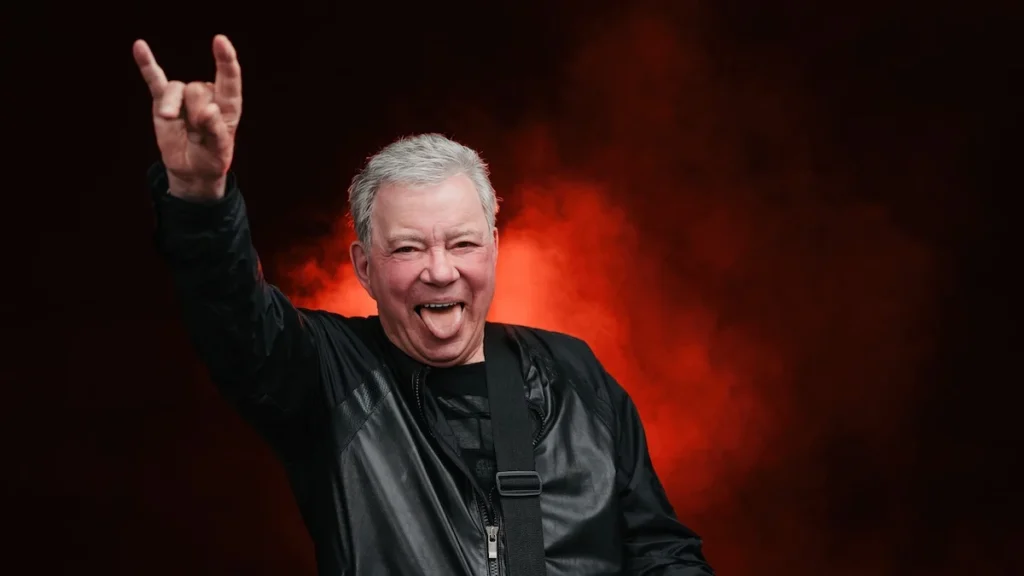

The convergence of science fiction legacy and heavy metal intensity reached an unexpected zenith on Saturday, September 19, when legendary actor and cultural icon William Shatner took the stage at Chicago’s Park West. In what can only be described as a landmark moment in the crossover between Hollywood and the hard rock industry, the 95-year-old performer debuted his foray into the metal genre. Accompanied by his backing ensemble, The *uckers, Shatner transformed the intimate club venue into a high-octane theater for the macabre and the melodic, signaling the beginning of a highly anticipated musical transition.
This performance served as the prelude to Shatner’s appearance at the Riot Fest music festival in Chicago, held on Sunday, September 20. The event, which drew a diverse crowd of longtime Star Trek enthusiasts and curious metal aficionados, provided the first public exhibition of the material set to appear on his upcoming full-length album, What the F Is Heavy Metal?
A Chronology of a Musical Evolution
William Shatner’s relationship with music spans several decades, characterized by his signature spoken-word delivery. However, his pivot to heavy metal represents a significant stylistic departure. The genesis of this project can be traced back to early 2026, when reports first emerged regarding his partnership with Cleopatra Records. Since then, the production process has involved a series of high-profile collaborations, positioning the album as one of the most curious and ambitious cross-genre projects in recent memory.
The Saturday night set at Park West was meticulously structured to balance established metal anthems with original compositions that reflect the actor’s philosophical inquiries into life, legacy, and aging. The setlist was as follows:
- Crazy Train (Ozzy Osbourne cover)
- Do not go gentle into that good night (Original)
- Ace of Spades (Motörhead cover)
- Will we care when the sky turns black (Original)
- Enter Sandman (Metallica cover)
- Damn old age (Original)
During the performance, Shatner utilized a vocal technique that emphasized dramatic cadence over melodic singing. While The *uckers provided a rigorous, high-fidelity backing that honored the technical complexity of the original tracks, Shatner treated the lyrics as poetic texts. This interpretative choice provided a unique contrast, highlighting the narrative weight of songs like Metallica’s "Enter Sandman" and Motörhead’s "Ace of Spades" when stripped of their traditional vocal delivery.
Industry Context and the Cleopatra Records Partnership
The decision to release a metal album via Cleopatra Records is indicative of the label’s strategy to bridge the gap between classic rock icons and experimental genre-blending projects. Cleopatra has long been a home for niche, avant-garde, and legacy rock projects, making it a logical home for a veteran performer like Shatner.
The upcoming album, What the F Is Heavy Metal?, has been bolstered by an impressive roster of guest contributors who represent the pinnacle of the metal genre. The participation of Queen guitarist Brian May, Judas Priest frontman Rob Halford, and Black Sabbath mastermind Tony Iommi provides significant institutional credibility to the project. Furthermore, the inclusion of former Slayer drummer Dave Lombardo—renowned for his foundational role in the development of thrash metal—suggests that the instrumentation on the album will be authentic to the genre’s technical requirements.
Industry analysts have noted that the "Shatner effect"—the actor’s ability to remain relevant through self-referential humor and bold experimentation—is a key factor in the project’s visibility. By blending the gravitas of his theatrical background with the raw energy of heavy metal, Shatner is effectively expanding the demographic reach of the genre while simultaneously diversifying his own career portfolio.
Analysis of the Performance and Genre Crossover
The reaction from the audience at Park West was largely one of intrigue, reflecting the broader fascination with celebrities who cross into extreme music subcultures. While actors moving into the music industry is a well-documented phenomenon, the move into heavy metal carries a specific set of challenges regarding authenticity and fan reception.
The performance at Park West functioned as a stress test for the material. By delivering "Crazy Train" and "Ace of Spades" in a live setting before the larger Riot Fest audience, Shatner and his backing band were able to gauge the impact of their stylized delivery. The choice of original songs, such as "Damn old age," indicates that the album is not merely a collection of covers, but a thematic exploration of the human condition.
The spoken-word approach to heavy metal is not entirely without precedent; however, applying it to the pillars of the genre—Ozzy Osbourne and Metallica—is a bold aesthetic choice. It forces the listener to engage with the lyrics on a linguistic level rather than a rhythmic one, a technique that has become a hallmark of Shatner’s musical career since his critically acclaimed 2004 album Has Been.
Broader Implications for the Metal Community
The integration of a non-traditionalist figure like William Shatner into the metal circuit has sparked a broader conversation regarding the boundaries of the genre. Metal has historically been a genre defined by its subcultural insularity, yet it has shown an increasing openness to experimentation in the 21st century.
From an economic perspective, the involvement of legacy metal artists like Iommi and Halford suggests that there is a commercial viability to "legacy-crossover" projects. The collaboration provides these established musicians with an opportunity to step outside the constraints of their long-standing band dynamics, while Shatner gains the prestige associated with working alongside the architects of the genre.
Furthermore, the logistical success of the Park West show—managed alongside the demands of a high-profile festival booking like Riot Fest—demonstrates a high level of professional preparation. At 95, Shatner’s ability to execute a multi-city performance schedule underscores the physical and mental dedication required for such a project. It challenges ageist stereotypes within the music industry, proving that creative exploration remains a viable pursuit well into the later stages of a career.
Future Outlook and Anticipation
As the industry looks toward the eventual release of What the F Is Heavy Metal?, the focus will remain on how the recorded tracks compare to the live energy presented in Chicago. The album’s production, which is expected to feature a heavy, polished sound, will be the next litmus test for whether the experimental approach can sustain listener interest over the course of a full-length studio release.
For now, the events at Park West and the subsequent appearance at Riot Fest have firmly established William Shatner’s presence in the metal landscape. Whether this is viewed as a novelty act or a genuine, albeit eccentric, contribution to the genre, it remains a significant cultural moment. It forces the listener to reconsider the versatility of iconic lyrics and the potential for a 95-year-old actor to command a mosh pit with nothing more than a microphone and a dramatic reading of the classics.
The collaboration with musicians as diverse as Dave Lombardo and Brian May ensures that the album will be scrutinized by both casual listeners and the most ardent metal purists. If the reception in Chicago is any indication, the project is likely to remain a focal point of discussion in music journalism throughout the remainder of the year.
Ultimately, Shatner’s debut metal show is a testament to the enduring power of performance art. By subverting expectations and embracing the theatricality inherent in both his acting career and the heavy metal genre, he has created a narrative that is as compelling as it is unconventional. The upcoming release of his album will be the definitive chapter in this unexpected musical journey, providing the final answer to the question posed by his album "What the F Is Heavy Metal?" For William Shatner, it appears to be a space where science fiction, poetry, and thunderous, amplified instrumentation coexist.