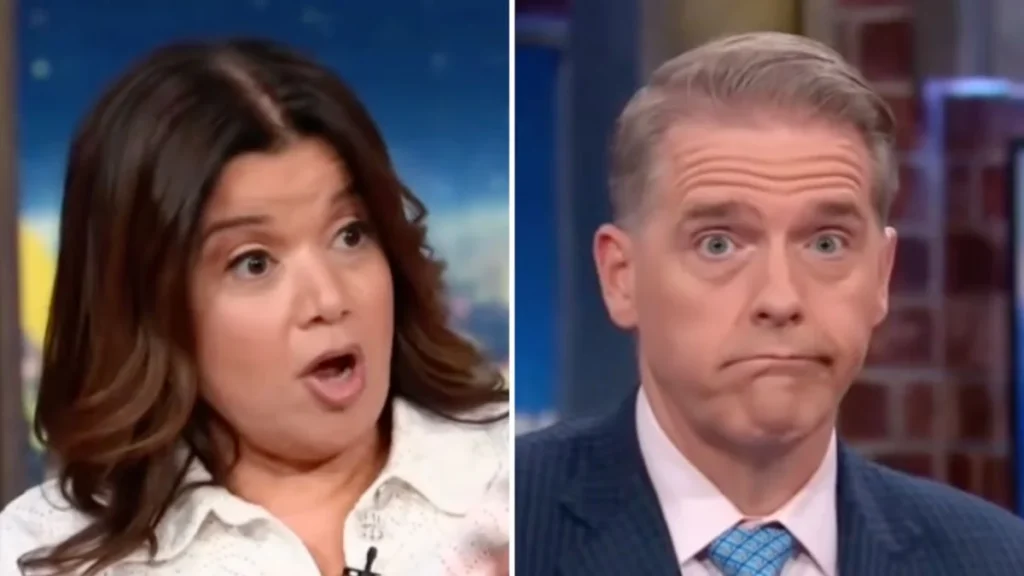

The typically measured discourse on CNN’s NewsNight with Abby Phillip took an unexpected turn on Monday evening, June 15th, when commentator Ana Navarro unleashed an uncensored expletive in a passionate denouncement of a derogatory remark targeting former First Lady Michelle Obama. The incident, which occurred during a panel discussion about a controversial statement made by UFC fighter Josh Hokit, underscored the sharp political divisions surrounding public figures and the escalating rhetoric in the digital age. The moment of Navarro’s unscripted outburst, which visibly surprised and momentarily silenced conservative commentator Scott Jennings, highlighted a growing tension in political commentary and the challenges of maintaining decorum when confronting what many perceive as baseless attacks.
The Inflammatory Remark and Immediate Fallout
The controversy originated from comments made by UFC fighter Josh Hokit during an interview with Joe Rogan at the UFC Freedom 250 event, held at the White House. In a segment that was later scrubbed from UFC’s social media channels, Hokit made the inflammatory statement: "And lastly, Michelle Obama is a man! Am I right, America?" This baseless and offensive assertion immediately ignited a firestorm of criticism across social media platforms and among public figures.
The UFC, under its president Dana White, moved swiftly to distance itself from Hokit’s remarks. White, in a statement to Time magazine, expressed his strong disapproval, stating, "I understand that the Obamas are public figures, but I’m completely against saying nasty and false things about people’s families." This condemnation from the head of a major sports organization signaled a significant breach of accepted conduct within the typically boisterous world of combat sports.
However, the lack of a public condemnation from President Donald Trump or his administration became a focal point of the NewsNight discussion. Host Abby Phillip pressed the panel on this apparent silence, questioning the administration’s rationale. "These people in the White House, [Communications Director] Steven Cheung, the president, nobody has the guts to say, ‘That’s inappropriate, it shouldn’t have been said, it’s wrong.’ Why?" Phillip asked, highlighting what she and others perceived as a failure to uphold basic standards of decency.
Scott Jennings’ Defense and Ana Navarro’s Unfiltered Response
Scott Jennings, a conservative commentator and a frequent presence on CNN, offered a defense of the administration’s silence, suggesting a deliberate policy of non-condemnation. "My assumption is that they get asked to condemn things all the time, everybody everywhere that says something, they’re constantly being asked to condemn things, and my guess is they just sort of have a policy not to do it," Jennings stated. He implied that a blanket refusal to condemn every offensive utterance was a strategic choice, potentially to avoid being drawn into a constant cycle of outrage or to avoid alienating segments of their base.
This explanation did not sit well with the rest of the panel. Abby Phillip countered Jennings’s reasoning, emphasizing that certain statements transcend mere policy. "Aren’t there some things that they should condemn? The idea that they always have to condemn things is not an excuse for not condemning things that should be condemned," she argued.
It was in this charged atmosphere that Ana Navarro delivered her forceful rebuttal. Drawing a parallel to a recent incident involving actor Robert De Niro, Navarro articulated her frustration with what she viewed as a selective application of outrage and condemnation. "This line of attack against Michelle Obama has been going on in right-wing extremist circles for years and years and years," Navarro stated, identifying the origins of the slur within specific political factions. She posited that Trump’s reluctance to condemn such remarks stems from a desire to avoid alienating a portion of his political base.
Navarro then pivoted to the recent public outcry over Robert De Niro’s "Shut the f up" chant directed at Donald Trump during a public appearance. "All I’ll say is this," Navarro began, her voice rising with emotion. "Whenever there is a Democrat back in the White House and they invite Robert de Niro and [he] stands in the White House and says, ‘f Trump, or starts talking about what Melania Trump did, I don’t want anybody who has remained silent right now raising their hand or saying a thing… there’s things that are just condemnable."
It was at this juncture that Navarro, in her impassioned plea for consistent moral standards, uttered the uncensored expletive, "f*** Trump." The raw and unfiltered nature of her language momentarily stunned the panel. Scott Jennings, in a visible display of surprise, turned and raised his eyebrows directly at the camera, a reaction that quickly became a talking point of the segment.
A Cycle of Expletives on Cable News
The unexpected eruption from Navarro was made even more noteworthy by a recent incident involving Jennings himself. Just the previous month, Jennings had also dropped an F-bomb on CNN NewsNight during a heated debate with MeidasTouch commentator Adam Mockler over Trump’s Iran policy. Frustrated by Mockler’s gesturing, Jennings had exclaimed, "Get your f** hand out of my face!" This prior occurrence created a layer of irony and a sense of déjà vu for viewers accustomed to the often-volatile exchanges on cable news. The parallel instances of panelists resorting to expletives, whether in anger or in emphatic condemnation, highlighted the increasing strain on civil discourse in political programming.
Broader Context and Implications
The incident involving Josh Hokit’s slur against Michelle Obama and the subsequent panel discussion on CNN NewsNight offer a microcosm of several larger trends in contemporary American politics and media:
-
The Weaponization of Disinformation and Personal Attacks: The baseless claim that Michelle Obama is a man is a long-standing conspiracy theory that has circulated in far-right circles. Its surfacing at a White House event, even indirectly through a fighter’s comment, underscores the persistent challenge of combating misinformation and its integration into mainstream discourse. The speed at which such claims can spread and gain traction, particularly in the digital age, poses a significant threat to public trust and informed debate.
-
The Role of Political Figures in Setting the Tone: The debate over President Trump’s silence or the administration’s lack of condemnation reflects a broader concern about the impact of leadership on public discourse. Critics argue that when political leaders fail to denounce hateful or false statements, it can be interpreted as tacit approval or, at the very least, a sign that such rhetoric is acceptable within their political sphere. This can embolden those who engage in such attacks and further polarize the electorate.
-
The Shifting Norms of Cable News Commentary: The presence of expletives, whether intentional or accidental, on reputable news programs like CNN signifies a potential erosion of traditional broadcast standards. While the heat of political debate can sometimes lead to unguarded moments, the increasing frequency of such occurrences raises questions about editorial oversight and the long-term impact on the credibility of news organizations. The desire to capture viewer attention and reflect the intensity of political discourse can inadvertently lead to a coarsening of language.
-
The Power of Social Media and "Cancel Culture" Dynamics: The immediate backlash against Hokit’s comments, leading to the scrubbing of the remark from UFC’s social media, demonstrates the power of public opinion and social media activism. Simultaneously, Navarro’s use of an expletive to condemn the attack, and Jennings’s own previous slip, can be seen within the broader context of reactions to perceived injustices or frustrating political stalates. The dynamics of "cancel culture," where individuals and organizations face repercussions for offensive actions or statements, are increasingly shaping public discourse.
Analysis of Implications
The resurfacing of the "Michelle Obama is a man" slur, even in an indirect manner, highlights the persistent and insidious nature of misogynistic and transphobic conspiracy theories within certain political factions. The fact that it was uttered at a White House event, regardless of the specific circumstances, lends it a degree of visibility that is deeply concerning. The UFC’s swift condemnation and the subsequent media attention underscore the understanding that such rhetoric is unacceptable in public life.
The panel’s discussion on NewsNight also served to illustrate the ideological chasm that exists regarding the responsibility of political figures to address harmful speech. While some, like Jennings, advocate for a pragmatic approach that avoids constant condemnation, others, including Navarro and Phillip, argue for a moral imperative to speak out against falsehoods and hate speech, especially when it targets vulnerable individuals or groups. This disagreement is not merely semantic; it reflects fundamentally different views on the role of leadership and the nature of political engagement.
Ana Navarro’s unfiltered expletive, while shocking to some, can be interpreted as a visceral reaction to the perceived hypocrisy and moral ambiguity she identified in the political landscape. Her linking of the attack on Michelle Obama to the broader context of political rhetoric, including the actions of figures like Robert De Niro, sought to establish a benchmark for consistent accountability. The fact that she felt compelled to use such strong language suggests a deep frustration with what she views as a double standard and a failure of prominent figures to uphold basic ethical principles.
The incident serves as a potent reminder of the challenges facing modern media in navigating the complex and often contentious terrain of political commentary. The pursuit of ratings and engagement, coupled with the intense polarization of the electorate, can create an environment where extreme rhetoric and emotional responses become commonplace. The "What To Know" section, which was empty in the original content, could have been used to summarize key takeaways such as the fighter’s offensive statement, the UFC’s response, the panel’s debate on condemnation, and the surprising use of expletives.
Ultimately, the NewsNight segment, punctuated by Ana Navarro’s unexpected outburst, provided a compelling, albeit controversial, glimpse into the current state of political discourse. It underscored the enduring power of offensive rhetoric, the differing interpretations of accountability, and the ever-evolving norms of public commentary on cable news. The implications extend beyond a single television program, reflecting a broader societal struggle to maintain civility and truth in an era of heightened political animosity.