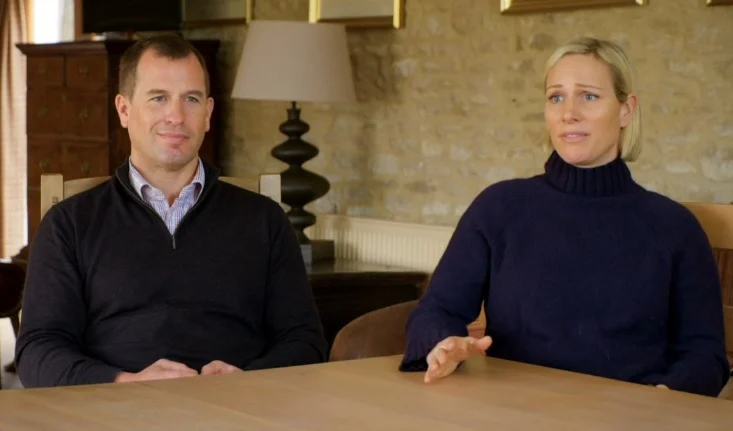

As members of the British Royal Family prepare to celebrate the marriage of Peter Phillips to Harriet Sperling this weekend, the upcoming ceremony at All Saints’ Church in Gloucestershire is set to bring together many familiar faces. King Charles, Queen Camilla, and the Prince and Princess of Wales are among the distinguished guests anticipated to attend, alongside a strong representation from Peter Phillips’ immediate and extended family. However, the joyous occasion will be marked by the absence of a less-known but significant relative: Felicity Tonkin, Peter Phillips’ paternal half-sister.
The wedding, scheduled for Saturday, promises to be a high-profile event, underscoring the enduring bonds within the Royal Family. Peter Phillips, the eldest grandchild of Queen Elizabeth II and Prince Philip, has maintained a relatively private life compared to some of his cousins. His marriage to Autumn Kelly in 2008 was the first royal wedding of a grandchild, and his upcoming nuptials to Ms. Sperling, a Scottish businesswoman, continue to draw attention to this branch of the monarchy. The choice of All Saints’ Church in Gloucestershire is particularly fitting, as it is a location deeply connected to the Phillips family, with Captain Mark Phillips, Peter’s father, having strong ties to the region.
A Family Divided: The Story of Felicity Tonkin
The absence of Felicity Tonkin from her half-brother’s wedding is not an unexpected development, but it serves as a poignant reminder of the intricate and sometimes distant relationships that can exist within even the most prominent families. Felicity is the daughter of Captain Mark Phillips and Heather Tonkin, a New Zealand-based art teacher. Her existence came to light in 1991, a period of significant upheaval for the Royal Family as it coincided with the final years of Captain Mark Phillips’ marriage to Princess Anne.
The Revelation and its Aftermath
The confirmation of Captain Mark Phillips’ paternity of Felicity Tonkin followed a brief relationship with Ms. Tonkin in New Zealand. The revelation sent ripples through the public consciousness, becoming one of the notable royal scandals of the late 20th century. DNA testing was conducted to confirm paternity, and the subsequent acknowledgement of Felicity as his daughter occurred during a tumultuous time for Princess Anne and Captain Mark Phillips, who ultimately divorced in 1992.
Felicity Tonkin was born in August 1985, making her 40 years old in 2024. Her upbringing in New Zealand, far removed from the British royal scene, has shaped her life and her relationship with her paternal relatives. Unlike her half-siblings Peter and Zara Tindall, Felicity has reportedly maintained no direct contact with them. This lack of connection stems from a combination of factors, including geographical distance and, according to various reports, a deliberate choice by Felicity to lead a life away from the intense scrutiny that accompanies any association with the Royal Family.
Contrasting Relationships: Stephanie Phillips and Felicity Tonkin
The narrative of Felicity Tonkin’s distance from her royal relatives stands in stark contrast to the relationship between Peter and Zara Tindall and their other half-sister, Stephanie Phillips. Stephanie is the daughter of Captain Mark Phillips and his second wife, Sandy Pflueger. Growing up on the Gatcombe Estate, the family’s country home, Stephanie was immersed in the royal environment and developed a close bond with Peter and Zara.
A Shared Childhood and Enduring Bonds
Stephanie Phillips has been an integral part of key family events for her half-siblings. She served as a flower girl at both Peter Phillips’ wedding to Autumn Kelly in 2008 and Zara Tindall’s marriage to Mike Tindall in 2011. This active participation in significant life milestones highlights a strong and nurturing relationship. The reciprocal nature of this closeness was evident when Stephanie married William Hosier in 2022. Peter and Zara were present to celebrate her marriage, and their children also played roles in the ceremony, further cementing the familial connection.
The close ties between Stephanie and her elder half-siblings underscore the differing paths and relationships that can emerge from the same paternal lineage. While Stephanie has been an embraced member of the extended royal family, Felicity has chosen a different trajectory, prioritizing privacy and a life independent of royal influence.
Felicity Tonkin’s Life Beyond the Spotlight
Despite sharing a father with prominent members of the Royal Family, Felicity Tonkin has carved out a distinct identity for herself. Like her well-known half-sister Zara Tindall, Felicity developed a passion for horses. This shared interest led her to pursue a career as a specialist equine veterinarian, a demanding and highly respected profession. Her dedication to this field has allowed her to build a successful career and a fulfilling life, seemingly without the need for royal recognition or association.
Reports over the years have consistently indicated that Felicity has never met Peter or Zara. This consistent separation suggests a mutual understanding or a long-standing decision to maintain separate lives. While some might speculate on the emotional impact of such a distance, friends have reportedly described Felicity as content with her life away from public attention. There have been suggestions that she has considered sharing her perspective on her unique family situation but has ultimately chosen to avoid causing potential difficulties for others, opting instead for a quiet and private existence.
The Implications of Privacy and Choice
Felicity Tonkin’s decision to remain outside the public eye has significant implications. It highlights the growing trend, particularly among younger generations, to seek personal fulfillment and identity separate from inherited status or lineage. In a world increasingly saturated with social media and constant public scrutiny, Felicity’s choice to maintain a private life is a testament to her agency and her desire for a life defined by her own achievements and relationships, rather than by her royal connection.
The contrast between Felicity and Stephanie also offers a lens through which to view the complex dynamics of blended families and the influence of upbringing. While Stephanie’s proximity and shared experiences likely fostered a strong bond, Felicity’s geographical distance and the circumstances surrounding her birth may have contributed to a different path.
Broader Context: Royal Family Dynamics and Public Perception
The upcoming wedding of Peter Phillips and Harriet Sperling, while a private family affair, inevitably draws public interest. The presence or absence of specific individuals within the Royal Family is often observed and commented upon, reflecting the public’s ongoing fascination with the institution. In this instance, Felicity Tonkin’s absence is a subtle reminder that the Royal Family, like any large family, is composed of individuals with their own unique histories, choices, and relationships.
The narrative surrounding Felicity Tonkin also speaks to the evolving nature of royal reporting and public perception. While past scandals were often met with widespread condemnation, there is now a greater understanding and appreciation for individual privacy and the right to forge one’s own path. Felicity’s story, therefore, is not one of ostracization but rather one of personal choice and the pursuit of a life less ordinary, even when born from an extraordinary lineage.
The Royal Family’s Public Image
The Royal Family has long navigated the delicate balance between maintaining its historical traditions and adapting to contemporary societal values. The inclusion of individuals like Stephanie Phillips, who have grown up within the royal orbit and maintained strong relationships, reflects a more modern approach to family connections. Conversely, the respectful acknowledgement of Felicity Tonkin’s chosen privacy demonstrates an understanding that not all family members wish to participate in public life, even when connected to the Crown.
As the wedding celebrations commence, the focus will undoubtedly be on the happy couple and the joy of their union. Yet, the quiet absence of Felicity Tonkin serves as a subtle but significant footnote, illustrating the diverse tapestry of relationships that constitute the extended Royal Family, and the enduring power of individual choice in shaping one’s destiny, regardless of one’s royal connections. The continued attendance of Stephanie Phillips at significant family events, and her active role in them, suggests a commitment to nurturing familial bonds that are built on shared experiences and mutual affection, a model that Felicity, by choice, has not pursued. This juxtaposition highlights the multifaceted nature of family and the varying degrees of connection that can exist within even the most closely watched dynasties.