
The transfer of political power in the United Kingdom, a cornerstone of its constitutional monarchy, unfolds through a ceremony of profound significance yet remarkable brevity: the private audience between the reigning Monarch and an incoming Prime Minister. This seemingly simple exchange, occurring behind the hallowed gates of Buckingham Palace, is the lynchpin of Britain’s stable governance, ensuring a seamless and peaceful transition at the apex of national leadership. While the public observes the comings and goings, the intimate details of this constitutional ritual remain sacrosanct, a testament to the enduring traditions that underpin British democracy.
The modern iteration of this pivotal moment, as recently exemplified by the anticipated handover of power, begins only after the outgoing Prime Minister has formally tendered their resignation to the Sovereign. In this specific instance, the process would commence with Sir Keir Starmer making his way to Buckingham Palace to present his resignation to His Majesty King Charles III. This act, though brief, marks the official conclusion of his premiership and paves the way for the next chapter of government. The private audience with the Monarch is a moment of direct, personal accountability, underscoring the Sovereign’s unique position above partisan politics.
Following Sir Keir Starmer’s departure, a subtle yet significant shift occurs within the Palace’s official machinery. Palace officials then prepare for the arrival of the individual designated to form the next government. In this hypothetical scenario, Andy Burnham would be escorted into Buckingham Palace, a figure poised to assume the highest office in the land. The destination is the Audience Room, a space imbued with historical weight, where King Charles III awaits. Crucially, this meeting is conducted without the presence of any other officials, ensuring absolute confidentiality and allowing for an unvarnished exchange between the Monarch and the prospective Prime Minister. This privacy is not merely about discretion; it is fundamental to the integrity of the constitutional process, safeguarding the frank discussions that may take place regarding the state of the nation.
The Formal Invitation: A Modernised Ritual
At the heart of the audience lies the Monarch’s formal invitation to form a government. The precise wording, while steeped in tradition, is understood to be direct and to the point. The Sovereign, acting on the constitutional imperative to ensure stable governance, inquires whether the leader of the party commanding the confidence of the House of Commons is prepared to take on the responsibilities of Prime Minister. Upon acceptance of this invitation, the designated individual, in this case, Andy Burnham, legally and constitutionally becomes Prime Minister and First Lord of the Treasury. This transition is instantaneous, signifying the profound shift in executive authority.
From Kissing Hands to Handshakes: A Symbol of Evolution
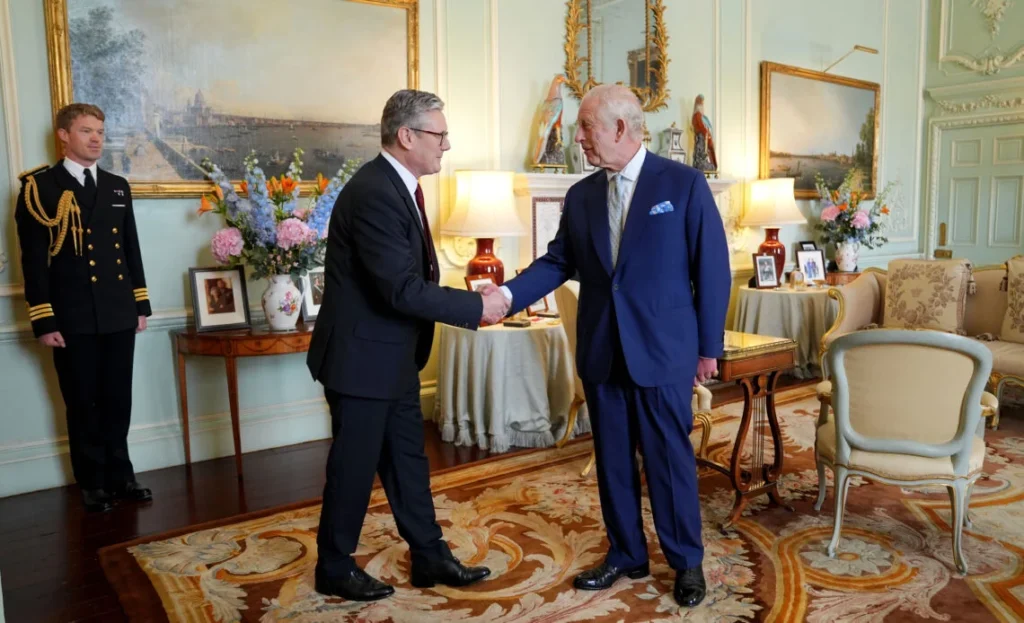
For centuries, this appointment was colloquially known as the "kissing of hands." This historical practice involved the incoming Prime Minister physically kissing the Sovereign’s hand as a gesture of fealty and loyalty. This deeply symbolic act underscored the Monarch’s ultimate authority and the Prime Minister’s subservience to the Crown. However, in a demonstration of how deeply ingrained traditions can adapt to modern sensibilities, this practice has evolved. Today, the ceremony has been modernised, with a simple handshake between the Monarch and the new Prime Minister replacing the centuries-old custom. Despite this change, the historic nomenclature of "kissing of hands" often persists in informal discussions, a subtle nod to the long lineage of this constitutional ritual. This evolution reflects a broader societal shift towards less formalised expressions of respect and a greater emphasis on partnership, even within the highly formalised structures of government.
Capturing the Moment: The Official Photograph
The conclusion of the private exchange is marked by a moment of public acknowledgment. A Palace photographer is then admitted to the Audience Room to capture the official photograph of the Sovereign greeting the new Prime Minister. This image serves as a tangible record of the transition, a visual testament to the continuity of the British state. Typically released within minutes of being taken, this photograph quickly becomes part of the historical archive, documenting the beginning of a new premiership and the ongoing narrative of the Monarch’s reign. The speed of its release reflects the modern media landscape and the public’s keen interest in these significant moments.
Beyond the Handshake: Briefings and Preparedness
The audience, while brief, is not solely an ceremonial event. It typically lasts between 20 and 30 minutes, though the duration can vary depending on the specific circumstances and the complexity of the issues at hand. Crucially, before departing Buckingham Palace, the newly appointed Prime Minister receives essential constitutional and security briefings. These vital updates are delivered by senior officials and cover a range of critical matters, including national security, the operational frameworks of government, and any immediate challenges or priorities facing the nation. This ensures that the new leader is as prepared as possible to assume the immense responsibilities of office from the moment they leave the Palace.
The Journey to Downing Street: A New Mandate Begins
Following these crucial briefings, Mr. Burnham would then undertake the short journey from Buckingham Palace to 10 Downing Street, the official residence and workplace of the Prime Minister. It is at this iconic address that he would deliver his first speech as Prime Minister, addressing the nation and outlining his vision for the future. This speech is a critical moment, setting the tone for his premiership and communicating his immediate priorities to the public. Subsequently, he would cross the threshold of the famous black door to commence the complex and often challenging process of appointing his Cabinet, selecting individuals to lead government departments and implement his policy agenda.
A Choreographed Transition: The Monarch’s Enduring Role
The entire process, from the outgoing Prime Minister’s resignation to the incoming leader’s arrival at Downing Street, is meticulously choreographed. It is a procedure that has been refined over generations, embodying the principles of constitutional monarchy. While governments and political parties may change, the Monarch’s role remains steadfast and unwavering: to act as the ultimate guarantor of the nation’s stability by ensuring the smooth and peaceful transfer of power. By appointing the individual best placed to command the confidence of the House of Commons, the Sovereign upholds the democratic will of the people and safeguards the integrity of the British constitution. This role, though often understated, is one of the most vital in maintaining the continuity and resilience of the United Kingdom’s governance.
Historical Context and Supporting Data
The tradition of the Monarch appointing the Prime Minister dates back centuries. While the specific mechanisms have evolved, the fundamental principle of the Sovereign acting upon the advice of those who can command parliamentary support has remained constant. For instance, following the general election of 2019, Boris Johnson was appointed Prime Minister by Queen Elizabeth II after the Conservative Party secured a significant majority. Similarly, in 2022, Liz Truss was appointed by King Charles III following the resignation of Boris Johnson. These instances, while varying in their electoral context, illustrate the consistent application of this constitutional protocol. The average tenure of a Prime Minister in the UK, while subject to fluctuations, often spans several years, highlighting the importance of a stable and predictable transition process. The current parliamentary term, for example, is typically set at five years, though early elections can occur. This extended period underscores the significance of each handover.
Broader Impact and Implications
The private audience, while a small event in terms of duration, carries immense weight. It symbolizes the continuity of the state, irrespective of the political party in power. For international observers, it represents a key element of Britain’s unique constitutional arrangements, demonstrating a stable system that can weather political change. The personal relationship between the Monarch and the Prime Minister, though formal, is crucial for effective governance. King Charles III, as a constitutional monarch, is expected to provide counsel and support to his Prime Ministers, drawing on his experience and understanding of national and international affairs. This advisory capacity, though confidential, is an integral part of the system. The symbolic significance of the handshake, replacing the older ritual, also reflects the evolving nature of the British monarchy, adapting to contemporary expectations while preserving its historical importance. The adherence to these formalised, yet evolving, procedures ensures that the fundamental machinery of government remains robust and credible, both domestically and on the global stage. The efficiency and discretion with which these transitions are managed are a testament to the enduring strength of Britain’s constitutional framework.