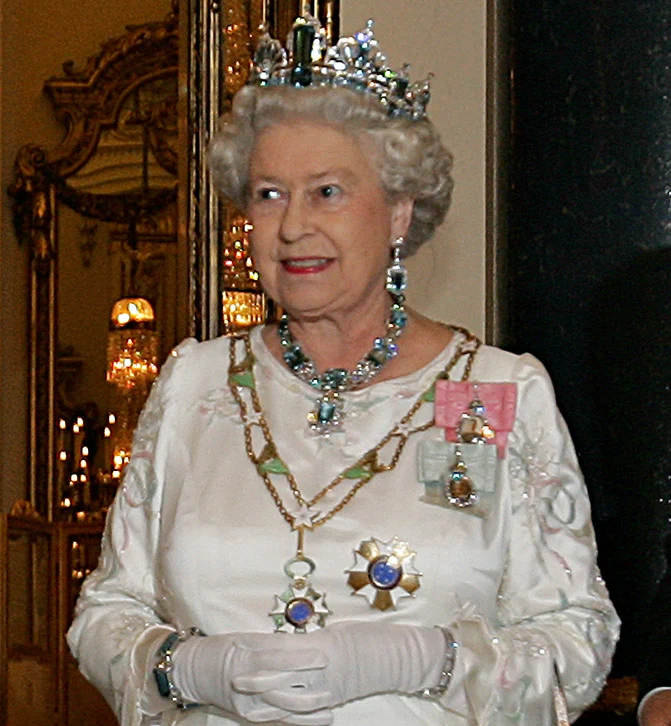

The glittering inventory of the British royal collection houses some of the most historic, valuable, and culturally significant gemstones on earth. Among these, few collections possess a backstory as uniquely collaborative or as personally favored by the late Queen Elizabeth II as the Brazilian Aquamarine Parure. Originating as a modest coronation tribute from the government and people of Brazil in 1953, the suite gradually expanded over fifteen years into one of the most comprehensive and frequently worn jewellery sets of the second Elizabethan era. Following the accession of King Charles III in September 2022, ownership and custodianship of these historic pieces passed to Queen Camilla. Yet, despite her frequent rotation of royal diadems at state banquets and diplomatic receptions, the iconic Brazilian aquamarine tiara remains untouched by any royal hands other than those of Elizabeth II. As royal watchers anticipate upcoming state events, questions linger over whether Queen Camilla will soon debut the striking stones, bridging a historic transition between two reigns.
Main Facts and Composition of the Parure
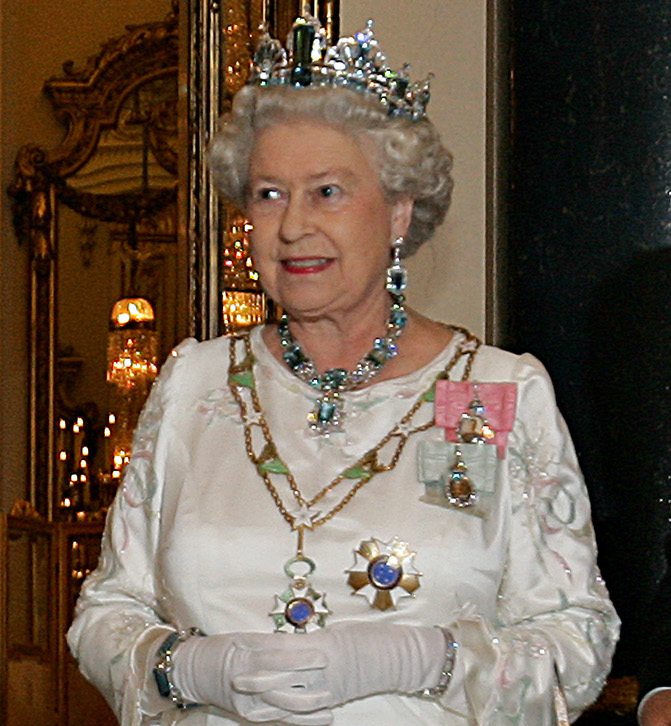
The Brazilian Aquamarine Parure is not merely a single diadem, but a cohesive suite of jewelry built incrementally through international diplomacy. At its foundational core is a necklace featuring nine large, rectangular-cut aquamarines, each framed in intricate diamond scrolls, accompanied by a detachable, even larger rectangular aquamarine pendant drop.
Over the years, the suite grew to incorporate matching pendant earrings, a wide statement bracelet, and an elaborate brooch. The centerpiece of the collection—the aquamarine and diamond tiara—was constructed in several distinct iterations. Its current form features a bandeau base of alternating diamonds and smaller aquamarines, surmounted by three massive, upright aquamarine stones surrounded by radiant diamond clusters.
The stones themselves are renowned for their exceptional clarity, deep ocean-blue saturation, and remarkable scale. Aquamarines, a variety of beryl, are often associated with tranquility, clarity, and maritime heritage. In the context of British royal diplomacy, the Brazilian parure stands as a physical manifestation of warm transatlantic relations during the mid-20th century, capturing an era when international state gifting frequently took the form of bespoke, high-craftsmanship jewelry designed to cement political alliances and mutual respect.
Chronology of the Brazilian Aquamarine Collection
The creation and evolution of the parure spanned nearly two decades, reflecting a sustained diplomatic gesture from South America’s largest nation to the British monarch.
1953: The Initial Coronation Gift
In honor of the coronation of Queen Elizabeth II, the President of Brazil, acting on behalf of the Brazilian government and its citizens, presented the young monarch with a necklace and a pair of pendant earrings composed of matched aquamarines and diamonds.
1957: Commissioning the First Tiara
Recognizing the need for a headpiece to match the substantial presence of the 1953 necklace and earrings, Queen Elizabeth II commissioned the prestigious London jeweler Garrard & Co. to craft a coordinating tiara. The resulting diadem utilized aquamarines and diamonds in a bandeau setting, anchored by three prominent upright aquamarine stones.
1958: Expanding the Suite
The Brazilian government continued its commemorative gifting strategy five years later, presenting the Queen with a matching diamond and aquamarine bracelet and a complementary brooch, further unifying the ensemble into a true parure.
1968: The Historic State Visit to Brazil
In November 1968, Queen Elizabeth II embarked on her first and only reigning state visit to Brazil, a landmark six-day tour that took her to Recife, Salvador, Brasília, São Paulo, and Rio de Janeiro. During this tour, the Governor of São Paulo presented the monarch with additional aquamarine and diamond hair ornaments featuring a distinct scroll design.
1971: The Redesign
Following her return from South America, Her Late Majesty opted to modernize and consolidate the collection. She instructed her jewelers to dismantle the newly acquired 1968 hair ornaments and integrate them directly into the 1957 Garrard tiara. Simultaneously, the large rectangular aquamarine pendant—originally designed to hang from the 1953 necklace—was detached and permanently fixed as the central stone of the newly reconfigured tiara, creating the silhouette recognized worldwide today.
Supporting Data: Usage and Diplomatic Significance
Throughout her historic 70-year reign, Queen Elizabeth II maintained a rigorous schedule of state banquets, diplomatic receptions, and international tours, utilizing her jewelry archive as a subtle yet powerful tool of soft diplomacy. The Brazilian Aquamarine Parure was consistently selected for high-profile diplomatic engagements, particularly those involving Latin American dignitaries or nations with historical trading ties to the United Kingdom.
One of the most notable modern appearances of the suite occurred in 2017, when the monarch wore the complete parure to the state banquet held at Buckingham Palace in honor of King Felipe VI and Queen Letizia of Spain. Observers noted that the choice of the vivid blue stones provided a striking visual contrast against the crimson sash of the Royal Victorian Order and the white dress worn by the Queen.
Data compiled by royal historians indicates that while Elizabeth II possessed dozens of tiaras—ranging from the Vladimir Tiara to the Girls of Great Britain and Ireland Tiara—the Brazilian aquamarine set held a uniquely personal status. It was one of the few parures she commissioned and modified herself, tailoring its physical structure to suit her evolving aesthetic preferences over the decades.
Official Responses and Protocol Around Royal Custody
Under the complex structure of the British royal household, the ownership of historic jewels is divided between the Crown (assets held in trust for the nation and successive monarchs) and the Royal Collection Trust, alongside private collections owned personally by members of the Windsor family. State gifts presented to a reigning monarch by foreign heads of state traditionally enter the Royal Collection or are designated for the sovereign’s personal use, subject to the discretion of the reigning king.
Following the accession of King Charles III, access to the principal royal vault and the ultimate authority over the distribution of state jewels passed to the new monarch. Consequently, Queen Camilla assumed custodianship of the primary tiara collection, including pieces formerly worn exclusively by Queen Elizabeth II.
While palace officials do not issue detailed public commentaries regarding the personal wardrobe choices or jewelry rotations of senior royals, royal protocol dictates that certain items of immense sentimental or historic value are introduced gradually. Protocol experts suggest that the hesitation to deploy specific ancestral pieces often relates to the personal preferences of the wearer, the scale and weight of the diadem, or a deliberate effort to establish a distinct visual identity for a new reign before drawing heavily upon the signature pieces of a beloved predecessor.
Broader Impact and Implications for Queen Camilla’s Reign
The ongoing absence of the Brazilian Aquamarine Parure from Queen Camilla’s public appearances carries subtle implications for how the current Queen approaches her sartorial responsibilities. Since 2022, Queen Camilla has navigated a delicate balance: honoring the legacy of Queen Elizabeth II while asserting her own distinct royal persona.
To date, Queen Camilla has demonstrated a clear preference for specific pieces within the collection. She has repeatedly worn the Ruby Tiara—commissioned by Elizabeth II—as well as the historic diamond Kokoshnik tiara originating from Queen Alexandra. In a notable moment at the annual Diplomatic Reception, Camilla surprised royal watchers by selecting a smaller five-aquamarine tiara historically associated with the Duchess of Edinburgh, demonstrating an openness to incorporating aquamarines into her repertoire.
However, the main Brazilian aquamarine diara and its accompanying suite remain un-worn by the current Queen. Analysts of royal fashion suggest that this restraint may be deliberate. The Brazilian parure is inextricably linked in the public consciousness to the image of Queen Elizabeth II, having been worn by her for nearly seventy years. By spacing out the introduction of such heavily laden historical items, Queen Camilla allows the public time to adjust to the transition of the crown.
As the royal calendar advances toward upcoming high-level diplomatic engagements and winter state receptions, speculation naturally turns to whether the milestone will prompt the debut of the Brazilian set. If Queen Camilla ultimately chooses to unlock this chapter of royal history, it will signal not only a continuation of exceptional British royal style but also a respectful nod to a monumental diplomatic bond forged across continents more than half a century ago.