
The landscape of contemporary interior design is undergoing a significant aesthetic shift as high-gloss lacquer moves from the periphery of accent furniture into the very core of architectural structure. While the material has long been associated with luxury and historical craftsmanship, its recent resurgence, championed by influential designers and adopted by mass-market retailers, signals a broader cultural movement toward theatricality and polished maximalism. This transition is most visible in the work of prominent figures such as Athena Calderone and Mark Grattan, whose recent projects demonstrate that lacquer is no longer just a finish but a primary medium of self-expression.
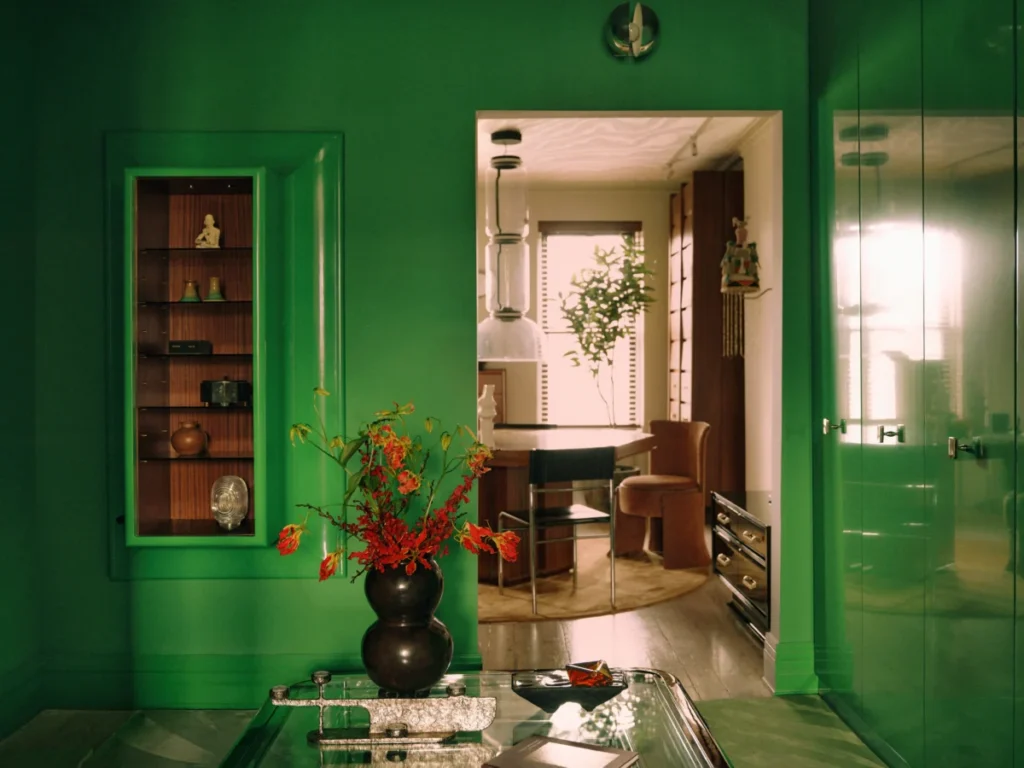
As the design world moves away from the muted, matte textures that dominated the previous decade, the return of lacquer represents a desire for depth, reflection, and "cinematic" environments. From the oxblood-hued islands of high-end Tribeca lofts to the vibrant green built-ins of Brooklyn apartments, the material is being used to define the contours of modern living spaces. This trend is not merely a fleeting fashion; it is a sophisticated revival of a technique that spans centuries, now adapted for a digital age where the home serves as a curated backdrop for public life.

The Historical Lineage of Lacquer: From Ancient Craft to Hollywood Regency
To understand the current obsession with high-gloss surfaces, one must look at the technical and cultural history of the medium. Lacquer has its origins in East Asia, particularly in Japan and China, where the sap of the Toxicodendron vernicifluum tree was used to create durable, waterproof, and lustrous coatings for wood and metal. This traditional "urushi" lacquer required dozens of layers, each dried in a humid environment and polished to a mirror-like sheen.
By the 17th and 18th centuries, lacquered goods became highly coveted in Europe, leading to the development of "japanning," a Western imitation of Asian techniques. However, it was during the Art Deco movement of the 1920s and 30s that lacquer became synonymous with modern luxury. Designers like Eileen Gray and Jean Dunand pushed the boundaries of the material, using it to create sleek, geometric furniture that reflected the machine age’s optimism.
The "cinematic" quality often attributed to lacquer today was codified during the Hollywood Regency era. Celebrity designers such as Billy Haines and Dorothy Draper used high-gloss finishes to create interiors that felt like film sets. This "mise-en-scène" approach to design used lacquer to catch the light, add glamour, and provide a sense of formal elegance to the homes of the era’s elite. The current revival draws heavily from this theatrical legacy, encouraging homeowners to view their spaces through the lens of a set designer.

The Shift from Freestanding Accents to Architectural Built-ins
A defining characteristic of the 2024-2025 lacquer resurgence is the scale of application. Historically, lacquer was reserved for freestanding pieces—a jewelry box, a side table, or a specific cabinet. In the contemporary era, designers are utilizing the material to create "built-in" environments.
Athena Calderone’s Tribeca apartment serves as a primary case study for this shift. In her media room, the walls are not merely painted; they are enveloped in panels of Dedar’s Fanfara wall covering, topped with a high-gloss lacquer ceiling by GL Veneer. This application creates a "jewelry box" effect, where the entire room reflects light and color, blurring the boundaries between furniture and architecture. Similarly, Mark Grattan has utilized parrot green lacquer for substantial frames and piano-black finishes for bed frames and cabinetry throughout his Brooklyn residence.
This trend is also evident in the homes of other high-profile figures. Broadway producer Jordan Roth’s New York City townhouse features extensive millwork in shades of light pink and "petroleum green" lacquer. In these instances, the material is used to create a sense of permanence and structural intent. It is no longer an accessory but the foundation of the room’s identity.

Retail Democratization: Bringing High-Gloss to the Mass Market
The movement from high-end bespoke design to mass-market accessibility is a critical component of the lacquer renaissance. Major retailers have recognized the growing consumer appetite for polished finishes and have integrated them into their latest collections.
- West Elm: The brand’s collaboration with lifestyle influencer Emma Chamberlain features a range of lacquered surfaces, from petite table lamps to storage consoles. This partnership targets a younger demographic, signaling that the "glamorous" look of lacquer is being rebranded for Gen Z and Millennial consumers.
- IKEA: Known for its utilitarian designs, IKEA has introduced the BESTÅ storage series in high-gloss dark olive green, providing a cost-effective way for homeowners to achieve a custom-look wardrobe or media unit.
- CB2 and Crate & Barrel: CB2 has launched entire collections in white lacquer, while Crate & Barrel is reportedly preparing a celebrity collaboration that leans heavily into the material’s reflective properties.
- Anthropologie: The retailer has expanded its furniture line to include lacquered sideboards and armoires in bold colors like teal and pink, catering to the "maximalist" consumer.
This democratization suggests that the "human eye is naturally drawn to shininess," as noted by Aurélien Raymond of Studio Akademos. By offering these finishes at various price points, the industry is making the "cinematic" home accessible to a broader audience.
Technical Analysis: The Craftsmanship Behind the Gloss
Achieving a high-quality lacquer finish remains one of the most labor-intensive processes in interior finishing. Modern lacquer typically consists of a clear or colored coating that dries by solvent evaporation or a curing process. To achieve the "piano finish" seen in luxury interiors, the process involves several distinct stages:

- Substrate Preparation: The surface (usually MDF or high-quality wood) must be perfectly smooth. Any imperfection will be magnified once the gloss is applied.
- Multiple Coatings: A true statement lacquer requires between five and ten coats. Each layer must be allowed to dry completely before the next is applied.
- Sanding and Polishing: Between each coat, the surface is sanded with increasingly fine grit. The final stage involves buffing the surface with polishing compounds to achieve a mirror-like reflection.
The difficulty of this process explains why high-end designers still rely on specialized firms like Amuneal or GL Veneer for their most ambitious projects. However, the rise of high-quality "lacquer-effect" paints from companies like Sherwin-Williams and Farrow & Ball has allowed for DIY applications, further fueling the trend.
The Social Media Factor: Curation for "The Grid"
The current popularity of lacquer cannot be separated from the influence of social media platforms like Instagram and TikTok. In a digital environment where visual impact is paramount, the reflective and saturated nature of lacquer makes it an ideal material for "the grid."
Designers and homeowners are increasingly curating their spaces to be photogenic. Lacquer provides a dynamic element that changes depending on the lighting and the angle of the camera, offering a level of visual interest that matte surfaces cannot replicate. This has led to the "theatricalization" of the home, where rooms are designed as backdrops for content creation. The "cinematic" descriptor used by industry experts refers not just to the look of the material, but to its performance in front of a lens.

Economic and Market Implications
The resurgence of lacquer is also a reflection of broader economic trends in the luxury goods market. As consumers move away from "fast furniture" toward "investment pieces," there is a renewed appreciation for finishes that require craftsmanship and longevity. While high-gloss surfaces can be prone to scratching, they are often perceived as more "precious" and valuable than standard painted wood.
Furthermore, the global furniture market is seeing a rise in demand for "customization." Lacquer allows for an infinite range of colors and sheens, enabling homeowners to create spaces that feel unique in an era of mass production. This "bespoke" appeal is driving growth in the high-end cabinetry and millwork sectors, which have seen a steady increase in revenue as more homeowners opt for extensive renovations over simple redecorating.
Chronology of the Lacquer Renaissance
- 2020-2022: The "Grandmillennial" and "Maximalism" trends begin to take hold, reintroducing bold colors and historical patterns.
- Early 2024: Architectural Digest heralds the return of lacquer as a major design trend, highlighting its use in luxury European interiors.
- April 2024: Gucci’s Salone del Mobile exhibit in Milan features high-gloss "Rosso Ancora" (a deep oxblood) installations, confirming the material’s relevance in the world of high fashion and luxury branding.
- Mid-2024: Major US retailers (West Elm, CB2) launch lacquer-heavy collections, moving the trend into the mainstream.
- Late 2024: Cover features of leading design magazines showcase prominent designers like Mark Grattan and Athena Calderone utilizing lacquer as a structural element.
Future Outlook: Sustainability and Innovation
As the trend continues to evolve, the industry is facing new challenges, particularly regarding sustainability. Traditional lacquers often contain high levels of Volatile Organic Compounds (VOCs), which can be harmful to both the environment and indoor air quality. In response, there is a growing movement toward water-based lacquers and bio-based resins that offer the same high-gloss finish without the environmental toll.

Innovation in application technology is also making the finish more durable. New UV-cured lacquers provide a harder surface that is more resistant to the scratches and chips that have historically plagued high-gloss furniture.
In conclusion, the high-gloss revolution is more than just a return to a specific aesthetic; it is a re-evaluation of the home as a place of drama, reflection, and craftsmanship. Whether it is used to underline a specific architectural detail or to envelop an entire room in color, lacquer has once again proven its ability to transform the mundane into the extraordinary. As we move into 2025, the "statement lacquer" is poised to remain a cornerstone of sophisticated interior design, bridging the gap between ancient tradition and modern digital curation.