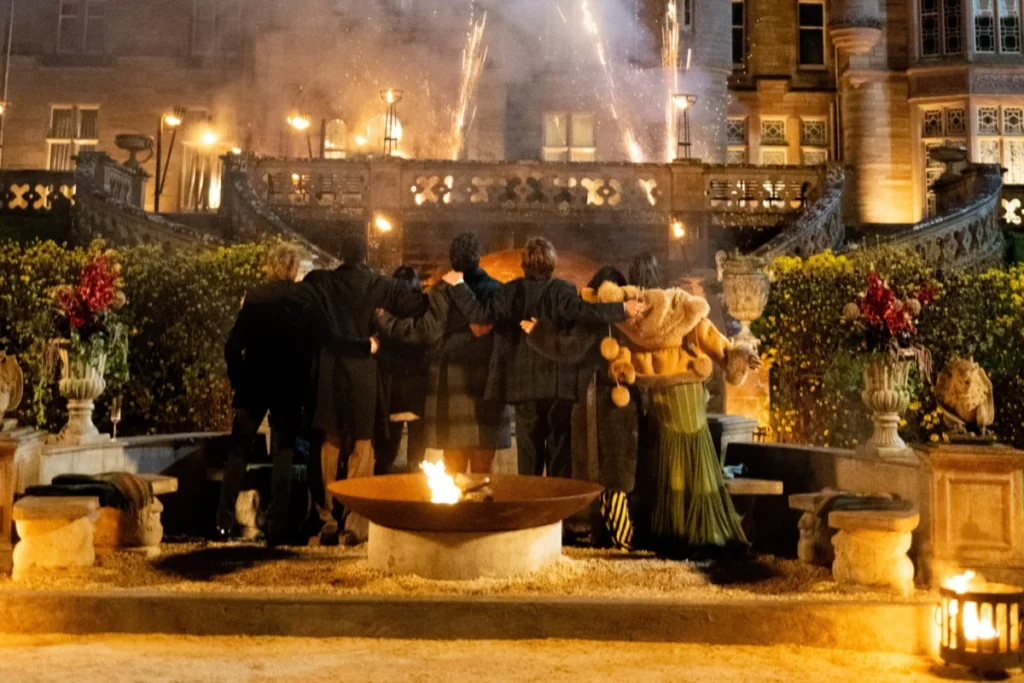

The grand finale of the second series of The Celebrity Traitors has officially cemented its status as a juggernaut of modern British television, drawing a record-breaking overnight average of 11.2 million viewers to BBC One this past Friday. The dramatic conclusion, which saw the final "faithfuls" unmask the remaining "traitors," reached a staggering peak audience of 11.6 million, capturing a dominant 62.9% share of the total viewing audience. These figures represent the highest performance in the history of the celebrity spin-off, surpassing the previous high-water mark set by last year’s finale, which pulled in 11.1 million viewers.
The climax of the high-stakes psychological game saw comedian Romesh Ranganathan and Heartstopper actor Sebastian Croft successfully identify and banish the final two traitors, television presenter Maya Jama and reality personality "King" Kenny. Their victory brought a tense, multi-week strategic battle to a close, with the pair splitting an £83,000 prize pot. In a gesture that garnered significant public approval, both winners pledged their respective £41,500 shares to charity: Ranganathan to the Refugee Council and Croft to the non-profit organization Choose Love.
A Chronology of Strategic Deception
The trajectory of the second series has been characterized by consistent growth in engagement and viewership. The season premiered at the start of October with an average of 8.9 million viewers, peaking at 9.1 million—the most-watched debut of any iteration of the show to date. Throughout the season, the production maintained a narrative tension that kept audiences returning, a feat made more impressive by the format’s inherent reliance on psychological endurance and social manipulation.
The success of the celebrity edition follows a well-established timeline of growth for the franchise. Since its inception, The Traitors has moved from a niche reality experiment to a cultural phenomenon. The first celebrity season, which premiered last autumn, opened with an audience of 6.1 million. By the time that inaugural season reached its conclusion, it had generated a peak audience of 15.4 million, officially becoming the most-watched individual television broadcast of 2025. This momentum has transferred seamlessly into the civilian version of the show as well; the most recent civilian series, which launched in January, saw a strong debut with 6.4 million viewers and reached a record-breaking peak of 9.6 million for its finale.
Analysis of the Production Success
The success of The Celebrity Traitors can be attributed to several production choices that differentiate it from standard reality fare. The show, hosted by Claudia Winkleman, utilizes a "whodunnit" narrative structure that keeps the audience in the position of an omniscient observer. By revealing the identities of the traitors to the viewers while keeping the "faithfuls" in the dark, the producers foster a sense of high-stakes dramatic irony.
Industry analysts note that the show’s ability to consistently draw double-digit millions in an increasingly fragmented digital media landscape is rare. The BBC’s strategic scheduling of the show—often airing on consecutive nights—has created a "water cooler" effect, encouraging real-time social media discussion and preventing the drop-off typically associated with weekly serialized content. The format’s reliance on high-profile personalities, such as Ranganathan and Jama, ensures a broad demographic appeal that bridges the gap between traditional broadcast audiences and younger, internet-savvy viewers.
Future Aspirations for the Franchise
The overwhelming success of the series has led to speculation regarding the future of the format and the potential for even higher-profile casting. Stephen Lambert, the chief executive of Studio Lambert—the production company responsible for the show—has publicly floated ambitious ideas for upcoming cycles. In an interview with The Times, Lambert suggested that the production team is aiming for "A-list" global talent to headline future iterations.

"Tom Cruise would be great, and he loves Britain," Lambert remarked, signaling the high level of ambition driving the show’s development. "We’re right up there in terms of our aspirations for the kind of person that might do the show."
Furthermore, the show’s cultural footprint has extended to the highest levels of British society. The Prince of Wales has previously expressed a personal interest in the programme, a fact that has not been lost on the production team. Lambert has openly joked about the possibility of a working member of the royal family participating in a future series, noting that such a figure would be an ideal addition to the high-pressure environment of the game. While such a development remains speculative, the fact that a major entertainment format is being discussed in the same breath as royalty and global movie stars underscores how far the brand has evolved since its 2022 inception.
Broader Implications for BBC Entertainment
The consistent performance of The Traitors franchise serves as a critical pillar for the BBC’s entertainment strategy. At a time when linear television broadcasters are struggling to maintain relevance against global streaming services, the ability of a domestic production to capture 62.9% of the viewing share is a significant indicator of the "event television" model’s continued viability.
The show’s success also creates a halo effect for other BBC programming. By attracting millions of viewers to a specific time slot, the network effectively promotes its wider slate, using the reach of the show to funnel audiences into news, documentary, and drama segments. The decision to cast a diverse mix of comedians, actors, and public figures has also allowed the BBC to cultivate a multi-generational audience, ranging from teenagers who follow the contestants on social media to older demographics who appreciate the classic "parlour game" elements of the show.
Looking Toward Series Three
As the industry turns its attention toward the inevitable third series, the pressure on the production team to maintain this level of quality and engagement will be intense. The "celebrity spin-off" model relies heavily on the quality of the cast—a factor that can be unpredictable. However, given the current cultural momentum of the show, it is likely that talent acquisition will become easier as more high-profile stars seek to demonstrate their strategic acumen and relatability to the public.
For now, the record-breaking finale serves as a milestone in the history of British reality television. By successfully balancing the suspense of a thriller with the lighthearted appeal of a game show, The Celebrity Traitors has managed to capture the national imagination. Whether the show can continue to exceed its own performance records in the future remains to be seen, but the data suggests that as long as the format remains fresh and the casting remains inspired, the appetite for the game of deception and loyalty is showing no signs of waning.
As the production team begins the process of scouting for the next group of contestants, the success of Ranganathan and Croft stands as a testament to the show’s core appeal: that even in a game built on lies, the most engaging moments are those that reveal the genuine character of the players involved. With the bar set at 11.6 million viewers, the next iteration of The Celebrity Traitors faces a significant challenge, but one that the BBC and Studio Lambert appear ready to meet with continued investment and creative ambition.