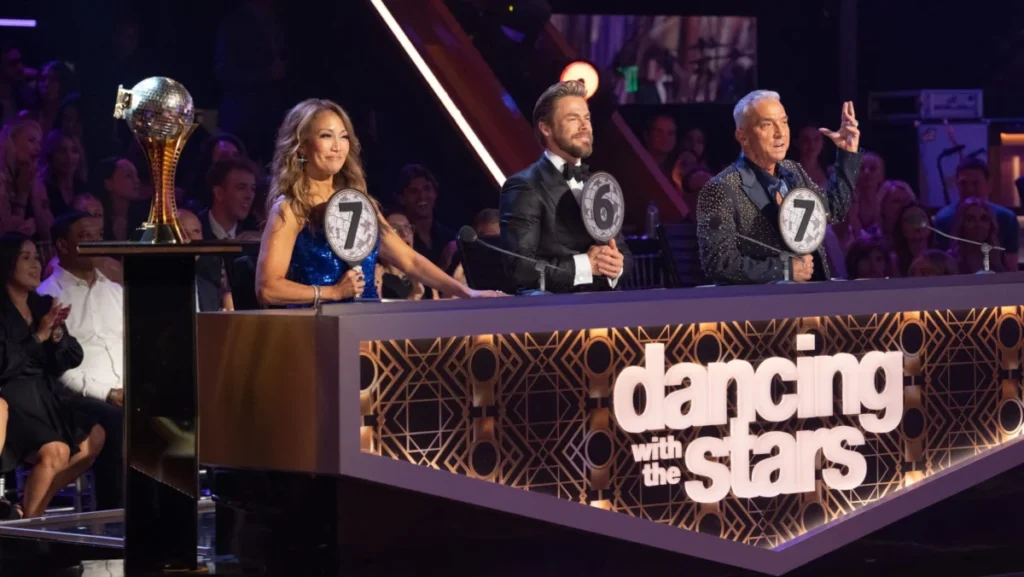

The ballroom lights of Dancing With the Stars are shifting focus from traditional television nostalgia to modern internet culture as season 35 steps into its third episode with Viral Hits Night. Following a high-octane, two-night premiere week that established the baseline for the milestone season, the remaining celebrity and professional dancer pairings are preparing to translate some of the most recognizable online moments, trending audios, and viral social media dances into choreographed ballroom routines.
As ABC’s long-running dance competition continues its multi-platform broadcast strategy—airing live simultaneously on ABC and Disney+ while remaining available for next-day streaming on Hulu—the stakes for the contestants have never been higher. With the competition narrowing down rapidly following early exits, Viral Hits Night represents a critical juncture for the cast to connect with younger digital demographics while impressing a rigorous judging panel.
A Tumultuous Opening Week Sets The Stage
Season 35 officially commenced with a unique two-night premiere structure designed to showcase the massive roster of talent recruited for this milestone iteration. Rather than easing the celebrities into the competition, the production team opted for immediate accountability, dividing the premiere responsibilities across consecutive nights.
During the Tuesday night premiere, the male celebrities took to the floor to debut their initial routines, facing immediate scrutiny from the judges. The evening showcased a broad spectrum of dance abilities, ranging from surprising natural agility to awkward missteps. When the combined totals of judges’ scores and live viewer votes were tallied at the conclusion of the broadcast, reality personality and internet creator Conner Leavitt found himself at the bottom of the leaderboard. Leavitt became the first official casualty of season 35, setting a serious tone for the remainder of the roster.
The following night shifted the spotlight to the female celebrities, who delivered their inaugural performances in front of a live studio audience. The competition proved equally unforgiving. Despite a spirited effort in the ballroom, television personality Sarah Jane Nader failed to secure enough support from the viewing public and the judging panel, resulting in her elimination as the second celebrity to leave the competition in week one.
The double-elimination structure of the opening week immediately stripped away the illusion of a leisurely ramp-up period. Contestants quickly realized that fan engagement and technical execution had to align from the very first minute they stepped onto the dance floor.
The Remaining Contenders In Season 35
With Leavitt and Nader eliminated, a diverse and fiercely competitive field of 14 couples remains in the running for the coveted Mirrorball Trophy. The current roster features a cross-section of entertainment, athletic, and culinary talent:
- Tatyana Ali, partnered with Jan Ravnik
- Tyler Cameron, partnered with Sharna Burgess
- Giada De Laurentiis, partnered with Alan Bersten
- Jenna Dewan, partnered with Val Chmerkovskiy
- Ezra Frech, partnered with Daniella Karagach
- Amber Glenn, partnered with Pasha Pashkov
- Taylor Hanson, partnered with Britt Stewart
- Maura Higgins, partnered with Mark Ballas
- Ciara Miller, partnered with Brandon Armstrong
- Jackson Olson, partnered with Emma Slater
- Guillermo Rodriguez, partnered with Witney Carson
- Harry Shum Jr., partnered with Jenna Johnson
- Julia Stiles, partnered with Ezra Sosa
- Connor Wood, partnered with Rylee Arnold
This eclectic mix of backgrounds—spanning professional cooking, reality television, acting, music, and sports—has created a uniquely volatile competitive landscape. Competitors like Jenna Dewan arrive with significant dance experience, raising expectations for technical execution, while personalities like Guillermo Rodriguez rely heavily on audience rapport and entertainment value to offset technical shortcomings.
The Mechanics Of DWTS Live Voting
Understanding the operational framework of Dancing With the Stars is vital for analyzing how contestants survive each round. The competition operates on a hybrid scoring system that equally weights scores awarded by the professional judging panel and votes cast directly by the viewing public.
Live voting opens at the beginning of the East Coast broadcast of each episode and remains active throughout the show, officially closing shortly after the final performance of the night. This window creates a logistical challenge for viewers residing on the West Coast and in other western time zones. Because the show broadcasts live relative to the East Coast, West Coast viewers must cast their votes between 5:00 p.m. PT and approximately 6:45 p.m. PT. Failure to vote within this compressed timeframe leaves a contestant’s survival entirely dependent on their performance score and the votes of eastern audiences.
This voting structure often leads to dramatic discrepancies between leaderboard placement and ultimate safety. A couple sitting comfortably in the middle of the judges’ technical standings can find themselves in jeopardy if they fail to mobilize a digital fanbase during the live window, while a crowd favorite with lower technical marks can advance purely on the strength of viewer loyalty.
Embracing Digital Culture On Viral Hits Night
Viral Hits Night represents a calculated programming choice by ABC and the executive production team to bridge the gap between traditional broadcast television and digital-native audiences. By utilizing songs, audio clips, and choreographic trends that originated on platforms like TikTok, Instagram Reels, and YouTube Shorts, the show directly appeals to younger demographics who consume entertainment primarily through short-form video.
Producers have noted that adapting internet memes and viral choreography into structured ballroom styles—such as the Quickstep, Cha Cha, Tango, and Foxtrot—requires a delicate balance. The routines must maintain the integrity of traditional ballroom technique while honoring the recognizable beats and visual cues that made the source material popular online.
Professional dancers have spent the week coaching their celebrity partners on how to inject personality, humor, and contemporary rhythm into their routines without sacrificing posture, footwork, and frame. For seasoned pros like Val Chmerkovskiy, Daniella Karagach, and Mark Ballas, the challenge lies in translating fleeting digital moments into cohesive, minute-and-a-half television spectacles.
Broader Industry Implications And Streaming Strategy
The execution of season 35 underscores the ongoing evolution of television distribution models. By maintaining its simultaneous broadcast on ABC and Disney+, alongside next-day availability on Hulu, the network captures a fractured viewing audience across multiple ecosystems.
Industry analysts point out that reality television formats must continuously adapt to shifting consumption habits to remain relevant. Integrating themes like Viral Hits Night is not merely a creative choice; it is a retention strategy designed to generate companion content—such as behind-the-scenes clips, rehearsal breakdowns, and reaction videos—that can be recycled across social media platforms to maintain viewer interest between weekly broadcasts.
Furthermore, the casting philosophy of season 35 reflects an industry-wide push to include digital creators and niche internet personalities alongside mainstream actors and musicians. This strategy intentionally blurs the line between traditional celebrity status and digital influence, acknowledging that contemporary fame is increasingly forged online.
Looking Ahead In The Ballroom
As the remaining 14 couples finalize their preparations for Viral Hits Night, the physical and psychological toll of the competition begins to mount. Rehearsal studios across Los Angeles are operating at maximum capacity as contestants log punishing hours to master complex footwork in compressed timeframes.
The upcoming elimination will test the resilience of the cast and provide further insight into how the viewing public is responding to the hybrid scoring model. With the margin for error shrinking with every passing week, couples can no longer afford safe, middle-of-the-road performances. They must capture the energy of the internet, deliver it flawlessly to the ballroom floor, and convince millions of viewers to cast their votes before the window slams shut.
Dancing With the Stars airs live on Tuesdays at 8 p.m. ET/PT on ABC and Disney+, with streaming access available the following day via Hulu.