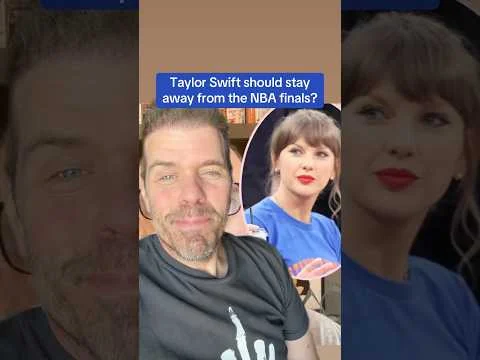

The intersection of global pop culture and elite professional sports has once again sparked debate, following recent discussions by commentators Monica McNutt and actor Hank Azaria regarding the hypothetical presence of superstar Taylor Swift at the NBA Finals. The premise, originating from a celebrity news outlet, suggests that Swift’s attendance to support the New York Knicks at a pivotal championship game could draw significant public scrutiny and potentially overshadow the athletic contest itself. This discussion comes amidst a broader public fascination with Swift’s high-profile appearances at sporting events, particularly her unwavering support for her boyfriend, NFL tight end Travis Kelce, which has previously ignited widespread media attention and fan reactions across various demographics.
Taylor Swift’s journey from country music prodigy to an unparalleled global pop icon has been marked by record-breaking album sales, sold-out stadium tours like "The Eras Tour," and an unprecedented level of cultural influence. Her fan base, often referred to as "Swifties," numbers in the hundreds of millions and spans generations and continents. This immense popularity has recently extended into the realm of professional sports, notably the National Football League (NFL), where her presence at Kansas City Chiefs games to cheer on Kelce became a dominant storyline throughout the 2023-2024 season. The "Swiftie effect" was tangible: NFL viewership, particularly among female demographics, saw a notable surge, merchandise sales for Kelce and the Chiefs spiked, and social media engagement around game broadcasts reached new heights. Advertisers and broadcasters openly acknowledged the commercial benefits, with many embracing the crossover appeal. This established precedent of Swift’s undeniable impact on a major sports league sets the stage for the current discussion regarding her potential involvement with the NBA Finals.
The NBA Finals represent the pinnacle of professional basketball, a series that culminates months of intense competition and determines the league champion. It is an event steeped in tradition, fierce rivalry, and athletic excellence, drawing millions of viewers worldwide. For a team like the New York Knicks, a franchise with a storied history and one of the most passionate fan bases in the league, reaching the Finals is a monumental achievement, capable of galvanizing the entire city. The hypothetical scenario posits Swift attending to support the Knicks, a team with a strong celebrity following, including prominent figures like Spike Lee, who is a perennial fixture at their games. While celebrity attendance at sporting events is commonplace, Swift’s unique level of global superstardom elevates any such appearance into a major media event, prompting questions about its appropriateness and potential ramifications for the integrity of the sporting spectacle.
The commentary from individuals like Monica McNutt and Hank Azaria, as referenced in the initial report, underscores a recurring tension between sports purists and the growing influence of celebrity culture on athletic competitions. Monica McNutt, an acclaimed ESPN analyst and former college basketball player, is known for her insightful and often direct commentary on basketball. Her hypothetical concerns would likely center on the potential for Swift’s presence to become a distraction, diverting media attention away from the athletes, their performances, and the strategic nuances of the game. For many sports commentators, the focus of the NBA Finals should unequivocally remain on the teams, coaches, and players who have dedicated their lives to reaching that stage. McNutt, representing a segment of sports journalism, might argue that the spectacle of a global pop star could inadvertently overshadow the athletic narrative, reducing the focus on the actual competition.
Similarly, Hank Azaria, a renowned actor and known sports enthusiast, particularly a long-time New York Knicks fan, could voice concerns from a fan’s perspective. Azaria, having been deeply embedded in the sports culture as a fan for decades, might lament the potential shift in focus from the game itself to the peripheral celebrity narrative. His hypothetical criticism could stem from a desire to preserve the sanctity of the sporting event, where the drama unfolds purely through athletic endeavor, rather than through celebrity appearances. This perspective often articulates a sentiment among traditional sports fans who believe that the game, in its purest form, should be the sole focal point, untainted by external celebrity narratives that might feel manufactured or opportunistic.
The debate surrounding Swift’s presence at sporting events is not entirely new. Throughout the NFL season, discussions often arose regarding the amount of airtime dedicated to her reactions in the VIP box. While some viewers and broadcasters embraced the added buzz and the influx of new audiences, others, particularly long-time fans, expressed frustration, feeling that the coverage detracted from the game itself. Social media platforms became a battleground for these differing viewpoints, with "Swifties" celebrating her visibility and critics decrying the "Hollywood-ification" of sports. This established pattern suggests that her attendance at an NBA Finals game would likely trigger a similar, if not more intense, polarized reaction, given the heightened stakes and prestige of the championship series.
From a fan perspective, the reactions would undoubtedly be bifurcated. One segment of fans, particularly those who are also Swift enthusiasts or appreciate the cultural crossover, would likely welcome her presence. They might see it as a thrilling addition, bringing a unique blend of celebrity glamour and mainstream appeal to an already exciting event. For these fans, the confluence of entertainment and sports is a positive development, potentially attracting new viewers to basketball and enhancing the overall spectacle. They might argue that celebrities have always attended major sporting events, and Swift’s attendance is merely a high-profile continuation of this tradition, bringing positive attention to the league and the Knicks.
Conversely, another significant portion of the fan base, aligning with the sentiments potentially expressed by McNutt and Azaria, would likely view her presence with skepticism or outright disapproval. These fans might fear that the media narrative would shift from the intense on-court battle to her attire, her reactions, or her interactions with other celebrities. The concern is that the focus would inadvertently be drawn away from the blood, sweat, and tears of the athletes, the strategic genius of the coaches, and the dramatic ebb and flow of the game itself. For these purists, the NBA Finals should be about basketball, and anything that distracts from that core purpose is seen as a detriment.
Beyond the immediate fan reactions, there are significant commercial and marketing implications for the NBA and its teams. The "Swiftie effect" in the NFL demonstrated a clear capacity to boost viewership, particularly among demographics that might not traditionally tune into sports. The NBA, like all major sports leagues, constantly seeks to expand its audience and engage new demographics. Swift’s presence, regardless of the controversy, guarantees immense media coverage across entertainment and news outlets, potentially translating into higher ratings, increased social media impressions, and broader cultural relevance for the league. This is a powerful draw for advertisers and sponsors, who are always looking for opportunities to reach a wider and more diverse audience. For the New York Knicks, a team that plays in the largest media market in the U.S., such an appearance could amplify their brand globally, attracting new fans and commercial partners.
Historically, celebrity attendance at NBA games, especially for the Knicks and Lakers, is a well-established phenomenon. Figures like Spike Lee at Madison Square Garden and Jack Nicholson at the Crypto.com Arena have become synonymous with their respective teams, adding a layer of glamour and cultural cachet to the games. However, their presence, while notable, rarely eclipses the game itself. These celebrities are often seen as part of the fabric of the team’s fan base, their reactions a familiar backdrop to the action. Taylor Swift’s current level of global celebrity, however, is on a different scale, possessing an almost unparalleled ability to command media attention, potentially overshadowing even the most iconic sporting events. This is the crux of the dilemma: is the commercial benefit and expanded audience reach worth the potential cost of diverting focus from the athletic competition?
The NBA, as a league, has generally embraced celebrity involvement and its potential to elevate the sport’s profile. Adam Silver, the NBA Commissioner, has often spoken about the league’s commitment to entertainment and global expansion. From the league’s perspective, having a figure of Swift’s stature attend the Finals could be viewed as a net positive, reinforcing basketball’s status as a premier entertainment product. It aligns with the NBA’s broader strategy of integrating sports with popular culture, using music, fashion, and celebrity to appeal to a younger, more diverse, and globally connected audience. Therefore, it is unlikely that the NBA would actively discourage such high-profile attendance, even if it generates some debate among traditionalists.
It is also important to address the specific detail in the original report referring to Travis Kelce as Swift’s "fiancé." As of current public knowledge, Taylor Swift and Travis Kelce are in a widely publicized relationship, but there has been no official announcement of an engagement. This detail might be a speculative future prediction or an error in the original source, highlighting the often-blurred lines between confirmed news and celebrity gossip. Regardless, the public’s keen interest in their relationship only amplifies the scrutiny any joint or individual appearance by Swift at a major sporting event would receive. Her attendance, therefore, is not merely as a casual fan but as a figure whose personal life is inextricably linked to another prominent sports personality, further intertwining the worlds of music, celebrity, and sports.
In conclusion, the hypothetical scenario of Taylor Swift attending the NBA Finals, particularly to support the New York Knicks, encapsulates a complex modern dilemma at the nexus of sports and entertainment. While her presence would undoubtedly generate unparalleled media buzz, attract new demographics to basketball, and offer significant commercial benefits to the league and the team, it also raises legitimate concerns among sports commentators and traditional fans. The debate centers on whether the immense star power of a global icon like Swift would inadvertently overshadow the athletic purity and competitive integrity of the NBA Finals. As sports continue to evolve into multifaceted entertainment spectacles, finding a balance between embracing celebrity appeal and preserving the core essence of athletic competition remains a persistent challenge for leagues, media, and fans alike. The discussion initiated by figures like Monica McNutt and Hank Azaria serves as a poignant reminder of these ongoing tensions, reflecting the broader conversation about the changing landscape of major sporting events in the 21st century.