
The tragic death of former Conservative MP and prominent political figure Ann Widdecombe, discovered deceased at her Devon home on Wednesday, has escalated into a complex national drama, intertwining a murder investigation with a fierce political row over financial donations and public commentary. The situation reached a contentious peak during a live broadcast on ITV’s Good Morning Britain, where journalist Kevin Maguire accused Reform UK leader Nigel Farage of leveraging Widdecombe’s murder as a diversion from scrutiny surrounding a substantial £5 million donation to his party. This incendiary claim, broadcast to a wide audience, ignited a significant public backlash, adding another layer of controversy to an already sensitive and unfolding investigation now led by counter-terrorism detectives.
The Tragic Discovery and Escalating Investigation
Ann Widdecombe, a formidable and distinctive presence in British politics for decades, was found dead at her residence in Devon on Wednesday. The initial police inquiry quickly escalated, with authorities confirming they were treating her death as a suspected murder. This development sent shockwaves across the political spectrum and the nation, given Widdecombe’s high profile and her enduring presence in public life.
By Monday, the investigation took a dramatic turn when it was announced that counter-terror detectives had assumed leadership of the case. This unprecedented move was prompted by "new information and evidence" that came to light, leading to the re-arrest of a suspect on suspicion of "commission, preparation or instigation of acts of terrorism." Home Secretary Shabana Mahmood later confirmed that the individual in question was not known to the government’s Prevent anti-terror programme, further deepening the mystery and public concern surrounding the motive behind the attack on a well-known political personality. The police have, throughout this period, issued stern warnings against public speculation, urging restraint and allowing the investigative process to proceed unimpeded.

Nigel Farage’s Swift Response and Controversial Speculation
In the immediate aftermath of Widdecombe’s death, Nigel Farage, leader of Reform UK and a former colleague of Widdecombe’s in the Brexit Party, made a notable journey to Devon. His visit was ostensibly to pay tribute to his late colleague, but his subsequent public statements ignited a firestorm. Farage expressed his belief that Widdecombe’s death was a "pre-meditated murder," speculating further that it could have been carried out by "someone with political motivations or a grudge."
These comments, made amidst a live police investigation, immediately drew criticism from various quarters. Many, including fellow politicians, argued that such speculation was unhelpful, potentially prejudicial, and directly contradicted police appeals for the public to refrain from conjecture. Farage’s decision to publicly air his theories on the nature and motive of the murder of a political figure, particularly one who had been associated with his party, was perceived by some as an attempt to frame the narrative around the tragedy in a politically charged manner.
The £5 Million Donation Controversy: A Shadow Over Reform UK
Underlying the immediate drama of Widdecombe’s death and Farage’s comments is a significant and ongoing controversy surrounding a £5 million donation to Reform UK. The donation, reportedly from a Thai-based crypto billionaire, has been a source of intense scrutiny and criticism. Transparency and accountability in political financing are paramount in British politics, and the circumstances surrounding this particular gift have raised numerous questions.

According to Kevin Maguire, Farage had offered multiple, somewhat inconsistent, explanations for the £5 million sum. Maguire stated on Good Morning Britain that Farage initially claimed the money was for "security," then later suggested it was a "reward for Brexit," and finally, seemed to imply it was discretionary funds that "you could spend on whatever you like, Ferraris or gambling." This perceived ambiguity and shifting rationale behind such a substantial donation from an undisclosed foreign source have fueled accusations of a lack of transparency and potential ethical breaches, particularly in the run-up to a crucial by-election. The by-election context further amplifies the political stakes, making any controversy surrounding Reform UK’s finances particularly potent.
The Explosive Good Morning Britain Exchange
The confluence of these narratives – Widdecombe’s murder, the counter-terror probe, Farage’s controversial speculation, and the ongoing donation scandal – converged dramatically on Good Morning Britain. Veteran political journalist Kevin Maguire, known for his incisive and often provocative commentary, appeared on the show to discuss the unfolding events. It was during this segment that Maguire unleashed his most controversial assertion.
Maguire explicitly claimed that Nigel Farage’s pronounced public commentary on Ann Widdecombe’s murder was a calculated "diversion from rows over gifts and donations." He directly linked Farage’s visit to Devon and his pronouncements about a "pre-meditated murder" to the Reform UK leader’s desire to deflect attention from the ongoing scrutiny of the £5 million crypto donation. Maguire articulated his view, stating: "Nigel Farage has come up with three reasons why he took a secret £5 million gift from the Thai-based crypto billionaire… Security was one Reform put out, then said it was a reward for Brexit and then he said you could spend on whatever you like, Ferraris or gambling, but I think if somebody is murdered, a politician is murdered and they’re in your party, one of yours, I personally understand that. But because there’s that by-election going on, why it’s become so intensely political and why there was so much pressure on the police because Reform, it’s quite clear, I use the murder as a diversion from rows over the money."
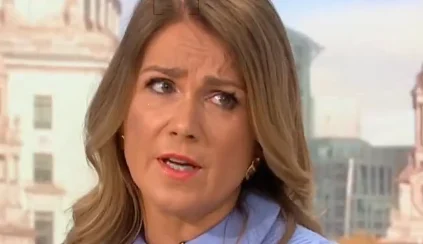
The gravity of this accusation was immediately apparent. Co-host Susanna Reid, visibly uncomfortable with the directness and sensitivity of Maguire’s claim, swiftly interrupted him. She challenged his assertion, stating, "That’s unfair. They may not want to talk about their donation, but I think accusing them of using it as a diversion is going to feel uncomfortable." Despite Reid’s interjection, Maguire remained unyielding, insisting: "No, I’ve watched this many times, they don’t want to talk about crypto money and £5 million." His steadfast refusal to retract or soften his stance further exacerbated the tension of the live broadcast.

Widespread Public Outcry and Media Scrutiny
Maguire’s comments on Good Morning Britain triggered an immediate and widespread backlash across social media platforms. Viewers expressed outrage and condemnation, accusing the journalist of insensitivity, disrespect, and unprofessional conduct. The accusation that a political party would exploit a murder, especially that of a former colleague, for political gain was deemed by many to be beyond the pale of acceptable public discourse.
One viewer, reflecting the sentiment of many, wrote: "Kevin Maguire was totally out of order by suggesting the Reform Party were using Ann Widdecombe’s death as a cover. Despicable actions. Get him off your programme." Another echoed this strong disapproval, stating: "Kevin Maguire is now saying that Farage, Zia and Reform will use Ann Widdecombe’s murder as a diversion to distract from the investigation. That’s just disgusting. What an awful thing to say." The severity of the criticism was further encapsulated by a third comment: "His vile suggestion that Reform are trying to use the murder of Ann Widdecombe as a distraction to divert from the ongoing row over their donations, is yet another low for this vile man." The sheer volume and vehemence of these reactions underscore the public’s discomfort with the intertwining of a murder investigation with partisan political accusations, particularly when the victim is a well-known public figure. The Standard has reached out to Kevin Maguire for comment regarding the backlash.
Ann Widdecombe: A Life in Public Service
Ann Widdecombe’s political career was marked by a distinctive and often uncompromising style. Born in Bath in 1947, she served as the Conservative Member of Parliament for Maidstone from 1987 to 2010. During her time in Parliament, she held various ministerial positions, including Minister of State for Prisons, where she gained a reputation for her tough stance on law and order issues. Widdecombe was known for her strong conservative views, her robust debating style, and her unwavering adherence to her principles, often making her a polarising but undeniably memorable figure.

Following her retirement from the House of Commons, Widdecombe remained in the public eye, participating in popular television shows and continuing to offer political commentary. She later re-entered frontline politics as a prominent figure in the Brexit Party (which subsequently became Reform UK), advocating passionately for the United Kingdom’s departure from the European Union. Her death, therefore, is not merely a personal tragedy but also the loss of a significant voice that shaped British political discourse for over three decades.
Broader Political Reactions and Calls for Restraint
Beyond the immediate GMB controversy, other prominent political figures weighed in on the wider issue of public speculation surrounding Widdecombe’s death. Sir Iain Duncan Smith, a former Conservative leader, unequivocally condemned the premature theorizing about the murder’s motive. He told Times Radio: "Don’t try and give some news interview in which you’re able to tell everybody this is what you think. When you know this is not an Agatha Christie novel. This is real life, and this is a real murder. And let’s just leave the police to get on with it. And then, when they’re ready and they release the information, then we all know what happened." His comments highlighted the responsibility of public figures to avoid hindering a sensitive police investigation.
Similarly, former Conservative MP Harvey Proctor criticised Farage directly for ignoring police advice. He told The Times: "The police have expressly asked the public not to speculate about the motive. It is therefore deeply disappointing that Nigel Farage has chosen to do precisely that." These statements from across the political spectrum reflect a general consensus that, irrespective of political affiliations, the integrity of a murder investigation, especially one with potential counter-terrorism implications, should take precedence over political point-scoring or speculative commentary.
Implications for Political Discourse and Media Ethics

The confluence of Ann Widdecombe’s tragic murder, the escalating counter-terror investigation, the enduring controversy over Reform UK’s £5 million donation, and the fiery exchange on Good Morning Britain has brought into sharp focus several critical issues.
Firstly, it underscores the delicate balance required in media commentary during sensitive national events. While robust political debate is a cornerstone of democracy, accusations of exploiting a murder for political deflection push the boundaries of journalistic ethics and public acceptability. The visceral reaction to Maguire’s comments highlights a societal expectation for a degree of solemnity and respect when discussing a death, particularly one under criminal investigation.
Secondly, the incident exposes the heightened tensions and high stakes within the current political landscape. With an impending by-election and ongoing scrutiny of political financing, any major event can become weaponised in the battle for public opinion. The £5 million donation controversy is a significant challenge for Reform UK, raising questions about transparency, influence, and the sources of political funding. The accusation of using a tragedy to divert from this issue, whether true or not, significantly impacts public perception of the party’s ethical standing.
Finally, the involvement of counter-terrorism detectives in the murder investigation adds a layer of national security concern, elevating the public interest and simultaneously increasing the imperative for responsible reporting and commentary. The police’s repeated calls for non-speculation serve as a crucial reminder to both politicians and the media of their civic duty to support, rather than hinder, such critical investigations.
As the police investigation into Ann Widdecombe’s death continues, and the political reverberations of these controversies unfold, the events serve as a stark reminder of the complexities and responsibilities inherent in public life, political commentary, and the pursuit of justice.