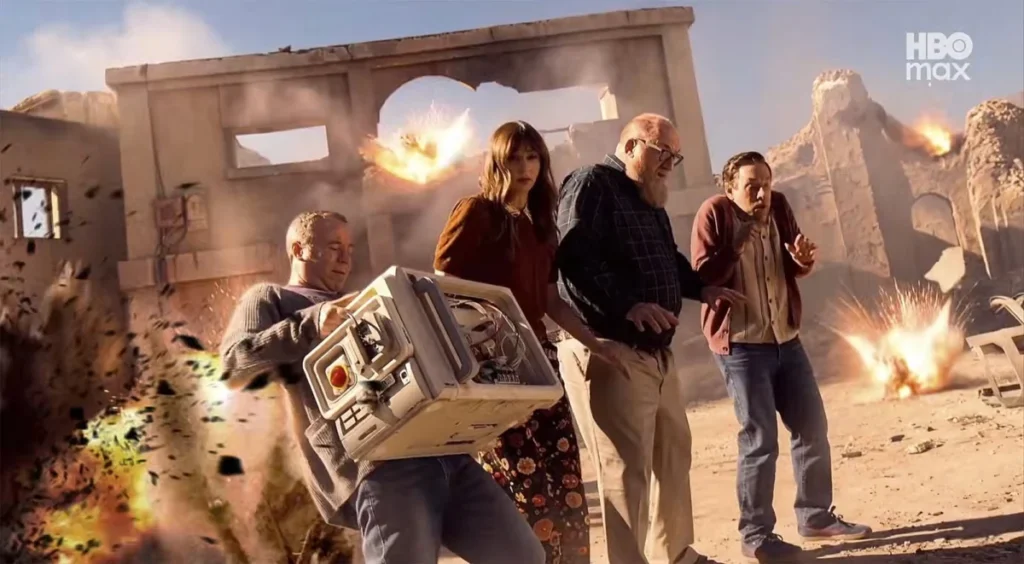

HBO Max has officially unveiled the full trailer for its highly anticipated sci-fi comedy series, Stuart Fails to Save the Universe, a new venture extending the beloved The Big Bang Theory universe. The series, scheduled for a weekly episode release beginning July 23rd, 2026, promises a multiverse-spanning adventure centered on the perpetually unlucky comic book store owner, Stuart Bloom. This marks the fourth television series associated with The Big Bang Theory franchise and the second direct spin-off from the original sitcom, delving into the chaotic consequences of a scientific mishap with potentially universe-altering implications.
The Multiverse Unravels: A High-Stakes Comedy Premise
The official trailer, released on YouTube, introduces a compelling, albeit comedic, premise: Stuart Bloom, portrayed once again by Kevin Sussman, inadvertently breaks a device of immense power, originally conceived by the brilliant minds of Sheldon Cooper and Leonard Hofstadter. This catastrophic accident doesn’t just cause a localized disturbance; it rips open the fabric of reality, ushering in a "multiverse Armageddon." The fate of all existence, it appears, now rests precariously on the shoulders of the amiable but often overwhelmed Stuart.
His daunting mission to restore the fractured reality is not undertaken alone. He is joined by a motley crew of allies, including his girlfriend Denise, a steadfast geologist friend named Bert, and the notoriously exasperating yet undeniably brilliant quantum physicist, Barry Kripke. As they navigate the treacherous landscape of alternate universes, the trailer hints at encounters with familiar faces—or rather, alternate-universe versions of characters fans have come to know and love from The Big Bang Theory. This element of parallel selves offers fertile ground for comedic exploration, examining how familiar personalities might manifest under drastically different cosmic circumstances.
The trailer itself is packed with visual gags and narrative hooks. Notably, it features an amusing homage to The Matrix, with a scene that directly echoes the iconic "gooey battery pods" sequence, suggesting a blend of pop culture references and genre satire. This stylistic choice, combined with the core premise, positions Stuart Fails to Save the Universe as a fun, dystopian, and post-apocalyptic comedy that doesn’t shy away from its geeky roots.

Creative Forces Behind the Chaos
The series is the brainchild of a formidable creative team, with Chuck Lorre, Zak Penn, and Bill Prady serving as creators, writers, and executive producers. This trio brings a wealth of experience in crafting successful and enduring television comedies. Chuck Lorre is a television powerhouse, known for his extensive work on multi-camera sitcoms, including The Big Bang Theory itself, Two and a Half Men, and Mom. Zak Penn, an accomplished screenwriter, has a background in science fiction and action films, with credits such as The Avengers and X-Men: The Last Stand, lending a potential for intricate plotting and imaginative world-building. Bill Prady, a co-creator of The Big Bang Theory, brings an intimate understanding of the characters and the universe they inhabit, ensuring continuity and authentic fan appeal.
The directorial talent also adds significant weight to the production. Several episodes are helmed by Kyle Newacheck, a director renowned for his work in comedy. His portfolio includes projects like Game Over, Man!, Murder Mystery, the critically acclaimed series What We Do in the Shadows, and even the recently announced Happy Gilmore 2. Newacheck’s comedic sensibilities are expected to infuse the series with a distinct visual style and sharp comedic timing.
Stuart Fails to Save the Universe is produced by Chuck Lorre Productions in association with Warner Bros. Television, and will be a flagship offering for HBO Max. The involvement of Warner Bros. Television, the studio behind the original The Big Bang Theory, ensures a seamless integration into the existing franchise landscape.
Casting: Familiar Faces and New Additions
At the heart of the series is Kevin Sussman, reprising his role as Stuart Bloom. Sussman’s performance as the often put-upon comic book store owner in the original series garnered a significant fan following, and his ascension to a leading role in a spin-off is a testament to his character’s enduring appeal. The trailer showcases Sussman’s ability to convey both the desperation and the burgeoning heroism required for the role.
The supporting cast brings a blend of established comedic talent and new faces. Lauren Lapkus, known for her improvisational skills and roles in shows like Orange Is the New Black and Crashing, is expected to bring a unique energy to the series. Brian Posehn, a veteran comedian and actor, adds another layer of comedic gravitas. John Ross Bowie, familiar to audiences from The Big Bang Theory and Speechless, further rounds out the ensemble. The series also features Ryan Cartwright, Josh Brener, and Tommy Walker, all contributing to the diverse and talented cast.

Franchise Expansion and Strategic Rollout
The launch of Stuart Fails to Save the Universe is a significant strategic move for Warner Bros. Discovery and its streaming platform, HBO Max. The continued success of The Big Bang Theory in syndication and on streaming services indicates a strong, dedicated audience base. Expanding the universe through spin-offs capitalizes on this established goodwill and provides new content that appeals to existing fans while potentially attracting new viewers.
The Big Bang Theory concluded its 12-season run in 2019, but its cultural impact remains potent. The prequel series Young Sheldon, which debuted in 2017, has proven to be a critical and commercial success, charting the early life of Sheldon Cooper. Stuart Fails to Save the Universe represents a different approach to franchise extension, moving away from prequel territory and into a more genre-driven, comedic adventure that directly builds upon the established universe’s scientific elements and character dynamics.
The decision to release new episodes weekly, rather than a full season binge model, is a common strategy employed by streaming services to maintain viewer engagement over an extended period, foster social media buzz, and encourage sustained platform viewership. This approach allows for ongoing discussion and anticipation surrounding each new installment.
Context and Potential Implications
The emergence of a "multiverse Armageddon" scenario taps into a popular trend in contemporary science fiction and superhero narratives. The concept of parallel universes allows for creative freedom in storytelling, enabling creators to explore "what if" scenarios and introduce variations on established characters and themes. For a comedy series, this offers ample opportunity for surreal situations, unexpected character interactions, and satirical commentary on societal norms and human behavior as reflected in alternate realities.
The involvement of Chuck Lorre, Zak Penn, and Bill Prady suggests a commitment to crafting a narrative that is both accessible and intelligently written. Their collective experience in television production indicates a focus on character development, witty dialogue, and a well-paced plot. The inclusion of directors like Kyle Newacheck points towards a modern, dynamic visual style that complements the comedic elements.

The success of Stuart Fails to Save the Universe could have significant implications for the future of the The Big Bang Theory franchise. A strong performance could pave the way for further expansions, perhaps exploring other tangential characters or even delving deeper into the scientific concepts introduced in the original series. Conversely, a less favorable reception might prompt a reevaluation of the franchise’s expansion strategy.
From a business perspective, the series represents a crucial investment for HBO Max in its ongoing battle for streaming market share. Leveraging established intellectual property like The Big Bang Theory is a well-trodden path for streamers seeking to attract and retain subscribers. The sci-fi comedy genre, when executed effectively, has a broad appeal, and the franchise’s existing fanbase provides a solid foundation for viewership.
A Glimpse into the Future of Geek Culture on Screen
The trailer for Stuart Fails to Save the Universe hints at a series that understands and celebrates the core elements that made The Big Bang Theory a global phenomenon: relatable characters navigating complex social dynamics, a deep appreciation for science and geek culture, and a consistent vein of humor. By placing Stuart Bloom, a character often on the periphery of the main group’s grander scientific pursuits, at the center of a universe-altering crisis, the creators are offering a fresh perspective. It allows for the exploration of themes like impostor syndrome, unexpected heroism, and the idea that even the most ordinary individuals can be thrust into extraordinary circumstances.
The July 23rd, 2026 premiere date places the series firmly in the summer release window, a period often characterized by tentpole releases across film and television. The anticipation built through trailers and promotional materials will be key in driving initial viewership. As audiences prepare to embark on this multiversal journey with Stuart Bloom, the promise of laughter, adventure, and perhaps a few existential crises awaits on HBO Max. The question posed in the trailer, "Maybe we have a chance to fix the world?", serves as both a narrative hook and a reflection of the inherent optimism, however misplaced, that drives comedic storytelling. Whether Stuart succeeds or, as the title suggests, spectacularly fails, the journey itself is poised to be an entertaining spectacle for fans of the franchise and the broader sci-fi comedy genre.