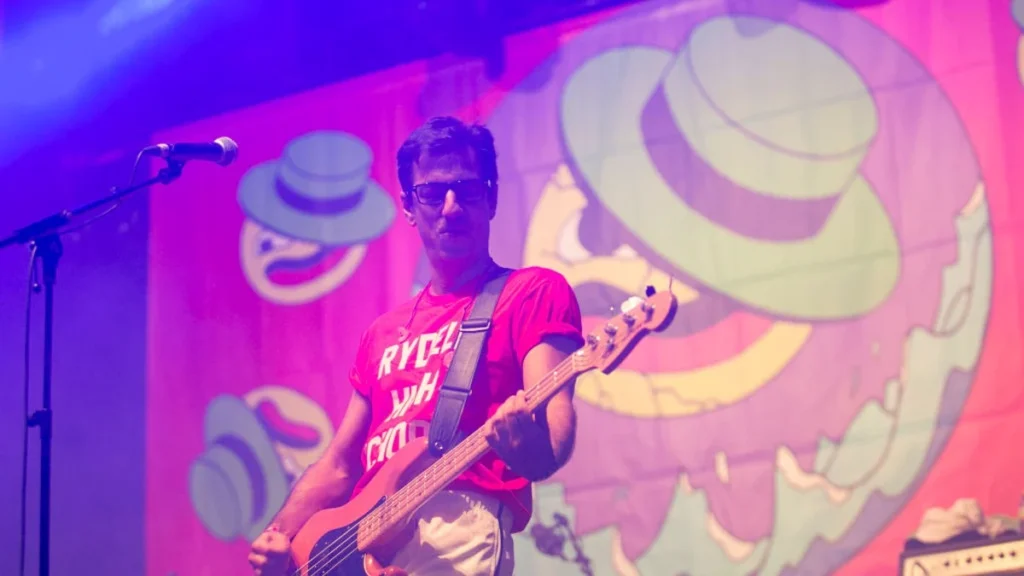

The trajectory of a band’s sound is rarely a linear path; it is often a mosaic of influences, stolen riffs, and aspirational mimicry. For the Spanish punk rock trio Airbag, the foundation of their identity was heavily cemented in the melodic power-pop sensibilities of Rivers Cuomo and the American band Weezer. Long before the release of their ninth studio album, the band’s deep-seated admiration for the Los Angeles legends manifested in a unique performance project: a dedicated Weezer cover act that toured the Spanish club circuit in the early 2000s.
The Genesis of a Tribute
In a recent interview with the Spanish music publication CrazyMinds, frontman Adolfo Díaz reflected on the band’s formative years. During the turn of the millennium, as Airbag was beginning to establish itself within the local Spanish punk scene, the members found themselves captivated by the technical precision and pop-conscious songwriting of Weezer.
"We started a project alongside Airbag, just for fun, where we only played Weezer covers," Díaz explained. The initiative, which functioned as an occasional side-project, allowed the trio to dissect the mechanics of Weezer’s music. This was not a casual endeavor; it was an exercise in musical emulation. Bassist José Andrés noted that the group performed approximately five or six concerts exclusively dedicated to the Weezer catalog, a significant commitment for a band simultaneously trying to launch their own original material.
The most notable of these performances was a complete recreation of the 2001 self-titled record, commonly referred to as The Green Album. The band took their homage to an aesthetic level, even recreating the album’s iconic cover art for their promotional posters, posing against a stark green backdrop to mirror the source material. This level of dedication underscored a pivotal realization for the members: they wanted to reconcile the raw, high-energy ethos of punk rock with the sophisticated, radio-ready melodies that defined the mid-90s alternative rock landscape.
A Career-Defining Philosophy
The influence of the Cuomo-led ensemble was not merely a phase; it was a stated career goal. Díaz recalled a specific interview conducted in the year 2000, coinciding with the release of Airbag’s debut album, Mondo Cretino. When posed with the question regarding their long-term aspirations as a band, the members were candid: "We want to be like Weezer when we grow up."
This aspiration functioned as a roadmap for the band’s development. Throughout the early 2000s, while their peers in the Spanish punk circuit leaned heavily into the stripped-back, aggressive sound of the era, Airbag was actively studying the "Weezer blueprint." This meant prioritizing intricate vocal harmonies, precise guitar interplay, and a polished production style that, while rooted in distortion, remained remarkably accessible.
This stylistic pivot proved instrumental in Airbag’s longevity. By blending the frantic energy of their punk roots with the structural discipline learned through their cover projects, Airbag managed to carve out a distinct niche in the Spanish music industry. Their recent release, Una extraña fuerza, serves as the latest testament to this evolution. The album, released through the label Sonido Muchacho, maintains the hallmark distorted guitars and melodic sensibility that have characterized their nearly three-decade career, effectively bridging the gap between their youthful obsession and their current professional maturity.
Chronology of Influence
To understand the significance of this connection, one must view it within the broader timeline of both bands:
- 1994–1996: Weezer rises to global prominence with The Blue Album and Pinkerton, setting a standard for modern power-pop that influences an entire generation of international musicians.
- 2000: Airbag releases Mondo Cretino. During the press cycle, the members explicitly cite Weezer as their primary North American influence.
- 2001–2003: Airbag launches their Weezer cover project, performing shows across Spain that mimic specific albums, including The Green Album.
- 2010s: Airbag solidifies their place in the Spanish rock pantheon, balancing their early punk intensity with more refined songwriting techniques derived from their formative study of Cuomo’s work.
- 2026: Both bands mark significant milestones. Airbag releases their ninth studio album, Una extraña fuerza, while Weezer concludes their 20th studio album cycle and continues their high-profile "The Gathering" tour.
The Mechanics of Melodic Punk
The admiration Airbag held for Weezer is a case study in how international scenes absorbed the "Alt-Rock" boom of the 1990s. While punk rock in Spain has historically been defined by political urgency and fast tempos, Weezer’s influence offered an alternative: a focus on the "geek-rock" aesthetic, complex guitar layering, and introspective, often humorous lyrics.
Data-driven analysis of Airbag’s discography suggests that while the intensity of their early work was high, the "melody-to-distortion" ratio increased as they matured. This shift mirrors the trajectory of many post-punk bands who eventually prioritized songwriting craft over raw velocity. By studying Weezer’s ability to transition from indie-rock cult favorites to stadium-filling performers, Airbag was able to sustain a career in an industry that is notoriously difficult for long-term independent artists.
Broader Implications and Industry Context
The fact that a Spanish punk band would dedicate entire sets to another artist’s discography highlights a unique aspect of the "tribute culture" that existed before the streaming era. In the early 2000s, local bands often functioned as "cover bands" to sustain themselves financially and to sharpen their technical skills. For Airbag, this was not just a means of income; it was an educational experience.
Furthermore, the longevity of this influence speaks to the enduring legacy of Weezer’s 1994–2001 output. Even as Weezer moved into different phases of their career—experimenting with synth-pop, heavy metal, and orchestral arrangements—the core fan base, and the bands they influenced, continued to hold the "classic" Weezer sound as the gold standard.
Current Status of the Bands
Today, both groups exist in very different professional orbits, yet the thematic connection remains relevant. Weezer’s recent "The Gathering" tour, which concluded in Los Angeles in late October 2026, showcased the band’s ability to bridge generations, playing to audiences that include both original 90s fans and younger listeners who discovered the band through digital platforms. Their success with a 20th studio album demonstrates that the "Weezer sound" remains commercially viable and culturally resonant.
Conversely, Airbag’s continued output proves that the influence of such acts can foster regional sustainability. By internalizing the lessons of their idols—focusing on melodic integrity and consistent, high-quality production—Airbag has transitioned from a band that wanted to be Weezer to a band that has successfully carved out its own unique, enduring identity.
Conclusion
The narrative of Airbag is a poignant reminder that influence is not a sign of lack of originality, but rather a catalyst for development. By paying homage to Weezer through those early cover sets, the trio did not lose their identity; they refined it. As they continue to tour and record in the wake of Una extraña fuerza, the band serves as a bridge between the high-octane punk origins of their home country and the global influence of American power-pop. Their journey from local cover act to veteran recording artists provides a compelling case study for emerging bands: find the artists you admire, deconstruct what makes them great, and use those tools to build your own legacy.