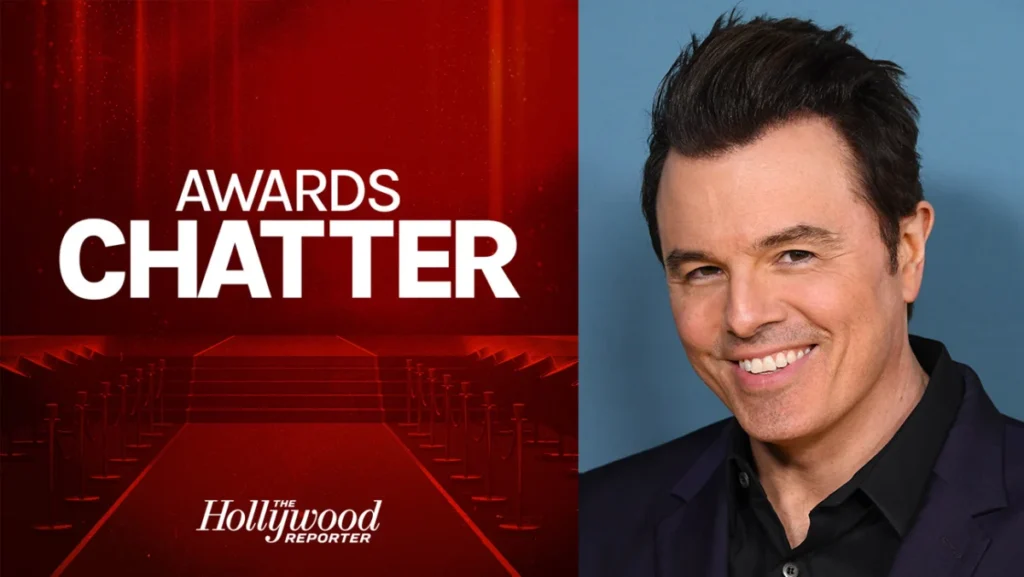

Seth MacFarlane, a name synonymous with groundbreaking animation, sharp wit, and an unparalleled versatility in Hollywood, recently offered a candid look into his illustrious career during an appearance on The Hollywood Reporter’s Awards Chatter podcast. Recorded live last Sunday before an engaged audience at the Newport Beach TV Fest, where MacFarlane was honored with the prestigious Maverick Award, the discussion illuminated the creative forces, industry challenges, and future aspirations of one of entertainment’s most influential figures. From his early days as the youngest executive producer in television history to his ongoing oversight of multiple hit series, MacFarlane’s insights provided a rare glimpse into the mind behind some of the most beloved and boundary-pushing content of the past three decades.
A Maverick’s Journey: From Animation Prodigy to Multi-Hyphenate Mogul
MacFarlane’s journey in Hollywood began with an astonishing ascent. At just 24 years old, he shattered industry norms by becoming the youngest executive producer in television history with the debut of Family Guy in 1999. This landmark achievement marked the beginning of a prolific career that has seen him seamlessly transition between roles as an actor, voice artist, animator, writer, director, producer, singer, and songwriter. His creative empire, anchored by Fuzzy Door Productions, boasts a portfolio of shows that continue to dominate airwaves and streaming platforms, demonstrating an enduring appeal and a consistent ability to innovate within the entertainment landscape.
His early success with Family Guy, a show initially canceled by Fox only to be resurrected due to unprecedented DVD sales and a loyal fanbase, laid the foundation for an animated comedy dynasty. The series, now remarkably in its 24th season, continues to thrive, with MacFarlane lending his iconic voice to lead characters Peter, Stewie, and Brian Griffin, among others. This longevity is a testament to the show’s cultural impact and its ability to remain relevant through evolving comedic sensibilities.
Following Family Guy‘s success, MacFarlane co-created American Dad with Mike Barker and Matt Weitzman, which is currently in its 22nd season. This further solidified his position as a titan of adult animation, known for its irreverent humor and satirical commentary. Beyond animation, MacFarlane diversified his creative output, notably with the highly successful Ted film franchise, which spawned two blockbuster movies in 2012 and 2015. These R-rated comedies, starring a foul-mouthed teddy bear brought to life through CGI, collectively grossed over $750 million worldwide, showcasing MacFarlane’s ability to translate his unique comedic voice into live-action filmmaking. More recently, the Ted universe expanded into a critically acclaimed television series on Peacock, with its second season having dropped just months ago. On this adaptation, MacFarlane serves as executive producer, director, writer for several episodes, and provides the voice and motion capture for the titular character, ensuring continuity and creative control.
His ventures also include the science fiction comedy-drama The Orville, which premiered on Fox before moving to Hulu, demonstrating his versatility across genres and platforms. Additionally, he serves as an executive producer for The ‘Burbs, a well-received series that completed its first season on Peacock this year. This extensive and varied body of work underscores MacFarlane’s status not merely as a creator, but as a genuine industry pioneer whose influence spans multiple facets of media production.
The Foundational Influence of ‘The Simpsons’ and the Evolution of Primetime Animation
During the podcast, MacFarlane delved into the profound impact The Simpsons had on his formative years and ultimately, his career trajectory. He articulated how the groundbreaking animated series redefined comedy for his generation, shifting the paradigm from observational humor to gut-busting laughter. "Prior to that, there were animated shows in which you could recognize comedy that was good comedy — like The Flintstones and Looney Tunes and whatnot — but you weren’t necessarily laughing out loud," MacFarlane explained. "Then The Simpsons came along and, at least for our generation, just changed everything. Suddenly we’re all sitting there howling with laughter. It was like nothing we’d seen in our lives."
This transformative experience, he noted, was pivotal. It unequivocally "shifted my trajectory from the Disney path toward the path of doing something more primetime oriented." Before The Simpsons, animated television for adults was largely uncharted territory, dominated by family-friendly fare or niche programming. The Simpsons proved that animation could be a powerful vehicle for sophisticated satire, social commentary, and deeply resonant humor, resonating with a broad adult audience. This cultural shift paved the way for MacFarlane and other creators to explore mature themes and edgier comedic styles within the animated format, ultimately leading to the proliferation of shows like Family Guy and American Dad. Without the path forged by Homer, Marge, Bart, Lisa, and Maggie, the landscape of primetime animation, and indeed MacFarlane’s own career, would undoubtedly look very different. The show didn’t just entertain; it educated a generation of aspiring animators and writers on the true potential of the medium.
Emmy Frustrations: A Candid Critique of Awards Recognition
MacFarlane’s conversation took a sharp turn when addressing the complexities and, at times, perceived absurdities of the Primetime Emmy Awards. His candid remarks about the awards body highlighted a long-standing tension between creators and the mechanisms of industry recognition. In 2009, Family Guy achieved a historic milestone, becoming the first animated series since The Flintstones 48 years prior to be nominated for the coveted Best Comedy Series Emmy. Despite this rare achievement, MacFarlane openly expressed his bewilderment and frustration with the overall Emmy process.
"The Emmys are so up fucked up. So much of it is nonsense," he stated unequivocally. His primary grievance wasn’t about his show’s lack of wins in that specific category, but rather the broader inconsistencies he perceived. "First of all, it’s nonsense that we would get nominated for best comedy when The Simpsons had not gotten nominated ever. That’s weird." This highlights a significant industry paradox: The Simpsons, a show universally acknowledged as a comedic and cultural touchstone, which paved the way for Family Guy, was overlooked for the top comedy award, while its successor received the nod.
He further elaborated on the perceived arbitrary nature of the voting, noting, "It’s also weird that Family Guy never won best animated comedy in the 25 years." This statement, while slightly inaccurate (the show has won multiple Emmys in the Outstanding Animated Program category, including in 2000, 2002, and for specific individual achievement), underscores his broader point about a perceived disconnect between consistent quality/longevity and awards recognition. "There’s a lot of things that are weird about the Emmys that make me think, ‘Is anybody watching anything, or is this people just checking boxes while they’re fucking shaving?’ And you start to not care a little bit, which is a healthy place to be. What was weird about that [2009 nomination], too, is we weren’t even campaigning for it. I don’t even know if that was our best year. I just suddenly woke up one morning and we got nominated for best comedy. I don’t understand it.”
MacFarlane’s comments reflect a sentiment often shared by creators who feel that award processes can sometimes prioritize buzz, political maneuvering, or subjective preferences over consistent artistic merit or cultural impact. While Family Guy has indeed been recognized with numerous accolades, including multiple Annie Awards and Primetime Emmy Awards for Outstanding Voice-Over Performance and Outstanding Original Music and Lyrics, his critique targets the perceived systemic flaws within the highest-profile categories. This perspective invites a broader discussion on how awards bodies truly evaluate and honor content, especially for genres like animation that have historically struggled for mainstream recognition outside of their dedicated categories. His "healthy place to be" — not caring — suggests a creator who prioritizes audience connection and creative freedom over industry validation.
The Resurgence of ‘Ted’: From Blockbuster Films to Streaming Success
The discussion shifted to the origin and future of the Ted television series, a project that emerged not from MacFarlane’s own initiative, but from a strategic overture by a major network. "I got the call from Susan Rovner, who was running NBC at the time, asking me, ‘Would you want to do a Ted TV series?’" MacFarlane recounted. This highlights a growing trend in Hollywood where established intellectual properties (IPs) are actively sought by streaming platforms looking to build their content libraries and attract subscribers.
MacFarlane’s decision to take on the project was pragmatic, influenced by the comprehensive deal offered by NBC. "Based on the size of the overall deal that they were giving me at that point, I figured I’d better do whatever the hell they want." However, his agreement came with a crucial condition: a commitment to maintain the high production quality of the original films. "Is this something that you guys could commit to doing with the same level of quality as the films? I’m not talking about car chases and whatnot, but the bear himself, will you be willing to put the same resources into this, so it doesn’t look like the diet soda version of Ted?"
The response from NBC/Peacock was affirmative, signaling a significant investment in the series. "For a half-hour sitcom, it was like $10 million an episode because of the bear, because of all the CGI. And they said, ‘Yeah, we’re willing to do that.’ And I was like, ‘Great, then let’s give it a shot.’" This substantial per-episode budget underscores the commitment required to produce high-quality CGI animation for a series, a factor that often limits the scope of animated television. The success of the Ted series on Peacock, evidenced by its quick renewal for a second season, validates this investment and demonstrates the enduring appeal of the character and MacFarlane’s comedic vision. The series effectively bridged the gap between the last film (2015) and its streaming debut, proving that a decade-long hiatus did not diminish audience enthusiasm for Ted’s irreverent escapades.
‘Ted’s’ Future: Feature Film Potential and Enduring Appeal
Looking ahead, MacFarlane remains optimistic about the future of the Ted character, envisioning various possibilities for its continuation. While a third season of the Peacock series is not currently in immediate plans, MacFarlane proposed an intriguing alternative: a direct-to-Peacock feature film. "I’ve thrown the idea out that maybe we do a direct-to-Peacock Ted feature with this cast. That might be something that’s kind of fun." This strategy could capitalize on the established cast and narrative of the series while offering a more expansive storytelling format, appealing to both existing fans and new viewers on the streaming platform.
The inherent nature of the character, being CGI, grants Ted a unique kind of immortality within the entertainment landscape. "I mean, the bear is CGI, so he can go as long as there’s an appetite for him. It’s up to Universal. It’s up to Peacock." This statement highlights the strategic decision-making power of the studio in determining the franchise’s trajectory, contingent on viewership metrics and platform strategy. MacFarlane emphasized the character’s timeless appeal, noting, "It was what, 10 years between the last Ted movie and the first episode of this series, and people were still there for it. He’s a character we can bring back at any time.” This resilience speaks to the strong brand recognition and comedic value embedded in the Ted universe, making it a valuable asset for Universal and Peacock to potentially leverage in various formats for years to come.
The Unstoppable ‘Family Guy’: Longevity and the Elusive Feature Film
Perhaps no other project epitomizes Seth MacFarlane’s enduring influence more than Family Guy. Now in its astonishing 24th season, the animated sitcom continues to defy conventional expectations for television longevity. MacFarlane himself expressed a sense of wonder at its sustained success. "I think it can go as long as there’s an appetite for it. I’m consistently shocked at the numbers for the show, that they continue to be very, very high. I don’t know why that is. It’s been so long. It’s been a quarter of a century that this thing has been on the air!"
This remarkable consistency in viewership, even after two and a half decades, underscores the show’s ingrained presence in popular culture. Family Guy has not only outlasted many of its contemporaries but has also cultivated generations of fans through its distinctive humor, cutaway gags, and memorable characters. Its initial cancellation by Fox in 2002, only to be revived in 2005 after overwhelming fan demand and strong DVD sales, remains a legendary tale in television history, cementing its status as a show that truly belongs to its audience.
Beyond the ongoing series, the prospect of a Family Guy feature film has been a topic of speculation and anticipation for years. MacFarlane confirmed that the idea remains very much alive, albeit strategically held in reserve. "The Family Guy feature film is something that’s still always in the back of my head. I’ve always had a pretty clear idea of what it’s going to be." He characterized this potential film as a "break glass in case of emergency" project, an "arrow in the quiver that I keep for when everything else goes to shit."
This strategic positioning reveals a fascinating aspect of MacFarlane’s professional foresight. He envisions the Family Guy movie as a reliable palate cleanser for audiences, a guaranteed hit that could restore professional standing after a potential setback. "[Could that ever happen while the show is still on TV?] Oh, yeah. I always kind of assume that if I have a really dismal professional failure, like I produce a movie or a show that just fails so badly, the only thing that can cleanse the palette of the audience is the Family Guy movie. That’s when I’ll do it.” This candid admission offers insight into the pressures of creative entrepreneurship in Hollywood, where even established figures seek a definitive fallback. Given Family Guy‘s global fanbase and consistent ratings for Disney (which now owns Fox’s entertainment assets), a feature film would undoubtedly be a massive event, offering both creative fulfillment for MacFarlane and significant box office/streaming revenue for the studio, whenever that opportune moment may arise.
Broader Implications: MacFarlane’s Enduring Impact on Media and Industry Trends
Seth MacFarlane’s reflections at the Newport Beach TV Fest offer more than just personal anecdotes; they provide a microcosm of broader trends and challenges within the contemporary entertainment industry. His journey from an animation prodigy to a multi-platform content creator exemplifies the evolution of Hollywood itself.
Firstly, his sustained success in animation, particularly with Family Guy and American Dad entering their third decade, highlights the enduring power of long-form animated series. These shows have become cultural institutions, proving that animation is not merely a genre for children but a sophisticated medium capable of sustaining complex narratives, evolving humor, and deep audience engagement over decades. MacFarlane’s ability to step back from day-to-day oversight while maintaining key creative contributions (like voice acting) allows for the longevity of his flagship properties while freeing him to explore new ventures.
Secondly, his experience with the Ted series underscores the increasing dominance of streaming platforms and their appetite for established intellectual property. The willingness of Peacock to invest $10 million per episode for a CGI-heavy sitcom demonstrates the high stakes and competitive nature of the streaming wars. Creators like MacFarlane, with proven track records, are invaluable assets in this landscape, capable of launching new platforms and attracting significant subscriber bases. His push for a direct-to-Peacock Ted feature further illustrates the blurring lines between theatrical releases and streaming content, a trend that continues to reshape distribution strategies.
Thirdly, MacFarlane’s frank critique of the Primetime Emmys reflects a wider dissatisfaction among some industry professionals regarding the perceived relevance and fairness of traditional awards bodies. As the media landscape fragments and audience consumption habits diversify, the mechanisms for recognizing artistic achievement are under scrutiny. His sentiment that "you start to not care a little bit, which is a healthy place to be," suggests a shift in focus from industry accolades to the more direct validation of audience engagement and creative freedom.
Finally, his entrepreneurial spirit, embodied by Fuzzy Door Productions, and his strategic thinking regarding the Family Guy movie, illustrate the complex balancing act of creative ambition and commercial viability. MacFarlane navigates the industry not just as an artist, but as a shrewd businessman, understanding the value of his creations and leveraging them strategically. His career is a masterclass in adapting to technological shifts, understanding audience desires, and maintaining creative integrity while operating within the commercial demands of Hollywood.
In conclusion, Seth MacFarlane remains a singular force in Hollywood, a true Maverick whose influence continues to shape the entertainment landscape. His candid reflections provide invaluable insights into the creative process, the challenges of sustained success, and the ever-evolving nature of the industry. As he continues to expand his creative universe, audiences can anticipate more groundbreaking projects, sharp humor, and perhaps, one day, that long-awaited Family Guy feature film, solidifying his legacy as one of the most innovative and impactful creators of his generation.