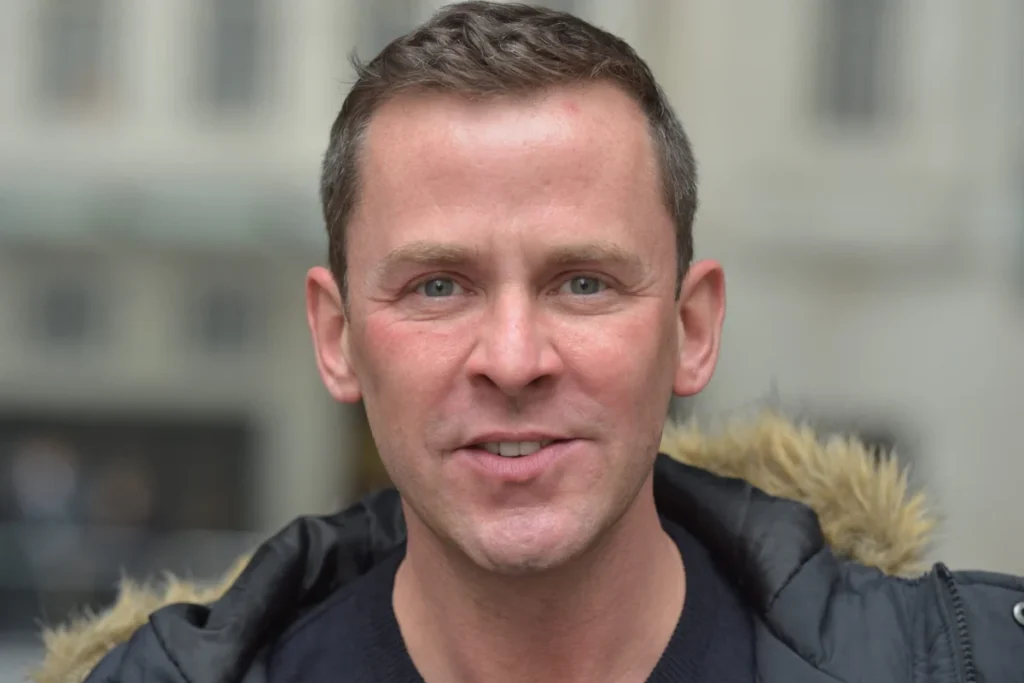

The annual BBC Annual Report for the year ending March 2026 has revealed a dramatic reshuffle in the corporation’s highest-paid talent, with former BBC Radio 2 presenter Scott Mills unexpectedly emerging as the top earner, despite his departure from the broadcaster in March of the same year. The figures, published on Tuesday, highlight a period of significant transition for the BBC, marked by high-profile exits, substantial pay adjustments, and an ongoing commitment to reducing overall talent costs amidst intense public scrutiny regarding the use of licence fee revenue.
Mills, aged 53, commanded a salary ranging between £745,000 and £749,999 for his work during the 2025/2026 financial year. This considerable sum was predominantly attributed to his tenure on the prestigious BBC Radio 2 Breakfast Show, a role he had only assumed in January 2025, taking over from broadcasting veteran Zoe Ball. His sudden rise to the top spot is particularly notable given his sacking just two months after the financial year concluded, underscoring the complexities of contractual obligations and reporting periods within large public service organisations. In stark contrast, during the preceding year (ending March 2025), Mills’ earnings were considerably lower, placing him joint 11th on the list with a salary between £355,000 and £359,999, alongside fellow presenter Naga Munchetty. This sharp increase in remuneration, followed swiftly by his exit, is likely to fuel further public debate regarding talent contracts and value for money at the publicly funded broadcaster. The significant jump in Mills’ salary over a single year reflects the premium placed on leading a flagship national radio programme, even if his time in the role was relatively brief.
Gary Lineker’s Precipitous Decline and High-Profile Departures
Perhaps the most striking shift in the BBC’s remuneration landscape is the significant drop in earnings for former England footballer and long-standing BBC stalwart, Gary Lineker. Once the undisputed highest-paid star, Lineker’s salary for the year ending March 2026 plummeted to between £325,000 and £329,999, placing him 15th on the most recent list. This represents a monumental decrease from his earnings in the previous annual report, where he topped the list with a salary between £1,350,000 and £1,354,999. Lineker’s reduced earnings reflect his departure from the BBC in May 2025, with his 2025/2026 remuneration stemming solely from his contributions to the Premier League highlights show Match Of The Day and other residual football coverage prior to his exit. His departure, a year before the reporting period concluded, illustrates how quickly the top echelons of BBC pay can be reorganised following a high-profile talent move.

Lineker was not the only prominent figure to depart the BBC’s highest-earners list. Zoe Ball, who previously held the second spot on last year’s remuneration table, is entirely absent from the latest report. Her move to a new afternoon show on commercial rival Greatest Hits Radio, slated to commence in September, signifies a broader trend of top talent exploring opportunities beyond the BBC, often enticed by lucrative offers that may not carry the same level of public scrutiny as salaries funded by the licence fee. Ball’s previous earnings, reported in the preceding annual report, placed her firmly in the top tier, underscoring the substantial financial commitment the BBC had in retaining her for the Radio 2 Breakfast Show. The departure of such established names, particularly from prime-time slots, poses a significant challenge for the BBC in terms of retaining audience share and maintaining its competitive edge in a fragmented media landscape. The BBC must continually weigh the cost of retaining top talent against the potential loss of audience and competitive standing if popular figures defect to commercial broadcasters.
BBC’s Ongoing Efforts to Curb Talent Costs Amidst Public Scrutiny
Against a backdrop of increasing financial pressures and perennial public debate surrounding presenter salaries, the BBC has reiterated its commitment to fiscal prudence. The corporation’s funding model, primarily reliant on the mandatory licence fee paid by every household owning a television or watching live BBC content online, places unique demands for transparency and accountability on the organisation. Unlike commercial broadcasters, the BBC must consistently justify its expenditure to the public, particularly when it comes to high salaries, which have historically drawn criticism from politicians and licence fee payers alike.
Rhodri Talfan Davies, the BBC’s deputy director-general, addressed the issue ahead of the Annual Report’s release, asserting that the corporation had made "remarkable progress" in managing talent costs. He highlighted a substantial reduction, claiming that the number of individuals earning above the £500,000 threshold had been slashed by 50% over the past seven years. Furthermore, Davies stated that the cumulative on-air presenter costs across the same seven-year period had decreased by approximately £20 million, demonstrating a concerted effort to rein in expenditure.
Davies articulated the delicate "balancing act" the BBC faces: "If you look at all our on-air presenter costs over the last seven years, they’ve come down by about £20 million pounds, so we have been focused on it, there is always a balancing act. We want to be a broadcaster that can attract the best talent, but we’re also very mindful of the financial pressures that we’re facing. But I think we’re striking that balance very, very carefully, and I think you’ll see that downward trend continuing in the months to come." This statement underscores the BBC’s strategic imperative to remain competitive in attracting top-tier broadcasting talent while simultaneously demonstrating accountability to licence fee payers. The corporation operates in a highly competitive market where commercial rivals are not bound by the same public transparency requirements or the pressure to justify every pound of expenditure to a national audience. The challenge lies in offering sufficiently attractive packages to prevent a brain drain of popular personalities, while also responding to public calls for greater financial restraint, particularly given broader cost-of-living pressures facing households.

A Detailed Look at the Top Earners for 2025/2026
The full list of highest earners provides a snapshot of the BBC’s investment in its on-screen and on-air talent across various departments, reflecting both continuity and change in its strategic priorities:
- Scott Mills: £745,000 – £749,999. His meteoric rise to the top spot, fuelled by his high-profile Radio 2 Breakfast Show role from January 2025, represents a significant investment in a single talent. His subsequent departure in March 2026, just after the reporting period, means this figure largely captures his peak earning period at the BBC before moving on.
- Greg James: £440,000 – £444,999. The popular BBC Radio 1 DJ maintains a strong position as the second-highest-paid staff member, reflecting the continued importance of youth-oriented programming and national radio listenership for the BBC. His consistent performance, broad appeal to a younger demographic, and long-standing presence underscore his value to the corporation and its strategy to engage diverse audiences.
- Stephen Nolan: £425,000 – £429,999. The Northern Irish radio presenter secures the third spot, highlighting the BBC’s investment in regional talent and news programming. Nolan’s significant earnings demonstrate the critical role of local and national news and current affairs broadcasts in the BBC’s overall output, particularly for dedicated audiences in specific regions, where his programmes command considerable listenership and influence.
- Laura Kuenssberg: £405,000 – £409,999. As the BBC’s leading political journalist and presenter of her eponymous Sunday morning show, Kuenssberg stands as the highest-paid female staff member. Her remuneration reflects her pivotal role in political coverage, especially in a period often dominated by significant national and international events. Her position underscores the BBC’s commitment to high-calibre, authoritative journalism at the forefront of its news agenda.
- Vernon Kay: £405,000 – £409,999. Joint fourth with Kuenssberg, the Radio 2 presenter continues to be a prominent voice on the station, demonstrating the BBC’s continued investment in established and popular radio personalities following the recent changes to its flagship shows. His audience appeal and versatility across different programme formats contribute to his high valuation.
- Alan Shearer: £390,000 – £394,999. The Match Of The Day football pundit and former Newcastle United striker saw a decrease in his pay from the previous year’s £440,000 – £444,999. Despite the reduction, Shearer remains a highly valued sports commentator, indicating the enduring popularity and importance of football coverage within the BBC’s diverse portfolio, especially for its flagship weekend programme.
- Justin Webb: £375,000 – £379,999. A seasoned journalist and presenter, Webb’s presence on the list reinforces the BBC’s commitment to experienced news broadcasters who bring gravitas and insight to their roles, often on flagship news programmes like the Today programme on Radio 4. His long career and respected journalistic credentials contribute to his substantial earnings.
- Naga Munchetty: £360,000 – £364,999. A familiar face on BBC Breakfast and a respected radio presenter, Munchetty’s consistent presence among the top earners highlights her versatility and significant contribution to the BBC’s news and current affairs offerings across both television and radio platforms.
- Fiona Bruce: £345,000 – £349,999. The presenter of Question Time and Antiques Roadshow remains a key figure, demonstrating her enduring popularity and importance across both news and entertainment formats. Her ability to front diverse programmes, from robust political debate to cultural showcases, makes her a highly valued asset.
- Sophie Raworth: £340,000 – £344,999. Another highly regarded journalist and newsreader, Raworth rounds off the top 10, reinforcing the BBC’s investment in its core news presentation team and its commitment to delivering authoritative news coverage.
Gender Parity and Representation in High Earnings
The latest report indicates a modest improvement in gender representation among the BBC’s highest-paid talent. Four women now feature in the top 10 list, an increase from three in the previous year. Laura Kuenssberg, as the highest-paid female staff member, leads this cohort, with Naga Munchetty, Fiona Bruce, and Sophie Raworth also securing positions. While this represents a positive step towards greater gender parity, the overall distribution of top salaries continues to be an area of ongoing discussion and focus for the corporation, as it strives to reflect the diversity of its audience in its workforce and remuneration structures. The BBC has faced historical criticism regarding gender pay gaps, and these incremental improvements will be scrutinised for sustained progress and to ensure that pay equity is consistently applied across all roles and levels of experience. The increase, while welcome, still leaves a significant imbalance in the upper echelons of the pay scale.
The Nuances of BBC Remuneration and Public Accountability

It is crucial to understand the parameters within which these salaries are reported. The BBC is legally obligated to declare the salaries of all individuals, both on-air and off-air, who receive more than £178,000 directly from licence fee revenue in a given year. This threshold ensures a degree of transparency for significant public expenditure. However, the published list does not encompass all talent associated with the BBC. Specifically, it excludes individuals who are paid through independent production companies or the BBC’s commercial arm, BBC Studios. This distinction is significant, as many high-profile presenters, actors, and creatives may receive substantial remuneration via these alternative channels, which are not subject to the same public disclosure requirements.
This creates a partial picture, often leading to public misunderstandings about the true total cost of BBC talent. For instance, a presenter hosting a show produced by an independent company, even if broadcast on the BBC, would have their fees paid by that company, not directly by the BBC’s licence fee fund, and thus would not appear on this specific list. Similarly, talent working on commercially funded projects through BBC Studios, such as international sales of BBC formats or productions for other broadcasters, would not have those earnings disclosed here. This complex structure, while allowing the BBC to operate more flexibly and commercially in certain areas, inherently limits the scope of public transparency in its annual reports. Understanding these nuances is vital for a comprehensive assessment of the BBC’s overall talent expenditure.
Broader Implications for Public Broadcasting and Future Outlook
The shifts revealed in this year’s Annual Report carry broader implications for the future of public broadcasting in the UK. The departure of established stars like Gary Lineker and Zoe Ball to commercial ventures highlights the intense competition for talent. While the BBC aims to reduce overall costs, it must balance this with the need to attract and retain personalities who draw significant audiences and deliver value for the licence fee. The rise of streaming services and diverse media platforms has further intensified this competition, offering talent new avenues and potentially higher, less scrutinised, remuneration. The BBC’s ability to compete in this evolving landscape, while adhering to its public service remit and financial constraints, will define its future.
The ongoing "downward trend" in talent costs, as articulated by Rhodri Talfan Davies, signals a strategic direction for the BBC. This trend is likely to continue as the corporation seeks to demonstrate fiscal responsibility, especially in an era where the future of the licence fee itself is frequently debated by politicians and the public. The report also indirectly reflects the BBC’s internal talent pipeline, showcasing individuals like Greg James and Laura Kuenssberg who have risen through its ranks and now command significant salaries, indicating the organisation’s investment in cultivating its own stars. However, the unexpected top earning status of Scott Mills, followed by his swift departure, serves as a poignant reminder of the volatile nature of talent contracts and the constant churn in a highly dynamic media industry. The transparency provided by the annual report, while incomplete, remains a cornerstone of the BBC’s accountability to the British public. The next annual report will undoubtedly be scrutinised for further evidence of these evolving trends, particularly as the BBC continues to adapt its strategy in an increasingly challenging media environment.