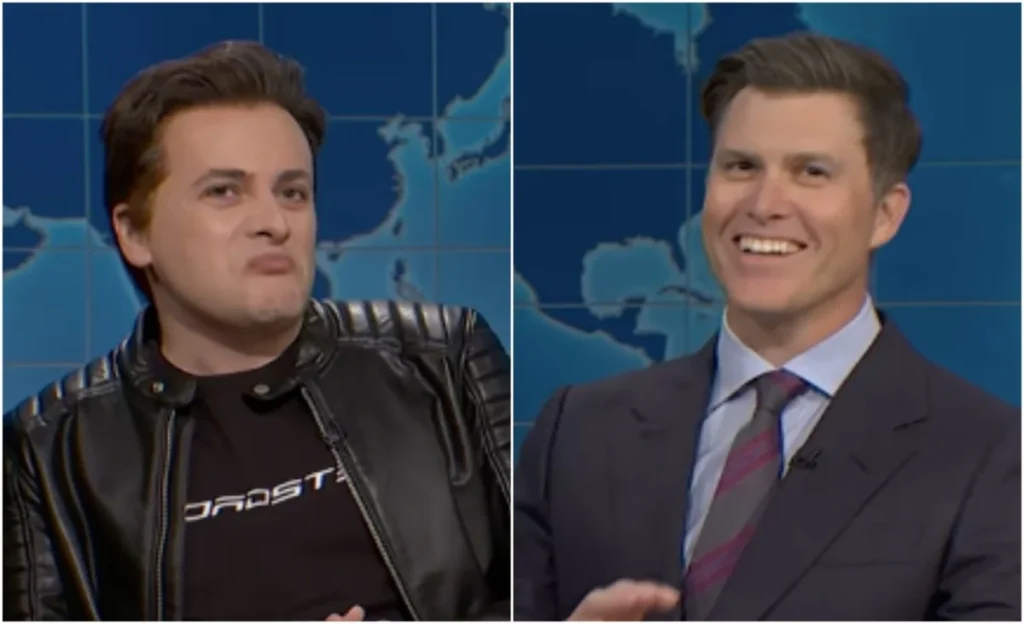

The November 7 episode of Saturday Night Live featured a biting satirical segment that targeted billionaire entrepreneur Elon Musk following a tumultuous week for his business interests and political investments. During the show’s signature Weekend Update, cast member Jeremy Culhane portrayed the SpaceX and Tesla CEO, engaging in a scripted dialogue with host Colin Jost that highlighted the mounting pressures facing the tech mogul in the wake of the recent midterm elections.
The sketch served as a comedic synthesis of real-world headlines that have dominated financial and political news cycles over the past week. By leveraging the platform of late-night television, the production underscored the growing public and corporate scrutiny surrounding Musk’s increasingly public alignment with partisan politics and his subsequent business setbacks.
The Context of the Midterm Investment
The satire was rooted in well-documented financial disclosures regarding the midterm elections. Reports have indicated that Musk committed approximately $470 million toward supporting Republican candidates. The investment was framed as a strategic attempt to influence the legislative landscape in favor of his corporate interests, particularly regarding deregulation and tax policy. However, the electoral results did not align with the desired outcomes of these significant financial contributions.
For many observers, the failure of these high-profile investments served as a focal point for the segment. By highlighting the disparity between the expenditure and the electoral outcomes, the show tapped into broader discussions regarding the efficacy of billionaire-funded political action committees and the potential risks of corporate leaders tethering their public image to specific political platforms.
Chronology of Corporate Volatility
The timeline of events leading up to the SNL sketch suggests a period of intense volatility for Musk’s portfolio. The week prior to the broadcast saw a confluence of negative developments:
- Political Expenditure: Reports finalized the total of Musk’s midterm-related political spending, drawing widespread commentary from political analysts regarding the influence of private capital in public elections.
- Market Fluctuations: Following the election results, stock prices for Tesla and SpaceX experienced downward pressure. Market analysts noted that investors were increasingly concerned about the potential for political backlash affecting consumer perception of the Tesla brand.
- Operational Shifts: The decision to cease production of the Tesla Cybertruck—a vehicle that had been a centerpiece of the company’s recent marketing efforts—represented a significant operational pivot. The move was widely interpreted as a response to cooling demand and the need to streamline manufacturing resources during a period of market uncertainty.
The Satirical Performance: A Closer Look
In the sketch, Jeremy Culhane’s portrayal of Musk centered on a character who was detached from his current financial realities, choosing instead to focus on superficial distractions, such as a "flying car" demonstration. This artistic choice served to lampoon the perceived disconnect between Musk’s public rhetoric and the pragmatic challenges faced by his companies.
The dialogue between Jost and the character highlighted several key areas of public concern. When Jost interrogated the character about the financial losses incurred during the midterms, the response was a deflection toward an anecdotal, hyperbolic narrative about a car crash. This comedic device was used to mirror the frustration felt by shareholders and political commentators alike who have criticized Musk’s tendency to prioritize social media engagement over traditional corporate transparency.
Furthermore, the segment touched upon the relocation of Musk’s headquarters from California to Texas. Jost noted the irony of Musk’s attempt to escape California’s regulatory environment, only to find that shifting demographics and evolving local politics in Texas could potentially lead to the same tax and regulatory outcomes he sought to avoid. This point resonated with many viewers, as it touched upon the complex interplay between corporate tax strategy and state-level political shifts.
Technological Prowess and the Role of AI
The segment also incorporated references to Grok, the AI developed by xAI, Musk’s artificial intelligence company. By framing Grok as a tool for "epic vulgar roasts," the sketch served as a commentary on the current state of AI development and the ethical dilemmas inherent in training models to be "edgy" or "unfiltered." The abrupt conclusion of the segment, where the character commands the AI to "shut it down," served as a metaphor for the unpredictability of AI tools when deployed in public-facing capacities.
Fact-Based Analysis of Economic Implications
From an economic standpoint, the situation involving Musk highlights the risks associated with the "CEO-as-Brand" model. When a corporate leader becomes the primary focal point of political polarization, the underlying business entities often inherit that volatility.
- Consumer Sentiment: For Tesla, a brand that has historically relied on a progressive customer base, the shift toward overt conservative political advocacy has presented a unique challenge. Analysts have suggested that this friction may be contributing to the stagnation of sales that necessitated the recent changes to the Cybertruck production schedule.
- Regulatory Scrutiny: As Musk continues to engage with political figures, the likelihood of increased regulatory oversight grows. Whether it involves labor laws, environmental standards, or the governance of his social media platform, the intersection of his political activities and his business dealings is being watched closely by federal regulators.
- Market Stability: The reaction of the stock market to Musk’s recent activities underscores the sensitivity of institutional investors. While Musk has maintained a loyal base of retail investors, institutional holdings are increasingly subject to Environmental, Social, and Governance (ESG) criteria, which often weigh heavily against the kind of public controversies witnessed in recent weeks.
Official Responses and Public Sentiment
While neither Elon Musk nor his representatives have issued a formal statement regarding the specific parody, the broader response on social media platforms has been divided. Supporters of Musk often view such portrayals as an inevitable consequence of his unconventional leadership style, while critics point to the sketch as a validation of the growing narrative that his business decisions are becoming increasingly erratic.
The decision by SNL to center a segment on these events reflects the show’s ongoing commitment to satirical commentary on the most influential figures in the American landscape. By distilling complex financial and political failures into accessible, albeit biting, humor, the show reinforces the cultural importance of holding public figures accountable through the lens of parody.
Broader Impact and Future Outlook
The events of the past week, as summarized in the SNL segment, represent a potential turning point for Musk’s corporate strategy. If the decline in vehicle sales and the negative reception of his political spending continue, the companies under his stewardship may be forced to recalibrate their public communication strategies.
The "Weekend Update" segment served as a mirror, reflecting the widespread public fatigue regarding the constant influx of news surrounding the billionaire. By simplifying his complex financial maneuvering into a dialogue about "flipping cars" and "vulgar roasts," the show successfully punctured the aura of invincibility that often surrounds high-net-worth tech leaders.
As the fiscal year draws to a close, market analysts will be watching to see if the trends identified in the sketch—namely the cooling of product demand and the political volatility of leadership—translate into long-term systemic issues for Tesla and SpaceX. For now, the public narrative remains focused on the juxtaposition of extreme wealth and the apparent missteps that have characterized the last several months.
Ultimately, the segment on Saturday Night Live was more than just a series of jokes; it was a synthesis of the current cultural sentiment regarding the intersection of wealth, politics, and technology. As these sectors continue to converge, the scrutiny directed toward figures like Elon Musk is unlikely to abate, and the role of comedy as a check on such power will remain a fixture of the American media landscape. Whether these events result in a change of course for the billionaire remains to be seen, but for the time being, the public discourse continues to center on the real-world consequences of a very public, and often contentious, year.