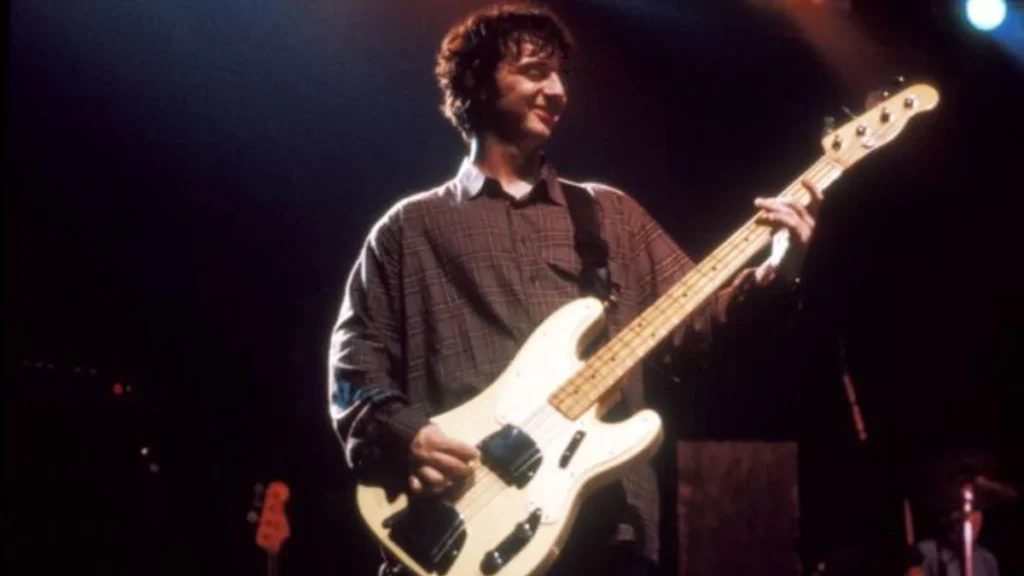

In a notable course correction that underscores the critical importance of historical accuracy in recognizing musical legacies, the Rock & Roll Hall of Fame has officially amended its list of inductees for the Class of 2026 to include Paul "Guigsy" McGuigan, co-founder and original bassist of the iconic British rock band Oasis. This rectification follows a period of public scrutiny and commentary after McGuigan’s initial omission from the induction roster, despite his foundational role in the band’s most seminal works. The swift resolution highlights the institution’s responsiveness to informed critique and a broader commitment to acknowledging all integral members of celebrated musical acts.
The announcement of Oasis’s induction into the prestigious Rock & Roll Hall of Fame for its 2026 class was met with widespread acclaim, celebrating the enduring impact of the Manchester-born quintet on global music culture. Oasis, formed in 1991, quickly rose to prominence as a leading force in the Britpop movement, crafting anthemic rock songs that resonated with millions worldwide. Their induction recognizes their significant influence, particularly through their explosive debut Definitely Maybe and the monumental follow-up (What’s the Story) Morning Glory?.
Oasis’s Enduring Legacy and the 2026 Induction Class
Oasis’s journey from working-class Manchester to global superstardom is a narrative deeply embedded in modern rock history. With their raw energy, distinctive sound, and the prolific songwriting of Noel Gallagher, coupled with the inimitable vocal delivery of Liam Gallagher, the band captured the zeitgeist of the 1990s. Their catalog is replete with multi-platinum albums and era-defining singles, making their eventual induction into the Rock & Roll Hall of Fame an inevitability for many music critics and fans.
The 2026 induction class is a diverse and esteemed group of artists spanning various genres and eras, further solidifying the Hall of Fame’s broad interpretative scope of "rock and roll." Alongside Oasis, this year’s inductees include the pioneering hip-hop collective Wu-Tang Clan, legendary solo artist Phil Collins, the influential post-punk/new wave giants Joy Division/New Order, the enigmatic soul-jazz icon Sade, heavy metal stalwarts Iron Maiden, punk-rock trailblazer Billy Idol, and the beloved R&B crooner Luther Vandross. This eclectic mix reflects the Hall’s ongoing effort to represent the multifaceted tapestry of popular music.
The official induction ceremony for the Class of 2026 is scheduled to take place at the Peacock Theater in Los Angeles on Saturday, November 14th. Music enthusiasts globally will have the opportunity to witness the event, as a recorded broadcast is slated to debut in December on both ABC and the Disney+ streaming platform, bringing the celebration to a wide audience.
Paul "Guigsy" McGuigan: The Unsung Foundation of Oasis
Paul "Guigsy" McGuigan’s contributions to Oasis are fundamental to the band’s early success and enduring sound. As a co-founder, McGuigan held the bass guitar duties from the band’s inception in 1991 until his departure in 1999. His rhythmic foundation was crucial to the sonic architecture of Oasis during their most prolific and critically acclaimed period. He is credited on all three of the band’s most essential and commercially successful albums: 1994’s Definitely Maybe, 1995’s (What’s the Story) Morning Glory?, and 1997’s Be Here Now.
Definitely Maybe, Oasis’s debut album, released in August 1994, was an instant phenomenon, becoming the fastest-selling debut album in UK history at the time. McGuigan’s bass lines provided the driving force behind tracks like "Supersonic," "Live Forever," and "Cigarettes & Alcohol," underpinning the band’s raw, rock-and-roll energy. The album’s success propelled Oasis to the forefront of the burgeoning Britpop scene, establishing their reputation for anthemic melodies and rebellious attitude.
The follow-up, (What’s the Story) Morning Glory?, released in October 1995, transcended the Britpop movement to become a global cultural touchstone. With over 22 million copies sold worldwide, it stands as one of the best-selling albums in UK chart history. McGuigan’s bass work on iconic tracks such as "Wonderwall," "Don’t Look Back in Anger," and "Champagne Supernova" provided the melodic and rhythmic backbone, contributing significantly to the album’s expansive and emotionally resonant sound. His ability to craft memorable, yet understated, bass lines that served the song rather than seeking the spotlight was a hallmark of his tenure.
Be Here Now, released in August 1997, became the fastest-selling album in UK chart history upon its release, despite receiving a more mixed critical reception in hindsight. McGuigan’s steadfast presence in the rhythm section anchored the album’s often grand and layered production, ensuring that the band’s core sound remained intact amidst the heightened expectations and pressures of their fame.
The role of a bassist, often operating in the background compared to vocalists and guitarists, is frequently underestimated in the overall sonic identity and stage presence of a rock band. McGuigan’s consistent, solid, and melodic bass lines were integral to Oasis’s sound, providing the necessary groove and weight that allowed the Gallagher brothers’ dynamics to flourish. His presence during the band’s formative years and peak commercial success makes his initial exclusion from the Hall of Fame’s induction roster particularly perplexing to many.
The Initial Oversight and the Call for #JusticeForGuigsy
Upon the initial announcement of Oasis’s induction into the Rock & Roll Hall of Fame, the listed members for the band included Noel Gallagher, Liam Gallagher, and notably, Tony McCarroll, who served as the band’s drummer from 1991 to 1995 and played on Definitely Maybe. However, Paul McGuigan, whose tenure extended beyond McCarroll’s and encompassed the band’s most successful albums, was conspicuously absent.
This omission quickly drew the attention of astute music journalists and dedicated fans. Rolling Stone magazine was among the first prominent outlets to highlight the oversight, drawing public attention to what many perceived as a significant historical inaccuracy. The reaction across social media platforms and music forums was swift and emphatic, with countless individuals expressing dismay and advocating for McGuigan’s inclusion under hashtags like #JusticeForGuigsy. This groundswell of "Umm, actually…" moments from music nerds, as one publication aptly put it, underscored a collective belief that foundational members, particularly those contributing to a band’s most iconic work, deserve proper recognition.
The situation also reignited a long-standing debate within music circles about the Rock & Roll Hall of Fame’s induction criteria and its history of sometimes contentious decisions regarding band lineups. Past controversies have included disputes over which specific members of legendary groups like Fleetwood Mac, The Grateful Dead, and others were ultimately inducted, often leading to arguments about the institution’s understanding of a band’s definitive lineup. The oversight regarding McGuigan, therefore, tapped into a broader sentiment about the often-overlooked contributions of bassists and rhythm section players in the pantheon of rock music, where lead vocalists and guitarists frequently receive the lion’s share of attention.
Rectification: A Swift and Responsive Action
In a testament to the power of public and journalistic advocacy, and perhaps an internal review process, the Rock & Roll Hall of Fame moved with remarkable speed to rectify the oversight. Within a mere two days of the initial critiques emerging, Paul "Guigsy" McGuigan’s name was officially added to the list of Oasis inductees on the Rock & Roll Hall of Fame’s official website.
While the exact internal mechanisms that led to the correction remain undisclosed, two primary reasons are widely speculated: either the initial omission was a simple clerical error during the drafting of the announcement, which was promptly addressed once identified, or it was the direct result of intervention from the Oasis camp itself, or representatives thereof, who advocated for McGuigan’s rightful place. Regardless of the precise catalyst, the swiftness of the correction reflects positively on the institution’s willingness to acknowledge and amend errors, thereby reinforcing its commitment to historical accuracy and its responsiveness to the broader music community. This quick reversal was largely applauded, turning what could have become a prolonged controversy into a demonstration of accountability.
Guigsy’s Life Beyond Oasis: A Private Chapter
Paul McGuigan’s departure from Oasis in August 1999 marked a significant turning point in his life, as he largely stepped away from the glare of the music industry spotlight. Reports at the time indicated that McGuigan, who had reportedly grown disillusioned with the band’s relentless touring schedule and internal strife, conveyed his decision to quit via fax – a method that became somewhat legendary in itself, symbolizing a definitive break from his past.
Since then, McGuigan has embraced a notably private life, focusing on his family and pursuing personal interests outside of music. He is known to be a devoted family man and an ardent football (soccer) enthusiast, a passion he has cultivated significantly. His love for the sport even led him to co-author a book titled The Greatest Footballer You Never Saw. Published in 2004, the book chronicles the life and career of Robin Friday, a cult figure in English football known for his prodigious talent and famously bohemian lifestyle, who retired from the sport prematurely. This literary endeavor offers a rare glimpse into McGuigan’s post-Oasis pursuits, demonstrating an intellectual curiosity and a deep engagement with subjects beyond the music industry.
Given his well-documented preference for privacy and his definitive separation from the professional music scene for over two decades, there is considerable speculation about whether McGuigan will attend the Rock & Roll Hall of Fame induction ceremony in November. While his presence would undoubtedly be celebrated by fans and fellow inductees, his past actions suggest a strong inclination towards maintaining his current private life. Regardless of his attendance, his official inclusion ensures that his integral role in Oasis’s groundbreaking career is rightfully acknowledged for posterity.
Broader Implications: Recognition, Accuracy, and Fan Influence
The Rock & Roll Hall of Fame’s decision to rectify Paul McGuigan’s omission carries several important implications for the institution, musicians, and the wider music community.
For the Rock & Roll Hall of Fame: This incident, and its swift resolution, could serve to enhance the Hall’s credibility. By demonstrating a willingness to correct errors and respond to informed public commentary, the institution reinforces its commitment to historical accuracy and avoids protracted controversies that could undermine its authority. It also potentially sets a precedent for more rigorous vetting of band lineups in future induction processes, ensuring that all truly foundational members are recognized from the outset. This responsiveness is crucial for an institution that aims to be the definitive archive of rock and roll history.
For Musicians and the Industry: McGuigan’s belated but rightful inclusion is a small but significant victory for "sidemen" and less publicly prominent members of iconic bands. It highlights the often-underestimated contributions of bassists, drummers, and other instrumentalists who form the backbone of a band’s sound but may not share the same level of fame as frontmen or primary songwriters. This recognition can help validate the essential roles played by all members in shaping a band’s identity and success, encouraging a more holistic view of musical collaboration. It underscores that influence and impact are not solely the domain of the most visible members.
For Fans and Music Journalism: The swift correction also powerfully underscores the collective influence of informed fan advocacy and diligent music journalism. The immediate and widespread reaction to McGuigan’s initial omission, amplified by platforms like Rolling Stone and social media, clearly played a role in prompting the Rock Hall’s review. This demonstrates that engaged audiences and critical media outlets can effectively hold institutions accountable and contribute to the accuracy of historical narratives. It reinforces the idea that cultural institutions, even those as established as the Rock & Roll Hall of Fame, operate within a dynamic public sphere and benefit from robust public scrutiny.
In conclusion, the inclusion of Paul "Guigsy" McGuigan in the Rock & Roll Hall of Fame’s Class of 2026 for his integral role in Oasis marks a significant moment of historical rectification. It celebrates not only the enduring legacy of one of Britain’s most iconic bands but also the often-unsung contributions of its foundational members. As the music world anticipates the formal induction ceremony in November, this correction stands as a testament to the power of collective memory, journalistic diligence, and the institution’s commitment to ensuring that all essential architects of rock and roll receive their due recognition.