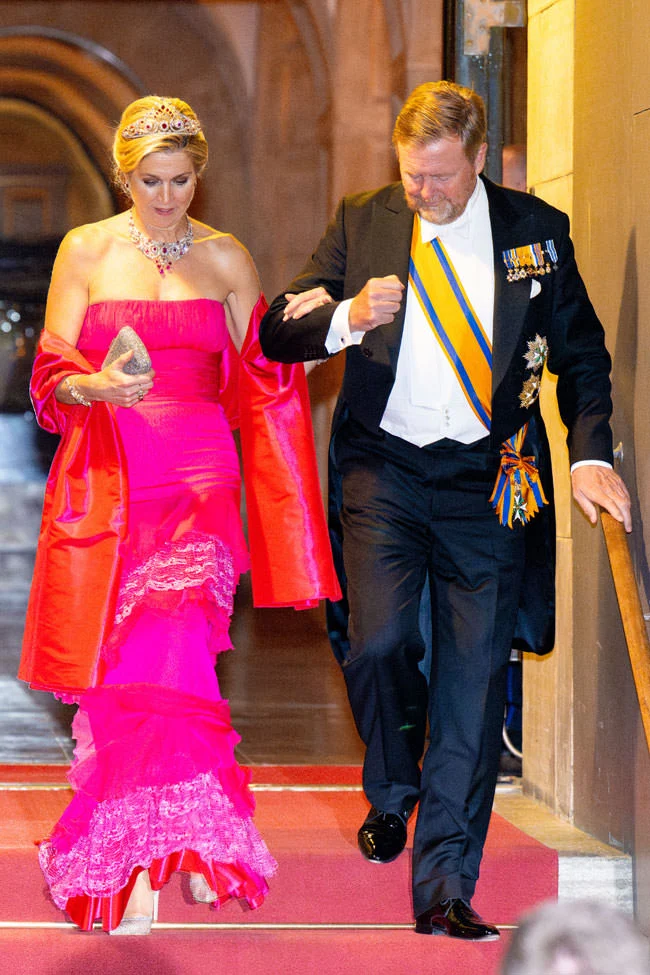

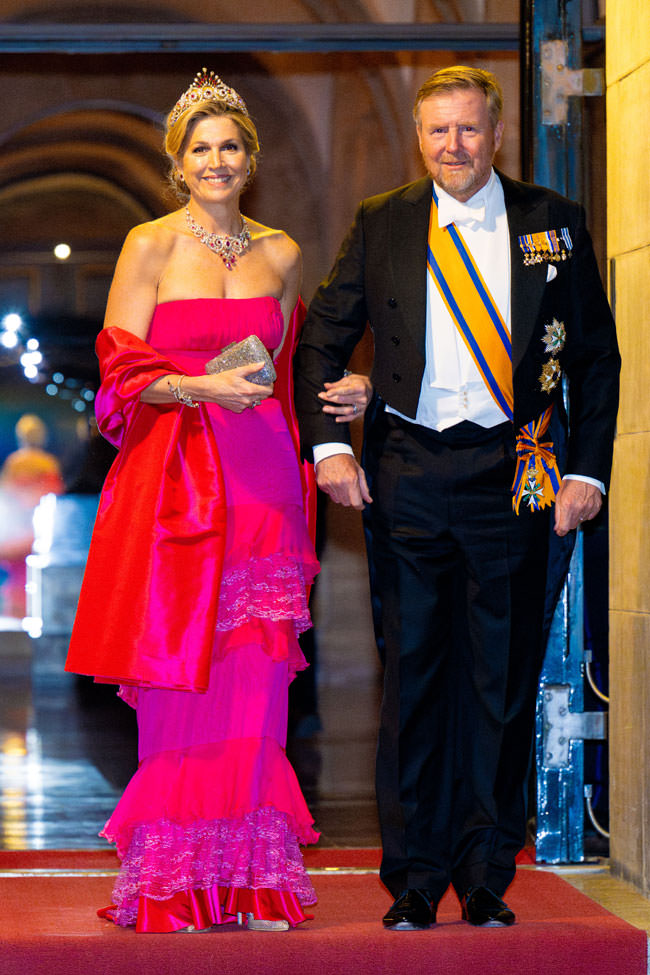
King Willem-Alexander and Queen Máxima of the Netherlands hosted the annual gala dinner for the Diplomatic Corps at the Royal Palace in Amsterdam in April 2026. This prestigious event, a staple of the Dutch royal calendar, serves as a formal gesture of appreciation for the foreign ambassadors, representatives of international organizations, and diplomatic staff stationed within the Netherlands. The evening was marked by traditional royal pageantry, highlighting the intersection of historical heritage and contemporary diplomatic relations. Queen Máxima’s appearance, featuring a vibrant ensemble and significant historical jewelry, drew considerable attention from both the diplomatic community and observers of royal protocol.
The Diplomatic Gala: Purpose and Protocol
The gala dinner for the Diplomatic Corps is held annually to maintain and strengthen the social ties between the Dutch monarchy and the international representatives residing in the country. The Netherlands, particularly The Hague and Amsterdam, serves as a global hub for diplomacy, hosting over 150 embassies and consulates, as well as major international judicial institutions such as the International Court of Justice and the International Criminal Court.
The event is governed by strict protocol. Guests are received at the Royal Palace Amsterdam, a building that transitioned from a 17th-century city hall to a royal residence during the Napoleonic era. The King and Queen, often accompanied by other members of the Royal House, greet each head of mission individually before proceeding to the Citizens’ Hall (Burgerzaal) for the banquet. The dinner provides an informal yet structured environment for the King to discuss international cooperation and for the Queen to engage with representatives on her various global initiatives, including her role as the United Nations Secretary-General’s Special Advocate for Inclusive Finance for Development (UNSGSA).
Chronology of the Evening
The proceedings for the 2026 gala followed a traditional timeline established by the Master of Ceremonies of the Royal Household:
- Arrival and Reception: Starting at 7:30 PM, members of the Diplomatic Corps arrived at the Dam Square entrance of the Royal Palace. They were escorted to the reception rooms where they were formally introduced to the royal couple.
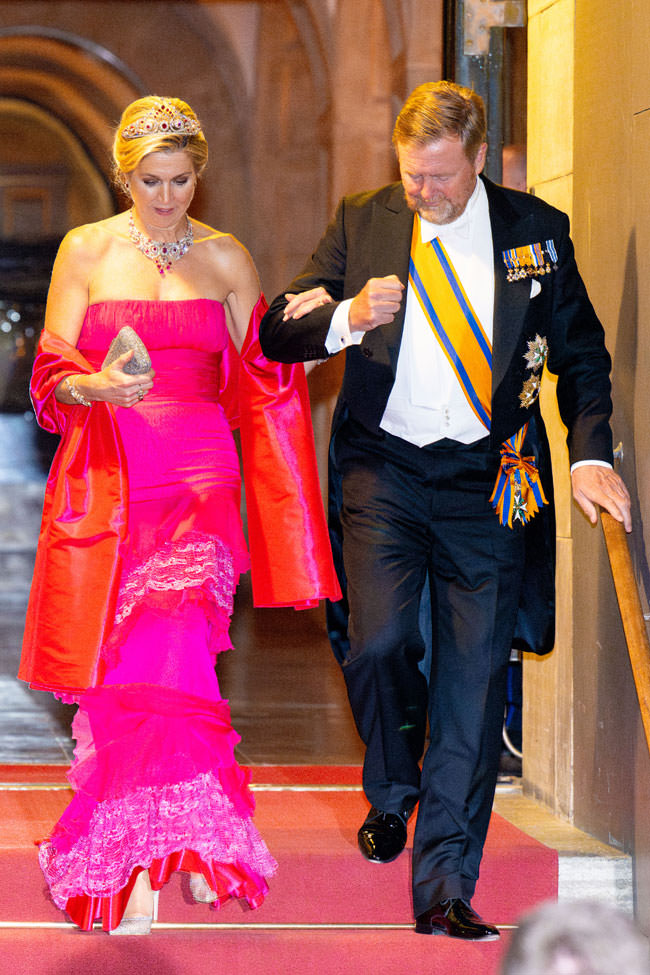
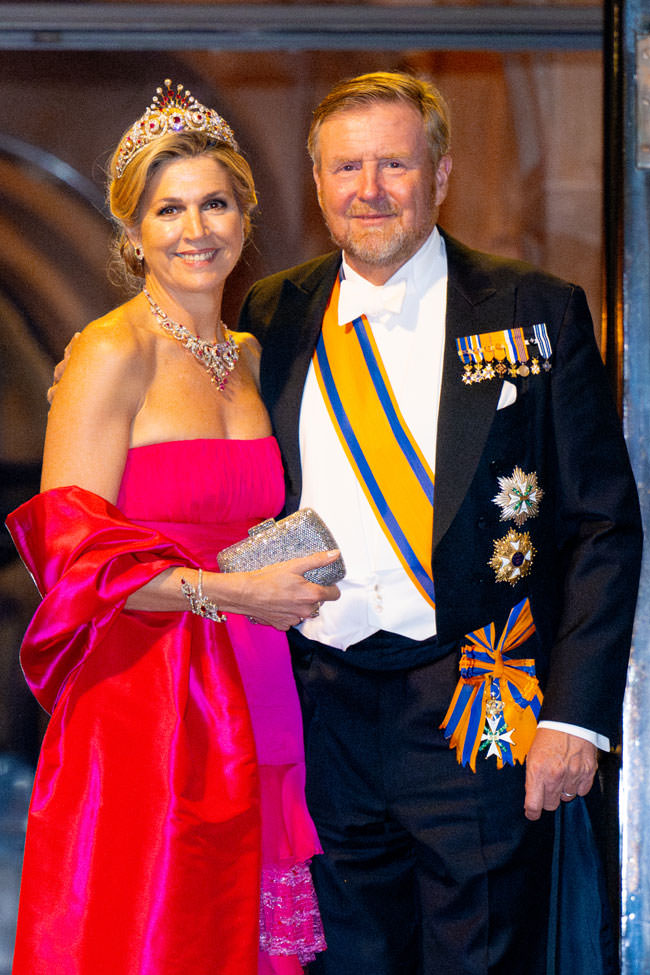
- The Procession: Following the introductions, the King and Queen led a procession into the dining hall. The King wore a formal evening dress (white tie) with the sash and star of the Order of the Netherlands Lion.
- The Banquet: The dinner featured a menu curated to showcase Dutch seasonal produce, a standard practice intended to promote the nation’s agricultural sector to foreign dignitaries.
- The Royal Address: During the dinner, King Willem-Alexander delivered a speech emphasizing the importance of international stability and the shared values of the diplomatic community.
- Coffee and Interaction: Following the meal, guests moved to the palace’s galleries for coffee, allowing for less formal conversations between the royals and the diplomats.
Analysis of Queen Máxima’s Attire and the Ruby Peacock Tiara
For the 2026 gala, Queen Máxima opted for a bold aesthetic that blended modern couture with 19th-century jewelry. Her choice of a shocking pink, strapless gown by Natan Couture—a Belgian fashion house led by designer Edouard Vermeulen—signaled a continuation of her long-standing patronage of Benelux designers. The gown featured intricate lace detailing and a tiered skirt, paired with a matching satin wrap.
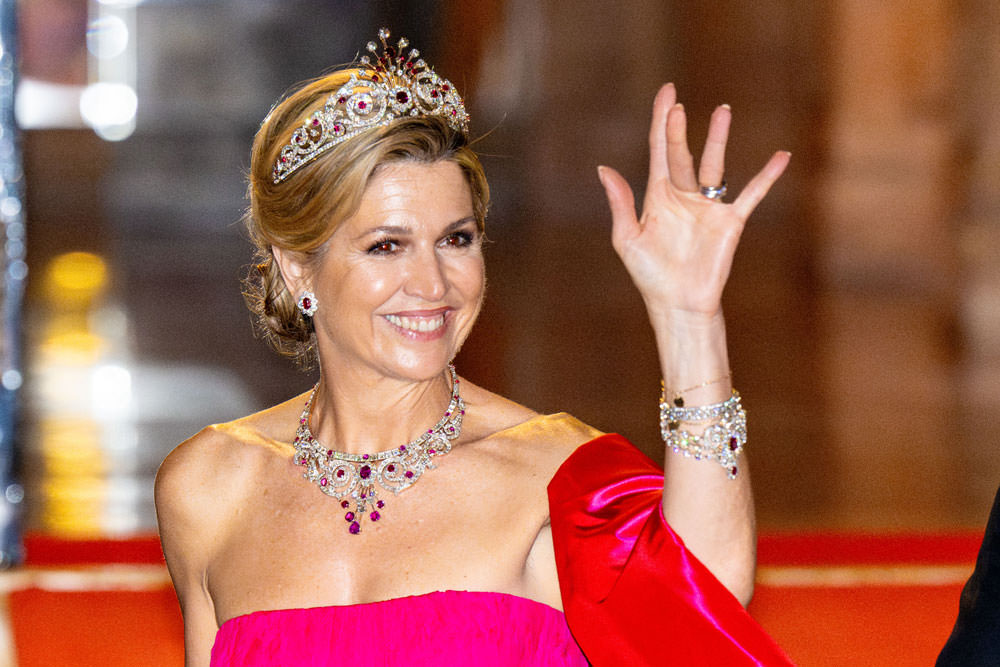
While the dress provided a contemporary silhouette, the centerpiece of the Queen’s ensemble was the Ruby Peacock Tiara and its associated parure. The history of these jewels provides a window into the lineage of the House of Orange-Nassau:
- Origin: The Ruby Peacock Tiara was commissioned in 1897 by Queen Wilhelmina. It was designed by the Frankfurt-based jeweler Schürmann.
- Design: The tiara is crafted in the shape of a peacock’s tail, featuring a central cluster of rubies that can be detached and worn as a brooch. The arrangement of the gems allows for a high degree of brilliance, making it one of the most striking pieces in the Dutch royal foundation (the Stichting Regalia van het Huis Oranje-Nassau).
- The Parure: Queen Máxima wore the full suite, which includes a diamond and ruby necklace and a large brooch. The rubies used in this set originally belonged to Queen Sophie, the first wife of King Willem III, dating back to the mid-19th century.
The decision to pair these specific jewels with a monochromatic pink gown is viewed by fashion historians as a deliberate attempt to modernize the presentation of the crown jewels. By choosing a dress color that complements the deep red of the rubies, the Queen highlights the versatility of the royal collection in a 21st-century context.
Supporting Data: The Economic and Cultural Impact of Royal Fashion
The choices made by Queen Máxima regarding her wardrobe are not merely aesthetic; they have documented economic and diplomatic implications. The "Máxima Effect" often results in increased visibility for the designers she selects. Natan Couture, which also frequently dresses Queen Mathilde of the Belgians, has seen a steady rise in international profile due to its association with the Dutch and Belgian royal families.
According to data regarding royal expenditures and the promotion of the arts, the Dutch monarchy’s use of specific designers serves as a form of "soft power." By wearing European-based couture to events attended by global ambassadors, the Queen promotes the regional fashion industry. Furthermore, the maintenance and public display of the royal jewelry collection, managed by a private foundation rather than the state, ensures that Dutch cultural heritage remains visible to the international community without placing a direct burden on the public taxpayer for the acquisition of new assets.
The Role of the Royal Palace Amsterdam
The venue itself, the Royal Palace Amsterdam, plays a critical role in the messaging of the gala. As the "eighth wonder of the world" during the Dutch Golden Age, the palace’s architecture—designed by Jacob van Campen—was intended to reflect the power and global reach of Amsterdam. Using this space for the Diplomatic Corps gala reinforces the historical narrative of the Netherlands as a center of world trade and international law.
The Citizens’ Hall, where the dinner is held, features a floor inlaid with maps of the Eastern and Western hemispheres, symbolizing Amsterdam’s central position in the world. For foreign diplomats, dining in this space serves as a reminder of the long-standing international engagement of the Dutch state.
Official Responses and Diplomatic Significance
While the specific details of the conversations held during the gala remain confidential under the rules of diplomatic engagement, the Rijksvoorlichtingsdienst (RVD), the Netherlands Government Information Service, released a statement following the event. The office noted that the gala was a "successful reaffirmation of the ties that bind the Netherlands to its international partners."
Diplomatic sources indicate that such events are highly valued for the "corridor diplomacy" they facilitate. In an era of digital communication, the opportunity for ambassadors to engage in face-to-face dialogue with the Head of State and his consort in a historic setting remains a powerful tool for building mutual trust and understanding.
Broader Impact and Future Implications
The 2026 gala dinner highlights the evolving role of the Dutch monarchy. While the King’s role is largely symbolic and ceremonial under the Dutch constitution, events like the Diplomatic Corps gala demonstrate how the monarchy provides a stable, apolitical backdrop for the nation’s foreign policy.
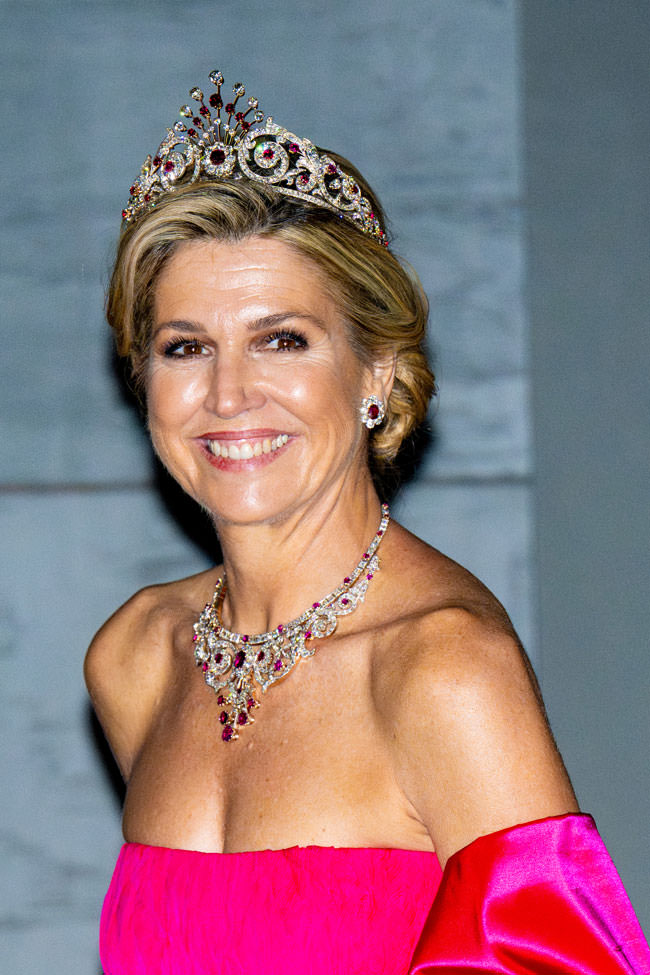
Queen Máxima’s role, in particular, has expanded the reach of the Dutch Royal House. Her ability to navigate high-fashion circles while maintaining her serious work with the UN allows her to bridge the gap between traditional royalty and modern global advocacy. The 2026 gala was a visual representation of this duality: the ancient rubies of Queen Wilhelmina worn by a modern, professional Queen who remains one of the most popular figures in the Netherlands.
As the Netherlands continues to navigate complex global challenges, from climate change to international security, the annual gala for the Diplomatic Corps will remain a vital instrument of Dutch statecraft. It ensures that the representatives of the world’s nations are not only welcomed but are also integrated into the historical and cultural fabric of the Dutch state. The 2026 event, through its blend of heritage, fashion, and formal protocol, successfully projected an image of a confident, outward-looking monarchy.