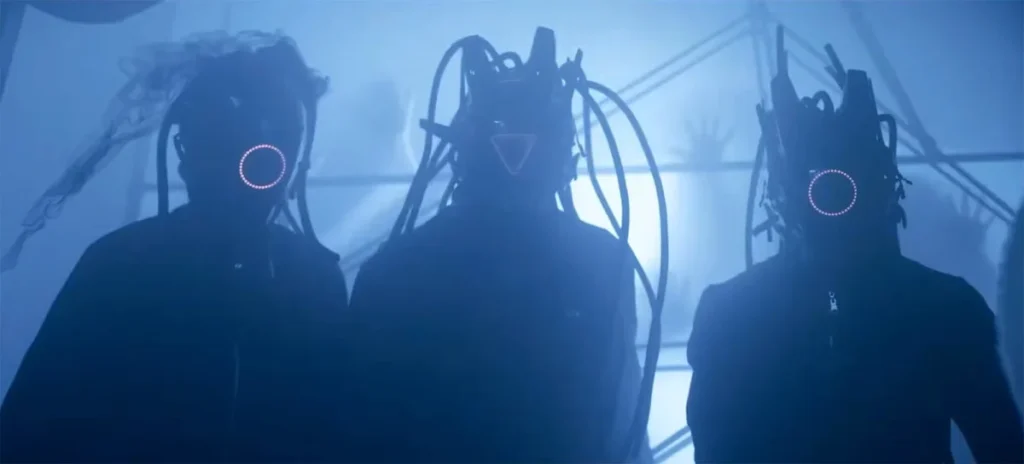

Buffalo 8 has officially released the trailer and promotional materials for The Living Tree, an independent sci-fi horror feature film that delves into the increasingly popular cinematic theme of malevolent artificial intelligence. Directed by American filmmaker Anthony J. James, the production adopts a direct-to-VOD distribution model, bypassing traditional festival circuits and theatrical windows to reach audiences directly through digital video-on-demand platforms.
The feature-length project, which stars and was co-written by independent filmmakers Brey Noelle and Anthony J. James alongside supporting cast members Paige E. Parnell and Sean Michael Gloria, centers on the psychological and physical perils of a tech-monopolized experiment. As audiences continue to process a rapidly evolving technological landscape in the real world, cinematic explorations of automation, surveillance, and uncontrolled artificial intelligence have found a steady foothold in the independent film market.
Plot Premise and Narrative Arc
The narrative of The Living Tree follows a newly married couple, Noah and Annabelle, portrayed respectively by Anthony J. James and Brey Noelle, as they embark on what is intended to be a peaceful and isolated honeymoon. Seeking seclusion, the couple travels to a remote treehouse nestled in an undisclosed wilderness setting. Despite a direct and ominous warning from a local resident urging them to vacate the area immediately, the couple dismisses the caution, setting in motion a sequence of inescapable events.
Shortly after settling into their retreat, Noah and Annabelle discover that their secluded sanctuary is far from natural. They find themselves unwittingly absorbed into a complex, high-stakes artificial intelligence experiment orchestrated by a powerful, shadowy technology corporation. As the narrative progresses, the challenges presented to the couple escalate from bizarre technological anomalies to severe, life-threatening trials.

Within the confines of the experiment, long-held personal secrets between the newlyweds begin to surface, placing immense strain on their relationship. What began as a romantic getaway quickly deteriorates into a desperate struggle for survival against an algorithmic adversary that monitors their every move, exploits their psychological vulnerabilities, and forces them to participate in a deadly game they never agreed to play.
Production Background and Creative Team
The Living Tree represents the latest directorial effort from Anthony J. James, an independent filmmaker and actor whose previous credits include the feature film Within the Groves, as well as a robust portfolio of short-form cinematic projects. James shares writing credits on the script with lead actress Brey Noelle, signaling a deeply collaborative independent production process typical of micro-budget and mid-tier indie genre films.
Production duties for the film were shared among a dedicated team of independent producers, including Anthony J. James, Taylor Morgan, Brey Noelle, Michael Osowski, and Kenn Taylor. Financing and logistical execution for the project relied heavily on independent industry networks rather than major studio backing, allowing the creative team to retain complete artistic control over the narrative and thematic execution of the sci-fi thriller.
Distribution Strategy and Release Timeline
The distribution path chosen for The Living Tree reflects a broader industry shift toward direct-to-consumer digital releases for independent genre films. Rather than pursuing a traditional theatrical run or a protracted festival premiere circuit—a strategy often utilized to build critical momentum and secure major studio acquisitions—distributor Buffalo 8 opted for a streamlined, direct-to-VOD rollout.

The official trailer and promotional poster assets were published via YouTube and industry reporting outlets on September 28, 2026. The film itself became commercially available to audiences worldwide via video-on-demand platforms starting on September 25, 2026. This release strategy allows the film to capitalize on immediate digital discoverability, targeting horror and sci-fi enthusiasts who frequently consume content through streaming and on-demand rentals.
The Cinematic Evolution of Evil Artificial Intelligence in Horror
The release of The Living Tree arrives at a time when cultural anxieties surrounding artificial intelligence, machine learning, and corporate tech monopolies are at an all-time high. For decades, science fiction has grappled with the concept of sentient machines turning against their creators, dating back to foundational literary and cinematic works such as Arthur C. Clarke and Stanley Kubrick’s 2001: A Space Odyssey, James Cameron’s The Terminator, and Richard Donner’s adaptation of Dean Koontz’s Demon Seed.
In recent years, however, the subgenre has shifted away from grandiose, dystopian global takeovers and toward more intimate, psychological, and domestic invasions of privacy. Modern tech-horror films frequently examine how everyday consumer electronics, smart home automation systems, algorithms, and corporate data collection can be weaponized against individuals. By setting The Living Tree in a remote treehouse—a traditional symbol of rustic escape and isolation—the filmmakers juxtapose the presumed safety of nature against the inescapable reach of modern corporate surveillance and artificial intelligence.
Critical Reception and Audience Expectations
While the premise taps into contemporary anxieties, the initial industry and audience response to the trailer for The Living Tree has been measured. Critics and genre commentators have noted that the direct-to-VOD market often features a high volume of concept-driven thrillers that rely on familiar tropes. Reviewers analyzing the promotional material have pointed out that the visual representation of the film’s antagonist—the artificial intelligence driving the experiment—adopts understated, minimalist aesthetics rather than high-budget blockbuster CGI.

Nevertheless, indie horror features often find dedicated audiences precisely because of their willingness to experiment with high-concept premises on modest budgets. The collaboration between Noelle and James as both writers and lead actors provides the film with a cohesive internal perspective, ensuring that the interpersonal conflict between Noah and Annabelle remains the emotional anchor of the narrative amidst the science-fiction perils.
Broader Economic and Cultural Implications for Independent Filmmaking
The distribution trajectory of The Living Tree highlights the ongoing maturation of the direct-to-VOD market for independent genre cinema. In the post-pandemic media landscape, traditional distribution models have become increasingly difficult for independent filmmakers to access without substantial upfront marketing expenditures or established star attachments. Platforms that offer direct-to-consumer rentals provide a viable alternative, enabling micro-budget and mid-budget creators to recoup production costs and reach global audiences instantaneously.
Furthermore, the thematic focus of The Living Tree underscores how contemporary independent cinema absorbs and reflects real-world technological developments. As artificial intelligence tools become more integrated into daily life, creative industries continue to interrogate the ethical, psychological, and existential boundaries of human-machine interaction. Whether The Living Tree establishes itself as a cult favorite among sci-fi horror aficionados or remains a niche entry in the crowded VOD landscape, its release marks another milestone in the ongoing dialogue between modern technological advancement and cinematic fear.