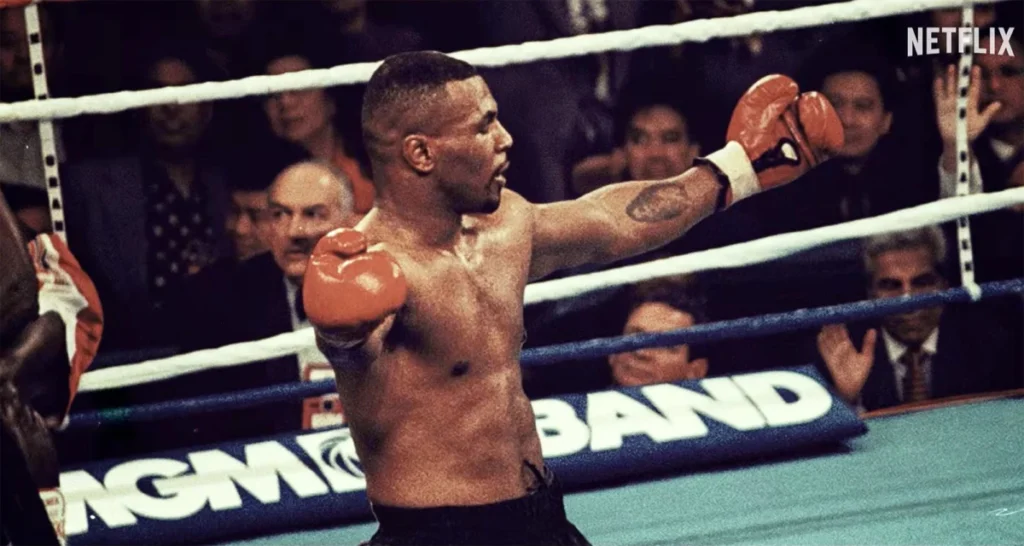

The landscape of sports documentary filmmaking is set to expand significantly this autumn as Netflix prepares to release its latest high-profile docuseries, simply titled Tyson. Directed by acclaimed filmmaker Floyd Russ, the four-part television event offers an uncompromising, multi-layered look into the life, career, and enduring cultural footprint of former undisputed heavyweight champion Mike Tyson. Scheduled for a global streaming premiere on October 13, 2026, the project arrives amid a broader resurgence of interest in Tyson’s personal and professional trajectory, positioning itself as both a historical retrospective and a deeply personal psychological portrait.
The official trailer, released by Netflix, sets a stark and confessional tone, featuring Tyson reflecting candidly on his past with the haunting admission, "This is the dark side of me. That’s just who I became. Addicted to chaos…" This raw sentiment anchors the promotional campaign for the series, which aims to peel back the layers of public mythos surrounding one of the most polarizing and electrifying athletes in modern sports history. Alongside the docuseries, Netflix has also slated a filmed version of Tyson’s recent one-man stage performance at the Seminole Hard Rock Hotel & Casino in Hollywood, Florida, further cementing a comprehensive multi-platform showcase of his life story on the streaming giant.
From Brooklyn Streets to Global Stardom: A Chronicle of Triumphs and Turmoil

To fully understand the narrative arc of the upcoming Netflix series, one must examine the extraordinary chronology that defined Mike Tyson’s rise, fall, and subsequent public reinvention. Born in Brooklyn, New York, in 1966, Tyson’s early life was marked by poverty, instability, and frequent run-ins with the law juvenile detention facilities before he was discovered by legendary trainer Cus D’Amato. Under D’Amato’s tutelage, Tyson transitioned from a troubled youth into a devastating boxing prodigy, utilizing a ferocious peek-a-boo style that terrified opponents.
On November 22, 1986, Tyson etched his name into the annals of sports history by defeating Trevor Berbick via a second-round technical knockout. At just 20 years and 145 days old, Tyson became the youngest heavyweight boxing champion in history, a record he still holds to this day. The late 1980s saw him unify the heavyweight division, cementing his status as a global pop-culture phenomenon and an invincible sporting icon.
However, the zenith of his athletic success was soon eclipsed by personal turmoil. Following the death of Cus D’Amato and other key stabilizing influences, Tyson’s life outside the ring began to unravel. The chronology of his career shifted dramatically in the 1990s, highlighted by a high-profile rape conviction in 1992 that resulted in a three-year prison sentence. His return to the sport in the mid-1990s produced mixed results, culminating in the infamous June 28, 1997, championship bout against Evander Holyfield, during which Tyson was disqualified for biting his opponent’s ears. This public breakdown, followed by financial ruin, substance abuse, and erratic behavior, seemed to signal the definitive end of his legacy. Yet, the ensuing decades saw a gradual, surprising cultural rehabilitation, marked by comedic acting cameos, a successful one-man Broadway and touring show, a popular podcast, and sporadic athletic exhibitions that introduced him to a younger generation of fans.
Production Credentials and Creative Leadership

The creative machinery behind Tyson brings together a formidable roster of talent known for handling complex, sensitive, and high-stakes documentary subjects. At the helm is director Floyd Russ, whose previous directorial and production credits include acclaimed works such as the feature films Ayar and Stewart 27, as well as high-impact documentary series like American Manhunt: The Boston Marathon Bombing, American Manhunt: O.J. Simpson, and Untold: Malice at the Palace. Russ’s documentary style typically favors deep investigative rigor, stylistic visual framing, and a focus on human vulnerability amidst systemic pressure.
The series is produced by a team featuring Jenna Millman, Jacob Miller, and Alexa Ginsburg. Meanwhile, the executive producer roster boasts a heavyweight lineup of media and sports industry veterans, including Jim Gray, Ian Orefice, Amanda Spain, Jonna McLaughlin, Greg C. Lake, Michael Hughes, Douglas Banker, director Floyd Russ, and prominent sports media personality Bill Simmons. This coalition of producers suggests a project with substantial financial backing, archival access, and editorial ambition, aiming to distinguish itself from standard promotional sports biographies by interrogating the darker, less comfortable realities of Tyson’s life.
Unfiltered Testimony and Archival Depth
According to production details released by Netflix, Tyson relies heavily on first-person testimony, told entirely in the subject’s own words. This unfiltered approach is designed to give viewers unprecedented access to Tyson’s internal monologue as he confronts the choices, pressures, and personal costs of his unprecedented legacy. Rather than relying solely on conventional talking-head interviews with outside commentators, the series integrates never-before-seen archival material and grants rare access to members of Tyson’s immediate circle, including family members, lifelong friends, and former adversaries.

Industry analysts note that sports documentaries in the streaming era often walk a fine line between objective journalism and controlled image-making, particularly when the central figure is actively involved in the production or commercialization of their own brand. With Netflix simultaneously distributing his theatrical stage performance and the four-part docuseries, the platform is executing a coordinated release strategy that capitalizes on Tyson’s enduring marketability. However, the involvement of experienced investigative and sports documentarians like Floyd Russ and Bill Simmons indicates an intention to maintain critical distance, confronting difficult subjects such as incarceration, addiction, and public controversy rather than glossing over them.
Broader Impact and Cultural Implications
The arrival of Tyson on October 13, 2026, speaks to a broader cultural fascination with the psychological complexities of elite athletes. In recent years, audiences have moved away from hagiographic sports profiles in favor of more psychologically nuanced examinations of fame, mental health, and the systemic pressures placed on prodigies who achieve global celebrity before they are emotionally equipped to handle it.
By framing Tyson’s life not merely as a sequence of athletic achievements and scandals, but as a continuous struggle with personal demons and the quest for redemption, the documentary series positions itself as a timely commentary on celebrity culture and accountability. As viewers prepare for the October premiere, the project stands as a major test of whether a deeply scrutinized public figure can offer a genuinely new perspective on a life already picked apart by decades of media coverage. Through the lens of Floyd Russ and the platform of Netflix, the definitive modern chapter of the Mike Tyson story is poised to captivate audiences worldwide, challenging them to look beyond the champion, the convict, and the caricature to see the complex human being underneath.